野餐從何而來
2016-03-12 21:40:41FionaCAI
新東方英語·中學版 2016年3期
關鍵詞:英語
Fiona+CAI
In our world today, picnic simply means a pleasurable outing at which a tasty meal is eaten outdoors, preferably in a beautiful landscape. But did you know that the relaxing and carefree act of eating outdoors and sharing quality time with those you care about has its roots back in medieval times in England?
Picnics evolved from the elaborate1) traditions of outdoor feasts enjoyed by the wealthy. Medieval hunting feasts and Renaissance era country banquets can be credited with laying the foundation of the outdoor dining experiences we enjoy today. The history of picnicking is credited to the Europeans, and nowadays people all around the world enjoy participating in these leisurely outings.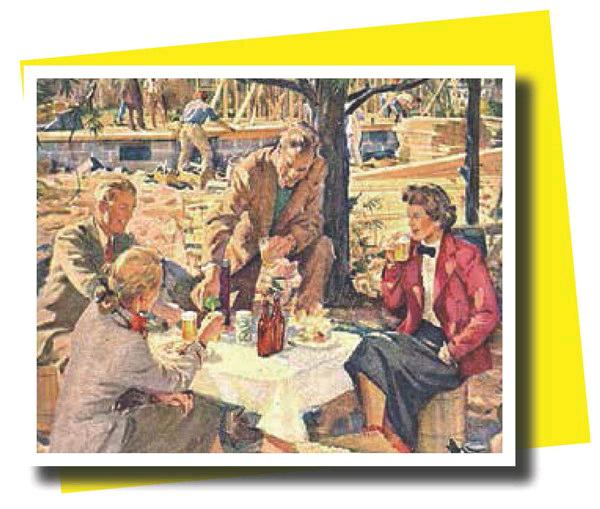
In Europe during the 14th century, the earliest picnics were medieval hunting feasts in England. These feasts before the hunt began were of special importance and the main foods that could be found at these feasts would be hams, baked meats and pastries2).
According to the Oxford English Dictionary (2nd edition, volume XI, p. 779), a picnic originally means "a fashionable social entertainment in which each person present contributed a share of the provisions3); now, a pleasure party including an excursion4) to some spot in The country where all partake of5) a repast6) out of doors: the participants may bring with them individually the viands7) and means of entertainment, or the whole may be provided by someone who 'gives the picnic'".
The oldest print evidence of the word picnic in the English language can be traced back to 1748, according to the Oxford English Dictionary. The word picnic was known in France, Germany and Sweden before it became part of the English society. According to Wikipedia, a free online encyclopedia, "the first usage of the word picnic was traced to a 16th century French text, describing a group of people dining in a restaurant who brought their own wine". A theory has it that the word picnic is based on the verb piquer which means "pick" or "peck" with the rhyming nique perhaps meaning trifle. The 1692 edition of Origines de la Langue Franqoise de Ménage, which mentions "piquenique" as being of recent origin, marks the first appearance of the word picnic in print. The word picnic first appeared in English texts in the mid-1700s, and may have entered the English language from this French word or from the German Picknick.
Hundreds of years ago, a picnic meant a potluck8), an entertainment at which each person contributed some dishes to a common table for all to share. The change in the meaning of the term, from "everyone bringing some food" to "everyone eating out of doors" seems to have been completed by the 1860s. Dining outdoors with a casual atmosphere, no strict course9) menu and jovial10) company is something that has taken hold of not only the European countries, but in the United States. By the mid-19th century, Americans had also adopted a flair11) for picnicking.
In America, we are a cultural melting pot, and there are many types of foods and cultural practices available to flair a picnic outing. There are many different types of culinary dishes and recipes which can be prepared for a picnic. Your environment might also influence the recipes you decide to make and bring along on your outdoor dining experience. If you are from the north-eastern states, you might decide to bring along a thermos12) of clam chowder13), a variety of sweet and tasty cheeses and meats, along with your favorite red or white wine. If you are picnicking in the southern states, a hefty14) supply of delicious BBQ and a cooler full of your favorite beers will satisfy you and your guests! A delicious blend of aromatic15) coffee with a selection of cheeses, cold cut meats and breads would suffice for a pleasant picnic no matter your location. For mid-western states, hamburgers, chili and biscuits and a crisp16), cold beverage would soothe the soul. For western states, a variety of upscale dining such as lobster or sushi with a heavenly dose of white wine would complete the picnic affair.
Gourmet delicacies no matter your location will supply you with an alternative to the traditional selection of sandwiches and salads. As long as you are relaxing, enjoying the scenery and affable17) company with scrumptious18) foods .... You are practicing the art of picnicking!
春暖花開的陽春三月,或攜友結伴而行,或舉家出行,帶上自己喜愛的便攜美食,走進海濱山谷、鄉村麥田、林間湖畔、郊外公園……野餐不僅僅是在怡人的美景中享受美食,還是一個與家人、朋友交流感情的機會。那么,野餐這一健康、自然的戶外休閑活動是怎么來的呢?一起來了解一下吧!
在當今世界,野餐意味的只是一次愉快的出游,期間在戶外吃上一頓美味的餐食,最好還能置身于美景之中。但是你知道嗎?在戶外用餐并和你在意的人一起享受美好時光,這種無憂無慮的放松行為可以追溯到中世紀的英格蘭。
野餐是從富人們所喜愛的戶外宴會這一講究的傳統演變而來的。我們現在所喜愛的戶外用餐體驗,其基礎的奠定都可以歸功于中世紀的狩獵宴會以及文藝復興時期的鄉村宴會。野餐的歷史要歸功于歐洲人,現如今全世界的人們都喜歡參加這種悠閑的出游活動。
在14世紀的歐洲,最早的野餐是英格蘭的狩獵宴會。這些在狩獵開始前舉辦的宴會有其獨特的重要性,在這些宴會上,人們可以看到的食物主要是火腿、烤肉以及點心。
根據《牛津英語大詞典》(第二版,第11卷,第779頁),“野餐”原指“一種時髦的社交娛樂活動,每位出席者都貢獻一份食物;現指一次愉快的聚會,包括去鄉村的某個地方遠足,所有人都會在那里享用一頓戶外的餐食:參與者可以自行準備食物,設計娛樂活動的形式,或者這一切也可以都由‘野餐組織者來提供”。
根據《牛津英語大詞典》,英語中“picnic”一詞最早存在的印刷證據可以追溯到1748年。“野餐”一詞在成為英國社會的一部分之前,已經在法國、德國和瑞典為人所知。按照免費在線百科全書維基百科的說法,“‘野餐一詞的第一次使用可以追溯到16世紀的一篇法語文章中,那篇文章描述了一群自帶葡萄酒去飯店吃飯的人”。還有一種觀點認為“picnic”一詞是基于(法語)動詞“piquer”(意為“拿起”或者“啄起”),并帶有押韻詞“nique”(可能意為“瑣碎的東西”)。1692年版的《法語的起源》提及“piquenique”一詞并指出其新近才出現,這標志著“野餐”一詞首次在出版物中亮相。“野餐”一詞首次出現在英語文本中則是在18世紀中葉,它可能是從這個法語單詞或者德語單詞“Picknick”演變而來,并成為英語詞匯的。
幾百年前,野餐指的是一頓百樂餐,一種每個人都為共同的餐桌貢獻一些菜肴供所有人享用的娛樂活動。在19世紀60年代,這個詞語的意思似乎完成了從“每個人帶一些食物來”到“所有人在戶外吃飯”的轉變。在戶外放松的氛圍中進餐,沒有嚴格上菜次序的餐食卻有愉快的陪伴,這種方式不僅在歐洲國家深入人心,在美國亦是如此。到19世紀中葉,美國人也接納了這種對野餐的熱愛。
美國是一個文化的大熔爐,有各種類型的食物和文化習俗可以使戶外野餐新穎、獨特,還有很多不同類型的可備野餐之用的美味佳肴和菜譜。你所處的環境可能也會影響你決定在戶外野餐之旅中做什么吃的和帶什么吃的。如果你來自東北部那些州,你可能會帶上一保溫瓶的蛤蜊濃湯、各種香甜美味的奶酪和肉類,以及你最喜歡的紅葡萄酒或白葡萄酒。如果你在南方那些州野餐,管夠的美味烤肉再加上滿滿一保溫箱你最愛喝的啤酒會讓你和你的賓客們覺得心滿意足。不論你身在何處,香濃的咖啡配上精心挑選的奶酪、冷切肉和面包,這樣美味的搭配對于一次愉快的野餐而言足矣。對于中西部的州而言,漢堡包、辣椒醬、餅干以及涼爽的冷飲便可以讓心靈得到撫慰。至于西部各州,諸如配有海量白葡萄酒的龍蝦或者壽司之類的各種高檔料理將會讓野餐十分完美。
不論你身在何處,美味佳肴都為你提供了一種可以替代三明治配沙拉這種傳統野餐菜肴的選擇。只要你能夠放輕松,享受美景、美食,有令人愉快的人相伴……你就是在實踐野餐的藝術!
1.elaborate [??l?b?r?t] adj. 精致的,講究的
2.pastry [?pe?stri] n. 烤焙花式食品(如蛋糕、小甜面包等)
3.provision [pr??v??n] n. 供應品(尤指食物及其他生活必需品)
4.excursion [?k?sk???n] n. 遠足;短途旅行
5.partake of: 分食
6.repast [r??pɑ?st] n. 餐
7.viands [?vai?nds] n. [復]各種食品(尤指美食)
8.potluck [p?t?l?k] n. 參加聚餐的每個人各帶一味菜肴供共享的)百樂餐
9.course [k??s] n. 一道菜;餐
10.jovial [?d???vi?l] adj. 快樂的
11.flair [fle?(r)] n. 癖好;熱情。vt. 使新穎、獨特
12.thermos [?θ??m?s] n. 保溫瓶
13.chowder [?t?a?d?(r)] n. (用魚、蛤與咸肉、蔬菜等煨成的)海鮮雜燴湯
14.hefty [?hefti] adj. 相當多的
15.aromatic [??r??m?t?k] adj. 芳香的
16.crisp [kr?sp] adj. 涼爽的
17.affable [??f?bl] adj. 令人愉快的
18.scrumptious [?skr?mp??s] adj. 美味的
猜你喜歡
新東方英語·中學版(2017年9期)2017-09-25 20:25:46
高考金刊·理科版(2016年3期)2016-04-13 07:13:48
小學生導刊(低年級)(2016年2期)2016-02-24 23:02:11
小天使·五年級語數英綜合(2014年5期)2014-06-25 05:22:42
興趣英語(2013年12期)2014-02-11 03:21:38
海外英語(2013年11期)2014-02-11 03:21:02
興趣英語(2013年3期)2013-05-13 09:21:06
興趣英語(2013年2期)2013-04-25 01:50:06