10 Must-Eat Street Food in Xi’an
2016-02-29 11:08:30
中國經貿聚焦·英文版
2016年1期
Located at the terminus of the Silk Road and at one time the cultural and political capital of China, the city of Xian in Shaanxi province has one of the more interesting culinary histories in China, in no small part due to the influence of its large Muslim population.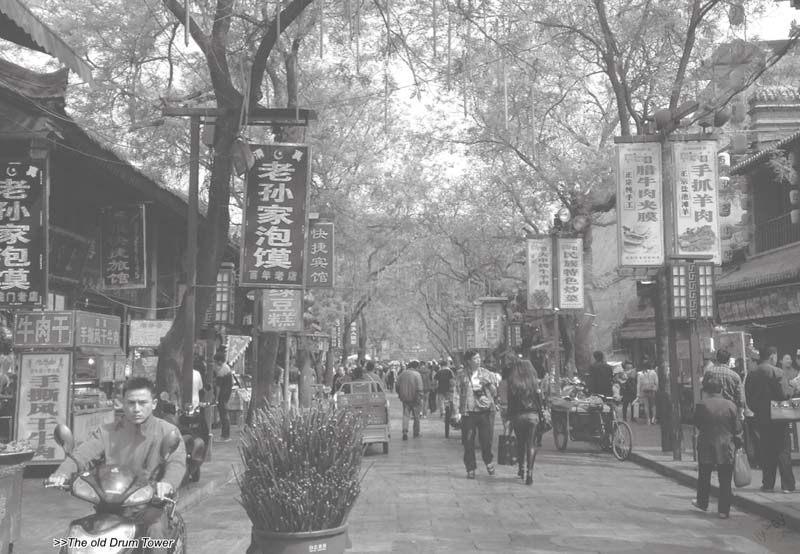
The old Drum Tower acts as the de facto entryway to the Muslim Quarter, located in the Northwest quadrant of the ancient walled city. At first glance, you get a sort of Epcot Center, Disney-esque impression, what with the loud hawking and bright signs everywhere, but its a location steeped in history: the neighborhood has housed a largely Muslim population since the 7th Century AD. Many of the dishes served have changed little since that time.
Youll find sights familiar to both Chinese and Middle Eastern culture. Chefs stir-fry lamb and spices in hot woks set over blazing hot coal ovens. Nearby, hawkers roast walnuts or sell prunes of varying prices and degrees of quality.
If you want to see crowds and hawkers and get jostled before your meal, head there in the late evening, after 7:30 or so. Go there in the afternoon or earlier in the evening and youll get treated better with a little more space to walk around—and food thats prepared with a bit more time and attention.
No matter how hungry you enter, you can expect to leave fully stuffed without spending more than around 40 Yuan(about $6.50) per person. Not a bad price for a night out.
1.HAND-STRETCHED NOODLES
Noodles come in all shapes and sizes ‘round here, and youll find noodles made from wheat flour, rice flour, mung bean starch, green bean starch, and a half dozen other grains and pulses in a variety of sauces and soups in the Muslim Quarter alone.
The noodles are always stretched to order, and youll recognize the restaurants that serve them by the oiled steel tables set out in front, topped with a bucket of greased dough balls. When you place an order, the noodle-stretcher will place a few balls on the oiled table and start by flattening them out with a smooth wooden dowel.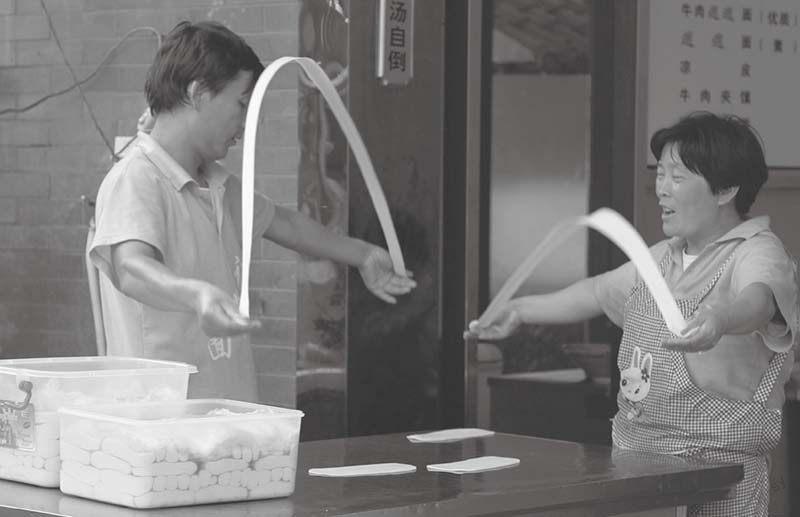
Next, he folds and stretches the noodles as far as he can without lifting them off the table. Its remarkably like watching an expert pizzaiolo at work. Anyone whos made a pizza before knows the process: stretch on the work surface first, then finish the process by lifting it and letting gravity do the rest of the work.
In this case, its gravity along with a bit of kinetic energy provided by vigorously slapping the everelongating noodle up and down.
As the noodles stretch, they get thinner and thinner. The end result is something about an inch and a half wide, with the thickness of good Italian pappardelle, though its much stretchier and more supple than any Italian-style pasta.
The noodles are boiled for a few moments along with some shredded cabbage in a large wok set over a roaring coal fire. The cook watches the pot carefully, topping it up with a bit of cold water every time the starchy liquid threatens to boil over.
As the noodles cook, bowls are brought out from the kitchen. At the bottom of each bowl is a bit of concentrated sauce—savory, vinegary, and aromatic.
Depending on what you order, the noodles are topped off with vegetables or braised meat. Beef or mutton are the most frequent choices; dont expect to see pork here—it is the Muslim Quarter after all.
Hot chili oil is provided at the table for you to adjust the heat according to taste. The finished noodles are thick, slick, stretchy, chewy, and excellent at sopping up the sauce, a mixture that fires flavor on all cylinders, with hot, sour, pungent, sweet, and meaty aromas commingling.
2.STUFF-ON-ASTICK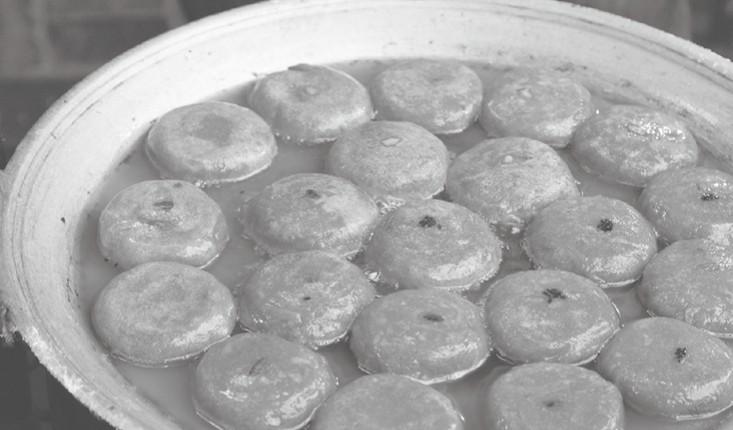
You may not know it from restaurants in the West, but the Chinese are prolific consumers of things-on-sticks, whether grilled, simmered, or fried, and nowhere more so than in Xian, where the smoke rising from tiny chunks of lamb sizzling over coal fires competes with steam and smog as the most prevalent substance in the lower atmosphere. In Xian theyre called rouchuan.
You can get grilled lamb or beef skewers on almost every street in the city, but youll get a wider selection in the Muslim Quarter.
There are chunks of fatty lamb basted with chili sauce and sprinkled with cumin, dried chilies, and salt, of course, but theres also beef, mutton, lambs liver, chicken wings, sausages of all sorts, chicken...
3.PERSIMMON DOUGHNUTS
Like many Asian desserts, these persimmon doughnuts can pose a bit of a textural challenge for Westerners. Theyre fried and crisp, sure, but the interiors are made of an entirely unleavened dough based on dried persimmons with a dense, chewy texture much like Japanese mochi.
Persimmon doughnut vendors will have a dozen or so varieties, each with a different filling in the center.
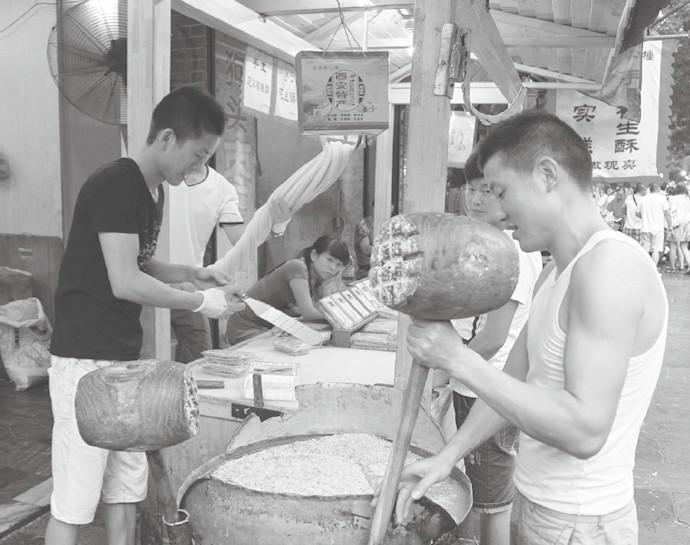
4.HAMMERED CANDY
Xian is a city obsessed with nuts, and their candy reflects it. After repeatedly folding and stretching hot sugar across a hook, the candy gets transferred to a large wooden stump, where its sprinkled with nuts.
5.BEEF OR LAMB ROUJIAMO (STEAMED BREAD SANDWICHES)
Rou jia bing, the arepa-like steam-griddled bread split and stuffed with a wide variety of fillings (or as they call them in the Xian dialect rou jia mo), are a staple around here. A local downing a bowl of majiang liangpi (sesame cold skin noodles) with chopsticks in one hand and a small pork-filled bing in the other is a sight you come across multiple times a day.
In the Muslim quarter, however, youll also see lines for bing stuffed with beef which, in all honesty, tastes like a moister, more-chopped version of corned beef.
The cook will fish out chunks of braised cured beef brisket from a vat in their kiosk and place it on a wooden chopping block before finely chopping it with a large cleaver. He then splits open a bing and spreads it with slick chili oil.
Finally, its stuffed with some of the chopped beef.
Wash it all down with a glass of prune juice, which is sold out of bubblers all over the place.
Outside of the Muslim Quarter, youre more likely to find the sand- wiches stuffed with chopped braised pork.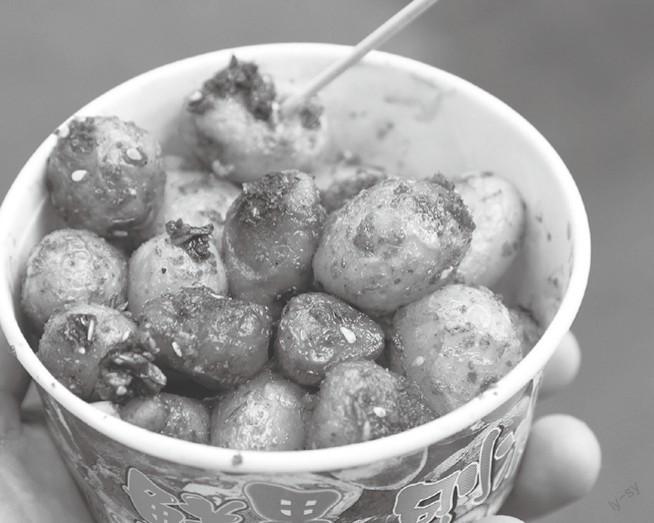
6.LIANGPI NOODLES
The true staple of the city, liangpi noodles are made by first washing a wheat or rice flour dough in water until its starches are completely rinsed off. This starchy water is then allowed to sit overnight until the starches collect at the bottom. The clear water above is poured off, and the ultrastarchy liquid below is steamed until it forms thin sheets with a uniquely crunchy-but-soft texture.
Those sheets are cut by hand into thin ribbons, then tossed with cucumber shreds and bean sprouts in a sauce made with sesame paste, black vinegar, and roasted chili oil. It all gets served, inevitably, out of bowls that are first slipped into a thin plastic bag for easy clean-up. You wouldnt believe how many plastic bags the city goes through in the name of deliciousness and hygiene.
7.FRIED POTATOES
They start as teeny-tiny yellow potatoes deep fried in a large, shallow vat. At this point, they very much resemble Colombian papas criollas, a variety of Andean potato. In Colombia, they deep fry them in a similar manner, until lightly crisp on the outside, then toss them with salt and serve them with Colombian ají.
In Xian, they take those same fried potatoes (the Chinese potatoes are a little creamier and less fluffy than their Colombian counterparts) and toss them to order in a wok with a couple types of dried chili, finely ground and coarselysmashed cumin, salt, sugar, garlic, and scallions.
8.MUTTON DUMPLINGS
Dumplings can be found all across China but you can only get the authentic taste of mutton dumplings bathing in hot and sour soup in Shaanxi.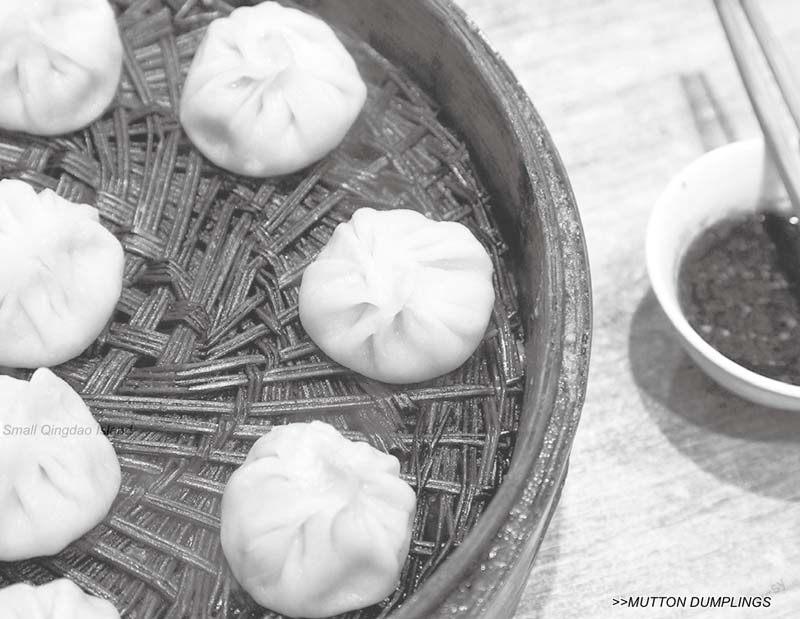
This dish is abundant in taste.
Sesame seeds, minced leek and cilantro add a flavorful kick to the soup.
The aftertaste lingers so long that its unforgettable.
9.BREAD AND MUTTON SOUP
If you wander deep enough into the side streets of the Muslim Quarter, youll run into a stretch of restaurants where the folks sitting at the table outside are all meticulously tearing flat disks of pita bread into tiny cubes into big soup bowls in front of them.
Youve just walked by a paomo restaurant, which specializes in what is the most-interesting-conceptually but least-interesting-actually dish in the Muslim Quarter. Once youve filled up your bowl with torn bread, it then gets whisked back to the kitchen where theyll add a handful of thin rice noodles, some chopped greens, and a few slices of braised mutton or beef to the bowl before topping it up with a thick, mildly-flavored broth. You want the lamb-y kind, so ask for yangrou paomo.
Its the kind of dish you eat when you want to be comforted and stuffed.
10.FRIED LIANGFEN (GREEN BEAN JELLY)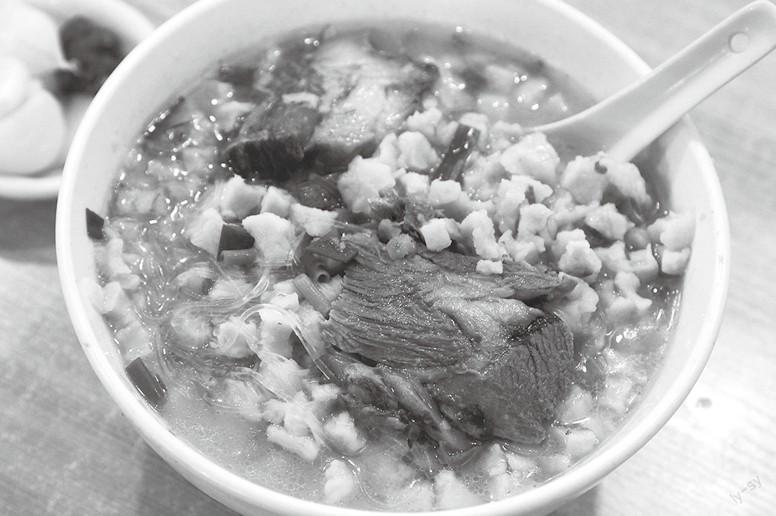
A starchy jelly with a soft texture similar to tofu, liangfen is typically derived from soy, potatoes or green beans. Its served both hot and cold, but in Xian liangfen is often stirfried with chili, mustard and vinegar sauce.
登錄APP查看全文