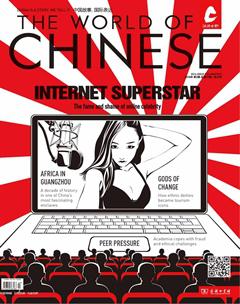
PEER PRESSURE
2016-01-10 07:53:16ByDavidDawson
漢語世界(The World of Chinese) 2016年2期
關鍵詞:困境
By David Dawson
Pressure, fraud, and unethical practices haunt Chinese academia
論文壓力、署名交易、倫理困境,說一說中國學術圈的“怪”現狀
Until October of 2014, Fang Zhouzi (方舟子), Chinas “science cop”, had an impressive public profile. He had built his reputation tussling with powerful figures ranging from wealthy snake-oil salesmen peddling their wares as traditional Chinese medicine to fraudulent academics and negligent physicians.
After posting an essay critiquing the comments made by a popular nationalist blogger, Fang vanished from Weibo, but can still be found on Twitter, raging against the state of Chinas scientific sector. His fan base on Weibo had been in the hundreds of thousands, a testament to how many people are frustrated by the fakery which plagues in Chinas science and academic sectors, which in turn is driven by pressure to perform, poor metrics for measuring research success, and a lack of oversight throughout academia.
Its no surprise that a “science cop” can earn so many fans. Chinas scientists and researchers are overworked and unappreciated and are often forced to resort to shortcuts. Aside from relatively low wages, career prospects are often incredibly limited. Its publish or perish; but few have the time for enough of the former, often they must teach classes as well as write papers and conduct research if they want to get promoted or advance in their career. This just leaves connections as a sure route to success, but these can be fickle—in one high profile incident in December, 2015 a young lecturer publicly slapped the face of the dean of Sun Yat-sen University in Guangzhou in retaliation for allegedly being blocked from applying for professor status.
Consider, Chinas 2015 winner of the Nobel Prize for Medicine, Tu Youyou (屠呦呦). In the field of Traditional Chinese Medicine, (TCM) she was at once embraced and shunnedas she used scientific methods to isolate the artemisinin malaria treatment, effectively carving it away from broader TCM theory. Despite the fact that she is widely respected as having made a groundbreaking humanitarian contribution to science, she lacks any impressive titles within China, and when top science and academic bodies released their rankings for 2015, Tu, a quiet, diligent outsider, was not on any of them—further fuel for the argument that scientific success rests more on connections than science.
And to get those connections, one must have papers published.
So when a researcher, desperate for bylines on respected papers, searches for a journal online and the countrys most popular search engine Baidu helpfully offers direct contact details for publishing agents at the top of the page, the temptation to take these shortcuts is pretty strong. “Years of experience”, a top entry reads. “Guaranteed publishing, low price, safe!”
Safe? One cant help but wonder exactly what these agents are offering.
Market for bylines
When TWOC posed as a scientist and inquired with one of the top publishing services about getting a fake article on the state of research into Parkinsons disease inserted into magazines, the agent said that, for a fee of 8,800 RMB, the article could be placed in a Guangdong journal, while another magazine with a higher profile had a spot available for 9,900 RMB. The agent did say that the quality of the article would need to suit the journal, but that they could help with editing.
Theoretically, giving the agency the benefit of the doubt, this had not crossed the line into unethical behavior, but their suggestion that they had “priority pages” reserved in the magazines for customers suggested cozy relationships between agents and magazine editors and some serious issues with the article selection processes.
Science magazine took this line of inquiry much further.
An in-depth investigation by the magazine over five months in 2013 revealed how fraud in the industry goes much deeper than priority pages. Papers could be bought from authors who had already written them, but a more common offer was a co-authorship byline on already written papers.
“You only need to pay attention to your academic research.The heavy labor can be left to us. Our service can help you make progress in your academic path!” Science quoted one agency, Wanfang Huizhi, as saying.
Science followed a paper that had been submitted to Wanfang Huizhi, in which the authorship was changed several times before publication. The company denied wrongdoing, saying that seemingly incriminating offers in fact, did not possess the appropriate company seal. In any case, this was merely one agency among many.
At the heart of the industry in the scientific sector lies demand for papers that show up in the Science Citation Index (SCI), an index by publishing giant Thomson Reuters that, in China at least, serves as a proxy for relevance in the scientific publishing sector. Without SCI papers published, its almost impossible for a Chinese scientist to achieve fame, fortune or professional respect.
The thing is, it isnt just a matter of buying a paper authorship. Well, not exactly. The best magazines have quality controls and academics arent likely to give up an entire paper which used original, verifiable science. The impact factor of Chinese publications is relatively low, so scientists tend to opt for international publications which require English. This sometimes necessitates the use of translators, so this opens up the murky area of how ethical the translators may be.
There are a number of ways around this.
There are certain key ways that fraudulent scientists try to surmount the obstacles in their way.
The first is co-authorship. This means the actual scientist who worked on the project isnt “giving up” their paper authorship, rather they are sharing it with someone who didnt write the article, and no doubt making some decent bucks on the side. According to the Science investigation, 90,000 RMB was one quoted price for co-authorship on a cancer paper in an international publication, but the price became significantly cheaper when there were three or more authors.
The second is meta-analysis. Rather than conducting original research—possibly requiring a lab or hands-on field research—meta analysis involves the collection, collation, and analysis of other research papers. These make up a majority of the papers on offer, and their lower profile makes them less likely to gain the wrong kind of attention. While this remains a perfectly valid form of research, the fact that the material is collated from already-existing publications by other scientists makes the line between original content and plagiarism that much murkier.
Its also possible to translate a Chinese article into English, or from English to Chinese, and switch the bylines, though the former would be far more lucrative as it opens the door to international journals.
The situation is further muddied by the fact there are perfectly respectable editing services operating as well—journals benefit from receiving more polished essays, and scientists benefit from assistance from editors more familiar with the process. In addition, famous publications can be taken in by scams as well. In August of 2015, international journal Springer had to retract 64 papers for false peer reviews, nearly all of which came from China. The writers had used fake email addresses, and the peer review reports that assessed the papers had been fabricated. The incident wasnt even the first of that year—in March, UK-based publisher Biomed retracted 43 papers for similar reasons, most of which came from China.
In the Springer case, the publisher hastened to add that these 64 publications represented just 0.05% of the submissions that came from China that year, and that there was plenty of good science as well—one very important thing to keep in mind is the sheer size of the Chinese science sector. As a space power and the worlds second largest economy, China is also the second largest when it comes to publishing scientific papers, and authorities are cracking down on the issues that affect its science reputation. In November of 2015, state media revealed that the China Association for Science and Technology was cracking down and had already begun investigating fraudulent scientists. Various agencies have told scientists that if their names are found on fraudulent papers, the consequences will be severe.
These scandals and their subsequent exposure may have had some effect on this industry, but with the prevalence of these problems it would be exceedingly difficult to measure. Its worth noting that in a brief follow-up to its 2013 expose, in 2014, Science noted that two computational biologists had stumbled across some very questionable figures using big data techniques. Using an algorithm to analyze a large number of abstracts from science database Pubmed, they found some terms that spiked in use in 2014, and in particular, one previously infrequently referenced publication began cropping up at a frequency way outside the norm.
On closer inspection, an abstract for the Research Council for? Complementary Medicine (CISCOM), run out of London, appeared in 32 curiously similar abstracts with wording that in some instances was almost identical but with some clunky re-wording. All 32 papers came from China, from 28 different research groups, spread out across the country. Interestingly, when run though plagiarism detection software, they did not show any red flags. The science article hypothesized that a technique known as “text laundering” could help avoid such detection.
Shady labs
Its no secret that China has ambitions of being a scientific superpower. As in most situations, by the raw numbers, one can make a case that it has already succeeded. China registers massive numbers of patents each year and mind-boggling quantities of funding pour into the sector. Biomedical research labs have sprung up across the country, supported by state-owned behemoths. Beneath the figures though, there are always wrinkles that reveal all is not quite so rosy.
China requires foreign patents to be re-registered in China and depending on the methods used to count the number of patents, lumping these in with the total can inflate the figures. In addition, the profits generated by Chinese patents lag far behind their American counterparts, hinting that while the quantity may be good, the quality often isnt.
Effectively, if there are two things in short supply in Chinese science circles, it is not patents nor funding, nor even innovation or public support. They are ethics and effective oversight, long talked about in Chinese science circles, but when actually implemented tended to be fragmented and bureaucratic.
Bioethics in China has traditionally focused on medical ethics, a 2006 analysis of Chinas system in the US National Library of Medicine points out that Chinas Ministry of Health has a bioethics committee, and that provincial governments are supposed to maintain their own committees as well, with any controversial research needing to be submitted to them. The report states that whilst on paper they see similar to rules elsewhere, “in contrast to European and US regulations, they are not enforceable by law.”
The author pointed out that “From discussions with friends and colleagues, I have gained the impression that these institutional committees do not always perform sufficiently well, mainly owing to their limited experience in handling ethically relevant questions” while acknowledging that this can be a problem overseas as well.
Certainly, recent announcements do raise a number of ethical questions. In late January, Chinese scientists detailed in Nature magazine how they had genetically engineered monkeys that displayed tendencies similar to autism, and that they carried a gene thought related to autism; though to be fair, US scientists have already created monkeys with Huntingtons disease—typically however, largely due to cost issues, US researchers have used mice for research related to autism.
The reaction on the Chinese internet to the autism experiment was divided. While a majority of comments seemed to favor the research, it had its critics as well, and it didnt help that the public announcements had come just ahead of the Year of the Monkey in the Chinese zodiac.
China does have a series of guidelines for animals used in experiments, but again, they are merely guidelines, and there have been no high profile cases of any research labs being punished for mistreating animals—a curious absence, particularly given the fact that China is home to the worlds largest pig cloning facility, which produces 500 pigs every year, to be used in medical research. As far as laws go, one recent piece of news, an amendment to the wildlife law in January, defined wild animals as resources. This prompted outrage from animal rights groups by making it legal to breed endangered animals in captivity, for use in performance or for farming body parts, while giving provincial and municipal governments the right to hand out licenses for trading endangered species. China already breeds and keeps bears and tigers in captivity, with both being sold illicitly to provide ingredients for TCM treatments.
The ethical issues dont stop with animals. Rumors of Chinese scientists editing human embryos were matter-of-factly confirmed in April 2015 in a paper published in online journal Protein and Cell. “Non-viable” embryos were used for the experiments that were obtained from fertility clinics—a scenario eerily similar to the controversy that erupted in the US after faked videos purported to show doctors at an abortion clinic selling embryos for profit. The US case—which was proven false and has resulted in two men being indicted for faking the video—became one of the key political events of the year, yet the Chinese experiments (which took place in a society in which abortions are relatively more common given the one-child policy and poor sex education) did not provoke any such reaction.
The research itself was an attempt to see if genes responsible for a blood disorder could be replaced via gene-editing method CRISPR. It instead demonstrated massive hurdles that would need to be overcome for this kind of research to be applicable to treating genetic diseases. Of the 86 embryos, 71 were tested, of those, just 26 were successfully spliced and researchers warned of “off-target” mutations.
“Off-target mutation” is possibly an apt metaphor for the current state of Chinas science in general. While it has undergone a massive boom and in many ways is world-leading, until there is more oversight and transparency, it seems unlikely to develop in a way that eases public anxiety—unless measures by the authorities are able to rein in the plagiarists and hucksters that are draining the life out of what promises to be a vibrant sector.
猜你喜歡
文苑(2020年12期)2020-04-13 00:54:08
學生天地(2017年20期)2017-11-07 02:26:30
環境保護與循環經濟(2017年8期)2017-03-22 01:28:58
中國衛生(2016年5期)2016-11-12 13:25:32
中學歷史教學(2016年3期)2016-11-11 07:11:10
環境科技(2016年3期)2016-11-08 12:14:20
社會科學(2016年6期)2016-06-15 20:29:08
人生十六七(2015年2期)2015-02-28 13:08:04
中國檢察官(2015年12期)2015-02-27 15:39:28
中國工程咨詢(2015年10期)2015-02-14 05:57:24