
Heredity in comorbid bipolar disorder and obsessive-compulsive disorder patients
2015-12-08 12:26:21AndreaAMERIOMatteoTONNAAnnaODONEBrendonSTUBBSNassirGHAEMI
上海精神醫學 2015年5期
關鍵詞:情感
Andrea AMERIO*, Matteo TONNA, Anna ODONE, Brendon STUBBS, S. Nassir GHAEMI
?Forum?Comorbid bipolar disorder and OCD
Heredity in comorbid bipolar disorder and obsessive-compulsive disorder patients
Andrea AMERIO1,2,*, Matteo TONNA3, Anna ODONE4, Brendon STUBBS5, S. Nassir GHAEMI2,6
bipolar disorder; obsessive-compulsive; comorbidity; heredity
1. Introduction
In 1970 the famous epidemiologist Alvan R. Feinstein defined comorbidity in relation to a specific index condition as, “any distinct additional entity that has existed or may occur during the clinical course of a patient who has the index disease under study”.[1]In Feinstein’s formulation, the implication was that a completely different and independent disease occurred at the same time as another disease.
In contrast to this approach, the Diagnostic and Statistical Manual of Mental Disorders (DSM) explicitly produces overlapping clinical criteria for many diagnoses, especially mood and anxiety disorders,guaranteeing comorbidity in quite a different sense than in the medical meaning of the term as co-occurrence of independent diseases.[1]
Psychiatric comorbidity is extremely common in bipolar disorder (BD). More than half of BD patients have an additional diagnosis, one of the most difficult to manage being obsessive-compulsive disorder (OCD).[2]
BD-OCD comorbidity has important nosological and clinical implications. The nosological question is whether this common “comorbidity” represents two diseases, or multiple symptoms of one disease. The clinical question is whether and how to treat the comorbidity since the main treatment for one disease can worsen the other diseases. Serotonin reuptake inhibitors (SSRIs) for OCD can cause mania and/or more mood episodes in BD.[3]
Although recent studies have investigated the cooccurrence of anxiety and bipolar disorders, the topic is insufficiently studied and the relationship between BD and OCD remains unclear.[4]In order to address this unanswered question, we updated our recent systematic review[5]to specifically investigate the heredity in BD-OCD patients.
2. Updated systematic review
Studies published in English through 31 October 2015 were identified by searching MEDLINE, Embase, and PsycINFO. We combined the search strategy of free text terms and exploded MESH headings for the topics of bipolar disorder, obsessive-compulsive disorder, and treatment combined as following:(((((((((“Bipolar Disorder”[Mesh]) OR Bipolar disorder) OR BD) OR Bipolar) OR Manic depressive disorder) OR Manic depressive) OR Manic)) AND((((“Obsessive-Compulsive Disorder”[Mesh]) OR OCD) OR Obsessive-compulsive) OR Obsessivecompulsive disorder))).
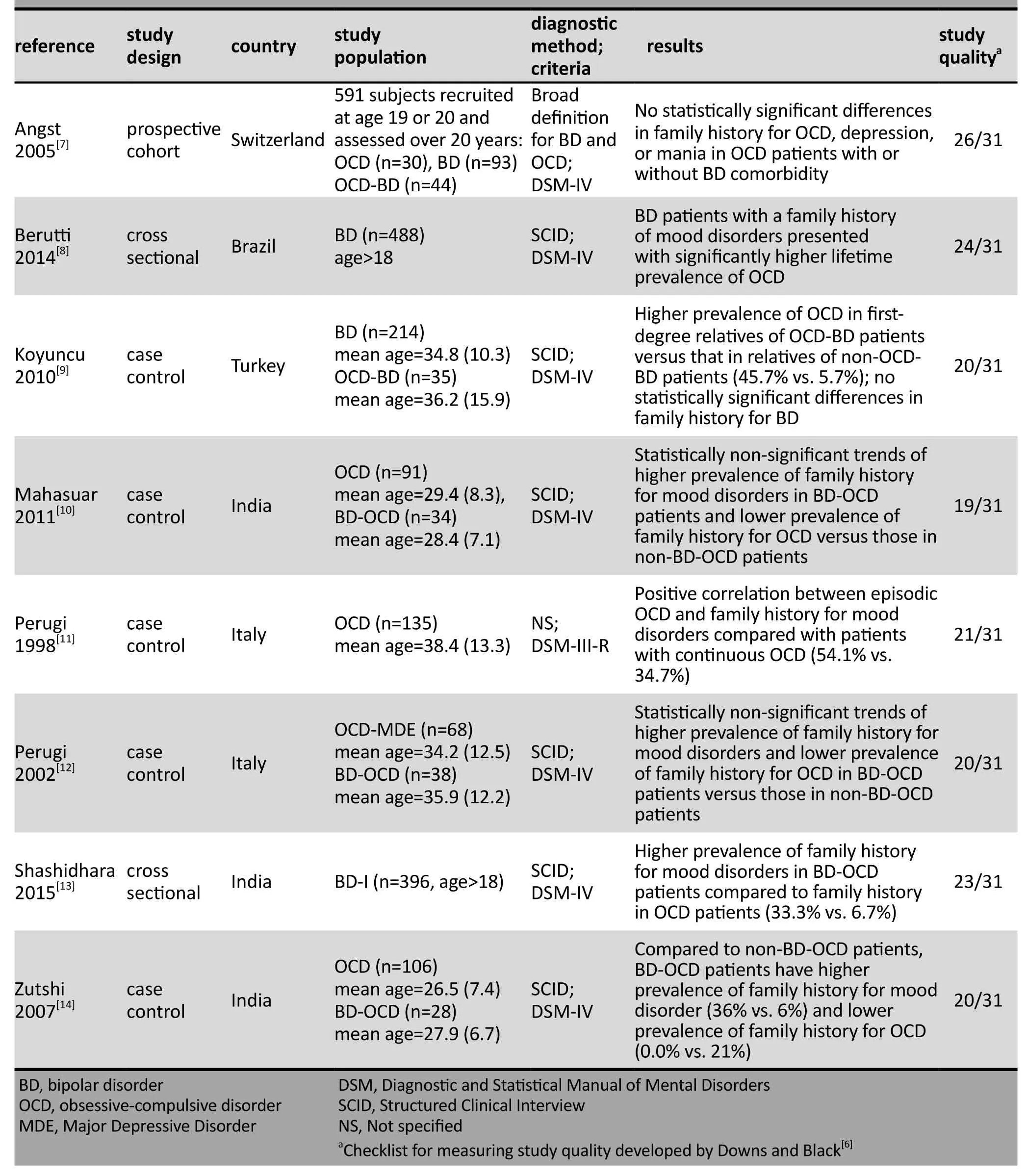
Table 1. Studies that met inclusion/exclusion criteria for systematic review about comorbid BD-OCD
The eight studies shown in Table 1 were selected. No studies were found that examined familial transmission of comorbid BD-OCD. Seven studies[7-10,12-14]assessed family history for OCD or BD in comorbid BD-OCD probands using semi-structured or unstructured clinical interviews and clinical records.Five studies[8,10,12-14]reported that compared to non-BD-OCD patients, BD-OCD patients were more likely to have a family history for mood disorders and less likely to have a family history for OCD; one study[9]reported the opposite. The sole population-based study[7]found no statistically significant differences in the prevalence of a family history for OCD, depression, or mania between OCD patients with or without BD comorbidity.In one study,[11]a family history for mood disorders was reported to be more frequent in patients with episodic OCD than in those with continuous or chronic OCD symptoms.
3. Conclusions
Results from this review support the view that the majority of cases of comorbid BD-OCD are, in fact, BD cases. Considering course of illness as a key diagnostic validator, the majority of comorbid OCD cases appeared to be related to mood episodes. OC symptoms in comorbid patients appeared more often – and sometimes exclusively – during depressive episodes,and comorbid BD and OCD cycled together, with OC symptoms often remitting during manic/hypomanic episodes.[5]
From a therapeutic perspective, Osler’s view that medicine should focus on the treatment of diseases,not on the treatment of symptoms, is consistent with the recommended approach for treating comorbid BDOCD. Mood stabilization should be the first objective in treating apparent BD-OCD patients, not immediate treatment with selective serotonin reuptake inhibitors(SSRIs) In a minority of BD patients with refractory OCD, addition of low doses of antidepressants might also be considered while strictly monitoring emerging symptoms of mania and hypomania.[3]
Funding
This research received no specific grant from any funding agency in the public, commercial, or not-forprof i t sectors.
Conflict of interest statement
None of the authors have any of conflict of interest related to this manuscript.
Authors’ contributions
Authors AA, MT, AO, and BS designed the study and wrote the protocol. Studies were identified and independently reviewed for eligibility by two authors (AA, AO) in a two-step based process. Data were extracted by one author (AA) and supervised by a second author (SNG) using an ad-hoc developed data extraction spreadsheet. The same authors who performed data extraction (AA, SNG) independently assessed the quality of selected studies using the checklist developed by Downs and Black both for randomized and non-randomized studies. AA, MT, AO,and BS have been involved in drafting the manuscript and SNG revised it critically. SNG has given fi nal approval of the version to be published. All authors read and approved the fi nal manuscript.
1. Maj M. “Psychiatric comorbidity”: an artefact of current diagnostic systems? Br J Psychiatry. 2005; 186: 182-184. doi:http://dx.doi.org/10.1192/bjp.186.3.182
2. Shi S. Obsessive compulsive symptoms in bipolar disorder patients: a comorbid disorder or a subtype of bipolar disorder? Shanghai Arch Psychiatry. 2015; 27(4): 249-251.doi: http://dx.doi.org/10.11919/j.issn.1002-0829.215091
3. Amerio A, Odone A, Marchesi C, Ghaemi SN. Do antidepressant-induced manic episodes in obsessivecompulsive disorder patients represent the clinical expression of an underlying bipolarity? Aust NZ J Psychiatry. 2014; 48(10): 957. doi: http://dx.doi.org/10.1177/0004867414530006
4. Tonna M, Amerio A, Ottoni R, Paglia F, Odone A, Ossola P, et al. The clinical meaning of obsessive-compulsive symptoms in bipolar disorder and schizophrenia. Aust NZ J Psychiatry. 2015; 49(6): 578-579. doi: http://dx.doi.org/10.1177/0004867415572010
5. Amerio A, Stubbs B, Odone A, Tonna M, Marchesi C, Ghaemi SN. The prevalence and predictors of comorbid bipolar disorder and obsessive-compulsive disorder: A systematic review and meta-analysis. J Affect Disord. 2015; 186: 99-109.doi: http://dx.doi.org/10.1016/j.jad.2015.06.005
6. Downs SH, Black N. The feasibility of creating a checklist for the assessment of the methodological quality both of randomised and non-randomised studies of health care interventions. J Epidemiol Community Health. 1998; 52(6):377-384
7. Angst J, Gamma A, Endrass J, Hantouche E, Goodwin R,Ajdacic V, et al. Obsessive-compulsive syndromes and disorders: significance of comorbidity with bipolar and anxiety syndromes. Eur Arch Psychiatry Clin Neurosci. 2005;255(1): 65-71
8. Berutti M, Nery FG, Sato R, Scippa A, Kapczinski F, Lafer B. Association between family history of mood disorders and clinical characteristics of bipolar disorder: results from the Brazilian bipolar research network. J Affect Disord.2014; 161: 104-108. doi: http://dx.doi.org/10.1016/j.jad.2014.02.045
9. Koyuncu A, Tukel R, Ozyildirim I, Meteris H, Yazici O. Impact of obsessive-compulsive disorder comorbidity on the sociodemographic and clinical features of patients with bipolar disorder. Compr Psychiatry. 2010; 51(3): 293-297.doi: http://dx.doi.org/10.1016/j.comppsych.2009.07.006
10. Mahasuar R, Janardhan Reddy YC, Math SB. Obsessivecompulsive disorder with and without bipolar disorder.Psychiatry Clin Neurosci. 2011; 65(5): 423-433. doi: http://dx.doi.org/10.1111/j.1440-1819.2011.02247.x
11. Perugi G, Akiskal HS, Gemignani A, Pfanner C, Presta S, Milanfranchi A, et al. Episodic course in obsessivecompulsive disorder. Eur Arch Psychiatry Clin Neurosci. 1998;248(5): 240-244
12. Perugi G, Toni C, Frare F, Travierso MC, Hantouche E, Akiskal HS. Obsessive-compulsive-bipolar comorbidity: a systematic exploration of clinical features and treatment outcome. J Clin Psychiatry. 2002; 63(12): 1129-1134
13. Shashidhara M, Sushma BR, Viswanath B, Math SB,Janardhan Reddy YC. Comorbid obsessive compulsive disorder in patients with bipolar-I disorder. J Affect Disord.2015; 174: 367-371. doi: http://dx.doi.org/10.1016/j.jad.2014.12.019
14. Zutshi A, Kamath P, Reddy YC. Bipolar and nonbipolar obsessive-compulsive disorder: a clinical exploration.Compr Psychiatry. 2007; 48(3): 245-251. doi: http://dx.doi.org/10.1016/j.comppsych.2006.12.005
(received, 2015-11-13; accepted, 2015-11-18)

Andrea Amerio, MD, is a psychiatrist and a PhD candidate at the Parma University Hospital,Department of Clinical and Experimental Medicine, University of Parma, Italy. Since January 2013 he has been a research fellow at the Mood Disorders Program, Tufts University, Boston, MA (USA).Supervised by Professor Ghaemi, his research focuses on psychiatric comorbidities in bipolar disorders.
雙相情感障礙共病強迫癥患者的遺傳性
Amerio A, Tonna M, Odone A, Stubbs B, Ghaemi SN
雙相情感障礙;強迫癥;共病;遺傳
Partly due to the overlap of symptom groupings in DSM, psychiatric comorbidity is extremely common. One of the most common and difficult to manage comorbid conditions is the co-occurrence of bipolar disorder (BD) and obsessive compulsive disorder (OCD). However, the key nosological question about this condition – whether they are two distinct disorders or a subtype of one of the disorders –remains unresolved. In order to help address this unanswered question, we updated our recent systematic review, searching the electronic databases MEDLINE, Embase, and PsycINFO to specifically investigate the heredity in BD-OCD patients. We identified a total of 8 relevant papers, the majority of which found that,compared to non-BD-OCD patients, BD-OCD patients were more likely to have a family history for mood disorders and less likely to have a family history for OCD. These results support the view that the majority of cases of comorbid BD-OCD are, in fact, BD cases. If confirmed in larger, more focused studies, this conclusion would have important nosological and clinical implications.
[Shanghai Arch Psychiatry. 2015; 27(5): 307-310.
http://dx.doi.org/10.11919/j.issn.1002-0829.215123]
1Department of Clinical and Experimental Medicine, University of Parma, Parma, Italy
2Mood Disorders Program, Tufts Medical Center, Boston, MA, USA
3Department of Mental Health, Local Health Service, Parma, Italy
4Department of Biomedical, Biotechnological and Translational Sciences, Unit of Public Health, University of Parma, Parma, Italy
5Institute of Psychiatry, Kings College London, London, UK
6Tufts University Medical School, Department of Psychiatry and Pharmacology, Boston, MA, USA
*correspondence: andrea.amerio@studenti.unipr.it
A full-text Chinese translation of this article will be available at http://dx.doi.org/10.11919/j.issn.1002-0829.215123 on February 26, 2016.
概述:精神病共病極為常見,其部分原因是DSM診斷系統癥狀分組重疊。其中雙相障礙 (bipolar disorder,BD) 和強迫癥 (obsessive compulsive disorder, OCD) 的共同出現是最常見的共病之一。然而,我們尚未解決有關該病癥的關鍵疾病分類問題,即它們兩個不同的疾病還是其中一個病癥中的另一種亞型。為了解決這個懸而未決的問題,我們更新了最近的系統綜述,即搜索電子數據庫MEDLINE、Embase和PsycINFO專門研究BD與OCD共病患者的遺傳性。我們一共納入了8篇相關論文,其中大部分研究的發現是,相較于非BD與OCD共病的患者,共病患者更可能有心境障礙的家族史而不太可能有強迫癥的家族病史。這些結果支持大多數BD與OCD共病的案例實際上BD患者。如果這一結論能在更大的、更集中的研究中得到證實,將具有重要的疾病分類和臨床意義。
本文全文中文版從2016年2月26日起在http://dx.doi.org/10.11919/j.issn.1002-0829.215123可供免費閱覽下載
猜你喜歡
今日教育·作文大本營(2025年3期)2025-03-24 00:00:00
中國生殖健康(2020年5期)2021-01-18 02:59:48
家庭醫學(下半月)(2020年4期)2020-05-30 12:42:50
現代裝飾(2020年4期)2020-05-20 08:55:06
北極光(2019年12期)2020-01-18 06:22:10
小太陽畫報(2019年10期)2019-11-04 02:57:59
海峽姐妹(2019年9期)2019-10-08 07:49:00
青年歌聲(2019年7期)2019-07-26 08:35:00
中國生殖健康(2018年5期)2018-11-06 07:15:40
發明與創新(2016年6期)2016-08-21 13:49:38
- 上海精神醫學的其它文章
- Persistent mental symptoms and rabies
- Sudden cardiac death after modified electroconvulsive therapy
- Infanticide by a mother with untreated schizophrenia
- The effect of simple imputation on inferences about population means when data are missing in biomedical research due to detection limits
- Assessment of a six-week computer-based remediation program for social cognition in chronic schizophrenia
- Effectiveness of Traditional Chinese Medicine (TCM) treatments on the cognitive functioning of elderly persons with mild cognitive impairment associated with white matter lesions