
Clinical observation on acupuncture combined with tuina manipulation for thoracic facet joint disorder
2015-05-18 09:01:35ZhouGuangming周光明JiangJun姜軍ZhangYan章燕
Zhou Guang-ming (周光明), Jiang Jun (姜軍), Zhang Yan (章燕)
Shaoxing Fifth Hospital, Zhejiang 312000, China
Clinical observation on acupuncture combined with tuina manipulation for thoracic facet joint disorder
Zhou Guang-ming (周光明), Jiang Jun (姜軍), Zhang Yan (章燕)
Shaoxing Fifth Hospital, Zhejiang 312000, China
Objective:To observe the clinical effect of acupuncture combined with tuina manipulation for thoracic facet joint disorder.Methods:A total of 93 eligible cases were randomly allocated into an observation group and a control group. Patients in the observation group (n=46) were treated with acupuncture combined with tuina manipulation, whereas patients in the control group (n=47) were treated with tuina manipulation alone. The treatment was done once a day, for a total of 3 times. Therapeutic efficacies were then evaluated according to scores on signs and symptoms.
Acupuncture Therapy; Tuina; Massage; Chiropractic; Thoracic Vertebrae; Point, Jiaji (EX-B 2)
Thoracic facet joint disorder, also known as thoracic facet joint subluxation, refers to pain in the chest and back due to subluxated thoracic zygapophyseal joint, capitulum costae joints and costotransverse joint affecting the surrounding soft tissue and compressing the nerve[1]. Patients with this condition may present with chest pain, chest tightness, palpitations, coughing and gastrointestinal dysfunction depending on its severity and involved nerves and soft tissue. Along with increased use of computer and changes in work and life, thoracic facet joint disorder tends to affect more and more people. It’s of great significance to come up with a reasonable and highly efficient therapy. We’ve treated this condition with acupuncture combined with tuina manipulation and compared its effect with that of tuina manipulation alone. The results are now summarized as follows.
1 Clinical Materials
1.1 Diagnostic criteria
This was based on the diagnostic criteria for thoracic facet joint disorder in theTuina Therapeutics[2]: a history of trauma, cold, chronic strain or poor posture; back pain that aggravates upon coughing or sneezing and sometimes radiates towards the chest, coupled with intercostal neuralgia, pain and discomfort in the rib-side area, a sense of pressure in the chest and abdomen; alternatively cardiac arrhythmias, difficulty breathing and gastric distension, tightness and pain may occur in severe cases; tenderness on or lateral to the spinous process with palpable nodules or ropy strings; radiographic findings show deviated spinous processes, absence of positive signs in chest PA and LAT films in patients with a short duration, and vertebral degeneration or compensatory scoliosis or kyphosis of the thoracic vertebrae.
1.2 Inclusion criteria
Those who met the above diagnostic criteria; aged between 18 and 60, no gender limitation; agreed to participate in this study and signed the informed consent.
1.3 Exclusion criteria
Pregnant women and those who have an extremely weak constitution; having complications of thoracic spinal tuberculosis, tumor, fracture and rheumatoid diseases; having severe conditions of the heart, liver and kidney; having poorly-managed chronic conditions such as hypertension and diabetes.
1.4 Statistical analysis
All data were processed with the SPSS 19.0 version software. The measurement data were expressed asThe intra-group comparison was made usingt-test and the inter-group comparison using independent samplest-test. The inter-group enumeration data comparison was made using the Chi-square test. APvalue of less than 0.05 indicates a statistical significance.
1.5 Case source and grouping
A total of 93 eligible cases with thoracic facet joint disorder treated in Tuina Department of our hospital between November 2013 and October 2014 were randomly allocated into an observation group (n=46) and a control group (n=47) according to their visit sequences. There were no between-group statistically significant differences in gender, average age and average duration (allP>0.05), indicating that the two groups were comparable (Table 1).
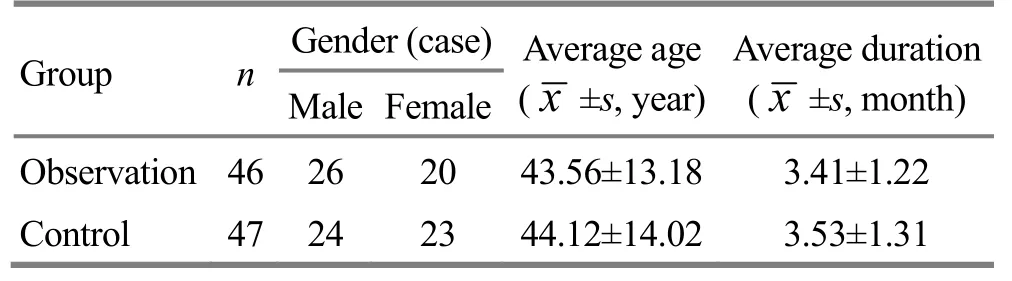
Table 1. Between-group comparison of baseline data
2 Treatment Methods
2.1 Observation group
Patients in the observation group were treated with acupuncture first and then tuina manipulation. The treatment was done once a day, for a total of 3 times.
2.1.1 Acupuncture treatment
Points: Jiaji (EX-B 2) points of the superior and inferior vertebrae to the affected one, Ashi points and bilateral Houxi (SI 3), (Figure 1).
Method: The patient was asked to take a prone lying position and lift both hands to each side of the head. The affected area was then sterilized using 75% alcohol and punctured with filiform needles of 0.35 mm in diameter and 40 mm in length. Upon arrival of qi, even reinforcing-reducing manipulation was conducted to enable the patient to feel sore and distending. The needles were retained 30 min and then followed by tuina treatment.
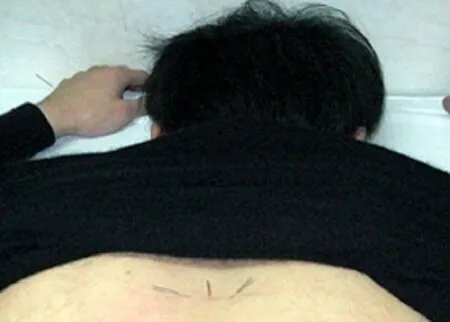
Figure 1. Acupuncture
2.1.2 Tuina therapy
With a prone lying position of the patient, the practitioner stood on one side of the patient and first applied 15 min of Gun-rolling (Figure 2), Nie-pinching (Figure 3), Rou-kneading (Figure 4) and Tanbo-plucking (Figure 5) manipulations to the back to relax the local soft tissue. Then a soft cushion was placed under the patient’s chest. Both arms of the patient were placed to each side of the treatment table. The practitioner An-pressed the spinous process of the affected vertebrae with the bases of overlapped palms. While asking the patient to breath slowly, the practitioner increased the pressure before the end of expiration and exerted a fast downward thrust. A ‘crack’ sound or a sense of mobilization often indicates a successful reduction (Figure 6).
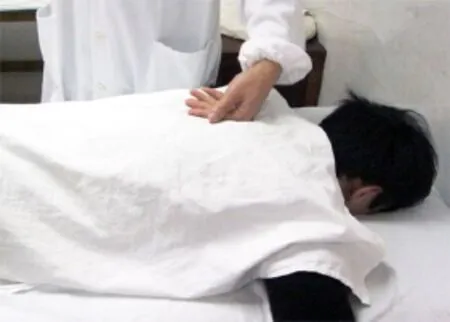
Figure 2. Gun-rolling manipulation
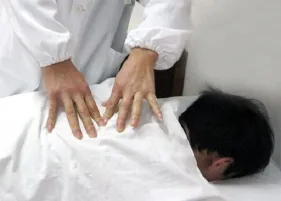
Figure 3. Nie-pinching manipulation
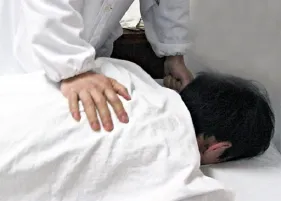
Figure 4.Rou-kneading manipulation
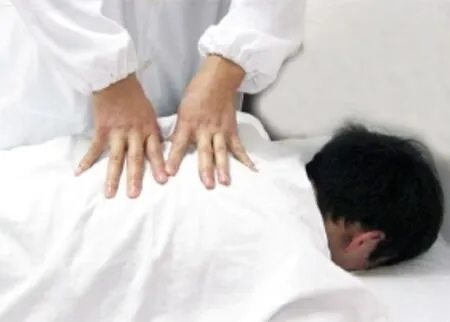
Figure 5. Tanbo-plucking manipulation
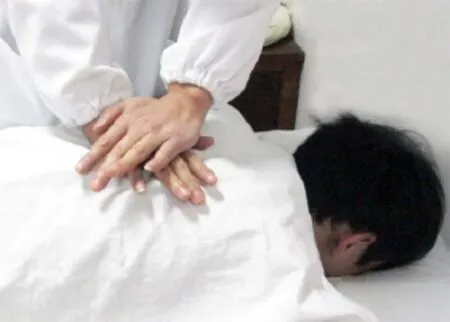
Figure 6. An-pressing for restoration
2.2 Control group
Patients in the control group only received the same tuina manipulation (method and time) as those in the observation group.
3 Therapeutic Efficacy Observation
3.1 Observation items
These included eight signs and symptoms: backache, local muscle tenderness, numbness in the shoulder/ back, flexion and extension, rotation, lateral flexion, and disturbance on work and sleep. The results were graded as none (0 point), mild (1 point), moderate (2 points) and severe (3 points). The discomfort of patients was recorded in detail.
3.2 Therapeutic efficacy criteria
The self-made therapeutic efficacy criteria were established according to the improvement rate, which was calculated Nimodipine method on the basis of scores on signs and symptoms.
Score improvement rate = (Pre-treatment score —Post-treatment score) ÷ Pre-treatment score × 100%.
Recovery: The score improvement rate ≥95%.
Marked effect: The score improvement rate ≥70% but <95%.
Improvement: The score improvement rate ≥30% but <70%.
Failure: The score improvement rate <30%.
3.3 Results
Patients in both groups completed the trial. There were no rejection cases or severe adverse reactions.
3.3.1 Between-group comparison of therapeutic efficacy
After treatment, the recovery rate in the observation group was 54.4%, versus 25.4% in the control group, showing a statistical difference (P<0.05). There was no between-group statistically significant difference in total effective rate (Table 2).
3.3.2 Between-group comparison of scores on signs and symptoms
Before treatment, there were no between-group statistical differences in the eight signs and symptoms (allP>0.05). After treatment, the scores of the eight signs and symptoms were significantly decreased in both groups (allP<0.01); and there were betweengroup statistically significant differences in scores on the eight signs and symptoms (allP<0.05).
These findings suggest that both treatment protocols can improve patients’ clinical signs and symptoms; however, acupuncture combined with tuina obtained better effects than tuina manipulation alone (Table 3).

Table 2. Between-group comparison of therapeutic efficacy (case)
Table 3. Between-group comparison in scores of signs and symptoms before and after treatment
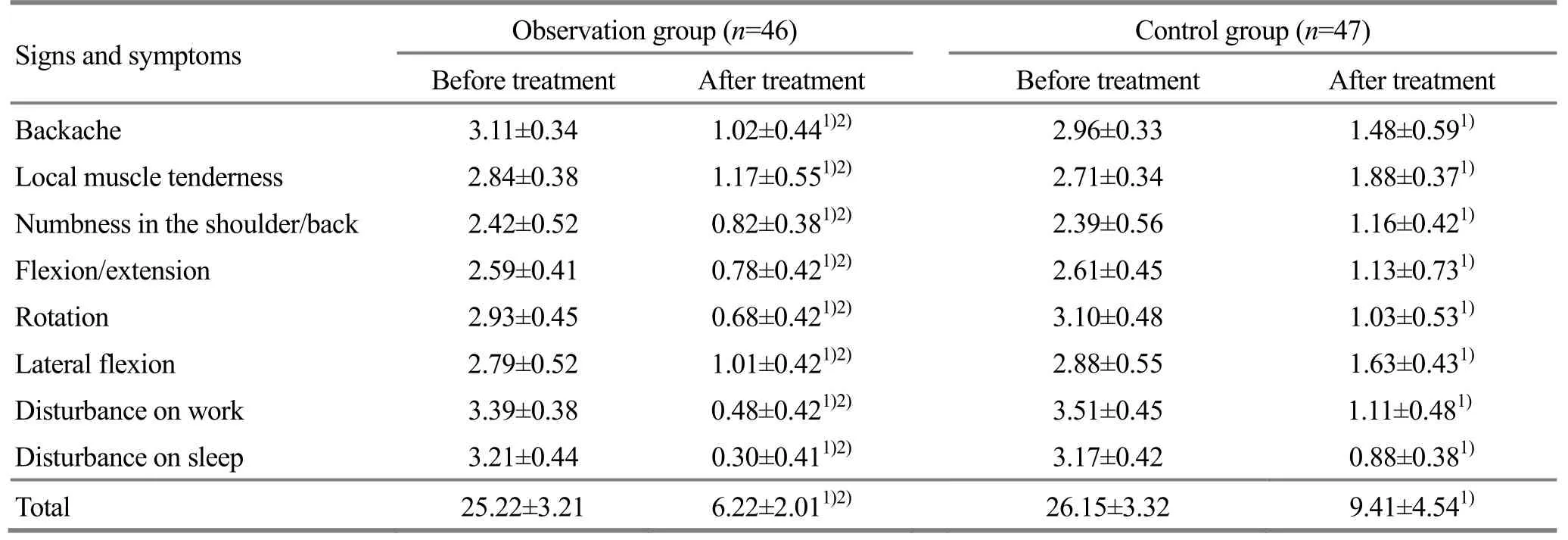
Table 3. Between-group comparison in scores of signs and symptoms before and after treatment
Note: Intra-group comparison before and after treatment, 1) P<0.01; inter-group comparison after treatment, 2) P<0.05
Signs and symptoms Observation group (n=46) Control group (n=47) Before treatment After treatment Before treatment After treatment Backache 3.11±0.34 1.02±0.441)2) 2.96±0.33 1.48±0.591)Local muscle tenderness 2.84±0.38 1.17±0.551)2) 2.71±0.34 1.88±0.371)Numbness in the shoulder/back 2.42±0.52 0.82±0.381)2) 2.39±0.56 1.16±0.421)Flexion/extension 2.59±0.41 0.78±0.421)2) 2.61±0.45 1.13±0.731)Rotation 2.93±0.45 0.68±0.421)2) 3.10±0.48 1.03±0.531)Lateral flexion 2.79±0.52 1.01±0.421)2) 2.88±0.55 1.63±0.431)Disturbance on work 3.39±0.38 0.48±0.421)2) 3.51±0.45 1.11±0.481)Disturbance on sleep 3.21±0.44 0.30±0.411)2) 3.17±0.42 0.88±0.381)Total 25.22±3.21 6.22±2.011)2) 26.15±3.32 9.41±4.541)
4 Discussion
Thoracic facet joint consists of thoracic zygapophyseal joint, capitulum costae joints and costotransverse joint[3]. Thoracic facet joint syndrome is relatively rare since the thoracic region of the spine is connected to the ribcage and secured by surrounding joint capsules, ligaments and muscles, making it relatively stable[4-5]. As a result, this condition is often overlooked. Left untreated, it may cause subluxation of the thoracic facet joint or embedding of the synovial membranes into articular surfaces, leading to aseptic inflammation of the surrounding soft tissue and clinical symptoms due to compression to intercostal or thoracic spinal nerves[6-7]. Apparently, the purpose of the treatment is to restore mechanical balance of the spine and correct subluxated position of the thoracic facet joint.
At present, conservative reduction manipulation is commonly used in both Chinese and Western medicine[8]. In this study, the recovery rate after three times of acupuncture combined with tuina manipulation was 54.4%, versus 25.4% by tuina manipulation alone. This indicates that acupuncture combined with tuina can obtain better effects than tuina manipulation alone. Tuina manipulation has long been used for thoracic facet joint syndrome. Modern studies have suggested that reduction manipulation can relax muscle tension or spams, release adhesion, improve blood circulation and metabolism and accelerate inflammation absorption[9-11]. In addition, it can mechanically restore the normal anatomical position[12-13]. As for acupuncture, it was also recorded as an effective therapy for tendon Bi-impediment syndrome[14]. In this study, the patients were first treated with needling Jiaji (EX-B 2) points, Ashi points and bilateral Houxi (SI 3). Needling Jiaji (EX-B 2) points and Ashi points can directly stimulate the nerve root, improve local blood circulation and metabolism and accelerate inflammation absorption[15-16]. Houxi (SI 3), one of the Eight Confluent points with the Governor Vessel, is a key point for pain along the spine[17].
In summary, acupuncture combined with tuina manipulation can restore normal anatomical position of subluxated thoracic facet joint, improve local blood circulation and metabolism, accelerate inflammation absorption, relieve compression to spinal and sympathetic nerves and thus alleviate clinical signs and symptoms.
Conflict of Interest
The authors declared that there was no conflict of interest in this article.
Statement of Informed Consent
Informed consent was obtained from all individual participants included in this study.
Received: 19 January 2015/Accepted: 23 February 2015
[1] Pan ZQ. Principle and Practice of Spine-related Disorders, Jinan: Shandong Science & Technology Press, 1996: 858-860.
[2] Song BL. Tuina Therapeutics. Beijing: People’s Medical Publishing House, 2007: 27-30.
[3] Hw HY, Deng YZ. Modern Diagnosis & Treatment of Traumatology. Beijing: People’s Medical Publishing House, 2002: 412-413.
[4] Hu Z, Li ZJ. Anatomical features of thoracic facet joint disorder. Zhongguo Baojian Yingyang, 2013, 23(2): 552.
[5] Zhou DH. Rotary-pressing reduction in a prone position for thoracic facet joint disorder. Zhongyi Zhenggu, 2014, 26(12): 50-51.
[6] Cao C, Zhan Q, Zhou X, He JY, Han JS, Wang R. Clinical observation on 3-D fixed reduction for thoracic facet joint disorder. Yunnan Zhongyi Xueyuan Yuanbao, 2014, 37(4): 39-41.
[7] Qu JP, Deng WZ, Fan BH. Professor Fan Binghua’s experience in treating thoracic spinal little joints disorder by manipulation of embracing cervical and extracting chest. Zhejiang Zhongyiyao Daxue Xuebao, 2014, 38(2): 150-152.
[8] Zhan HS, Shi YY, Zhang MC, Wang X, Huang SR. New diagnostic and treatment concepts of pathogenesis of intervertebral disc diseases. SHJTCM, 2007, 41(9): 4-6.
[9] Chen TC, Chen Y, Wang SX. Clinical observation of acupuncture combined with massage manipulation on treating facet joint disorder. Sichuan Zhongyi, 2013, 31(9): 128-130.
[10] Fu HL, Zhang L. Modified reduction manipulation for 68 cases with thoracic facet joint disorder. CJGMCM, 2012, 27(11): 2265-2266.
[11] Li WD, Xu HQ, Qiu HS. Tuina is superior to electroacupuncture in treating thoracic facet joint disorder. J Acupunct Tuina Sci, 2013, 11(6): 375-379.
[12] Wang SQ, Zhu QG, Lin YF. Clinical observation on fine adjustment manipulation for 80 cases with thoracic facet joint disorder under traction in a prone position. Hubei Zhongyiyao Daxue Xuebao, 2010, 12(6): 60-61.
[13] Shi NN, Shen GQ, Zhang XL, He SY. Holistic view of Chinese spinal manipulation and its clinical application. J Acupunct Tuina Sci, 2009, 7(5): 288-292.
[14] Chen TC, Chen Y, Wang SX. Clinical observation on needling Jiaji points combined with tuina for thoracic facet joint disorder. Shanghai Zhenjiu Zazhi, 2012, 31(10): 750-751.
[15] Sun LJ, Li X, Xue MM, Tan YQ. Characteristics of acupuncture therapy from its analgesic effect experiment. Zhongyiyao Daobao, 2012, 18(6): 81-82.
[16] Chen TC, Zhang SQ, Wang SX. Research advance in thoracic facet joint disorder. Shaanxi Zhongyi, 2012, 33(7): 927-929.
[17] Ji DS. Treatment advance in thoracic facet joint disorder. Neimenggu Zhongyiyao, 2014, 33(4): 118-119.
Translator:Han Chou-ping (韓丑萍)
針刺聯(lián)合推拿手法治療胸椎小關(guān)節(jié)紊亂的臨床觀察
目的:觀察針刺聯(lián)合推拿手法治療胸椎小關(guān)節(jié)紊亂的臨床療效。方法:選取符合胸椎小關(guān)節(jié)紊亂診斷標(biāo)準(zhǔn)的患者93例, 按就診先后順序隨機(jī)分為觀察組和對(duì)照組。觀察組46例予以針刺聯(lián)合推拿手法治療, 對(duì)照組47例予以單獨(dú)推拿手法治療。每日治療1次, 治療3次后, 以患者的癥狀及體征積分作為觀察指標(biāo), 進(jìn)行臨床療效評(píng)價(jià)。結(jié)果:治療后, 兩組患者8個(gè)癥狀或體征積分均與本組治療前有統(tǒng)計(jì)學(xué)差異(均P<0.01); 兩組間評(píng)分差異亦均有統(tǒng)計(jì)學(xué)意義(均P<0.05)。治療3次后, 觀察組治愈率為54.4%, 對(duì)照組為25.4%, 兩組治愈率差異有統(tǒng)計(jì)學(xué)意義(P<0.05)。結(jié)論:針刺聯(lián)合推拿手法治療胸椎小關(guān)節(jié)紊亂療效優(yōu)于單獨(dú)推拿手法治療, 值得臨床推廣。
針刺療法; 推拿; 按摩; 整脊療法; 胸椎; 穴, 夾脊
R246.2 【
】A
Author: Zhou Guang-ming, bachelor, attending physician.
E-mail: zgmzhentui@126.com
Results:After treatment, there were intra-group statistically significant differences in scores of eight signs and symptoms (allP<0.01); and the between-group differences were statistically significant in scores of eight signs and symptoms (allP<0.05). After three times of treatment, the recovery rate in the observation group was 54.4%, versus 25.4% in the control group, showing a statistical significance (P<0.05).
Conclusion:Acupuncture combined with tuina manipulation can obtain better effects than tuina manipulation alone for thoracic facet joint disorder and is therefore worth further clinical application.
猜你喜歡
中國(guó)民間療法(2021年1期)2021-04-20 02:30:34
基層中醫(yī)藥(2021年7期)2021-03-26 18:00:27
中華養(yǎng)生保健(2020年1期)2020-11-16 00:47:38
中國(guó)中醫(yī)急癥(2019年10期)2019-05-21 07:20:30
中國(guó)醫(yī)藥指南(2017年3期)2017-11-13 02:57:31
中國(guó)康復(fù)理論與實(shí)踐(2015年10期)2015-12-24 05:42:46
中醫(yī)研究(2014年8期)2014-03-11 20:29:23
中醫(yī)研究(2014年6期)2014-03-11 20:29:02
中國(guó)醫(yī)學(xué)科學(xué)院學(xué)報(bào)(2014年6期)2014-03-11 20:26:14
中國(guó)中醫(yī)藥現(xiàn)代遠(yuǎn)程教育(2014年17期)2014-03-01 04:29:28
 Journal of Acupuncture and Tuina Science2015年4期
- Journal of Acupuncture and Tuina Science的其它文章
- Clinical observation on collateral-pricking and cupping therapy plus moxibustion for localized neurodermatitis
- Therapeutic observation of superficial needling for hemifacial spasm
- Observation on therapeutic effects of acupuncture plus Chinese herbs for sudden deafness
- Clinical study on abdominal acupuncture for osteoporotic vertebral compression fracture
- Effect observation on heat-sensitive moxibustion for cervical spondylosis of vertebral artery type
- Observation on clinical effects of herbal cake-partitioned moxibustion for knee osteoarthritis