魅力漢字
2015-03-24 03:10:48
漢語世界 2015年3期
魅力漢字
ON THE CHARACTER
Del v i n g i n t o the an nals of l in g ui sti c s t o fin d c reat ivi ty i n catastro phe
創新的過程從來都不是一帆風順, 從挫折中汲取力量才能到達全新的彼岸
Whether you’re a writer, an artist, an entrepreneur, or any one of the thousands of jobs in the world that require imaginative solutions, creativity, or 創造力(chuàngzàolì), is what drives many of us forward. However, staying creative—in light of all the self-doubt, criticism, and hard work—is no easy task. It involves drawing the status quo into question and actively destroying preconceptions, often at great personal risk. This vantage point puts us in a better position to tackle one very special character: 創. It’s a character that means both “to start something new” and “wound or trauma”, with a slight variation in tone. With its dual meanings, the character for creation signi fi es the arduous journey endemic in creating something entirely new.
To create, you have to suffer fi rst. Judging by the evolution of the written form, we know that the character 創, meaning “wound”, appeared much earlier than the one for creativity. More than three millennia ago, it fi rst appeared in the form of bronze script. Some have posited that the script’s pattern indicates a person lying on the ground with incisions on the limbs; others claim it’s actually a blade dripping with blood.
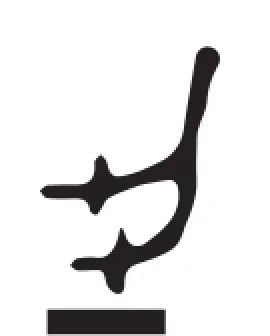
BRONZE SCRIPT
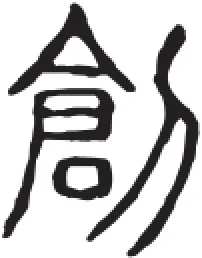
SEAL SCRIPT
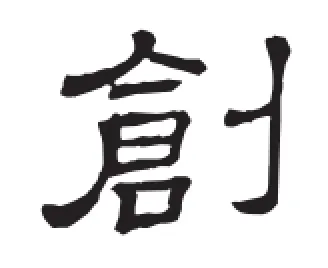
CLERICAL SCRIPT
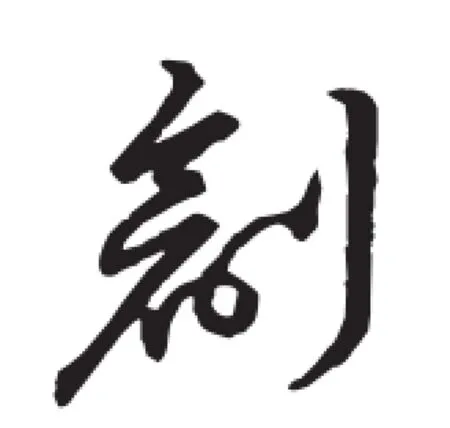
CURSIVE SCRIPT
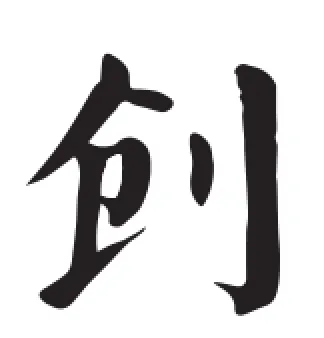
REGULAR SCRIPT
Either way, its original de fi nition was not debatable, meaning “to cut wounds”. As the character developed, the original pattern was simpli fi ed and became a radical, and at the same time another radical, 倉 (cāng), was added on its left to denote pronunciation. The end result is創, the traditional form of the character創. When it refers to “wound” as a noun, the fi rst tone (chuāng) is used.
Many words and phrases rely on the character, and all relate to its painful origins. 創口 (chuāngkǒu, wound) is a word you will most likely hear from surgeons, and when discussing a surgery, you may want to choose a plan of action that uses the least invasive techniques, which is 微創 (wēichuāng). Surgeons refer to surface wounds as 創面 (chuāngmiàn) when they are discussing its cleaning or healing.
Of course, the character does not just refer to physical wounds, but also psychological or emotional trauma. For instance, the word 創傷 (chuāngshāng) can mean both physical and psychological injury. For instance, “戰爭給人們的心靈留下了深深的創傷 (Zhànzhēng gěi rénmen de xīnlíng liú xià le shēnshēn de chuāngshāng)” means“War leaves deep wounds in people’s hearts.” To refer to the pain and suffering caused by such injuries, use the word 創痛 (chuāngtòng). The meaning of “wound”also expands to include setbacks on other general matters. For example, when the economy takes a hit, we say 經濟受創(jīngjì shòuchuāng); when one’s career is on the rocks, it’s 事業受創 (shìyè shòuchuāng); and when someone’s ego gets hurt, we can even say 自尊心受創 (zìzūnxīn shòuchuāng).
創 also means “to start something new”, and when it’s used as a verb, the fourth tone (chuàng) is used. Originally, this meaning belonged to the character刱 with the same pronunciation. But the former became immensely more popular in daily usage, so much so that the character was rendered obsolete.
創造 (chuàngzào), or “to create”, is the word you want to remember when describing creation on a grand scale, such as in 創造文明 (chuàngzào wénmíng, to create a civilization), 創造歷史 (chuàngzào lìshǐ, to create history), 創造紀錄 (chuàngzào jìlù, to set a record), and even 創造奇跡 (chuàngzào qíjì, to create a miracle). For something speci fi c, it depends on what you are creating. If it’s literature or art, use 創作 (chuàngzuò); if it’s a publication, use 創刊 (chuàngkān); and if it’s to establish a school, a company, or an organization, use創辦 (chuàngbàn), with the founder of the organization being 創始人 (chuàngshǐrén). To start a website, use the word 創建 (chuàngjiàn) and to create a new school of thought or a new theory, use 創立 (chuànglì). But, this is not to be confused with 創利 (chuànglì), which means “to create a pro fi t”. To do that, we have to start an enterprise fi rst, which is 創業 (chuàngyè). Entrepreneurs are actually 創業者 (chuàngyèzhě). With all this in mind, it should be clear that the subject at hand decides what verb should be used.
We celebrate and appreciate genuine creativity and out-of-the-box thinking; the word 創意 (chuàngyì) represents just that,“a brand new concept or fresh ground”, often in an artistic sense. In the modern world where technology grows ever more integrated, 創新 (chuàngxīn), or “to bring forth new ideas”, is often heard in regard to science and technology. In a world of innovation, the route to the unprecedented is the quickest to success; it’s the best way to ensure that your idea will be an 創見(chuàngjiàn, original idea) and your work will be 創舉 (chuàngjǔ, pioneering work). What are you waiting for? Set your mind free and go to be creative, it’s the easiest and most painful thing in the world.
— BY HUANG WEIJIA (黃偉嘉) AND LIU JUE (劉玨)