
Preliminary research on the design of flexible barriersfor debris flow
2014-09-05 05:47:37HuanZHANGLizhouZHANG
機床與液壓 2014年6期
Huan ZHANG,Li-zhou ZHANG
1School of Civil Engineering and Geosciences,Newcastle University,Newcastle upon Tyne,United Kingdom;2Changzhou Rail Transit Development Co.,Ltd.,Changzhou 213000,China;3Chongqing Survey Institute,Chongqing 400020,China
Preliminaryresearchonthedesignofflexiblebarriersfordebrisflow
Huan ZHANG?1,2,Li-zhou ZHANG3
1SchoolofCivilEngineeringandGeosciences,NewcastleUniversity,NewcastleuponTyne,UnitedKingdom;2ChangzhouRailTransitDevelopmentCo.,Ltd.,Changzhou213000,China;3ChongqingSurveyInstitute,Chongqing400020,China
Rigid barriers,including check dams,steel cells and retaining walls,are widely utilized for debris flow mitigation.It has to be said that these rigid structures are generally effective and technical feasible.However,with the enhancement of environmental awareness and innovative materials,flexible barriers have been being created which are very engineering effective,environmental friendly,material saving as well as easy construction in rugged terrain.Although the merits of such structures are summarized in above,the understanding of such barriers are very limited.Most of constructions are just on the basis of engineering experience and largely depend on the factor of safety to eliminate the uncertainties.In this paper,method for debris flow dynamics calibration and conventional ideas for the design of flexible barriers will be illustrated and an advanced method- finite element will be used to analyze the debris flow.
Mitigation measures,Dynamic characteristics,Conventional ideas,FEM
1.Background
Because of the aggressive demand of land,hilly terrain has to be excavated by human beings for their activities.Nevertheless,excessive excavation upsets the inner stress balance within slopes and leads to the failure of slopes.It should be emphasized that the slope problems,like debris flow,frequently occur in highly developed cities and cause heavy fatalities and economic loss.Combining with rugged terrain,redundant rainfall and human disturbance,debris flow can be easily triggered and aggravated by seismic effect.In this paper,the measures used for debris flow mitigation will be illustrated,focusing on the methodologies for dynamic features calibration and design of flexible barriers.
2.Mitigation measures
In serious with the heavy results,effective measures have been being created as to lower the damage of debris flow.In light of the performance of mitigation measures,two types of barriers are characterized,such as rigid barriers as well as flexible barriers.Specifically,rigid barriers take the advantage of their own weight and strength to resist the impact of debris flow,including check dams,steel cells as well as retaining walls.While flexible barriers are mainly consisted of high strength steel meshes which can be applied to absorb the dynamic impact of debris flow and inside boulders and then pass it to the ground with the help of their well deformable performance.
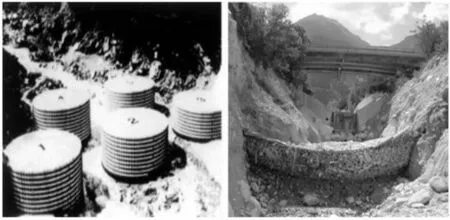
Figure 1.Steel cells and flexible barriers[1]
3.Previous research on the dynamics
In order to specify the design of barriers,dynamic impact of debris flow and inside boulders should be identified.Thus,the dynamic characteristics of debris flow are extensively researched during the past years.Numerous fluid models,including Bingham viscous fluid model[2]and Bagnold dilatant fluid model[3],were carried out and improved gradually to depict the moving behavior of debris flow,but most of fluid models for the description of debris flow merely regard debris moving mass as an one-phase fluid with continuous and isotropic characteristics assumption.Subsequently,multi-phase fluid models[4-6] with the consideration of anisotropic and non-homogenous features of debris moving mass are put forward.On the other hand,the dynamic characteristics (volume,velocity,peak discharge,thickness) of debris flow are also highly studied[7-8].Owing to the complicated moving mechanism of debris moving mass,such characteristics are very difficult to estimate.Therefore,empirical equations have been carried out on the basis of local data as well as laboratory results.
To be more specific,the Newtonian fluid model assumes that the laminar plain of water within the debris flow and the shear stress subjected by debris flow is proportional to the rate of strain linearly with the adjustment of dynamic viscosity.While,as a typical Non-Newtonian fluid model,Bingham fluid model performs non-linear to the shear rate,the threshold stress,yield stress and dynamic viscosity coefficient play the vital roles.Last but not the least,the collision effect is taken into account within the Bagnold dilatant fluid model and numerous tests were conducted as to further understand the collision of coarse granular and inside boulders.
Newtonian fluid model:
Bingham fluid model:
Bagnold dilatant fluid model:
Where,τis the shear stress subjected by debris moving mass;μis the dynamic viscosity coefficient;τyis the yield stress;ηis the rigidity modulus;K2is a collision coefficient;nis a parameter to affect the shear rate.
Besides,the debris moving mass is also studied in a microscopic way,such as the initiation research of debris flow.Meanwhile,element analysis for coarse and fine granular within the debris flow were carried out to depict the initiation mechanism of them where the debris flow will initiate if the motivation overrides the value of resistance (shown in Figure 2 for coarse granular debris flow).With this idea,discrete element analysis (DEM) is also applied to emulate the particles within the debris flow and the whole debris moving mass[6,9].

Figure 2.Element analysis of debris flow initiation
Motivation:
τ=(γ′h′S′+γwh)sinθ
Resistance:τ|τf
Initiation condition:

Besides the research of initiation and moving mechanism of debris flow,the ideas applied to calibrate the impact of debris flow and inside boulders have been also carried out.In the practice of engineering and research,the impact of debris flow can be calibrated within the force framework and energy framework currently.For the force framework,the impact of debris flow is sub-divided into dynamic impact of debris flow and boulders as well as the static impact of debris moving mass when deposition.Every part of them can be estimated by relevant equations[10],but the most important point for this framework is the estimation of dynamic impact of debris flow,numerous equations can be found with different modification coefficient to fit local conditions.Due to the regional characteristics of such equations,the adaptability of those empirical equations for estimation does not work for sometimes.However,the energy framework makes full use of the idea from the theorem of kinetic energy which just regards the debris flow as a one-phase moving mass and takes the weight and velocity of debris flow into consideration to calibrate the dynamic impact of debris flow,then for the design of barriers.
4.Conventional method for design
The guidance for the barrier design in service are mostly derived from the idea of force framework,including National Debris Flow Disaster Prevention Standard (DZ/T0239-2004) of CGS Report[11]and GEO Report No.270 which detailedly demonstrate the sequences and tricks for the design of rigid barriers of both China and Hong Kong.But as to the energy framework,the impact of debris flow is considered as one subject,the dynamic energy- the impact of debris flow can be estimated by the mass gravity and velocity exerting on the barriers.On account of the complicated moving mechanism of debris flow,factor of safety is quite necessary as to ensure the safety of barriers with the ignorance of gully friction and granular collision.Besides,the reflection of flexible barriers after impact is also ignored during the design because of its variable and quite unforeseeable.To put it simply for the design of flexible barriers,the manufactures will give out the limit strength of barriers in a project,and we just need to ensure the limit strength of flexible barriers system override the impact of debris flow with the consideration of safety factor.
Although the force framework seems perfect for the design of rigid barriers and it seems that energy framework performs well for the flexible barriers,the mechanic mechanism of flexible barriers is still unclear and more accurate analysis is required as to further optimize the design of flexible barriers which needs to take advantage of numerical analysis.
5.Advanced methods for design
As to optimize the conventional design for flexible barriers,the impact of debris moving mass should be recognized more clearly.Thus,numerous methodologies are applied for the sake of dynamic characteristics identification except for those empirical equations.
In recent years,numerical tools could give a more approximate estimation,in which the boundary and size effects can be taken into consideration properly.This condition also happens for the research of debris flow dynamics.The 2008 Yu Tung Road debris flow of Hong Kong and a laboratory flume test were both emulated successfully by LS-DYNA-a 3D finite element analysis software[12].With such technology,the mobility assessment of debris flow can be accurately performed,with the acknowledgement of the velocity,volume,thickness and travel distance.At the same time,the data of field observation are collected in order to improve the input parameters for numerical analysis.

Figure 3.Mobility simulation of debris flow by LS-DYNA
Wendeler[1] used the FARO (a finite element analysis software) to perform the assessment of flexible barriers and suggested how to determine the ring net mesh based on numerical results.Meanwhile,some researchers have been undergoing the numerical models to do more accurate structural assessment for flexible barriers.The biggest challenge for the design is to describe the reaction of barriers when loading.On the aspect of interaction simulation,the numerical software (like FARO) can assess the performance of each component of flexible barriers and give clear guidance for the further structural design.For more details,Chan et al[13] analyzed the large deformation and sliding node action of ring net works.Due to the non-linear behavior of such structures,Chan also created a special non-linear cable element and a sliding cable element to match the real behavior of brake rings as well as net rings of flexible barriers systems,respectively.
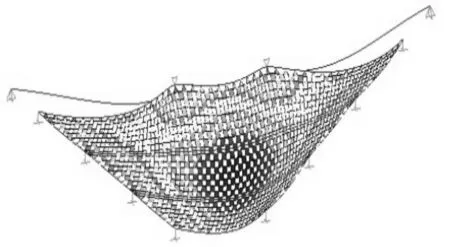
Figure 4.Stress within the flexible barriers when loading
With this powerful analysis method,the stress and strain within the flexible barriers could be characterized clearly which is constructive for the structural analysis and design for flexible barriers except for the empirical method.
6.Discussion
In this paper,the methodologies for the identification of debris flow dynamics are reviewed and conventional as well as advanced approaches for the debris flow mobility assessment are also introduced,which is very effective and feasible if dependable parameters could be available.In respect to the design of flexible barriers,the traditional approaches and numerical modeling of flexible barriers has also been presented in this paper and briefly discussed.While the design of the flexible barrier is yet to be realized because of the unforeseeable load value and pattern as well as the random deformable characteristics of ring net works.Thus,the future works for the design of flexible barriers will be focused on the mobility simulation and interaction analysis.
[1]Wendeler C,Volkwein A,Roth A,et al.Hazard Prevention Using Flexible Multi-Level Debris Flow Barriers[C]//Proc.of Int.Symp.Interpraevent.1: 547-554.
[2]Bingham E C.Fluidity and plasticity[M].New York: McGraw-Hill,1922.
[3]Bagnold R A.Experiments on a gravity-free dispersion of large solid spheres in a Newtonian fluid under shear[J].Proceedings of the Royal Society of London.Series A.Mathematical and Physical Sciences,1954,225(1160): 49-63.
[4]Chen H K,Tang H M.Method to Calculate Impact Force and Impact Time of Two-Phase Debris Flow[J].China Journal of Highway and Transport,2006(3).
[5]Chen H,Tang H,Chen Y.Research on method to calculate velocities of solid phase and liquid phase in debris flow[J].Applied Mathematics and Mechanics,2006,27: 399-408.
[6]Takahashi T.Debris flow: mechanics,prediction and countermeasures[M].Psychology Press,2007.
[7]Berti M,Simoni A.Prediction of debris flow inundation areas using empirical mobility relationships[J].Geomorphology,2007,90(1): 144-161.
[8]Jiang S,Wen B P.Comparison of methods used at home and abroad to estimate the key parameters of a debris flow[J].Hydrogeology and Engineering Geology,2012,39(3).
[9]Zhou G G D,Ng C W W.Numerical investigation of reverse segregation in debris flows by DEM[J].Granular Matter,2010,12(5): 507-516.
[10]Geotechnical Engineering Office.Supplementary technical guidance on design of rigid debris-resisting barriers(GEO Report No.270)[R].GEO,2012.
[11]China Geological Survey.Specification of geological mitigation and design for debris flow stability (DZ/T0239-2004)[R].China Geological Survey,2004: 10-14.
[12]Yiu J,Huang Y L,Pappin J,et al.Landslide mobility and flexible barrier numerical modelling using LS-DYNA[J].Proceeding of the AGS (HK)’s 1-Day CPD Seminar on Natural Terrain Hazard Mitigation Measures,Hong Kong,2012.
[13]Chan S L,Zhou Z H,Liu Y P.Numerical analysis and design of flexible barriers allowing for sliding nodes and large deformation effects[C].Proceeding of the AGS (HK)’s 1-Day CPD Seminar on Natural Terrain Hazard Mitigation Measures,Hong Kong,2012.
2013-10-29
? Huan ZHANG,E-mail:28745035@qq.com
10.3969/j.issn.1001-3881.2014.06.001

- 機床與液壓的其它文章
- Investigation of helical ball micro milling with variable radial immersion*
- Numerical simulation of the double suction balance type screw compressor working process*
- Parameter optimization of electro-hydraulic proportionalsystem of PID based on the improved ant colony algorithm
- Flying cutter machining and cutter design based on the machining principle of cycloid rotational indexing
- Simulation of multi-modal control in electro-hydraulicposition servo-system*
- Optimal design and security verification of flying cutterbased on finite element analysis