海洋共生菌Aspergillus sp. HDf2新活性次生代謝產物研究
2014-04-29 21:24:40王蓉等
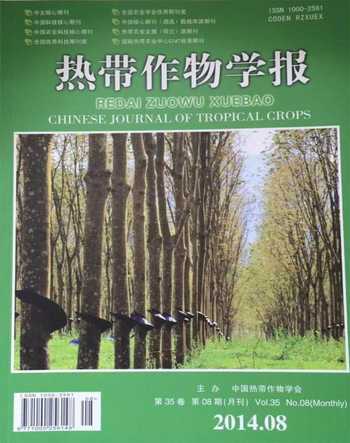
熱帶作物學報 2014年8期
王蓉等
摘 要 對紫海膽共生真菌Aspergillus sp. HDf2的次生代謝產物進行分離和鑒定。采用搖瓶液體發酵,運用柱層析等方法對其發酵液成分進行分離純化,經波譜解析和質譜分析進行結構鑒定,并運用濾紙片法對化合物進行體外抗金黃色葡萄球菌的活性測試。結果從該真菌發酵產物中鑒定出2個secospiculisporic acid新類似物,分別為secospiculisporic acid B(1)和secospiculisporic acid C(2),其中化合物1具有弱抗菌活性,抑菌直徑為9.2 mm(20 mg/mL)。首次對化合物1的NMR數據進行了歸屬,化合物2為secospiculisporic acid類的新化合物。
關鍵詞 曲霉菌;海洋真菌;secospiculisporic acid;抗菌活性
中圖分類號 O629.9 文獻標識碼 A
Marine-derived fungus is a rich source of structurally diverse, and/or biologically active metabolites, such as antibacterial, anticancer, and antiviral natural products[1]. A growing body of natural product research is focusing on the secondary metabolites of endophytic fungi, a considerable number of which show biological and pharmacological properties, derived from mangrove[2-3], and marine animals[4-8]. In our ongoing search for new bioactive secondary metabolites from marine-derived fungi, a strain of Aspergillus sp. HDf2 was isolated from Anthocidaris crassispina, and three new γ-butenolide derivatives, named spiculisporic acids B~D, were isolated from the EtOAc extract of its fermentation broth in the previous study[7]. Further chemical analysis of the secondary metabolites produced by the fungus led to two unreported secospiculisporic acid derivatives, secospiculisporic acid B(1)and secospiculisporic acid C(2)(Fig. 1), the structures of which were confirmed by means of spectroscopic methods and HR-ESI-MS. Herein we reported the isolation and structure determination of compounds 1 and 2, and the antibacterial activity of compound 1.
1 Materials and Methods
1.1 Instruments and Materials
Optical rotations were recorded on a Rudolph Autopol III polarimeter. UV spectra were recorded on a Hitachi U-3000 spectrophotometer, and IR spectra(KBr)were obtained on a Nicolet 380 FT-IR spectrometer. NMR spectra were recorded on Bruker DRX500 and AVIII-500 spectrometers at 500 MHz for 1H-NMR and at 125 MHz for 13C-NMR, and Bruker DPX300 spectrometer at 300 MHz for 1H-NMR and at 75 MHz for 13C-NMR. Chemical shifts are given in δ(ppm)and referenced to the solvent signal(acetone-d6, δH 2.05, δC 29.8; methanol-d4, δH 3.31, δC 49.1)as the internal standard, and coupling constants(J)are reported in Hz. HR-ESI-MS spectra were acquired on an Agilent 6210 TOF LC/MS mass spectrometer. Silica gel(200-300 mesh)for column chromatography(CC)and silica GF254(10~20 mm)for TLC were obtained from Qingdao Marine Chemical Factory(Qingdao, China). Sephadex LH-20 for chromatography was purchased from Merck(Darmstadt, Germany). Semipreparative HPLC was performed on a Hitachi L-7110 pump, and UV detector L-7400 (Waters ODS column, 5 μm, 250 mm×4.6 mm).
1.2 Cultivation, extraction and isolation
The fungus Aspergillus sp. HDf2 was isolated from Anthocidaris crassispina, collected from the seashore of Qionghai(Hainan, China), and cultivated on MEA solid medium(20 g malt extract, 20 g sucrose, 1 g peptone, 20 g agar, 1 L deionized water, pH 7.0)for 5 days at 28 ℃. Fermentation was carried out in Erlenmeyer flasks, each containing 300 mL of ME liquid media, on a rotary shaker(140 r/min)for 12 days at 26 ℃.
The filtrate(10 L)of the fermented culture broth was extracted three times with EtOAc(3×10 L)at room temperature, and the organic solvent was concentrated under reduced pressure to afford a crude extract(2.7 g). The crude extract was separated by silica gel(27 g, 200-300 mesh)CC(4 cm×90 cm)eluted with a gradient of CHCl3-MeOH(V/V 100 ∶ 0, 100 ∶ 1, 100 ∶ 2, 100 ∶ 4, 100 ∶ 8)to obtain five fractions. Fraction 4(455.7 mg)was subjected to Sephadex LH-20 CC(3 cm×50 cm)eluting with MeOH(500 mL), then by ODS CC(2.5 cm×40 cm)with a gradient of MeOH-H2O(V/V 50 ∶ 50, 65 ∶ 35, 70 ∶ 30, 80 ∶ 20, 100 ∶ 0, each 400 mL). The subfraction 4(52.2 mg)was purified by semipreparative reversed-phase HPLC[2 mL/min; MeOH-H2O, V/V 78 ∶ 22(+0.1% TFA)]to obtain 1(14.2 mg, tR=23.9 min). Compound 3 was isolated from a fraction by semipreparative reversed-phase HPLC in the previous research[7]. The methanol solution of compound 3 was stored at about 34 ℃ in one month, in which compound 2 was identified by NMR and MS technology.
Secospiculisporic acid B(1)
White amorphous powder;[α]26D 9.5(c 0.035, EtOH); UV(MeOH)λmax: 215 nm; IR(KBr)νmax: 3 465, 2 914, 2 848, 1 690, 1 413, 1 256, 941 cm-1; 1H and 13C NMR spectral data: see Table 1. HR-ESI-MS: m/z 383.204 5[M+Na]+(calculated for C18H32O7Na, 383.204 0).
Secospiculisporic acid C(2)
White amorphous powder(mixture with spiculisporic acid C); 1H and 13C NMR spectral data: see Table 1. HR-ESI-MS: m/z 383.205 4[M+Na]+(calculated for C18H32O7Na, 383.204 0).
1.3 Antibacterial test
The in vitro antibacterial activity against S. aureus ATCC51650 was evaluated by the filter paper disc agar diffusion method as described in our previous paper[7].
2 Results
Secospiculisporic acid B(1)was obtained as a white amorphous powder. Its molecular formula was established as C18H32O7 by ESI high-resolution mass spectrometry([M+Na]+ at m/z 383.204 5, calculated 383.204 0)and one dimension NMR spectral data(Table 1). Its 1H and 13C NMR, DEPT, and HMQC spectra revealed the presence of three carbonyl carbons including two carboxyl groups, eleven aliphatic methylene groups, two methyl groups(including one oxygenated), one methine carbon and one oxygenated quaterbary carbon. The structural information for 1 was determined by 1H-1H COSY and HMBC spectra(Fig. 2). The 1H-1H COSY experiment revealed a correlation between CH2-2(δH 2.49, 2.20)and CH2-3(δH 2.20, 2.02), and a seperate spin system, H3C-CH2-(CH2)7-CH2-CH-. The correlations between the methylene proton H-6a(δH 1.89), H-5[δH 2.76(dd, J=10.4, 2.6 Hz)]and H-7(δH 1.20~1.46)were also observed. Key HMBC correlations from H-5 to C-4(δC 77.7)and two carbonyl carbons(δC 175.1 and 174.5), from H2-3 to C-1(δC 173.6), C-4, and one of the carbonyl carbons(δC 175.1), and from H2-2 to C-1 and C-4, were observed. The HMBC spectrum showed a strong correlation between the oxygenated methyl protons(δH 3.62)and the carbonyl carbon at δC 173.6, indicating the position of the methoxyl group. Thus, these observations allowed the planar structure of 1 to be determined as shown in Fig. 1. Interestingly, the structure of 1 is the same as a compound with a CAS registry number 1136521-37-3, but no any mentioned information including the detailed physical data has been reported.
Secospiculisporic acid C(2)was isolated as a mixture with spiculisporic acid C(3)(the ratio is 1 ∶ 1). In its positive-mode HR-ESI-MS, a[M+Na]+ ion peak at m/z 383.205 4 was found, indicating its molecular formula to be C18H32O7, which was the same as that of 1. The 1H and 13C NMR spectra of 2 showed very similar features to those of 1, except for the different chemical shifts of an oxygenated methyl group(δC 53.0, δH 3.75). In the HMBC spectrum, there is a strong correlation between the oxygenated methyl protons and the carbonyl carbon at δC 175.2, which was correlated with H2-3(δH 2.21, 2.00)and H-5[δH 2.70(br d, J=10.5 Hz)], thus indicating the position of the methoxyl group. Unambiguous assignments of 1H and 13C NMR data of 2 were obtained by comprehensive analyses of HSQC, 1H-1H COSY, and HMBC spectra(Fig. 2), confirming the structure for 2 as shown.
Given the close structure between compounds 1, 2 and spiculisporic acid C(3), they could be the biogenetically hydrolyzed products of 3, or artifacts of the isolation process. Therefore, the structures of compounds 1 and 2 were determined, and named secospiculisporic acid B and C, respectively.
Compound 1 was tested in vitro for its antibacterial activity against S. aureus ATCC51650 using filter paper disc agar diffusion method. The result showed that it displayed weak inhibitory activity with inhibition zone of 9.2 mm at 20 mg/mL, while the diameter of inhibition zone of the positive control(streptomycin sulfate, 20 mg/mL)was 23.6 mm.
3 Discussions
Marine-derived fungi, living in a stressful habitat, are of great interest as important promising sources of bioactive natural products. Recently, a growing number of bioactive molecules have been isolated from marine fungi, such as spirobisnaphthalenes[9], hepatocellular carcinoma cycle inhibitory cyclodepsipeptides[10], new peptaibols exhibiting antimicrobial activity against environmental bacteria isolated from the Mediterranean coast of Israel[11], tryptoquivalines and meroditerpenes showing antibacterial and antibiofilm activities[12]. During our continuing search for new bioactive secondary metabolites from fungi associated with marine animals, two unreported secospiculisporic acid derivatives, secospiculisporic acid B(1)and secospiculisporic acid C(2), were identified. Their antibacterial effects against human pathogenic strain, Staphylococcus aureus, were observed in this study. However, they showed weaker activities than the previously isolated γ-butenolide derivatives, spiculisporic acids B-D[7]. The bioactive effect may be associated with the γ-butenolide moiety. Once the ester group of the γ-butenolide moiety is hydrolyzed, the antibacterial activity against Staphylococcus aureus will be cut down. Yet in previous studies, it is believed that the active metabolite is not the lactone but the hydrolyzed[13-14]. For the structure-activity relationship of these isolated compounds, it is needed to perform more biological assays, and further scale-up isolation of targeted molecules are in progress.
References
[1] Rateb M E, Ebel R. Secondary metabolites of fungi from marine habitats[J]. Nat Prod Rep, 2011, 28(2): 290-344.
[2] Mei W L, Zheng B, Zhao Y X, et al. Meroterpenes from endophytic fungus A1 of mangrove plant Scyphiphora hydrophyllacea[J]. Mar Drugs, 2012, 10(9): 1 993-2 001.
[3] Zheng B, Zeng Y B, Dai H F, et al. Two new meroterpenes from endophytic fungus A1 of Scyphiphora hydrophyllacea[J]. J Asian Nat Prod Res, 2012, 14(8): 776-779.
[4] Li D, Xu Y, Shao C L, et al. Antibacterial bisabolane-type sesquiterpenoids from the sponge-derived fungus Aspergillus sp.[J]. Mar Drugs, 2012, 10(1): 234-241.
[5] Pinheiro A, Dethoup T, Bessa J, et al. A new bicyclic sesquiterpene from the marine sponge associated fungus Emericellopsis minima[J]. Phytochem Lett, 2012, 5(1): 68-70.
[6] Gomes N M, Dethoup T, Singburaudom N, et al. Eurocristatine, a new diketopiperazine dimer from the marine sponge-associated fungus Eurotium cristatum[J]. Phytochem Lett, 2012, 5(4): 717-720.
[7] Wang R, Liu T M, Shen M H, et al. Spiculisporic acids B-D, three new γ-butenolide derivatives from a sea urchin-derived fungus Aspergillus sp. HDf2[J]. Molecules, 2012, 17(11): 13 175-13 182.
[8] Wang J F, Liu P P, Wang Y, et al. Antimicrobial aromatic polyketides from gorgonian-associated fungus, Penicillium commune 518[J]. Chin J Chem, 2012, 30(6): 1 236-1 242.
[9] Pudhom K, Teerawatananond T, Chookpaiboon S. Spirobisnaphthalenes from the mangrove-derived fungus Rhytidhysteron sp. AS21B[J]. Mar Drugs, 2014, 12(3): 1 271-1 280.
[10] Jiang W, Ye P P, Chen C T A, et al. Two novel hepatocellular carcinoma cycle inhibitory cyclodepsipeptides from a hydrothermal vent crab-associated fungus Aspergillus clavatus C2WU[J]. Mar Drugs, 2013, 11(12): 4 761-4 772.
[11] Panizel I, Yarden O, Ilan M, et al. Eight new peptaibols from sponge-associated Trichoderma atroviride[J]. Mar Drugs, 2013, 11(12): 4 937-4 960.
[12] Gomes N M, Bessa L J, Buttachon S, et al. Antibacterial and antibiofilm activities of tryptoquivalines and meroditerpenes isolated from the marine-derived fungi Neosartorya paulistensis, N. laciniosa, N. tsunodae, and the soil fungi N. fischeri and N. siamensis[J]. Mar Drugs, 2014, 12(2): 822-839.
[13] Brown S P, Goodwin N C, MacMillan D W C. The first enantioselective organocatalytic Mukaiyama-Michael reaction: a direct method for the synthesis of enantioenriched γ-butenolide architecture[J]. J Am Chem Soc, 2003, 125(5): 1 192-1 194.
[14] Pekdemir T, Tokunaga S, Ishigami Y, et al. Removal of cadmium or lead from polluted water by biological amphiphiles[J]. J Surfactants Deterg, 2000, 3(1): 43-46.
責任編輯:黃 艷