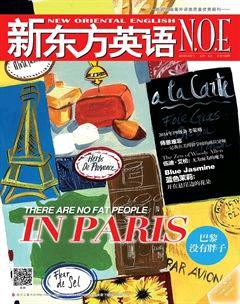
There Are No Fat People in Paris 巴黎沒有胖子
2014-04-09 11:37:17Ta-NehisiCoates
新東方英語 2014年4期
Ta-Nehisi+Coates


Two Saturdays ago, I visited the venerable1) bookstore Shakespeare and Company2). It was a hot day. The store was small and stifling3). A woman walked around handing out watermelon. I picked up a copy of Eric Hobsbawm4)s The Age of Revolution and Primo Levi5)s If This Is a Man. I went upstairs, sat in a room with view of the street and I think even the river. Two things happened while I sat there. First, I fell in love with Primo Levi, an unoriginal event which nevertheless deserves (and shall receive) elaboration6). Second, I decided that this room was perfect.
Paris requires effort. There are stairs everywhere and the stairs are all but mandatory. In America the stairs are off to the side, and the elevator is prominent. Often, its the reverse here—the stairs are out front and often beautifully wrought. It almost feels sinful to take an elevator. Theres a strong culture of pedestrianism. The streets belong to the people, and that encourages walking. On a normal day, I can end up walking for an hour or more. Theres so much to see. And those who dont walk use the public bike share.
There is almost no air conditioning—not in the homes, not in the offices, not on 99 percent of the subway trains. The windows are actually open on the subways. Theres no ice in the water or in any of the drinks and I dont ask for any. Travel isnt colonization. I think that discomfort is life unbound. But because of that discomfort, that constant sheen7) of sweat, finding a naturally cool place is a divine experience. That day when I stumbled into Shakespeare and Companys reading room, it was like stumbling into an undiscovered oasis8), like finding lost treasure.
Despite all the extra effort, I find that I consume less energy. I dont know that I eat any “healthier” in the sense of what “health” tends to mean back home. There are fat and carbs9) all around me. Theres butter in most of the dishes. Its nothing see a Parisian walking the street while inhaling10) a long baguette. Bread is served with every meal, but oddly enough, without butter, which leads me to believe that they think of butter as something to be put in things, not on them.
I eat my fries with mayonnaise11). I now find ketchup12) to be too sweet. Without exception I eat dessert—preferably something with chocolate. I eat a panini13) or a sandwich every day, but I dont eat any chips. You can find junk-food here, but you have to be looking for it. I dont really order out. Ive stopped drinking Diet Coke. In general I eat a lot less, and I drink a lot more—a half a bottle of wine every night. But I dont think Ive been drunk once since Ive been here. I feel a lot better—more energy, lighter on my feet, a clearer head.
Before I came here, so many people told me, “There are no fat people in Paris.” But I think this misses something more telling. There are “no” stunningly athletic people either. There just doesnt seem to be much gusto14) for spending two hours in the gym here. The people dont seem very prone to our extremes. And they are not, to my eyes, particularly thin. They look like how I remember people looking in 1983. I suspect they look this way because of some things that strike me—the constant movement, the diet, the natural discomfort—are part of their culture.
I dont know how much of this I can take back home with me. My sense is that I am reacting to my context. I am conflicted about all of this. In many ways, America feels like a much “freer” place. Theres more choice, and a strong desire to deliver that choice at the lowest cost possible. Theres no sense in France that “the customer is always right.” This city is very old—Pont Neuf15) is older than America itself. The Merovingian Clovis16) who reigned 1500 years ago is buried just outside the city. My home of New York is one of the oldest cities in America, but by the ancient standards of Paris, it is still a baby.
With that age comes a great dose of tradition, and a sense of the conservative. Things are done at a certain way. You dont just roll up on someone and say “Excusez-moi17)...” and then proceed into your query. You had better start with a “Bonjour” or a “Bonsoir.” The specifics of their language means much more to them than it means to us. I think actually all of this suits me better. I love old things, and I loved old Europe before I ever bore witness18). I wanted to study Charlemagne19) in high school. I didnt really know how. And I am terrorized by choice back home—by the take-out menus, the calorie counts, the organic, the local, the low-fat. By the end of the day, my brain is mush. I cant regulate.
We talk about culture as a way of establishing hierarchies—as though a hammer could, somehow, be innately better than a hacksaw20). I believe that cultures take shape for actual reasons, responding to real environments. If Americans love choice, if we love our air-conditioning, and our ice, if we love our comforts, and our elevators, the question should not be, “How do we change?” for that too is a kind of colonization. Better to ask “Why do we love those things? How do they profit us? What do we stand to lose21) should we abandon them?”
I love the tradition of low architecture here. But I also wonder how that tradition affects the cost of living for actual people. And so this is the other thing about culture. It tends to be an interlocking network, a machine of related gears, pulleys and levers. The thing you find so valuable may well be related to something else which you find utterly objectionable.
There is surely some knowledge to be taken back home. But in thinking about myself and my country, and “cultural” change, I find that I am more reformist than revolutionary. We are who we are. Our unchanging acre is forever our own.
上上個周六,我造訪了仰慕已久的莎士比亞書店。那天天氣很熱。書店不大,里面有些悶。一位女士在店里四處走動,給大家分發西瓜。我挑了艾瑞克·霍布斯鮑姆的《革命的年代》和普里莫·萊維的《如果這是一個人》。我走到樓上,在一個房間里坐了下來,從這里能看到街景,我覺得甚至還能眺望到河景(譯注:此處應指書店旁邊的塞納河)。我坐在那兒的時候,發生了兩件事。第一,我愛上了普里莫·萊維,雖然這不算稀奇,卻無論如何也值得(而且將會得到)一番詳述。第二,我覺得這個房間堪稱完美。
生活在巴黎頗為消耗體力。到處都要爬樓梯,而且除了樓梯之外,幾乎沒有別的選擇。在美國,樓梯都修在側面,電梯才是主角。這里的情形卻常常相反——樓梯修在正前面,而且大多建得很漂亮。搭電梯讓人簡直有負罪感。這里的步行文化氛圍濃郁。街道上滿是行人,鼓勵著你也加入其中。平日里,我每天要走一個小時或更長時間的路。沿途值得駐足觀看的東西太多了。不步行的人們會使用公共自行車。
這里幾乎看不到空調——住宅里沒有,辦公室里沒有,99%的地鐵車廂里也沒有。事實上,地鐵里的窗戶都是敞開的。水或其他任何飲料里都沒有冰塊,我也不刻意要求加冰。旅行并不是要把所到之處變成自己的“殖民地”。我把這種不舒適的感覺看做是不受束縛的人生體驗。不過,正是因為這種不舒適的感覺,因為經常汗水淋淋的緣故,才能夠在找到一處自然陰涼的地方時,越發覺得心曠神怡。當我那天逛到了莎士比亞書店的閱讀室,就仿佛是無意間闖入了一片未被發現的綠洲,尋找到了失落已久的寶藏。
雖然體力消耗增多了,我發現自己攝入的能量卻變少了。依照美國所謂的“健康”標準,我似乎也并沒有吃得“更健康”些。脂肪和碳水化合物隨處可見。大部分的食物里都有黃油。巴黎人一邊在街上走一邊大嚼法棍的場景毫不稀奇。每頓飯都有面包,十分奇怪的是,卻不搭配黃油,這讓我覺得他們認為黃油是要放在食物里面,而不是涂在食物外面的。
我蘸著蛋黃醬吃薯條。我現在覺得調味番茄醬太甜了。毫不例外,我也吃甜點——最好是帶巧克力的那種。我每天都吃帕尼尼或三明治,但是不配薯片。這里也有垃圾食品,不過要留心才找得到。我不太訂外賣,也不再喝健怡可樂。總體而言,我吃得少了很多,喝得卻多了不少——每晚都能喝掉半瓶紅酒。但是從我到這兒開始,我覺得自己一次也沒喝醉過。我覺得身體更勝從前——精力更旺盛,身體更輕盈,頭腦也更清醒。
在我來這兒之前,很多人告訴我:“巴黎沒有胖子。”但是我覺得這種說法忽略了一個更為明顯的事實。這里也“沒有”令人咋舌的運動型身材。在這里,人們對在健身房待上兩個鐘頭似乎并無多大熱情。人們似乎不傾向于我們那種極端的方式。而且在我眼中,他們也不算特別瘦。他們看起來和我所記得的1983年的人們身材差不多。我想他們之所以看起來是這個樣子,是因為有些令我印象深刻的方面——頻繁走動、飲食習慣、天然的不舒適感——已經成為他們文化的一部分。
如果回到美國,我不知道這些習慣我還能保持多少。我覺得我現在之所以能夠這么做,只是對這樣的環境做出的反應。這一切讓我覺得很矛盾。在許多方面,美國看起來是個“更自由”的地方。那里有更多選擇,人們強烈地想要以盡可能低的成本來滿足對這些選擇的需求。在法國,“顧客總是對的”這種說法站不住腳。這是一個非常古老的城市——新橋的歷史比美國的歷史還長。1500年前統治這里的墨洛溫王朝的克洛維國王就葬在城外。我所居住的紐約已經是美國歷史最悠久的城市了,但是依照巴黎的古老標準來衡量,它還是個嬰兒。
伴隨著如此悠久的歷史而來的是一份厚重的傳統以及對傳統的守護意識。凡事的做法都有定例。你不能隨便拉住一個陌生人,只說一句“不好意思,打攪一下……”,就冒冒失失地問東問西。你最好以“您好”或“晚上好”開始一段交談。與我們相比,他們對于法語的細微之處更加小心在意。我覺得所有這一切其實都更適合我。我喜歡古老的事物,并且在真正看到古老的歐洲之前,就已經愛上了它。中學的時候,我就非常想研究查理大帝,只是不知從何入手。在美國的時候,我一想到要做選擇就膽戰心驚——各種外帶食物菜單、卡路里計數、有機食物、本地種植、低脂食品。一天下來,真是耗盡腦力。我無法理出個頭緒。
我們討論文化的時候,把它當做是一種建立層級體系的方式——似乎一個錘子,不知為何,天生就是比鋸子要高級。我認為文化的形成是有其切實原因的,并是對實際環境的反應。如果美國人喜歡選擇,如果我們喜歡我們的空調和冰塊,如果我們喜歡我們的舒適感以及電梯,那就不該問“我們怎樣才能改變”,因為這個問題本身也有用別人的觀念“殖民”我們自己文化的嫌疑。更應該問一問:“我們為什么喜歡這些東西?它們帶給了我們什么好處?如果我們拋棄這些東西會有怎樣的損失?”
我喜歡這里的建筑都蓋得很低的傳統。但我也很想知道,對于現在生活在其中的人們而言,這樣的傳統對他們的生活成本有什么樣的影響。這就是關于文化的另外一點。它更像是一個互相緊密聯結的網絡,一架齒輪、滑輪和杠桿相互作用的機器。一件你覺得非常有價值的東西很有可能和一件你覺得非常反感的事情聯系在一起。
肯定有一些知識值得帶回美國去。但是想起我自己和我的祖國以及“文化上”的變化,我發現自己更傾向于做一個改革者,而不是革命者。我們就是我們現在的樣子。我們不變的故土留給我們的是永恒的印記。
1. venerable [?ven?r?bl] adj. 令人崇敬的,值得敬重的
2. Shakespeare and Company:莎士比亞書店,位于巴黎塞納河旁,是一家以出售英文書籍為主的獨立書店。
3. stifling [?sta?fl??] adj. 令人窒息的,氣悶的
4. Eric Hobsbawm:艾瑞克·霍布斯鮑姆(1917~2012),英國最具影響力的左派歷史學家。他在勞工運動、農民運動和世界史范疇的研究中取得了卓越的成果,其代表作為三部曲《革命的年代》(The Age of Revolution)、《資本的年代》(The Age of Capital)、《帝國的年代》(The Age of Empire)。
5. Primo Levi:普里莫·萊維(1919~1987),猶太裔意大利作家與化學家,是納粹大屠殺的幸存者,曾被捕并關押至奧斯維辛集中營,1945年才重獲自由。其在1948年出版的處女作《如果這是一個人》(If This Is a Man)即記錄了他在集中營中的生活。
6. elaboration [i?l?b??re??n] n. 詳盡闡述
7. sheen [?i?n] n. 光輝;光澤
8. oasis [???e?s?s] n. (沙漠中的)綠洲
9. carb [kɑ?b] n. (carbohydrate的縮寫)碳水化合物
10. inhale [?n?he?l] vt. 〈美口〉(急切或貪婪地)吃
11. mayonnaise [?me???ne?z] n. 蛋黃醬
12. ketchup [?ket??p] n. 調味番茄醬
13. panini [p??ni?ni] n. 帕尼尼,意大利的一種傳統三明治
14. gusto [?ɡ?st??] n. 愛好,嗜好,趣味
15. Pont Neuf:新橋,巴黎塞納河上最古老的橋
16. Merovingian Clovis:墨洛溫王朝的克洛維國王。墨洛溫王朝統治時期為公元5世紀至8世紀間。該王朝由克洛維國王(466~511)創立,克洛維國王被稱為法蘭克王國的奠基人。
17. Excusez-moi:(excuse me的法語表達)不好意思,打攪一下
18. bear witness:見證
19. Charlemagne:查理大帝(742~814),是法蘭克王國加洛林王朝的國王,曾控制大半個歐洲。
20. hacksaw [?h?ks??] n. 可鋸金屬的弓形鋸,鋼鋸
21. stand to do (sth.):很可能會做(某事),可能會有(某物)