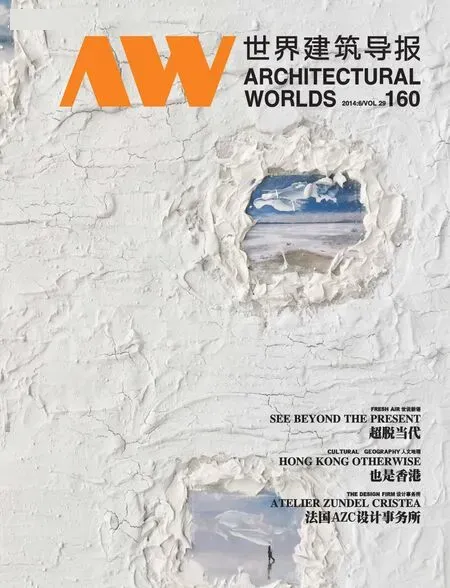
法國AZC設計事務所
2014-01-31 07:21:45
世界建筑導報 2014年6期
關鍵詞:建筑

建筑實踐
AZC事務所成立于2001年,公司創辦理念是探索建筑設計及其工藝,用于改善人居環境。在概念之外,我們總是尋求創造富有生命力的建筑的。
通過競賽與直接設計委托,事務所已經著手設計了一百多個不同尺度和類型的項目。已建項目名單涵括了從第一棟給兒童使用的公建到社會保障住宅、養老院、體育場館、禮堂、辦公樓、私人住宅、直到巴黎和雷恩市最新的八個地鐵站。
通過與工程師和專家團隊的合作共事,AZC參與監控從概念設計到建造的所有項目階段,期望能突破創造與革新的界限。
公司大部分的項目已經在許多國家發表,展示或者榮獲獎項。并且我們多次受邀參與可持續發展、多樣性和技術創新主題的研討,表明了我們對此類主題的探究。
我們先后在美國、英國和法國“最佳住宅獎”等國際競賽中贏得獎項,從而促使事務所在國際上獲得一定的知名度。
建筑師的使命是具體的、關乎物質的。而建筑是集體努力的結晶,我們謹記我們所創作的是全團隊協作組織的成果。
AZC現今是一個由25名來自世界各地的優秀建筑師組成的的事務所。有說法語、英語、德語、意大利語和羅馬尼亞語的。不同文化的融匯與碰撞定義了我們事務所,也激發我們超越不同國界的渴望……
設計方法
我們把建筑設計看作一門從人類集體層面汲取養分的學科。
在建筑實踐中指導與鼓舞我們的是其普遍性的特征,正如路易?康提到的”建筑是有思想的空間創造“。對我們來說,每個方案始于一個由不同任務書限定的規則和個人選擇之間的平衡的研究。我們最終總是自問什么才是最重要的。我們會把項目看作一種期望的表達而非一個需求的滿足。客觀地說,當人類的基本需求多少還停留在原地時,而人類的期望卻在不斷地提升。
建筑學,是關乎有生命力的房屋。每當設計一個方案,我們希望展現一個高效的建造邏輯。因此,我們重新審視方法、建造資源、和現場的實施,用以尋求明顯的解決方案。我們的職責是基于本土的也是全球性的。使一個方案具有合理性,意味著理解其語境,涉及關心在特定的物質和經濟環境中的建造問題。
隨著科技發現和創新,建筑可持續性和永久性的問題擺在我們眼前。當今我們面臨最大的挑戰,是創造持久的建筑,而非宏偉的建筑。
建筑翻新
如果不用修復的方式,我們還能如何應對不可再生的自然能源即將枯竭這一現實?綜合考量當今的能源、建筑、技術、經濟和社會因素,結論是明顯的:重新開發已有建筑成為一種道德訴求。
大量現有的破舊樓宇具備被重新開發利用,成為實用的、現代的、有經濟效益的新空間的潛能。
對現有建筑的細致分析,對其原始組成、性能、用途和其轉化而不是其破損的研究,是所謂“可持續發展”的基本思路。
拆除并重建總是比一個智慧的改造花費更多。歸根結底,翻新是一個更明智的消費方式。
可持續發展的城市
在不久的將來,建筑業將無疑被城市擴張和諸如能源、建筑材料、運輸和勞動力等資源成本的增長所支配。
城市的密集化是可持續發展的。城市資產和網絡的匯集致力于減少包括能源在內的多種資源消耗。
但可持續發展城市不是一個簡單地把高性能的、受認證的生態建筑并置的問題。在城市尺度上的可持續建立在公交系統的連通性、服務設施的效率和功能的綜合化之上。
真正的可持續性承認共享的重要性與公共空間的品質。難點在于適應不同運輸方式,迎合多種多樣的用途和用戶。
同樣引發質疑的是, 是否應該把那些導致污染的活動——鐵路、垃圾處理廠、貨運站等保留在城市內部。
21世紀的城市終于被致力于推廣綠色空間的理念所擁抱。諸如小型農業生產和社區園林等項目激發了生物多樣性,并且加強了社區的聯系。
辦公空間
二十一世紀的辦公空間的重要轉變體現在靈活性上。這一理念,是數量可觀的技術進步的結果,是新經濟發展的映照。
新技術的發展對我們的工作方式產生直接影響。當今最顯著的影響就是對辦公空間的構成這一定義含糊不清。
現今辦公室 是可移動的,以模塊的形式環繞它的使用者——我們在咖啡館、車站、住所或者在公用的辦公空間工作。
開放式的空間能在最短時間內被重新配置,在區區幾小時內就能被完全重組。當需求改變時,公司能輕而易舉地使用或棄用辦公場地。
如今,一個工作站的基本需求是一把椅子、一個連接網絡的顯示屏、一些儲物單元,且具備適當的隔音效果。至于該用自然采光還是人工采光,至今仍爭論不休。 “上班 “ 這一概念變得更抽象了,并且透明性和私密性的觀念也在演變。人們已經習慣于在工作中看到別人,同時也處于別人的目光之下。
根據這一簡化了的想法,一個辦公樓可以被定義為一個外殼和一個樞紐,既要求給使用者提供庇護,也要整合工作所需的技術和后勤資源。其建筑的象征意義在于體現和傳播使用者的價值。
教育
對學生來說,學校代表一個避風港,他們在其中暢想未來。在一個精心設計、 光線充足的、空間組織清晰的環境內,孕育學生對未來的憧憬。
教育類建筑必須是讓人愉悅和平靜的。以學校應在社區內被賦予合理的定位這一理念為出發點,引發了我們要給使用者和城市提供明朗的、易于理解的建筑的欲望。
此類項目以大量學生遵循上課和課間休息的節奏,頻繁穿梭于各個教室為特征。功能性、現代性、可持續性和空間協調是指導我們做教育類建筑的主要原則。
簡而言之,要求清晰的空間組織和明顯的標志物,恰當比例的走道和便捷的交通。中學項目往往是一個四層樓面圍繞一個中央庭院的布置方式。 圍繞庭院的環形交通流線是一個理想的解決對策,同時它激發了歡快氛圍、便捷了校園生活。
住宅
居住是人類的基本需求之一。隨著城市人口的不斷遞增,住宅的生產已成為一個首要的經濟活動。
建筑師在這一進程中身處關乎物質的和關乎哲學的交叉口。
在密集而不斷發展的都市語境內,如何能給一邊是房地產開發、建筑和技術 ,另邊是公共空間和社區的方程式賦予平衡關系?
現在是時候重新思索一個高品質住宅的特征了,而不是無休止地復制標準化的類型。
住宅不應僅限于舒適和滿足需求,而且應該在更大的圖景中被設計–- 一個更寬泛的社區概念,其中有著能開展各類活動的共享空間。
住宅的外延,涵蓋了社區空間、給年輕人的場所、運動場地、用于園藝和共享活動的外部空間等,這些都鼓舞了社群精神。
建筑物的“成功“至關重要。為了成功,意味著在開窗設計、生活空間的尺寸和用于保護私密性的內部隔墻的選擇等方面不遺余力。賦予建筑足夠的空間、高度和光線,并不一定意味著成本的增加。
醫療保健
醫療建筑遵循醫院的工作模式和方針。它回應由專業醫護人員的日積月累的實踐經驗所決定的,非常具體的需求。
這些建筑是給非常特定的人群而設計,他們需要高標準的舒適度和使用上的便捷性。不同單元之間的距離和路線被精確測量和校對,以確保整個醫院的流線組織高效且便利。
對我們來說,設計牽涉到思考一個醫院的運作方式,然后提議一個契合功能的有審美價值的形式的問題。在醫院,各種設備過多地暴露在外會給患者營造一種不舒服的氛圍。
這些房屋的內部一方面遵從隱私和獨處的需求,并且鼓勵與他人間的社交生活和空間共享。 所有區域都由一統一方針定義:慷慨人性化的尺度,并且配有露臺和花園。
文化
在對和諧與平衡的無盡追求中,人類用藝術來定義審美的、激情的和情感的體驗。
文化類建筑存在于公眾視線中,來彰顯其意義。在博物館內,具有意義的不是展出本身,而是它激發參觀者內心的思考。
對我們來說這涉及如何營造一個讓人們覺得有探索的必要的空間。 一個畫廊可以成為一個供思考和冥想的場所。
與過去教堂的功能不同,博物館是傳播文化的地方; 參觀者前來探索那些所展出的東西,同時也是在挖掘自身。
參觀博物館是同時激發幾種體驗的手段 : 在展出作品中獲得樂趣,也感動于自然之美。這不僅關乎如何展出作品,也關于如何激發對基本問題的思考。
基礎設施
世界上各個大城市都力求投資高效的公交系統,以作為城市發展的催化劑。
發展公共交通有諸多直接影響:該地區的產業和服務需求遞增,在公交體系內就業崗位的增加,運輸成本、時間和副作用的減少—例如污染、事故、能源消耗和被停車和高速公路占據的土地面積等。
地下鐵路和地鐵, 是一個新穎的觀點的產物,且一直在身份標識和形式語言上自行其道。作為城市化和擁擠的象征,地鐵把人們從擁堵的城市的一頭運載到另一頭,它的功能引導我們締造埋藏在地下深處的新型公共空間。
綜合考慮這些新空間的尺度和復雜性,它們的構筑形式傾向于形成一個我們稱之為“地鐵品牌“的整體概念。在這里,建筑關乎光線,也涉及到當乘客從街道抵達車站平臺,環繞在他們四周的外殼所形成的抽象“風景“。對建筑形式上的構思摒棄了多余的手法,僅僅為了定義這些地下體量。
運動
城市通過一系列的在工作場所、學校、家庭和公交系統間相沿成習的慣例與路線,最終限制了我們身體和精神自由。
運動讓我們有時間抽離這種生活節奏,以自由、愉悅和滿足感鼓舞我們的思想。
對于每個新方案,我們力求提醒自己人們去運動中心的動機--諸如良好的感覺、超越自我、認知和表現自我,還有給予與分享等。
在運動館,我們能使身心均得到發展。一個運動中心的設計, 必須回應各類體育活動精確的規范要求,尺寸和地面標識,以及更普遍的操作規程,如潔污分區。
這些大尺度的公共設施,為社區和公共福祉帶來切實的價值。
設計
可持續發展和共享的公共空間是當今城市化進程中的當務之急,而現在也充斥著各類關于建造環境、自然和居民之間的關系的臆想。
并不一定需要通過一個大型項目來豐富一個城鎮,即使是一個小型的、臨時性的干預措施,例如在一個重要場所的有時效性的活動,也能給城市帶來巨大影響力。
我們的實踐已經涉及對很多理念和裝置的思考,它們在某種程度上取悅了城市居民,轉變了他們看待自己所身處的城市的場所和習俗的觀點。
我們的目標是邀請城市居民參與一些與城市景致結合的,非常規的有趣事件: 一個龐大的充氣橋,用來體驗在塞納河上方跳躍的快感,一個坐落于倫敦公園內讓人冥想的涼亭,一個能坐在過山車上高速瀏覽的博物館 …
人類自古以來對一些基本福祉保留了一定的懷舊情懷。這些方案把極樂世界注入城市中心,致力于喚醒感官的更本質的體驗,而不是購物或其他常規的城市活動。
獎項和展出
2014年 TERRASSE 9 榮獲EDF獎和Pyramides d’Argent頒布的創新獎項
2014年 “巴納姆城“參與 里爾“Architectural Ride“展出
2013年 “蹦床橋”參與巴黎IN VITRO展
2013年 “和平宮”在慕尼黑獲得ICONIC獎項
2013年 “和平宮”獲ARCHTRIUMPH競賽一等獎
2013年 “巴特西電站”在倫敦獲ARCHTRIUMPH競賽一等獎
2012年 “蹦床橋”獲得A+ AWARD一等獎
2012年 “巴黎蹦床橋”獲ARCHTRIUMPH競賽三等獎
2012年 “巴黎Claude Bernard 地塊綜合樓”獲MIPIM一等獎
2011年 雷恩WAF競賽”4個地鐵站“獲勝團隊
2010年 巴黎 EVOLO競賽”Evolo 10 塔“ 特別獎
2009年 ”Strasbourg路住宅“獲EDF低碳競賽一等獎
2008年 ”Planchette樓“在巴黎的”建筑=可持續“展出
2005年 ”曼特澤南國庫“獲GRAND EST競賽一等獎
合伙人簡歷
Grégoire ZüNDEL—科爾馬,法國
1995年 畢業于法國斯特拉斯堡國立高等建筑學院
1996年-2000年 與M. Fuksas, 巴黎 J. Ferrier , 香港Terry Farrell & Partners共事
2004年-2006年 斯特拉斯堡國立高等建筑學院兼職教授
2001年與Irina Cristea成立AZC事務所
國籍:法國、瑞士、美國
Irina CRISTEA—布加勒斯特,羅馬尼亞
1995年 畢業于法國斯特拉斯堡國立高等建筑學院
1996年-2000年 與M. Fuksas, 里昂-巴黎Du Besset ,香港Hsin Yieh共事
2001年與Grégoire ZüNDEL成立AZC事務所
國籍:羅馬尼亞、法國

The practice
AZC was set up in 2001 with the idea that exploring architecture and its techniques could help us to improve the built environment. Our interest does not lie in concept alone, our passion is in designing real buildings that are built for real life.
through competitions and direct commissions, our practice has worked on over a hundred projects of varied scale and use. the list of our built projects ranges from public buildings for childcare, social housing and carehomes, sports complexes,auditoriums, of fi ce buildings and private houses, right up to eight new metro stations in rennes and Paris.
in collaboration with engineers and other specialist consultants, AZC participates in the management of every phase of the project, from design to completion, always looking to promote ingenuity and innovation.
Most of our projects have been published, exhibited or have won prizes internationally, giving us frequent opportunities to present our thoughts on sustainable development, social mixity, or innovative technical ideas, illustrating our preoccupations and beliefs.
Awards from international competitions, in the United states, the United Kingdom,and in France the MiPiM ‘Best residental Award’, have brought the practice international recognition.
the end product of our profession is concrete and tangible. Architecture is a collaborative process and it is important to remember that what we achieve is the result of organised team work.
AZC today numbers some 25 people, quali fi ed architects from all over the world.We speak French, english, German, italian, romanian… the cultural mix which de fi nes the practice feeds our desire to cross frontiers …
Architectural Approach
We see architecture as a discipline that is fed by the notion of community.
in practicing architecture, we are guided and motivated by its universal character,in the sense that louis Kahn expressed as ’the thoughtful making of spaces … the creating of spaces that evoke a feeling of appropriate use’. For us, each project begins with looking for a balance between the structured order imposed by the brief,and the possibilities of personal choice. We always end up asking ourselves what is really important.
We like to consider the brief in the light of desire rather than necessity. Objectively,it is mankind’s desires that evolve rather than our needs, which have been pretty much the same for ever. Architecture is about buildings which come
alive. Each time we design a project we want to fi nd an ef fi cient building approach.We look for obvious solutions, which reconsider the means and resources available for fabrication and local supply.
Our responsibility is as much local as it is global. to give coherence to a project one must understand its context, which means taking into consideration problems linked with building in that particular environment, in both physical and fi nancial terms.
With the speed of new discoveries and advances in technology. we are concerned by considerations of sustainability and timelessness in architecture. today’s greatest problem is to design architecture which is lasting without being imposing.
Renovation
How else can we prepare for natural, non-renewable energies running out, if not by restoration? Assessment of today’s energy, architectural, technical, economic and social considerations makes is clear that the redevelopment of existing buildings is a moral obligation.
Many existing dilapidated buildings have the potential to be redeveloped as new spaces that are useful, modern and economically pro fi table.
detailed analysis of existing buildings, study of their original make-up, their capacity,
their use, and their transformation rather than their destruction are the fundamental ideas of what is referred to as ‘sustainable development’.
demolition and rebuild will always be more costly than a clever transformation.Ultimately, a renovation is a wiser use of money.
The sustainable city
the immediate future of architecture will undoubtedly be dictated by spreading urbanisation and the growing cost of resources such as energy, building materials,transport and labour.
Urban densi fi cation is sustainable. Pooling the assets of urban space and its networks contributes to a reduction in the consumption of resources, including energy.
But the sustainable city is not simply a question of closely grouped buildings,however ef fi cient, highly rated or ecological they may be. Sustainability on an urban scale is established with the connectivity of public transport systems, the ef fi ciency of services and the mixed uses.
true sustainabililty acknowledges the importance of shared, quality public space.The dif fi culty is in accommodating a range of different modes of transportation and catering for a variety of uses and users.
Also called into question is whether or not activites considered pollutant – railways,waste treatment plants, transport depots – should be kept within the city.
the 21st-century city at last embraces the idea of promoting green spaces within an urban context. Projects such as the development of small-scale agricultural production and community gardens stimulate biological diversity and reinforce community links.
Of fi ces
The major change to the workplace of the 21st century is fl exibility. This idea, which is the result of considerable technical progress, reflects the evolution of a new economy.
the development of new technologies has a direct impact on the way we work.the most spectacular consequence of this today is the blurred definition of what constitutes the work place.
Today’s of fi ce is mobile and is moulded around its user – we work in cafés, stations,at home or in shared workspaces.
Open-plan spaces can be redeployed in record time, totally recon fi gured in a matter of only a few hours. As its requirements change, a company can easily take on or move on from its premises.
today, the basic requirements of a work station are a seat, a screen with internet access, a couple of storage units to tidy things away, and reasonable acoustic insulation. The jury’s out over natural lighting versus arti fi cial lighting. As the idea of‘going to work’ becomes more abstract, notions of transparency and privacy evolve.People are used to being seen and seeing one another at work.
Following this simplified idea, an office building can be defined as a shell and a hub, required both to shelter its occupants from the outside, and to assemble the technical and logistical resources required for work. the symbolic role of its architecture is to embody and communicate the values of its occupants.
Education
For students, school represents a haven from which to consider the future. A well thought-out environment, well lit and organised, nurtures a student’s future con fi dence.
Architecture for education needs to be cheerful and calm. the desire to provide users and towns with bright and readily understandable buildings comes from the notion that a school should be given its rightful place within the community.
education is characterised by large classrooms frequented by large numbers of students, obliged to move around in groups following the rhythm of class and break times. Functionality, modernity, sustainability and space management are the principle objectives that guide the design of buildings for education.
Briefs request clear organisation and way fi nding, correctly proportioned corridors and easy accessibility. secondary school projects often plan buildings on four levels arranged around a central courtyard. Circulation in a loop around the
courtyard is an ideal solution, as it stimulates conviviality and facilitates movement around the school.
Housing
Accomodation is one of man’s basic needs. With the growing urban population, the production of housing has become a primary economic activity.
the architect is at the physical and philosophical intersection of this process.
How can the equation between, on one side property development, architecture and technology, and on the other public space and communities, be resolved within a dense and evolving urban environment?
Instead of endlessly reproducing standard typologies, it is time for a fresh re fl ection on the characteristics of good housing. Housing should not only be comfortable and desirable, but should be designed as part of a larger picture – a broader notion of community, with shared spaces for a variety of activities.
extending housing schemes to include community spaces, places for the young, for playing sports, external spaces for gardening and shared activities, all encourage community spirit.
it is important that a building ‘succeeds’. to succeed implies generosity in the design of the openings, in the dimensions of the living spaces and in the choice of internal partitioning to preserve privacy. The provision of space, suf fi cient height and light,does not necessarily imply added cost.
Healthcare
Architecture for healthcare follows clear guidelines for working hospitals. it replies to very speci fi c requirements, determined by cumulative experience of healthcare professionals.
the overall organisation of these buildings is based on a system of horizontal spaces that enables common access to equipment, and proximity and visibility between different services.
This architecture is designed for very speci fi c users who require greater levels of comfort and ease of use. distances and routes between different units are measured and calibrated to ensure ef fi cient and easy circulation around the hospital.
For us it is a question of considering the way a hospital works and then proposing an aesthetic that fi ts its precise requirements. Over-visible technology in a hospital,for example, can create an uncomfortable ambience for patients.
these buildings’ interiors respect the need for privacy and solitude on the one hand, and encourage communal life and shared space on the other. All the areas are de fi ned by a therapeutic protocol: they are generously proportioned and have terraces and gardens.
Culture
In our endless quest for harmony and balance, mankind uses art to de fi ne aesthetic,powerful and emotional experiences.
The architecture of cultural spaces fi nds its meaning in the presence of the public.in a museum, it is not the exhibition itself which has meaning, but its capacity to stimulate re fl ection in the minds of its visitors.
For us it is about creating a space which people feel compelled to explore. A gallery can be a space for re fl ection and contemplation.
rather like the role of the church in times past, museums are places for the distribution of culture; visitors come to discover what’s on offer, at the same time discovering something about themselves.
the museum visit is a means of inciting several experiences at once: to take pleasure in the works on display, to be moved by the beauty of nature. it is not only a question of exhibiting work, but also of stimulating re fl ection on fundamental questions.
Infrastructure
The world’s large cities are looking to invest in ef fi cient public transport systems as catalysts for their development.
The direct effects of developing public transport are numerous: increased demand on property and services in the area, increased employment in public transport, and a reduction in costs, time and the harmful side-effects of transport – pollution, accidents,energy consumption, and land taken up by carparks and motorways.
Underground railways, metros, are the result of an original idea which has developed its own identity and formal language. symbol of urbanism and the congested city, its function, to transport people from one side of the congested city to another, has led to the creation of new public spaces buried deep underground.
Considering the scale and complexity of designing these new spaces, their architecture tends to form part of a global concept that we think of as the ‘metro brand’. Here, architecture is all about light, and the abstract ‘landscape’ that forms an envelope around the traveller as he moves from the street to the station platform, an architecture whose formal concept is simply to de fi ne these underground volumes.
Sport
Cities restrict our physical and spiritual freedom to a set of rituals and established routes, between work or school, home, and the public transport systems …
sport gives us time out from this daily rhythm, lifting our spirits with a sense of freedom, pleasure, ful fi lment.
For each new project, we try to remind ourselves of the reasons why we go to a sports centre – among these are feeling good, surpassing ourselves, learning and exerting ourselves, but also giving and sharing.
sports halls are places where we can evolve in both body and spirit. A sports centre’s architecture must respond to precise regulations for each sports activity– volumes, distances and fl oor markings, as well as more general operating rules,such as separating areas for outdoor shoes and sports shoes.
these are large-scale facilities that are open to the town, of real value for the community and public well-being.
Design
sustainable development and shared public space are the primary preoccupations in today’s urbanisation, with endlessly expanded ideas on the relationships between the built environment, nature and the inhabitants.
it does not always take a large-scale project to profoundly enrich a town; small, even temporary interventions, such as timely events in key venues, can have a powerful impact.
Our practice has given a lot of thought to ideas and installations likely to please citydwellers and to transform the way they think about places and practices within their town.
Our aim is to invite city dwellers to unusual and fun events that play with their urban landscape: an inflatable bridge with giant trampolines just for the fun of jumping above the seine, a pavilion inviting meditation in a london park, a museum visited at high speed aboard a roller-coaster …
Mankind maintains a certain nostalgia for some kind of basic wellbeing from times past. these projects bring new elysian Fields right into the heart of the city, dedicated not to shopping or other habitual urban activity, but rather to more fundamental experiences that awaken the senses.

Prizes and Exhibitions
2014 – terrAsse 9, Prizewinner for the “edF” and “innovation” categories at the Pyramides d’Argent
2014 – BArnUM CitY, exhibition of “Architectural ride” in lille
2013 – in VitrO, exhibition of “Contemporary Bridge” in Paris
2013 – iCOniC AWArd in Munich, Winner for “Peace Pavilion” and “Contemporary Bridge”
2013 – ArCHtriUMPH COMPetitiOn, 1st prize for “Peace Pavilion”
2013 – ArCHtriUMPH COMPetitiOn, 1st prize for “Battersea Power station” in london
2012 – ArCHtriUMPH COMPetitiOn, 3rd prize for “Contemporary Bridge” in Paris
2012 – A+ AWArd, 1st prize for “Contemporary Bridge” in nY
2012 – MiPiM AWArds, 1st prize for “immeuble Mixte ZAC Claude Bernard” in Paris
2011 – WAF, Finalists for “4 Metro stations” in rennes
2010 – eVOlO COMPetitiOn, special Mention for “tour evolo 10” in Paris
2009 – edF COMPetitiOn - lOW CArBOn, 1st prize for “Maison rue de strasbourg”
2008 – ArCHiteCtUre=sUstAinABle, exhibition of “immeuble Planchette” in Paris
2005 – GRAND-EST COMPETITION, 1st prize for “Trésorerie” in Muntzenheim
CV
Grégoire ZüNDEL, Colmar - France
1995, Graduated of ensA in strasbourg, France
1996-2000, Collaborations with M. Fuksas, J. Ferrier - Paris, terry Farrell & Partners- HK
2004-2006, Visiting teacher to ensA of strasbourg
2001, Founding of AZC with irina Cristea
Nationalities: French, Swiss, American
irina Cristea, Bucharest - romania
1995, Graduated of ensA in strasbourg, France
1996-2000, Collaborations with M. Fuksas, du Besset-lyon - Paris, Hsin Yieh - HK
2001, Founding of AZC with Grégoire Zündel
Nationalities: Romanian, French
猜你喜歡
北方建筑(2021年6期)2021-12-31 03:03:54
文苑(2020年10期)2020-11-07 03:15:36
現代裝飾(2020年6期)2020-06-22 08:43:12
現代裝飾(2020年4期)2020-05-20 08:55:08
攝影之友(影像視覺)(2019年2期)2019-03-05 08:27:16
藝術家(2017年3期)2018-01-26 08:54:49
文學自由談(2016年3期)2016-06-15 13:01:16
福建農業科技(2016年10期)2016-03-07 09:46:49
少兒科學周刊·兒童版(2015年6期)2015-11-24 03:49:38
中國工程咨詢(2015年4期)2015-02-14 03:49:56