
Should repeve Transcranial Magnec Smulaon (rTMS)be considered an effecve adjuncve treatment for auditory hallucinaons in paents with schizophrenia?
2013-12-09 03:28:39JijunWANGYifengXU
上海精神醫學 2013年3期
Jijun WANG, Yifeng XU*
Jijun WANG, Yifeng XU*
The experience of auditory hallucinaons, especially verbal hallucinaons, is a common psychoc symptom in persons with schizophrenia, but in about 30% of these individuals tradional treatment with anpsychoc medicaon is not effecve in reducing the hallucinaons. For this subgroup of paents, alternave forms of treatment need to be assessed. The occurrence of auditory hallucinaons has been linked to abnormal acvaon or inhibion of the neural circuits related to language processing, especially those in the letemporoparietal lobe.[1]Repeve Transcranial Magnec Smulaon (rTMS) is a noninvasive method that adjusts the excitability of the cortex, so rTMS is one type of adjuncve treatment for medicaon-resistant auditory hallucinaons in schizophrenia that researchers have been interested in.
Hoffman and colleagues[2]first reported the possibility of using rTMS to treat auditory hallucinaons in 1999. There have been at least 18 sham-controlled studies that reported the effecveness and safety of rTMS in the treatment of auditory hallucinaon; the majority were randomized sham-controlled trials and a minority used a cross-over design. Most parcipants in these studies had intractable auditory hallucinaons. Low smulaon frequencies (e.g., 1Hz) were used with a strength ranging from 80 to 115% of the parcipant’s motor threshold. The most common site of smulaon was the letemporoparietal juncon (T3P3); other sites include the right temporoparietal juncon (T4P4), the leor right Wernicke areas, and individualized sites determined by fMRI. The total number of pulses ranged from 240 to 4200 for a single treatment session. The duraon of rTMS treatment was usually between one and four weeks.[3]All of these studies were small-scale; only three had 20 or more parcipants (in each arm of the study) and none of them had more than 30 parcipants.
Three studies published inBiological Psychiatryin 2005, 2011, and 2013, reflect the evoluon of scien-fic thinking about rTMS as an adjuncve treatment for auditory hallucinaons in schizophrenia. Hoffman and colleagues (2005)[4]conducted a sham-controlled trial with 50 individuals with auditory hallucinaons (27 in the rTMS group and 23 in the control group). Aer nine days of 1Hz-rTMS smulaon to the letemporoparietal area, the rTMS group had significantly greater improvement in auditory hallucinaons than the control group. However, another randomized sham-controlled trial by Slotema and colleagues (2011)[5]did not find any benefit of rTMS treatment and did not find any advantage in using individualized sites for rTMS smulaon guided by fMRI. A follow-up study by the Hoffman’s team in 2013[6]again reported benefits to the adjuncve use of rTMS for auditory hallucinaons and found that the effecveness of rTMS treatment was related to the degree of aen-on the paent focuses on their hallucinaons and the degree of brain lateralizaon.
There have been six different meta-analyses about the effecveness of rTMS for auditory hallucinaons published since 2007. The meta-analysis by Freitas and colleagues,[7]which included cross-over studies and open trials, reported an effect size of 1.04 but had substanal heterogeneity across studies. Demeulemeester and colleagues[8]used stricter criteria, including nine RCT studies published between 2005 and 2011; they reported a pooled effect size of 0.42 (95% CI: 0.13-0.70,p=0.004). The most recent meta-analysis[3]reported an effect size of 0.44 (95% CI, 0.19-0.68) for rTMS smula-on at the letemporoparietal area and an effect size of 0.33 (95% CI: 0.17-0.50) for rTMS smulaon at other areas.
Although the most recent 2013 study by Hoffman and colleagues[6]was not included in these metaanalyses, all the previous meta-analyses supported the effecveness and safety of rTMS as an adjuncve treatment for auditory hallucinaons. Nevertheless, the effect sizes tend to be smaller in more recent studies. This downward trend is not due to publicaon bias,[3,8]but it may be due to the generally higher quality of the more recent studies. Advances in the technique for administering sham rTMS may also have contributed to the reducon of the difference between the intervenonand control groups. (The pseudo-coil designed specifically for these studies can cause a numbing sensaon in the scalp of paents.)
Conflict of interest
The authors report no conflict of interest related to this manuscript.
Funding
This work was supported by grants from the following agencies: NIMH R21 (1R21MH093294-01A1); Na-onal Nature Science Foundaon of China (NSFC-NIH) (81261120410); NSFC (81171267, 81201043); Shanghai Science and Technology Commiee (11410708800, 10411966400). Naonal Key Clinical Disciplines at Shanghai Mental Health Center (OMA-MH, 2011-873).
1. Ford JM, Dierks T, Fisher DJ, Herrmann CS, Hubl D, Kindler J, et al. Neurophysiological studies of auditory verbal hallucina-ons.Schizophr Bull2012; 38(4): 715-723.
2. Hoffman RE, Boutros NN, Berman RM, Roessler E, Belger A, Krystal JH, et al. Transcranial magnec smulaon of the letemporoparietal cortex in three paents reporng hallucinated ‘voices’.Biol Psychiatry1999; 46: 130-132.
3. Slotema CW, Aleman A, Daskalakis ZJ, Sommer IE. Metaanalysis of repeve transcranial magnec smulaon in the treatment of auditory verbal hallucinaons: update and effects aer one month.Schizophr Res2012 ; 142(1-3):40-45.
4. Hoffman RE, Gueorguieva R, Hawkins KA, Varanko M, Boutros NN, Wu YT, et al. Temporoparietal transcranial magnec smulaon for auditory hallucinaons: safety, efficacy and moderators in a fiy paent sample.Biol Psychiatry2005; 58(2): 97-104.
5. Slotema CW, Blom JD, de Weijer AD, Diederen KM, Goekoop R, Looijesjn J, et al. Can low-frequency repeve transcranial magnec smulaon really relieve medicaon-resistant auditory verbal hallucinaons? Negave results from a large randomized controlled trial.Biol Psychiatry2011; 69(5): 450-456.
7. Freitas C, Fregni F, Pascual-Leone A. Meta-analysis of the effects of repeve transcranial magnec smulaon (rTMS) on negave and posive symptoms in schizophrenia.Schizophr Res2009; 108(1-3): 11-24.
8. Demeulemeester M, Amad A, Bubrovszky M, Pins D, Thomas P, Jardri R. What is the real effect of 1-Hz repeve transcranial magnec smulaon on hallucinaons? Controlling for publicaon bias in neuromodulaon trials.Biol Psychiatry2012; 71(6): e15-16.
9. O’Reardon JP, Solvason HB, Janicak PG, Sampson S, Isenberg KE, Nahas Z, et al. Efficacy and safety of transcranial magnetic smulaon in the acute treatment of major depression: a mulsite randomized controlled trial.Biol Psychiatry2007; 62 (11): 1208-1216.
10. McCarthy-Jones S, Trauer T, Mackinnon A, Sims E, Thomas N, Copolov DL. A new phenomenological survey of auditory hallucinaons: evidence for subtypes and implicaons for theory and pracce.Schizophr Bull2012. doi: 10.1093/schbul/ sbs156 [Epub ahead of print]
11. Montagne-Larmurier A, Etard O, Razafimandimby A, Morello R, Dollfus S. Two-day treatment of auditory hallucinaons by high frequency rTMS guided by cerebral imaging: a 6 month follow-up pilot study.Schizophr Res2009; 113(1):77-83.
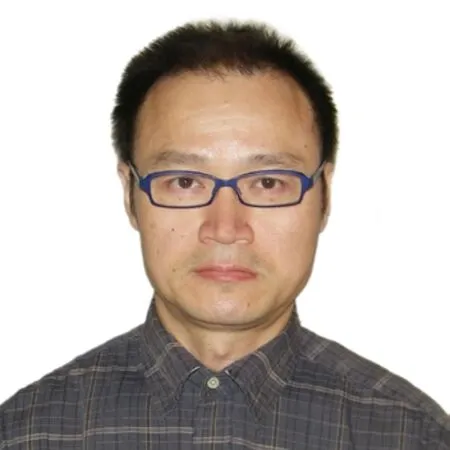
Professor Jijun Wang graduated from Beijing Medical University in 1989, completed a Masters of Medical Science (specializing in Psychiatry) at Shanghai No. 2 Medical University in 1994 and obtained his PhD degree from the University of Ryukyus in Japan in 2004. He is currently Director of the Department of EEG Source Imaging at the Shanghai Mental Health Center and a PhD supervisor at Shanghai Jiao Tong University School of Medicine. His current research interests include the early idenficaon and treatment of psychoc disorders, biological markers and repeve transcranial magnec smulaon (rTMS).
10.3969/j.issn.1002-0829.2013.03.009
Shanghai Mental Health Center, Shanghai Jiao Tong University School of Medicine, Shanghai, China
*correspondence: hyyyyb@gmail.com
- 上海精神醫學的其它文章
- Antidepressants for children with depression
- Survival analysis for observational and clustered data: an application for assessing individual and environmental risk factors for suicide
- Prevalence of ausm spectrum disorders in China
- Changing the focus of suicide research in China from rural to urban communities
- Two cases of neuroleptic malignant syndrome in elderly patients taking atypical antipsychotics
- Anxiety, depression, and associated factors among inpatients waiting for heart transplantation