電子書之父 邁克爾·斯特恩·哈特
2013-08-20 08:58:36
閱讀與作文(英語高中版)
2013年7期
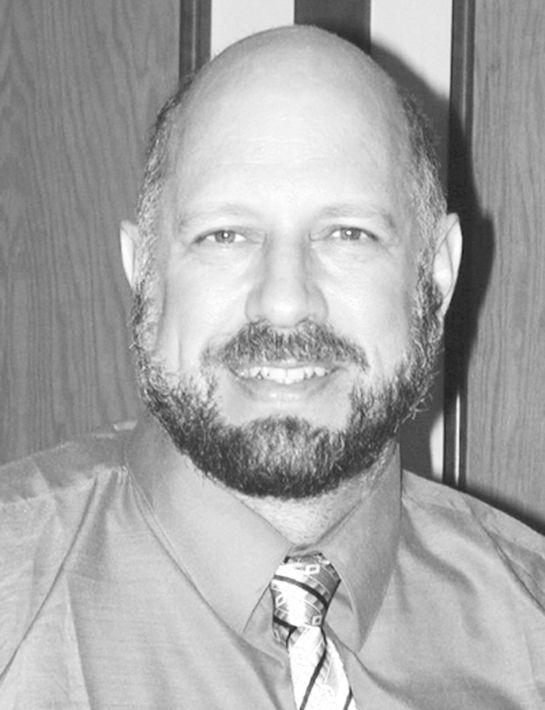
對于邁克爾·斯特恩·哈特(1947~2011)這個人,你可能還不太熟悉。但是在電子界,他可是個舉足輕重的人物。早在互聯網普及之前,邁克爾·斯特恩·哈特就發起了“古登堡計劃”,讓人們經由計算機獲得免費的電子書籍,可謂當之無愧的”電子書之父“。在自己的個人網頁上,他寫道:“如果你昨天所做的事情在今天看來依舊很了不起,那么你為明天設定的目標仍然不夠宏偉。”(If what you did yesterday still seems great today, then your goals for tomorrow are not big enough.)哈特的遠見卓識、不懈努力和堅定信念使電子書走入了大眾的日常生活,也讓掃除文盲和建立信息共享成為現實。下文就讓我們走近邁克爾·斯特恩·哈特,了解這個用電子科技造福世人的人。
Michael Stern Hart was a burly1 rebel whose vision of a literate society led him to pioneer the electronic book decades before the spread of the Internet.
Hart was a freshman at the University of Illinois in 1971 when he was granted free access to the campus enormous mainframe computer2. He was uncertain how to use the valuable computer time until inspiration struck in the form of a reproduction of the Declaration of Independence that had been stuffed in his grocery bag as part of a Fourth of July promotion.
He keyed the historic text into the computer system, which linked 100 users at elite institutions such as Harvard, UCLA and the Department of Defense. It was downloaded by six members of this pre-Internet network, which was encouragement enough for Hart to continue.
He transmitted the Bill of Rights, the Constitution, the Bible and the works of Shakespeare. Forty years later, Project Gutenberg, named after the inventor of the Gutenberg printing press3, is one of the oldest online collections of literature, offering more than 33,000 free books in 60 languages. The vast majority are public domain, and all are digitized by volunteers scattered around the globe.
Hart was “an ardent technologist and futurist,” said Newby, a University of Alaska computer scientist. Long before the invention of personal computers and electronic readers, “he predicted that information contained in books and other media would surround us and be freely available.”
Others compared him to publishing pioneers such as Barney Rosset4, who championed intellectual freedom through Grove Press, which published controversial authors such as D. H. Lawrence5 and Henry Miller6. “What Barney Rosset, legendary founder of Grove Press, was to the printed book, Michael Hart was for the digital book: animated by an unremitting7 vision, idiosyncratic8 but immensely capable,” independent publisher Richard E. Nash said.
A self-described “cyber-hippie,” Hart was born in Tacoma, Wash., on March 8, 1947. His father was a Shakespeare scholar and his mother a mathematician.
Before going to college, he was a street musician in San Francisco and served a stint9 in the Army. He studied briefly at Dartmouth College before entering the University of Illinois at Urbana-Champaign in 1971. An obstreperous10 student who enjoyed challenging his professors, he graduated in two years with the highest grades.
To support himself and Project Gutenberg, he held a variety of odd jobs, including installing and repairing hi-fi stereos. His enthusiasm for the future of electronic publishing won him a non-paying appointment at Illinois Benedictine College, which provided him standing to solicit11 donations for his literacy project.
He rarely collected a salary from Project Gutenberg, according to Newby, who described Hart in an online tribute as “frugal12 to a fault13.”
“He used home remedies rather than seeing doctors. He fixed his own house and car. He built many computers, stereos and other gear, often from discarded components,” Newby wrote.
He also was a skillful garage sale14 scavenger15, whose house, according to a friend, was “a cross16 between a trash heap and a museum.”
Project Gutenberg grew slowly during its first 18 years. By August 1989 it had completed its 10th e-book, the King James translation of the Bible. A few years later, he typed in Lewis Carrolls Alices Adventures in Wonderland, which brought an epiphany17. He was talking to a friend on the telephone when her 11-year-old invited some friends over to read Alice on their computer. When they all tried to squeeze in front of the monitor on one chair, it broke into pieces and they crashed to the floor. But they wanted to keep reading.
When Hart heard about the incident, “the light went on in my head.” He began concentrating on converting literary texts to e-books, convinced that the future of literature was electronic. From that day forward, “any time anyone owed me a favor,” he recalled in a 1996 article in the Fort Worth Star-Telegram, “it was, ‘Here, type in some Hamlet.”
The online collection grew exponentially over the next two decades, fulfilling an expansive range of reading tastes. The most-read book is The Kama Sutra of Vatsyayana with more than 25,000 downloads, followed by The Adventures of Sherlock Holmes, with more than 18,000 downloads. Project Gutenberg also releases collections on free CDs and DVDs.
In 1998, Wired magazine named Hart to its “Wired 25,” a list of people around the world who were “actively, even hyperactively, inventing tomorrow.”
Hart had his critics. He was often disparaged18 by academics, who complained of typographical and other errors in Project Gutenberg books. He was not beloved in the traditional publishing world, which he often attacked for profiting on the works of long-dead writers. He disapproved of U.S. copyright laws, which keep popular works out of the public domain for decades after an author has died.
Hart dismissed his critics attacks.
“Im not doing this to make the academic community happy,” he told the Chicago Tribune in 1999. He aimed to serve the masses. “I am a revolutionary in this neo-industrial revolution. Thats why they have trouble with me19. How can anyone be troubled by free information?”
邁克爾·斯特恩·哈特身材魁梧,是個突破社會常規的叛逆者,他在頭腦中構建了一個全民都能讀書識字的社會,這個想法引領他早在互聯網普及數十年之前就開啟了電子書的先河。
1971年,哈特在伊利諾伊大學讀一年級,作為新生的他獲得了該校大型計算機的免費使用權。起初,他并不清楚該如何利用這一使用計算機的寶貴時機,直到有一天,一份翻印的《獨立宣言》忽然給了他靈感。這份翻印文件是商家在獨立紀念日搞促銷時發放的,被他塞在了購物袋里。
他將這部具有重大歷史意義的文本鍵入計算機系統,這一系統連接了包括哈佛大學、加州大學洛杉磯分校、國防部等精英機構的一百名用戶。后來,該網絡系統(互聯網的前身)上有六名用戶下載了這本書,這已足以鼓舞哈特繼續堅持下去了。……
登錄APP查看全文