兩國(guó)都有美好的未來(lái)
2010-08-17 10:08:12孫玲翻譯王磊
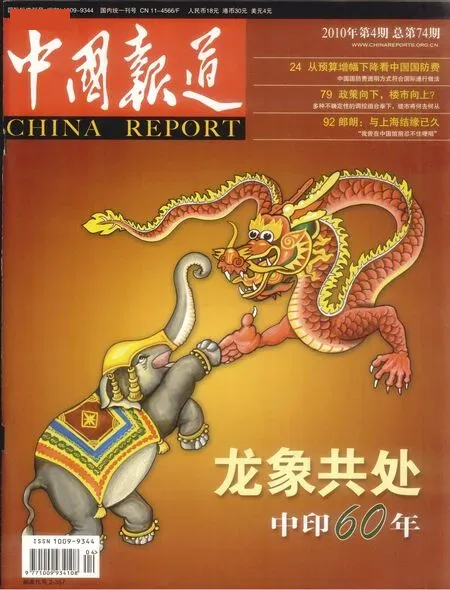
中國(guó)報(bào)道 2010年4期
關(guān)鍵詞:印度
本刊記者 孫玲 翻譯 王磊
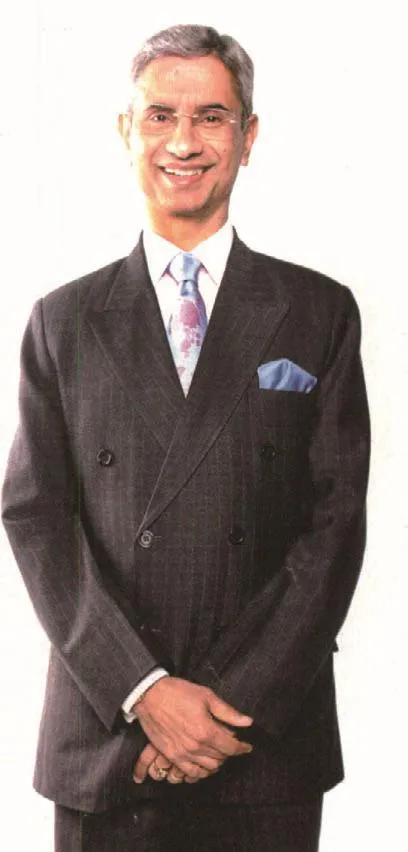
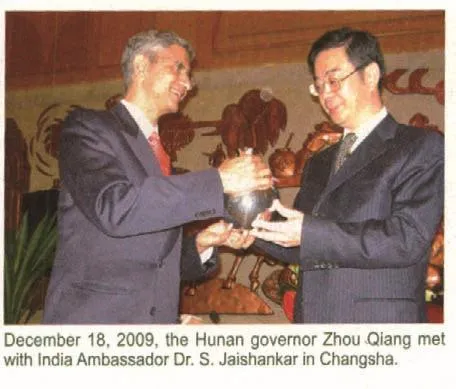
專訪印度駐華大使蘇杰生博士
我們一定要拘泥于歷史嗎?印度和中國(guó)都在崛起。兩國(guó)都有非常美好的未來(lái)。這需要用樂(lè)觀和積極的態(tài)度來(lái)看待兩國(guó)關(guān)系。
2010年4月1日,中印兩國(guó)正式建交60周年。60年里,中印兩國(guó)在政治、經(jīng)濟(jì)、文化等方面的交流與合作都得到了充分的拓展。作為新興的發(fā)展中國(guó)家,中印兩國(guó)的發(fā)展面臨著哪些新的機(jī)遇??jī)蓢?guó)又將如何面對(duì)歷史問(wèn)題,在雙邊關(guān)系上邁出新的一步?為此,本刊記者專訪了印度駐華大使蘇杰生博士來(lái)解讀中印關(guān)系。
中國(guó)報(bào)道:今年是中印建交60周年,中國(guó)將今年定為印度年,印度也將今年定為中國(guó)年。請(qǐng)問(wèn)印度將舉辦哪些紀(jì)念活動(dòng)?除經(jīng)貿(mào)推廣之外,在文化交流等方面,是否也有一些安排?
蘇杰生:對(duì)我們來(lái)說(shuō)這是非常重要的紀(jì)念日子。我們應(yīng)該提醒年輕一代,中印兩國(guó)過(guò)去一直并肩奮斗。這將加強(qiáng)我們今后就共同關(guān)心的問(wèn)題一起合作的決心。目前,我們兩國(guó)確實(shí)在做一些貿(mào)易推廣的活動(dòng)。這些活動(dòng)將于今年4月至10月在印度17個(gè)城市舉行。另外,我們還將在30多個(gè)城市舉辦文化交流方面的活動(dòng)。會(huì)有更多的人能夠分享這些盛事。
中國(guó)報(bào)道:目前,中國(guó)已經(jīng)超過(guò)美國(guó)成為印度第一大貿(mào)易伙伴,印度也已成為中國(guó)第十大貿(mào)易伙伴。您如何總結(jié)60年來(lái)尤其近些年來(lái)兩國(guó)的經(jīng)貿(mào)往來(lái)和經(jīng)濟(jì)成就?蘇杰生:我們可以通過(guò)貿(mào)易數(shù)字來(lái)看新階段兩國(guó)貿(mào)易之間最顯著的變化。15年前,也就是1995年,雙方貿(mào)易額只有12億美元。在2000年也仍然只有30億美元。但是到了2005年,這個(gè)數(shù)字已經(jīng)增長(zhǎng)到187億美元。過(guò)去的兩年是兩國(guó)貿(mào)易額迅猛增長(zhǎng)的時(shí)候。2008年達(dá)到了510億美元。2009年即使遇到全球經(jīng)濟(jì)下滑,雙邊貿(mào)易額也達(dá)到了430億美元。2010年前兩個(gè)月,這個(gè)數(shù)據(jù)同比增長(zhǎng)50%以上,也是非常喜人的。應(yīng)該注意到的一點(diǎn)是,經(jīng)濟(jì)合作是新型印中關(guān)系最為核心的要素。因此,必須成功地做好兩國(guó)貿(mào)易和相互投資,這是非常重要的。
中國(guó)報(bào)道:您曾經(jīng)說(shuō),“中國(guó)企業(yè)在印度的表現(xiàn)要比印度企業(yè)在中國(guó)的表現(xiàn)活躍得多”,您能否對(duì)此做具體解釋?
蘇杰生:這里有兩方面的問(wèn)題。其一,中國(guó)企業(yè)要比印度企業(yè)活躍嗎?我相信是的。但是與此關(guān)聯(lián)的第二點(diǎn)是,印度的國(guó)內(nèi)市場(chǎng)要比中國(guó)市場(chǎng)更開(kāi)放嗎?我相信答案依舊是肯定的。因此,一方面,印度的企業(yè)必須更加努力;另一方面,中國(guó)的市場(chǎng)應(yīng)該更加積極和開(kāi)放,特別是在信息技術(shù)、制藥、農(nóng)產(chǎn)品出口和技術(shù)服務(wù)等方面。對(duì)中國(guó)來(lái)說(shuō),這是長(zhǎng)遠(yuǎn)的利益。
中國(guó)報(bào)道:中印建交60年,是思考和總結(jié)的契機(jī)。您曾說(shuō),要加強(qiáng)合作,就要為對(duì)方提供問(wèn)題的解決辦法。在您看來(lái),中國(guó)市場(chǎng)還應(yīng)該在哪些方面做出努力,以進(jìn)一步促進(jìn)兩國(guó)經(jīng)濟(jì)領(lǐng)域合作?蘇杰生:從根本上說(shuō),中國(guó)企業(yè)在為印度企業(yè)提供商機(jī)時(shí)應(yīng)該有一個(gè)更加開(kāi)放的心態(tài)。當(dāng)然,印度市場(chǎng)更應(yīng)該充分展示其競(jìng)爭(zhēng)力。我可以向你保證我們今年就會(huì)做這件事。3月26日,我們辦了一個(gè)大型信息技術(shù)領(lǐng)域的活動(dòng)。今年晚些時(shí)候還要在制藥方面辦一個(gè)活動(dòng)。我本人也已游說(shuō)我們的商會(huì)派出工業(yè)代表團(tuán)來(lái)參加這17項(xiàng)活動(dòng)。
中國(guó)報(bào)道:中國(guó)和印度有許多共同點(diǎn),如人口最多的國(guó)家,同為發(fā)展中國(guó)家,又是“金磚四國(guó)”中的兩個(gè)重要成員。您如何看這些共同點(diǎn)在兩國(guó)交往中所發(fā)揮的作用以及對(duì)今后的影響?
蘇杰生:印度和中國(guó)有很多利益共同點(diǎn)。這體現(xiàn)在我們的雙邊關(guān)系和解決地區(qū)和全球問(wèn)題等方面。我們有責(zé)任把這些共同點(diǎn)轉(zhuǎn)化為雙方的合作。如果是有重大意義的合作,無(wú)疑會(huì)帶來(lái)更大的反響。
中國(guó)報(bào)道:在中國(guó)經(jīng)濟(jì)崛起的同時(shí),印度國(guó)內(nèi)對(duì)中國(guó)的快速發(fā)展表示了一些警惕,對(duì)此您有什么看法?您對(duì)中印兩國(guó)增強(qiáng)彼此互信,有什么建議?
蘇杰生:我的感覺(jué)是,事實(shí)上在普通印度人的心中,對(duì)中國(guó)取得的經(jīng)濟(jì)成就是非常羨慕的。對(duì)我們來(lái)說(shuō),確實(shí)有值得學(xué)習(xí)的地方。兩國(guó)之間的互信將隨著合作的不斷加深而增強(qiáng)。
中國(guó)報(bào)道:作為電影大國(guó),印度寶來(lái)塢電影多年來(lái)深受中國(guó)人喜愛(ài),比如《大篷車(chē)》、《阿育王》、《寶來(lái)塢生死戀》。您是否喜歡看中國(guó)電影?
蘇杰生:我并沒(méi)有觀賞很多中國(guó)電影。近期,我看了《建國(guó)大業(yè)》,非常吸引我。當(dāng)然我也看過(guò)一些更有名的電影,比如《十面埋伏》和《天地英雄》。我還非常喜歡《赤壁》。
中國(guó)報(bào)道:中國(guó)一些專家也在為中印建交60年做梳理和總結(jié),其中提到中印交往的一些歷史教訓(xùn),和兩國(guó)需要跨越的歷史難題。您如何看那些不愉快的往事?
蘇杰生:我想反問(wèn)的問(wèn)題是:我們一定要拘泥于歷史嗎?印度和中國(guó)都在崛起。兩國(guó)都有非常美好的未來(lái)。這需要用樂(lè)觀和積極的態(tài)度來(lái)看待兩國(guó)關(guān)系。
中國(guó)報(bào)道:中印邊界問(wèn)題還未能最后解決,對(duì)此,您期待一個(gè)什么樣的結(jié)果?
蘇杰生:這是一個(gè)復(fù)雜的問(wèn)題,解決它還需要時(shí)間。
中國(guó)報(bào)道:您曾經(jīng)在多個(gè)國(guó)家有駐外經(jīng)歷,和以往其他國(guó)家相比,在中國(guó)工作最大的特點(diǎn)或不同是什么?
蘇杰生:我認(rèn)為中國(guó)最迷人的部分就是其變革的廣度和速度。中國(guó)也是唯一一個(gè)與印度面臨類(lèi)似挑戰(zhàn)的國(guó)家。這確實(shí)非常特別。
中國(guó)報(bào)道:自從2009年8月上任以來(lái),您去了中國(guó)許多地方,如上海、廣州等。您覺(jué)得在中國(guó)生活和在印度生活的最大區(qū)別是什么?
蘇杰生:對(duì)一個(gè)像我這樣的人來(lái)說(shuō),中國(guó)的現(xiàn)代化和傳統(tǒng)性是非常有趣的。這兩者的共存對(duì)一個(gè)印度人來(lái)說(shuō)可能更容易理解。在我的職業(yè)生涯里,我們一直在做的就是求同存異。我可以向你保證,印度和中國(guó)的共同之處要比你看第一眼得出的結(jié)論多得多。
Interview of Ambassador Dr. S. Jaishankar
China Report: This year is the 60th anniversary of the establishment of diplomatic relations between China and India. China sets this year as “India Year”,while India sets it as “China Year”. Would you please tell us something about the main celebration activities in India? What are they and how they go? Besides trade promotion,are there many arrangements on cultural exchange and other aspects?
Dr. S. Jaishankar: It is a very important anniversary for us. We should remind the younger generations that India and China have stood together in the past. That will strengthen our resolve to do so in future on issues of common concern. Yes, we are doing a number of trade promotion events.In fact, these will be in 17 cities between April and October, 2010. In addition,there will be cultural activities in more than 30 cities so that we enjoy a better appreciation at the popular level.post strong growth. It was $51 billion in 2008 and in 2009, despite the global economic downturn, was $43 billion. The first two months of 2010 have been very encouraging. There is more than 50%growth as compared to 2009. The point to note is that economic cooperation is a central element of the new India-China relations. It is, therefore, very important that the businesses of both countries must succeed when dealing with each other and investing in each other.
China Report: At present, China has surpassed America and become India’s biggest trade partner. India is China’s tenth biggest trade partner. Would you summarize the economic exchange and trade between the two countries and their economic achievements in the past 60 years and in recent years especially?
Dr. S. Jaishankar: The most visible change in this new phase of our ties can be seen in our trade figures. Fifteen years ago, in 1995, bilateral trade was only $1.2 billion. In 2000, it was still only $3 billion.By 2005, it had grown to $18.7 billion.The last two years have seen our trade
China Report: You said that the Chinese enterprises in India are more actively than the Indian enterprises in China. Would you please interpret this in detail?
Dr. S. Jaishankar: There are two issues.One, are Chinese enterprises more active than Indian? I believe they are. But linked to this is, two, is India’s domestic market more open than China’s? I also believe that is so. Therefore, on the one hand,Indian business must strive harder. On the other, China should be more encouraging and open, particularly when it comes to IT, pharmaceuticals, agro-exports and engineering services. This is in long term Chinese interest.
China Report: China and India have diplomatic relations for 60 years. It is a golden moment now to think and summarize.You said that to enhance cooperation is to find a solution for the counterpart’s problem.Thus the Chinese market should make more effort to promote the economic cooperation between the two countries. In your point of view, what should the Chinese market do?Dr. S. Jaishankar: Essentially, Chinese companies should approach opportunities relating to Indian companies with a more open mind. Of course, that is possible only when India markets its capabilities more aggressively. I assure you we will do that this year. We have a big IT event to do exactly that on 26th March. We will do a pharmaceutical event later in the year.I have personally lobbied our business chambers to send industry-focused delegations to the 17 events we will be holding.for China’s speedy development. What’s your point of view about this? What’s your advice for China and India to deepen the mutual trust in the future?
Dr. S. Jaishankar: My sense is that there is actually considerable admiration in the mind of the average Indian when it comes to China’s economic achievements. For us, there are lessons to be learnt. Mutual trust will grow as habits of cooperation develop.
China Report: China and India share many things in common. How would you judge the roles those in common play in the exchanges between the two countries and their effects in the future?
Dr. S. Jaishankar: India and China have a strong convergence of interests. This can be reflected in our bilateral relations
China Report: Under the mechanism called BRICs, in what fields should the two countries further their cooperation, and what roles should they play on the international stage?
Dr. S. Jaishankar: We should await the Summit next month to assess the direction of BRICs cooperation.
and in our approach to regional and global issues. It is upto us to translate that convergence into cooperation. If that happens in a significant way, obviously, it will have much bigger repercussions.
China Report: India has a big motion picture industry. For many years, the Chinese like the Bollywood movies like Caravan and Devdas.Do you like Chinese movies? Can you name some?
Dr. S. Jaishankar: I haven’t seen as many Chinese films as I should. Recently, I watched the ‘Founding of the Republic’. It was very engrossing. Of course, some of the more famous films like ‘House of the Flying Daggers’ and ‘Warriors of Heaven and Earth’ have been seen by me. I also like ‘Red Cliff ’ very much.
China Report: As the Chinese economy taking off, some Indian people are on alert
China Report: Some Chinese experts are now summarizing Sino-India diplomatic relations at the 60th anniversary of its establishment. They mentioned about some historical lessons and also some historical
obstacles which need to be overcome in the exchanges between the two countries. How do you think about these unhappy stories in history?
Dr. S. Jaishankar: My counter question would be: Should we always remain prisoners of history? India and China are both rising. They have a great future ahead. That calls for optimism and a positive approach to our relationship.
China Report: Some border disputes between China and India have not yet been resolved. What results do you expect?
Dr. S. Jaishankar: It is a complicated issue and will naturally require time.
China Report: You have overseas work experience in many countries. Compare to other countries, what are the peculiarity and difference for you to work in China?
Dr. S. Jaishankar: I think the most fascinating part of China is the scale and speed of change that I see around me. It is also the only country whose challenges are comparable to those we face in India. That makes it very special.
China Report: Since you took office in August 2009, you have been to many places in China, like Shanghai and Guangzhou. Can you tell us your impression on China? What is the biggest difference between living in China and in India?
Dr. S. Jaishankar: Both the modernity and the heritage of China are of great interest to a person like me. Their co-existence is probably better understood by an Indian.In my profession, it is not that we ignore differences. But we constantly search for common ground. I can assure you that India and China have much more in common than you might assume at first glance.
猜你喜歡
中外文摘(2021年23期)2021-12-29 03:54:04
英語(yǔ)文摘(2021年7期)2021-08-14 02:36:28
幼兒100(2021年8期)2021-04-10 05:39:44
數(shù)學(xué)大王·趣味邏輯(2020年10期)2020-10-20 06:20:01
中國(guó)化肥信息(2018年4期)2018-08-23 09:11:18
中外文摘(2017年21期)2017-11-02 01:50:04
華人時(shí)刊(2017年19期)2017-02-03 02:51:37
青年文學(xué)(2015年1期)2015-10-24 03:27:18
海峽姐妹(2015年5期)2015-02-27 15:11:02
環(huán)球時(shí)報(bào)(2015-01-21)2015-01-21 01:38:52