
Prediction of Effective Diffusion Coefficient in Rotating Disc Columns and Application in Design
2009-05-14 03:04:42MarziehAmanabadiHosseinBahmanyarZohrehZarkeshanandMohamadAliMousavian
Marzieh Amanabadi, Hossein Bahmanyar, Zohreh Zarkeshan and Mohamad Ali Mousavian
?
Prediction of Effective Diffusion Coefficient in Rotating Disc Columns and Application in Design
Marzieh Amanabadi, Hossein Bahmanyar*, Zohreh Zarkeshan and Mohamad Ali Mousavian
Engineering College, Chemical Engineering Faculty, University of Tehran, Iran
A rotating disc column (RDC) with inner diameter 68 mm and 28 compartments is used in this study. Parameters including Sauter mean diameter, hold-up and mass transfer coefficient are measured experimentally under different operating conditions. The correlations in literature for molecular diffusion and enhancement factor equation including eddy diffusion, circulation and oscillation of drops are evaluated. A new equation for the effective diffusion coefficient as a function of Reynolds number is proposed. The calculated values of mass transfer coefficient and column height from the previous equations and present equation are compared with the experimental data. The results from the present equation are in very good agreement with the experimental results, which may be used in designing RDC columns.
liquid-liquid extraction, rotating disc column, mass transfer coefficient, effective diffusion coefficient
1 Introduction
Rotating disc column (RDC) is widely used for liquid-liquid extraction. The performance of these columns indicates that they are more efficient and possess better operational flexibility than the conventional sieve plate, packed and spray columns. An important application of these contactors is in the petroleum industry for furfural and sulfur dioxide extraction, propane deasphalting, solfolane extraction and for caprolactum purification [1]. In order to obtain a suitable design for RDC columns, a number of hydrodynamic parameters, axial mixing and mass transfer should be considered. In these columns, new drops are generated from breakage of bigger drops or coalescence of smaller drops [2, 3]. The variation of droplet sizes and dispersed phase hold-up along the column height due to droplet interactions have been studied by using the droplet population balance model [4-6]. Another most important parameter in design is the mass transfer coefficient. The fundamental process for the rate of mass transfer in extraction columns is still not sufficiently well understood nor adequately modeled [7]. Passage of drops from the continuous phase is under the influence of hydrodynamics and has a distinct effect on the mechanism and amount of mass transfer. With regard to the dispersion in the column, the inside of the drop may be stagnant, circulating, or oscillating [8, 9]. Therefore, the mass transfer mechanism inside the drop will be based on the existence or non-existence of circular flows.
In the following sections, by introducing a number of equations, the mass transfer coefficient will be calculated and the column height will be specified. A new equation for effective diffusivity is proposed for calculating the mass transfer coefficient and column height, and the results are compared with the calculated values from other equations in literature and experimental data.
2 Previous work
One of the oldest equations for the mass transfer coefficient, used for stagnant drops with molecular diffusion mechanism, is the Newman equation [10]. With the continuity equation and following initial and boundary conditions, Eq. (2) is obtained [11].


wheresis the drop radius. In Eq. (2) the resistance of continuous phase is neglected.
By applying the resistance in the continuous phase, Eq. (2) becomes [7]:

whereCandare functions ofc/d.
The equation, obtained by Kronig and Brink [12], for drops in which the mass transfer mechanism involves both molecular diffusion and composed internal circulation, is presented as follows:

For the drops with toroidal internal circulation, the dominant mechanism of mass transfer is eddy diffusion and the equation by Handlos and Baron [13] is used as follows:

Many arbitrarily chosen combinations of prediction models for mass transfer coefficient in dispersed phase have been recommended for use in RDC design. Nearly all the recommended combinations have resulted from the combination of mass transfer coefficient for dispersed phase from one of the above mentioned theoretical models, which can give the best agreement between predicted and experimental separation efficiencies. The equation for effective diffusivities or enhancement factor applicable in the rigid drop model is obtained by empirical combination of molecular diffusivity and an equivalent diffusivity. Many equations have been presented for determining the enhancement factor, several of which are listed in Table 1.
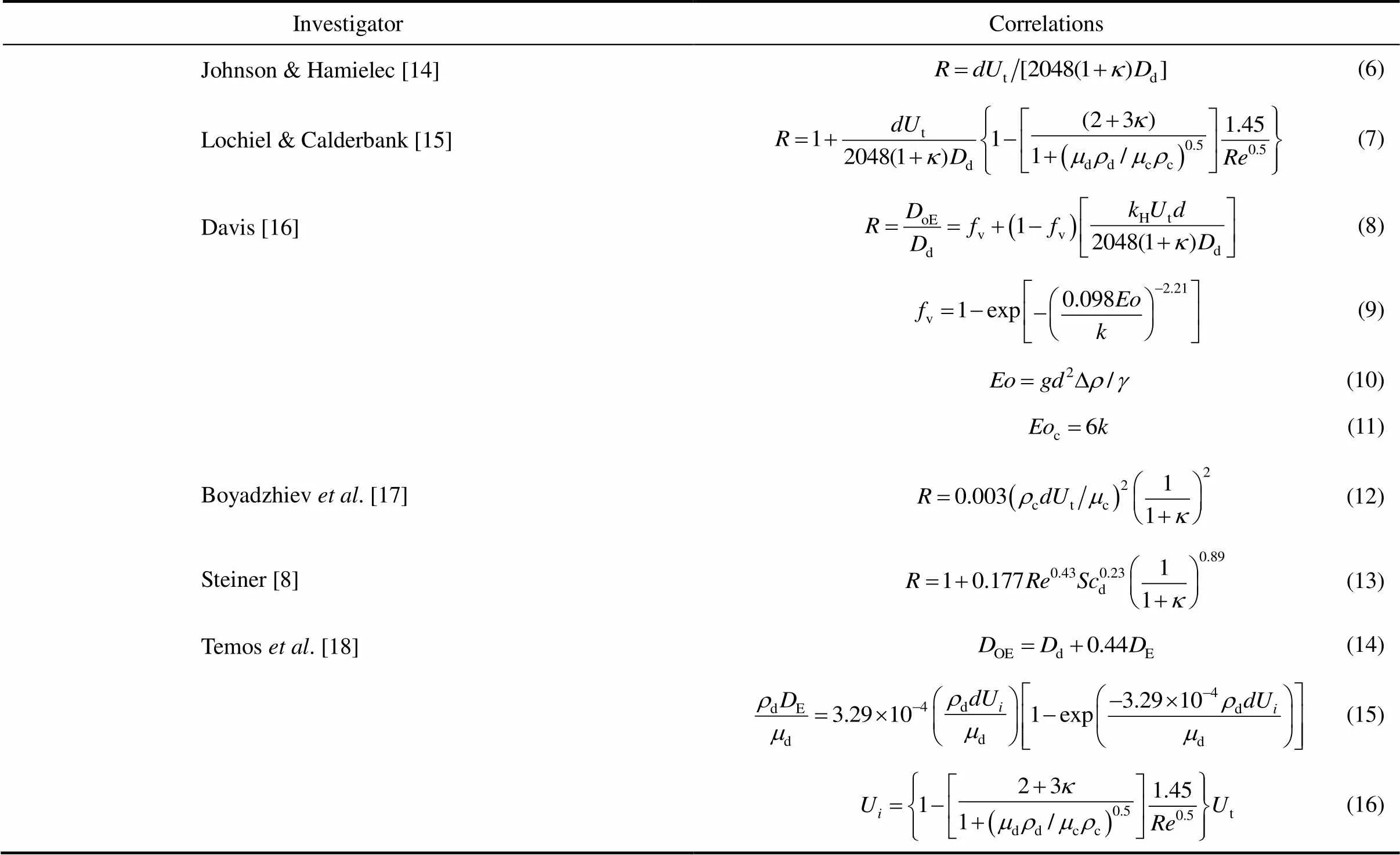
Table 1 Equations for enhancement factor in the literature
All these equations will be used in the experimental results section, and the results obtained from these equations will be compared with the experimental data.
3 Apparatus and MEASUREMENT
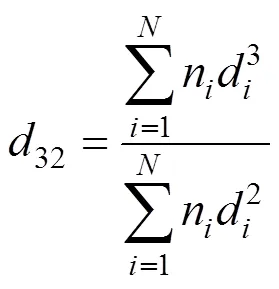
The experimental apparatus is shown in Fig. 1. The RDC column was made of glass and its rotors and stators were made of stainless steel. The continuous phase was fed at the top of the column to flow countercurrently to the dispersed phase fed at the bottom. The flow rates of two phases were measured using calibrated rotameters. The rotor speed was measured using Digital Tachometer photo/contact type and adjusted to the desired value (about 1.2 to 2 times of the critical value at which drops start to break). The holdup of dispersed phase was measured by shutdown method, in which the inlet and outlet flows were stopped simultaneously after reaching the steady state. The dispersion was then coalesced at the interface. The holdup was then measured by determining the change of interfacial height. The Sauter mean diameter,32, was obtained by photographic technique at a few stages of the column height and calculated by Eq. (17),
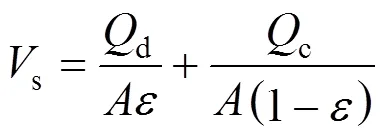
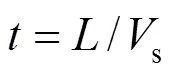
In each experiment for a specific column height, flow rates of dispersed and continuous phases, after measuring the holdup of dispersed phase and Sauter mean diameter, the slip velocity and contact time can be calculated using the following equations:
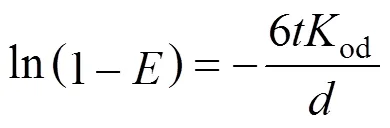
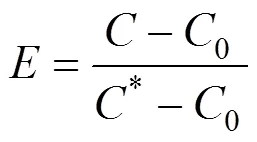
Mass transfer coefficients and enhancement factor are calculated using previous mentioned equations. With sampling from the valves in different sections of the column and measuring the solute concentration,, the experimental values of mass transfer coefficient can be found from Eqs. (20) and (21). Using these equations with the Newman equation, the definition of effective diffusivity can be shown in Eq. (22).

The other geometric values of the column are listed in Table 2.

Figure 1 The apparatus used in this research

Table 2 Characteristics of the column
4 Chemical system
The chemical system used in this study is water/acetic acid/carbon tetrachloride, in which water is the continuous phase, acetic acid as the solute and carbon tetrachloride as the dispersed phase. The mass transfer is from the dispersed to continuous phase. Physical properties of the system are shown in Table 3.

Table 3 Physical properties of system
5 Experimental results and discussion
The operating conditions and hydrodynamic parameters measured are listed in Table 4.

Table 4 Operating conditions
5.1 Calculation of mass transfer coefficient and column height using the equations in literature
By using the equations mentioned in the previous sections, and substituting(/s) for different droplet slip velocities, the mass transfer coefficient was calculated for each run and compared to the experimental data.
The error percentage shows the precision of each equation. The calculation results are shown in Figs. 2-4.
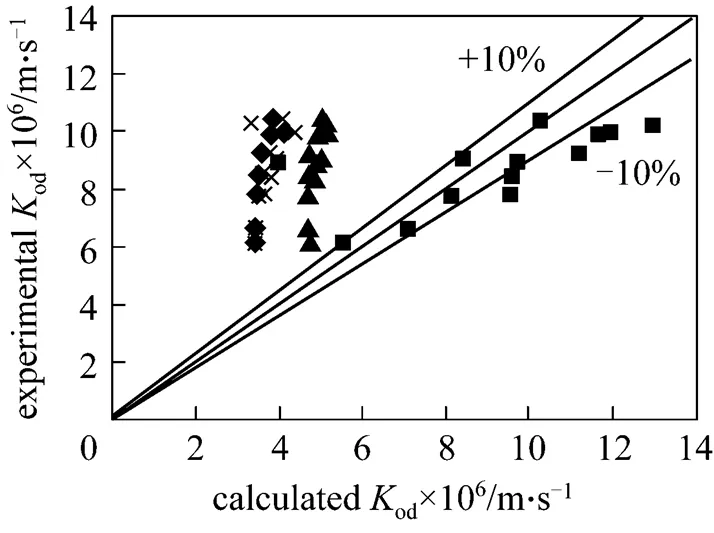
Figure 2 Calculatedodusing Newman, Boyadzhiev, Steiner and Temos equations◆?Newman;■?Boyadzhiev;▲?Steiner; ×?Temos
Figure 3 Calculatedodusing Davis, Lochiel & Calderbank, Johnson & Hamielec, and Kronig & Bring equations◆?Davis;■?Lochiel & Calderbank;▲?Johnson & Hamielec; ●?Kronig & Bring

Figure 4 Calculatedodusing Handlos & Baron equations
With calculated mass transfer coefficients, specific area and superficial velocity of dispersed phase in each run, the column height was calculated by Eq. (23), in whichis the specific area anddhis the mole fraction of solute measured at height, and compared to the actual values. The results are shown in Figs. 5-7.
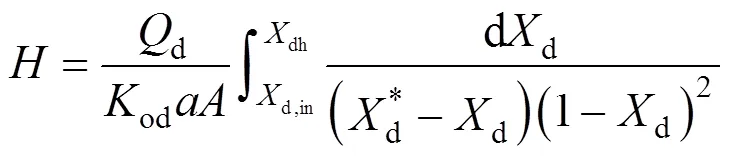

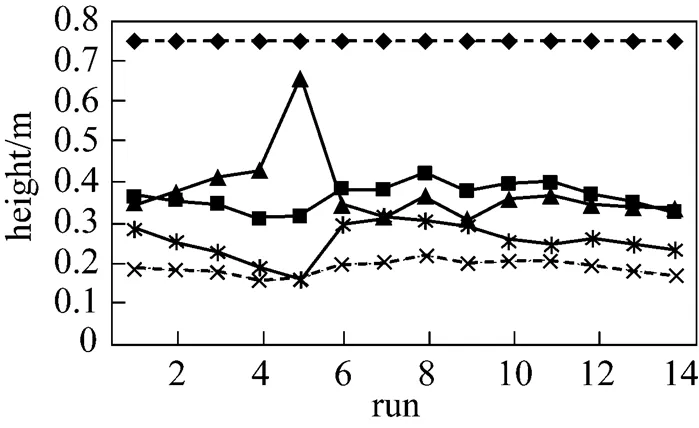
Figure 7 Calculated height using Handlos & Baron equations◆?actual height;▲?height usingsby Handlos & Baron equation
By considering Figs. 2-7, the previous equations can be divided into three categories:
(1) The equations which predictodmuch lower than the actual values.
The Newman equation [10] is for stagnant drops, the mechanism of mass transfer is molecular diffusion and no resistance in the continuous phase. Steiner [8] reduced Eq. (3) to its first term of the summation series and evaluated an enhancement factor. Temos. [18] proposed an overall diffusivity,OE, which was a combination of molecular diffusion in dispersed phase and eddy diffusivity. In their model an interfacial velocity at the drop equator was used.OEwas then used for laminar circulation model. In these models, the mass transfer is due to molecular diffusion or laminar circulation, so it is possible that the calculated values ofodare smaller than the experimental data (Fig. 2) and consequently the calculated column height are larger than the actual values (Fig. 5).
(2) The equations which predictodhigher than the actual values.
Davis[16] used a combination model for drops, divided into two regions: a stagnant cap with molecular diffusion and a circulating region with effective diffusivity. Lochiel and Calderbank [15] considered a flow around fluid spheres at intermediate Reynolds number. Johnson and Hamielec [14] modified Eq. (3) to define an enhancement factor. Their experiments involved the transfer of ethyl acetate into vigorously circulating water drops. Kronig and Brink [12] developed a model for mass transfer in circulating drops for zero external resistance. In these models with the mechanism of internal circulation, it is possible that the calculated values ofodare larger than the experimental values and then the column height calculated will be smaller (Figs. 3 and 6).
(3) The equations which predictodmuch higher than the actual values.
Handlos and Baron [13] proposed a model with the mass transfer mechanism in vigorously circulating drops. Due to the turbulence inside drops, the mass transfer coefficient calculated is much larger than the experimental values and the column height calculated is much smaller than the actual value (Figs. 4 and 7). Boyadzhiev. [17] presented an equation for enhancement factor based on their experimental data and those by Johnson and Hamielec [14]. As seen in Figs. 2 and 5, The equation shows the least error and may be considered an appropriate equation.
Considering all above results, we intend to find an effective diffusivity as a function of hydrodynamic parameters such as Sauter mean diameter and slip velocity, in which the holdup of dispersed phase are considered.
5.2 A new equation for effective diffusion coefficient
The error from the calculated mass transfer coefficient and column height shows the necessity for a more appropriate equation in column design. As shown in the previous sections, one of the equations with the best theoretical background is the Newman equation, which is based on the continuity equation with appropriate initial and boundary conditions. Thus this equation is used in this section for finding the effective diffusivity,eff, and it is preferred to other equations like Boyadzhiev equation based on experimental data. Due to the main effect of effective diffusion coefficient on mass transfer coefficient and column height, by replacingand experimental mass transfer coefficient in the Newman equation, the effective diffusion coefficient was calculated and the best curve ofeff.for different droplet velocity was drawn in a logarithmic scale. In order to obtain more accurate results, calculations were carried out using following different droplet velocities and the results are shown in Figs. 8-10.
(1) Slip velocity given in Eq. (18).
(2) Characteristic velocity

(3) Terminal velocity [7]
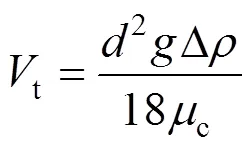
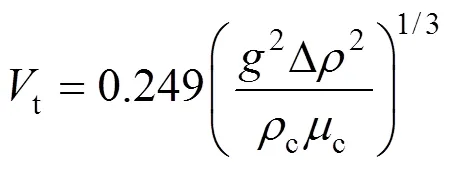
Figure 8eff.using slip velocity
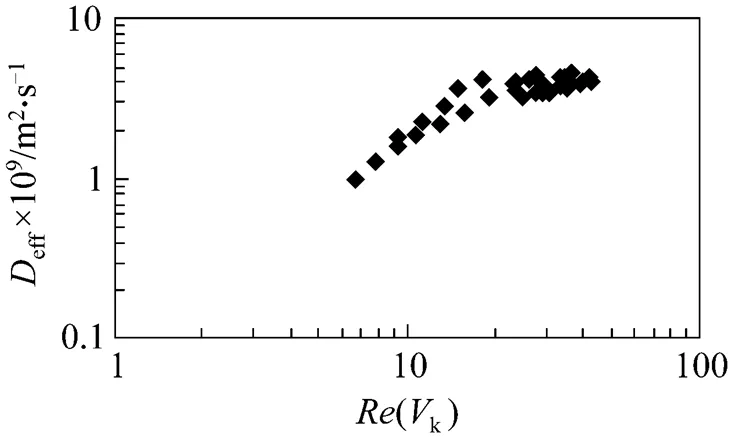
Figure 9eff.using characteristic velocity
Figure 10eff.using terminal velocity
With Figs. 8-10, the equation foreffcan be found based on. The mass transfer coefficient and column height calculated using the effective diffusion coefficients (Figs. 8-10) are given in Tables 5 and 6.
As seen in Tables 5 and 6, if the Reynolds number is defined based on slip velocity, the error percentage is less compared to those with characteristic velocity and terminal velocity. Therefore, utilization of slip velocity for the Reynolds number and in the present equation may be most suitable for the column design. An equation for effective diffusion coefficient with the least standard deviation is suggested as follows.

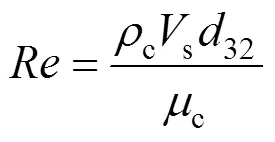
Figures 11 and 12 show the final results using above equations. Comparison of these figures with Figs. 2-7 shows that the proposed equation is much better.

Table 5 Calculated mass transfer coefficient with present model
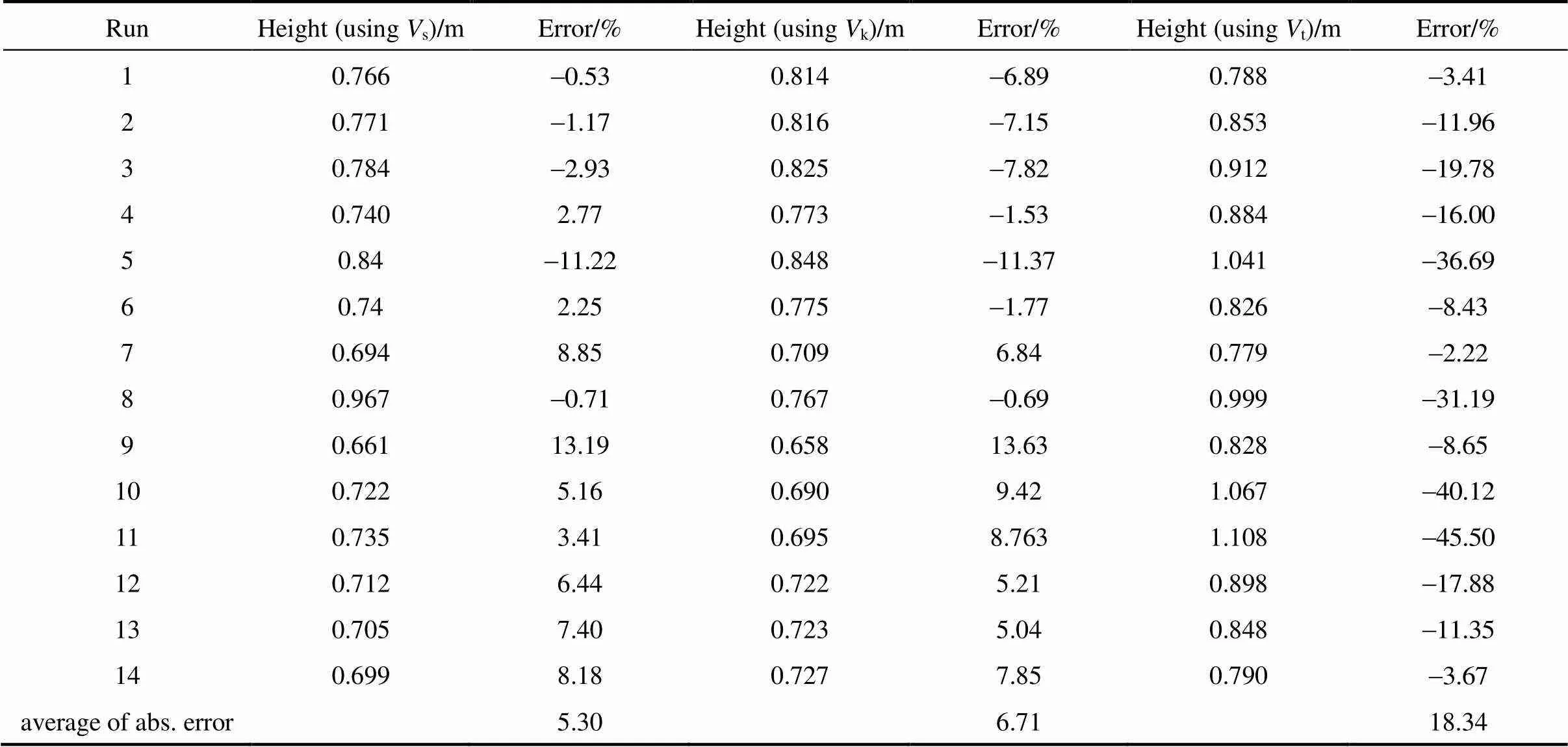
Table 6 Calculated height with present model
6 Conclusions
Among the equations used for calculating mass transfer coefficient and column height including enhancement factor, Boyadzhiev equation [17] is in good agreement with the experimental results. An new experimental equation is proposed in this work for calculating effective diffusion coefficient based on Reynolds numbercs32/c, which can be used for designing RDC.

Figure 11 Comparison of calculatedodusing present equation
Figure 12 Comparison of calculated height using present equation▲?height usingsby suggested equation;■?actual height
Nomenclature
column cross sectional area, m2
specific area, m2·m-3
solute concentration in dispersed phase, kmol·m-3
*equilibrium concentration of solute in dispersed phase, kmol·m-3
CTaylor constant
0initial concentration of solute in dispersed phase, kmol·m-3
ddiffusion coefficient, m2·s-1
Eeffective diffusion coefficient, m2·s-1
effeffective diffusion coefficient, m2·s-1
OEoverall effective diffusion coefficient, m2·s-1
drop diameter, m
32mean diameter of drop, m
cEotvos number for drop with critical diameter
vfractional segmental volume of stagnant drop
gravitational constant, m2·s-1
cmass transfer coefficient based on continuous phase, m·s-1
dmass transfer coefficient based on dispersed phase, m·s-1
odoverall mass transfer coefficient based on dispersed phase, m·s-1
Hcontamination coefficient varied between 0 to 1
column length, m
cvolume flow rate of continuous phase, m3·s-1
dvolume flow rate of dispersed phase, m3·s-1
internal enhancement factor for mass transfer
,sdrop radius, m
contact time, s
velocity, m·s-1
tterminal velocity, m·s-1
kcharacteristic velocity of drop, m·s-1
sslip velocity of drop, m·s-1
tterminal velocity of drop, m·s-1
dmole fraction of solute in dispersed phase
dhmole fraction of solute in dispersed phase at the column height
interfacial tension, N·m-1
dispersed phase holdup
viscosity ratio (dispersed/continuous phase)
λeigen value
ccontinuous phase viscosity, kg·m-1·s-1
ddispersed phase viscosity, kg·m-1·s-1
ccontinuous phase density, kg·m-3
ddispersed phase density, kg·m-3
Δdifference of dispersed and continuous densities, kg·m-3
1 Laddha, G.S., Degaleesan, T.E., Transport Phenomena in Liquid-Liquid Extraction, McGraw Hill, New York (1976).
2 Bahmanyar, H., Dean, D.R., Dowling, I.C., Ramlochan, K.M., Slater, M.J., “Studies of drop break-up in liquid-liquid system in an RDC, mass transfer conditions”,..., 14, 178-185 (1991).
3 Bahmanyar, H., Slater, M.J., “Studies of drop break-up in liquid-liquid system in an RDC, no mass transfer conditions”,..., 14, 78-89 (1991).
4 Ghalehchian, J.S., Slater, M.J., “A possible approach to improving rotating disc contactor design accounting for drop breakage and mass transfer with contamination”,..., 75, 131-144 (1999).
5 Attarakih, M.M., Bart, H.J., Faqir, N.M., “Numerical solution of the spatially distributed population balance equation describing the hydrodynamics of interacting liquid-liquid dispersions”,..., 58, 2567-2592 (2004).
6 Schmidt, S.A., Simon, M., Attarakih, M.M., Lagar, L.G., Bart, H.J., “Droplet population balance modeling hydrodynamics and mass transfer”,..., 61, 246-256 (2006).
7 Godfrey, J.C., Slater, M.J., Liquid-Liquid Extraction Equipment, John Wiley & Sons, Chichester, Chapter 4,5,9 (1994).
8 Steiner, L., “Mass transfer rates from single drops and drop swarms”,..., 41 (8), 1979-1986 (1986).
9 Kumar, A., Hartland, S., “Correlations of mass transfer coefficients in single drop systems and liquid-liquid extraction columns”,...., 77, 372-384 (1999).
10 Newman, A.B., “The drying of porous solids: Diffusions and surface emission equations”,....., 27, 203-220 (1931).
11 Skelland, A.H.P., Diffusional Mass Transfer, Wiley, New York (1974).
12 Kronig, R., Brink, J.C., “On the theory of extraction from falling droplets”,.., 2, 142-154 (1951).
13 Handlos, A.E., Baron, T., “Mass and heat transfer from drops in liquid-liquid extraction”,., 3 (1), 127-136 (1957).
14 Johnson, A.I., Hamielec, A.E., “Mass transferinside drops”,., 6 (1), 145-149 (1960).
15 Lochiel, A.C., Calderbank, P.H., “Mass transfer in the continuous phase around axisymmetric bodies of revolution”,..., 19 (7), 471-484 (1964).
16 Davis, J.T., “Interfacial renewal”,..., 62 (7), 89-94 (1966).
17 Boyadzhiev, L., Elenkov, D., Kyuchukov,G., “On liquid-liquid mass transfer inside drops in a turbulent flow field”,...., 47, 42-44 (1969).
18 Temos, J., Pratt, H.R.C., Stevens, G.W., “Comparison of tracer and bulk mass transfer coefficients for droplets”, In: Proc. ISEC 93, Elsevier, Amesterdams, 1770-1777 (1993).
2008-08-25,
2009-03-02.
* To whom correspondence should be addressed. E-mail: hbahmany@ut.ac.ir
 Chinese Journal of Chemical Engineering2009年3期
- Chinese Journal of Chemical Engineering的其它文章
- Position Group Contribution Method for Estimation of Melting Point of Organic Compounds
- Process Intensification of VOC Removal from High Viscous Media by Rotating Packed Bed*
- Adsorption of Dye from Wastewater by Zeolites Synthesized from Fly Ash: Kinetic and Equilibrium Studies*
- Modeling of Isomerization of C8 Aromatics by Online Least Squares Support Vector Machine*
- Resolution of Ibuprofen Ester by Catalytic Antibodies in Water-miscible Organic-solvents*
- Reaction Characteristics of Asymmetric Synthesis of (2S,5S)-2,5-Hexanediol Catalyzed with Baker’s Yeast Number 6*