Into the Depths of the Greater Khingan Mountains(2)
2025-03-08 00:00:00
中國新書(英文版) 2025年1期

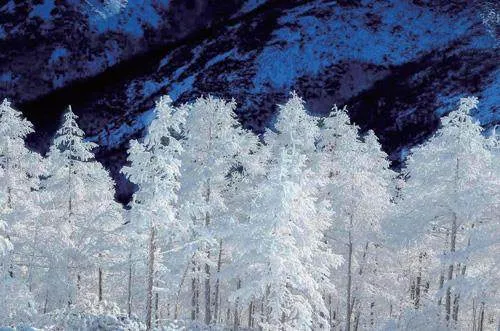

The night in the Greater Khingan Mountains is tranquil and pure.
There is no artificial light to be seen.
The wind blows through the forest, creating waves of “surfing” sounds; the gentle flow of the Aba River fades into the distance; occasionally, a branch snaps with a sharp “crack,” and there is the subtle hum of insects.
This peace, this purity, intoxicated me as I stepped into this land for the first time.
“Woof! Woof!”
“Woof! Woof!”
Around 11 p.m., a sudden burst of dog barks echoed from the direction of the camp, rippling through the vast darkness.
At first, there was just one dog, but soon others joined in. Two, three, four, or maybe five. They barked and ran, ran and barked, getting louder and fiercer with each moment.
The first night at the Qiqian Squad was destined to be sleepless.
It was a summer evening in late July 2021. I arrived in Hailar from Changsha by plane on the first day. Early the next morning, I boarded an off-road vehicle, led by the relevant staff from the Publicity Department of the Greater Khingan Mountains Forest Fire Brigade. We set off for Qiqian. The ten-hour journey took us through an endless green ocean. Along the way, I marveled at the vibrant colors and vastness of the Greater Khingan Mountains, while also experiencing the unique microclimate with its sudden changes from sunshine to rain. Qiqian is a township under the jurisdiction of Ergun City in Hulunbuir, Inner Mongolia, located along the Ergun River in the northern part of the Greater Khingan Mountains, right in the heart of the pristine forests. The Qiqian squadron, part of the Mordaoga team under the Greater Khingan Mountains Forest Fire Brigade, is not only situated at the forefront of the northern frontier of our country, but it also guards the only contiguous 950,000-hectare undeveloped primitive forest area in China.
When we finally arrived at the squadron after passing through the dense forest, it was already dusk. The vast twilight slowly obscured the distant mountains. The squadron’s buildings, with red roofs and white walls, were embedded in a concave shape deep within the forest. Smoke rose from the kitchen chimney, and everything in front of me was neat and clean, instantly evoking a sense of warmth. Several dogs, yellow and black, of various sizes, ran toward us excitedly, wagging their tails in greeting.
After dinner, Squad Leader Wang Depeng gave me a tour of the squadron’s honor room. Wang, a 90s-born youth, wore glasses and was both handsome and refined. He is from Zhalantun City, Hulunbuir. In 2008, he passed the entrance exam for Beijing Forestry University’s national defense program. After graduation, he chose to serve in the Greater Khingan Mountains. After spending four or five years in the Kudur team, he returned to Beijing Forestry University to pursue a master’s degree. Upon completing his graduate studies, he didn’t hesitate to return to the Greater Khingan Mountains and unwaveringly came to the Qiqian squadron. Many classmates and friends thought he was foolish. After completing his master’s degree, he clearly had the opportunity to leave the mountains, yet he chose to go further and deeper into the Greater Khingan Mountains.
The honor room is not large, but I could feel its weight and significance. Squad Leader Wang said that every year, when new recruits arrive at the squad, the team uses the opportunity to visit the honor room as part of the team’s history education. They are motivated by the hardships of starting the team, by the heavy medals, and by the spirit of Qiqian, which has been nurtured over decades, inspiring and guiding them. The squad not only has great responsibility and mission, but also a long history. The Greater Khingan Mountains serve as the “green Great Wall” of our northern frontier, not only shielding against Siberian cold fronts and the arid winds of the Mongolian Plateau, but also acting as a natural barrier that strengthens the Northeast Plain, guarding the food security of the “granary of China” — the Songnen Plain. Its ecological value is unique and vital. The 950,000 hectares of pristine forest area guarded by the Qiqian squadron is located in the northern part of the Greater Khingan Mountains. This area is the only section of the Eurasian taiga forest that extends into China. If we calculate the average area per squad member, each person is responsible for a fire protection zone as large as more than 20,000 football fields. In summary, there are three prominent characteristics of the Qiqian squadron. First, it is located near the border. The squad’s base is only 2.5 kilometers from the China-Russia border, which directly and severely tests the loyalty of its members. Second, it is situated along the extreme cold line. The squad is located at the “cockscomb” of China’s map, with an average annual temperature of —3℃, the historical record for the lowest temperature reaching —53℃, and a frost-free period of only 82 days, while the winter lasts for as long as nine months. Third, it is located deep within the forest. Among the entire Greater Khingan Mountains Fire Brigade, the Qiqian squadron has the largest fire protection area, the heaviest duties, and the most frequent firefighting activities. The squad was established in April 1963, and since its founding, it has spent about 22,000 days and nights guarding the Greater Khingan Mountains. One could say that here, the team members live year-round with the mountains, surrounded by dense forests, and constantly fighting solitude. The nearest township is Mordaoga Town, which is more than 150 kilometers from the squad’s location. For six months of the year, the area is sealed off by heavy snow, blanketing the land in white. The squad’s base is seldom visited by others; it lacks regular electricity and postal services.
In winter, the challenge is surviving in extreme conditions, while summer tests their firefighting abilities. What is firefighting? It’s essentially fire extinguishing and suppression, but the squad members prefer to call it “dahuo” (打火, literally “fire beating”), as it feels more intimate and energetic. Although the summer in the Greater Khingan Mountains is short, it is the peak season for wildfires, primarily caused by lightning strikes, with human-caused fires being rare. The period from June to August is particularly prone to dry thunderstorms. The unique geographical location, geological structure, and climate of the northern forest area make it highly susceptible to dry thunderstorms. Furthermore, the area is filled with pine trees that have high resin content. When a dry thunderstorm occurs, it can easily spark a forest fire, which is highly flammable and difficult to control. One day, there were over a thousand lightning strikes in the northern forest area, possibly the most ever recorded in a single day. A few days ago, there was a thunderstorm at the base, and for one hour, there were 40 minutes of intense thunder, with lightning flashing continuously. As soon as they hear the thunder, the team members become anxious and alert, preparing for firefighting. Thunderstorms with rain are still manageable, as the rain may put out the fire if it reaches a certain intensity. However, dry thunderstorms are terrifying. If the rain is too light to extinguish the fire, the fire may spread into a disaster. This area is full of high mountains, dense forests, and thick underbrush. To outsiders, it may appear mysterious and fascinating, but it is an extremely challenging region for firefighting.
“Firefighting must be very dangerous, right?” I asked.
Squad Leader Wang calmly replied, “In times of peace, firefighting is like ‘war.’” “Although we don’t carry guns, we hold the fire-fighting blower. The blower hose is our weapon. When we head to the fire line with it, it feels just like going to battle. Firefighting is the very reason for the existence of our forest fire brigade, even though we all hope for no fires.”
Forest fires can be classified into crown fires, surface fires, and underground fires. Among these, crown fires spread the fastest. When the fire burns in the tree canopy, the flames can reach several meters high. Driven by the wind, it spreads from one tree to another, rampaging through the forest without restraint. Do the team members immediately start fighting the fire upon arrival at the scene? No. When the wind is strong and the temperature high, the fire burns most fiercely. At this time, they generally don’t attack the fire directly, because it’s too hard to control and extremely dangerous. What should they do? The commander immediately surveys the terrain and weather, predicts the extent of the fire, and determines the location for creating firebreaks. The team members, following the instructions, cut down trees, dig trenches, and create firebreaks to contain the fire within a certain range. When do they attack the “fire demon?” Usually, it’s when the wind dies down and the temperature drops. Experienced team members form the advance unit, charging ahead with their blowers to fight the flames, while younger members follow behind to clear out any remaining embers. The hardest part of firefighting is the lack of water. Prolonged exposure to the intense heat of the fire causes rapid dehydration. Experienced members are cautious with the water they bring. No matter how thirsty they are, they only take small sips. Some younger members, lacking experience, drink all their water on the way to the fire line. The seasoned squad leaders offer advice to the younger members: “Cut through the bark of a birch tree, insert a stick, and you’ll be able to extract some moisture. Collect it in a bottle.” After a couple of hours, they can gather about three to four centimeters of birch sap. Everyone shares it, each taking a small sip. But this is only a drop in the bucket. To solve this problem, team members are dispatched to search for water sources. On the fire line, the most encouraging word is “koutou” (扣頭). This term refers to when teams positioned at different sections of the fire line meet up, indicating that the fire has been encircled and therefore controlled. The visibility on the fire line is low, and the firefighting teams don’t know when they will be able to achieve “koutou.” Only those observing the overall fire situation from the rear can confirm everything. They communicate through walkie-talkies to the commanders on the fire line: “Team X, be aware, there’s another team Y about X meters ahead. ‘Koutou’ will happen soon!” When this message is received, everyone knows that they will finally return from the fiery hell to the warmth of the human world.
Ji Hongjian
Ji Hongjian is the vice president of the China Reportage Society, a member of the Reportage Committee of the Chinese Writers Association, and a member of the Presidium of the Hunan Federation of Literary and Art Circles. He is a “Young Talent in Propaganda, Ideology, and Culture” of the Propaganda Department of the CPC Central Committee, and an expert who enjoys special government allowances from the State Council. He has won the 7th Lu Xun Literature Award and the 15th “Five One Project” Special Award of the Central Propaganda Department.