“中國外國文學學會朝鮮-韓國文學研究分會2024年年會”在南昌大學召開
2025-02-09 00:00:00全紅
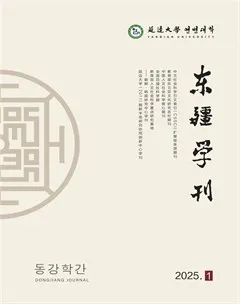
東疆學刊 2025年1期

2024年10月26日,由南昌大學、中國外國文學學會朝鮮-韓國文學研究分會主辦,南昌大學人文學院承辦的“中國外國文學學會朝鮮-韓國文學研究分會2024年年會”在南昌大學舉行。
南昌大學紀委書記萬繼鋒出席會議并致辭。湖南師范大學教授蔡美花做了題為《論朝鮮古代詩學中的核心范疇“象”》的演講,山東大學教授尹允鎮做了題為《中峰明本和忠宣王的交友與忠宣王的江南之行--兼及李齊賢的江南詩歌》的發言,華中師范大學教授池水涌做了題為《韓國古代小說lt;樸氏傳gt;》主人公的身份困境與倫理選擇》的發言。此外,浙江越秀外國語學院教授金健人、上海師范大學教授趙維國、延邊大學教授徐東日也做了重要發言。
大會分為近現代與當代文學,古代文學與東亞行紀,文學接受與文化傳播,文學比較、文學理論及其他四個分論壇,圍繞新時代背景下的朝鮮-韓國文學研究的新思想、新問題、新方法等主題進行了深入研討。來自南京大學、山東大學、中央民族大學、北京外國語大學、華中師范大學、上海師范大學、湖南師范大學、延邊大學、大連大學、浙江越秀外國語學院、中國社會科學院等國內著名高校、科研院所的100余位專家學者與會參與研討與交流。
閉幕式上,大會表彰了教師和博士生優秀論文。
China’s Area Studies:
Status Quo, Reference to Foreign Experience and Exploration of Pathways
Lin Minjie, Wu Kai
(Nanjing, Nanjing Normal University, 210000)
Abstract: In the context of the accelerated globalization and the profound changes in the world pattern, area studies, as an emerging discipline, has become a crucial strategic support for China’s integration into the global governance framework and the construction of a community with a shared future for mankind. This paper conducts an elaborate dissection from six dimensions: the background and status quo of China’s area studies, the dilemmas and trials, the mature experience of neighboring countries, expectations, the construction of a pathway, and the cross-disciplinary and cross-border analysis. It points out that there is still a lot of room for improvement in the construction of the theoretical system, innovation of the research methodology, and optimization of the personnel training mode. Drawing on the experience of Japan and South Korea, it is proposed that China’s area studies should promote interdisciplinary research in depth, strive to cultivate professionals with an international perspective, and actively expand international exchanges and cooperation, so as to accurately meet the strategic needs of the country and the trend of change in global governance, and ultimately contribute unique Chinese academic wisdom and strength to the construction of a community with a shared future for mankind.
Keywords: Regional and Country Studies in China; Construction Paths; Disciplinary Development; Experiences of Japan and South Korea; Community with a Shared Future for Mankind
On “Love” and “Tears” in the Friendship between Chinese and Japanese Scholars and Korean Ambassadors ---- Discussion with Professor Susumu Fuma
Qi Yongxiang
(Peking University, Beijing, 100871)
Abstract: Taking the Joseon correspondent Won Chong-ju and the Joseon envoy Hong Dae-yong as examples, Japanese scholar Prof. Susumu Fuma discusses the different “love” worlds of Chinese, Japanese and Korean scholars in the Qing Dynasty. He argues that Joseon envoys maintained close friendship with local literati in both Japan and China, notes that the Chinese and Japanese people shed tears for love while Joseon people seldom did, and argues that the spirit of Joseon envoys, which they tried to suppress, came from “the spirit of Zhu Xi’s thought”. The examination of the contact among Chinese, Korean and Japanese people at that time shows that Chinese scholars had feelings of “separation” and “sadness” since ancient times, their tears when seeing off their Joseon friends were the natural reaction to this separation culture. The Chinese scholars that Joseon envoys interacted with were mostly southerners, who hid a “double separation” deep in their hearts, which was very easy to cause strong emotional resonance, so that they “cried and covered up their tears”. The Chinese scholars’ “slightly over” tears perceived by the Joseon envoys was both sincere and performative. Koreans were also emotional and often tearful-eyed, but they seldom shed tears in public. Joseon envoys had a sense of racial and cultural superiority in Japan; they did not care to talk about art and learning with the Japanese, but only dealt with all kinds of hospitality ceremonies mechanically and indifferently. Whether or not the people of the three countries shed tears is not directly related to the “spirit of Zhu Xi”.
Keywords: China, Japan, Joseon ambassadors, Joseon Envoys to Yenching, correspondent, love and tear, separation, Zhu Xi’s thought
A Review of Yoon Seok-youl Administration’s “Global Pivotal State” Strategy and Its Practice
Wang Sheng, Yang Sien
(Jilin University, Changchun, 130012)
Abstract: “Global pivotal state” is not only the overall diplomatic goal of Yoon Seok-youl administration but also a summarization of its diplomatic discourse. The diplomatic strategy of the Yoon Seok-youl government can be summarized as the “global pivotal state” strategy. The analyzing the “120 National Political Issues of the Yoon Seok-youl Administration” emphasizas the intention of this strategy, analyzes the characteristics of theimplementation of the “global pivotal state” strategy and evaluates the strategy by examining the diplomatic discourse and practice of the Yoon Seok-youl Administration. The implementation of the “global pivotal state” strategy has been characterized by two main features: values diplomacy and economic diplomacy. While the strategy has achieved apparent successes such as the U.S.-Japan-South Korea Camp David Summit and the invitation of the South Korean president to the NATO summit, it has actually overstretched South Korea’s strategic power in the areas of geopolitics, geopolitical security, economy, and culture. The “global pivotal state” strategy has led to confrontation in Northeast Asia and even in the Asia-Pacific region, thereby worsening the security situation in the region and aggravating instability in the world.
Keywords: Yoon Seok-youl administration, South Korea’s diplomatic strategy, “global pivotal state”, values diplomacy, strategic overdraft
Japan’s Adjustment of Its Supply Chain Security Policy under the Great Changes in the World and Its Implications for China
Cui Jian, Chen Ziqi
(Jilin University, Changchun, 130012)
Abstract: Against the backdrop of the world changes such as the severe impact of COVID-19 Pandemic, the intensification of strategic competition between China and the United States, the deepening of the Ukrainian crisis, and the escalation of the Israeli-Palestinian conflict, the global supply chain is experiencing a major change which has not been seen in the past hundred years. Japan, as the world’s third largest economy, has repeatedly convened “economic security meetings” to formulate supply chain protection policies in response to the vulnerability of its own supply chain, which has led to a shift in the layout of the supply chain from the “pursuit of optimal efficiency” to the enhancement of the “supply chain resilience and sustainability”. At the same time, Japan has also strengthened cooperation on economic security issues with its allies led by the United States. Japan’s supply chain policy adjustments may expose China to the risks of technological vacancies in high-tech fields, reduced investment by Japanese companies in China, and the “decoupling” of the supply chain between China and Japan. Chinese enterprises should continue to explore feasible ways to safeguard their economic security in terms of enhancing transparency, improving talent training capacity and innovation, and strengthening cooperation with other countries and international organizations. Only by strengthening cooperation and exchanges and jointly addressing supply chain security issues can China and Japan help to maintain the stability of the global supply chain and promote common development.
Keywords: great changes in the world, Japan, supply chain, economic security, China, implication
Sea World and Silk Road Communication in the Perspective of Ancient Joseon
Liu Yonglian, Liu Anqi
(Jinan University, Guangzhou, 510632; The Academy of Korean Studies, Seangnam, 13455)
Abstract: In the early days, the people of the Korean Peninsula absorbed and adapted the concept of “rising sea” to depict the marine world they faced. The experience of sea-drifters such as Zhao Wanbi and the Korean envoys enriched and developed their knowledge of the marine world through the medium of China, so that they not only distinguished the East China Sea accurately, but also recognized the South China Sea and expanded their knowledge to the Indian Ocean and even the Atlantic Ocean. The transportation from North Korea and Japan to the eastern and southern coasts of China reflected in their cognition can be incorporated into the Silk Road system, which is called the eastern route of the Maritime Silk Road. At the same time, the deep-sea voyage cannot be separated from the driving force of China’s navigation business, and it complements the shallow-sea voyage along the coasts of the continent, which is helpful to the understanding of the Maritime Silk Road and the historical connotation of the maritime civilization of East Asia from the aspect of the Korean Peninsula.
Keywords: Korean peninsula, understanding of sea, “rising sea”, the Silk Road, Sino-Korean relation