Blessed by the Gods
2024-12-28 00:00:00TanYunfeiJiayuZhang
漢語世界(The World of Chinese) 2024年4期
關鍵詞:藝術
Jincheng, in Shanxi province, is home to a staggering number of temples and cultural sites, yet many remain in disrepair, despite being key to local tourism campaigns
在山西晉城,打卡千年古建,感受時間與藝術的變遷,文旅發展與保護傳承的碰撞
We’ve arrived at seemingly the wrong time. It is a rainy mid-October day, with little sunshine forecasted in the next three days. My friend and I are on a temple tour and we have discovered that Tiefo (Iron Buddha) Temple, one of the city’s most popular attractions, will be closed for “maintenance” for the entire week. This is after it received nearly 20,000 people during the weeklong National Day holiday, most of them queuing for hours just to have a peek at the temple’s 27 famous iron-structured sculptures from the 16th century.
I can’t help but feel regret and worry after this ominous start. This year marks the first time in several decades that Tiefo has opened to the public, and it remains unknown whether it can handle the hordes of tourists it’s received. (As of the time of publication, Tiefo is open again, though its future as a tourist destination is uncertain.)
But not all is lost. There is much else to see in Jincheng, Shanxi province, with its 6,601 cultural sites, typically featuring centuries-old architecture and artwork like sculptures and murals. The city is only 9,490 square kilometers, meaning there are two cultural sites for every 3 square kilometers. Many were opened in August, after the video game Black Myth: Wukong brought national attention to the city by featuring four of its temples, including Tiefo.
The city is trying its best to adapt to this newfound fame. The extra revenue is good, but people are still figuring out the proper balance between sightseeing and preservation.
The “museum” of ancient China
Shanxi province in northern China is known as the “treasury of ancient Chinese architecture.” The region’s buildings are naturally preserved by the surrounding mountains, which shield them from precipitation that could otherwise erode these ancient structures. Jincheng, in particular, has also been dubbed a “museum of ancient Chinese architecture,” housing 58 wooden buildings from the 10th to 13th centuries, which account for one-third of the total number in the country. Often, a single temple can serve as its own museum, showcasing architecture from different dynasties. These buildings may also show signs of repair work and renovations from each of these periods.
We might not have gotten out to the best start, but in three days, we ended up visiting 10 temples out of the city’s 63 recognized “national treasures.” They were scattered in different villages, some up in the mountains, difficult to get to, others in the city center. As we hopped from one site to another, I found myself traveling into history, getting lost in time, and feeling the divide between the ancient and modern melt away.
The useful gods
At 9 a.m. on the second day, we step into the courtyard of Xixi Erxian Temple (or “Temple of the Two Immortals at the West Creek”) in a valley surrounded by heavily forested mountains to see a spot featured in Black Myth. Several visitors are already there, surveying trees that look like animals. “That’s the tiger,” someone says.
“That’s the horse.”
“Where is the monkey?”
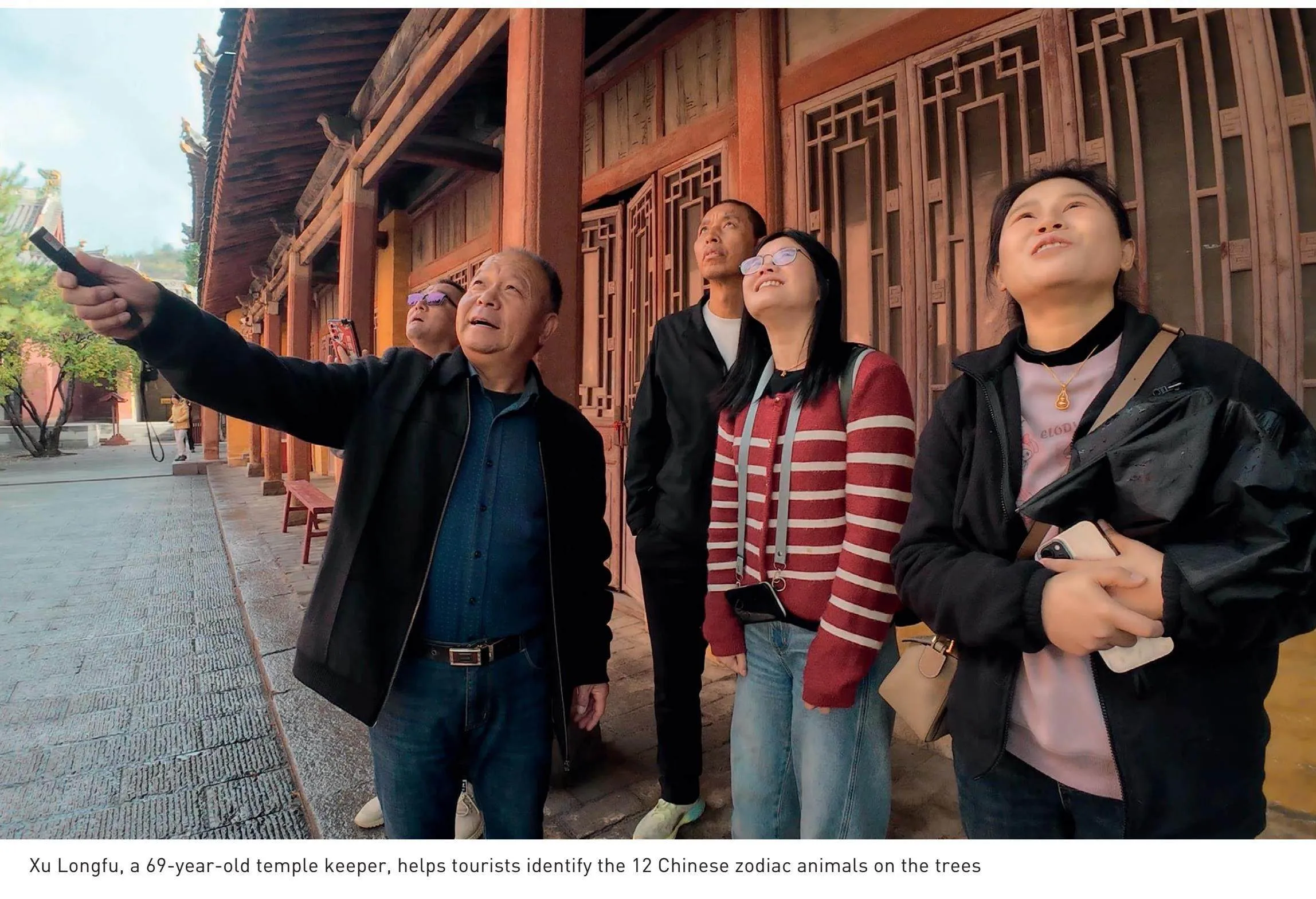
What they’re looking at are 1,200-year-old cypress trees whose burls look like the 12 Chinese zodiac animals when glimpsed from different perspectives. Their origins remain a mystery, but they have long been one of this place’s major attractions. Though centuries-old trees are common in Shanxi’s ancient temples, they can often distinguish themselves from each other in one way or another, just like the temples.
“This is the head, eyes, mouth,” a temple keeper, Xu Longfu, shows us with a laser pointer. The 69-year-old has worked here for over three decades, and is happy and proud to introduce the temple, from its history to every design detail, including the elaborate wood carvings of dragons, phoenixes, and cranes.
“An ancient temple such as this often took more than a decade to build, with quality materials,” Xu tells a visitor. They were built to last: The structures from the 10th to the 14th centuries use a combination of pillars, beams, purlins, and other supports to form a frame that will keep the building upright even if the walls collapse.
These structures have preserved ancient beliefs as well. According to Xu, during each year’s temple fair on the 15th day of the fourth lunar month, thousands of people, mainly locals, descend upon the temple to pay respect and pray to the Erxian (二仙, “two immortals” )—two filial sisters whose story emerged in the eighth century—for everything from rain to health to good luck in childbirth. In particular, families pray when their children turn 15 (or 12 in some places) for their “coming-of-age.” “The road [to the temple] has gradually improved over the last 15 years,” Xu says, “from dirt to concrete, and then to asphalt, to facilitate people’s visits.”
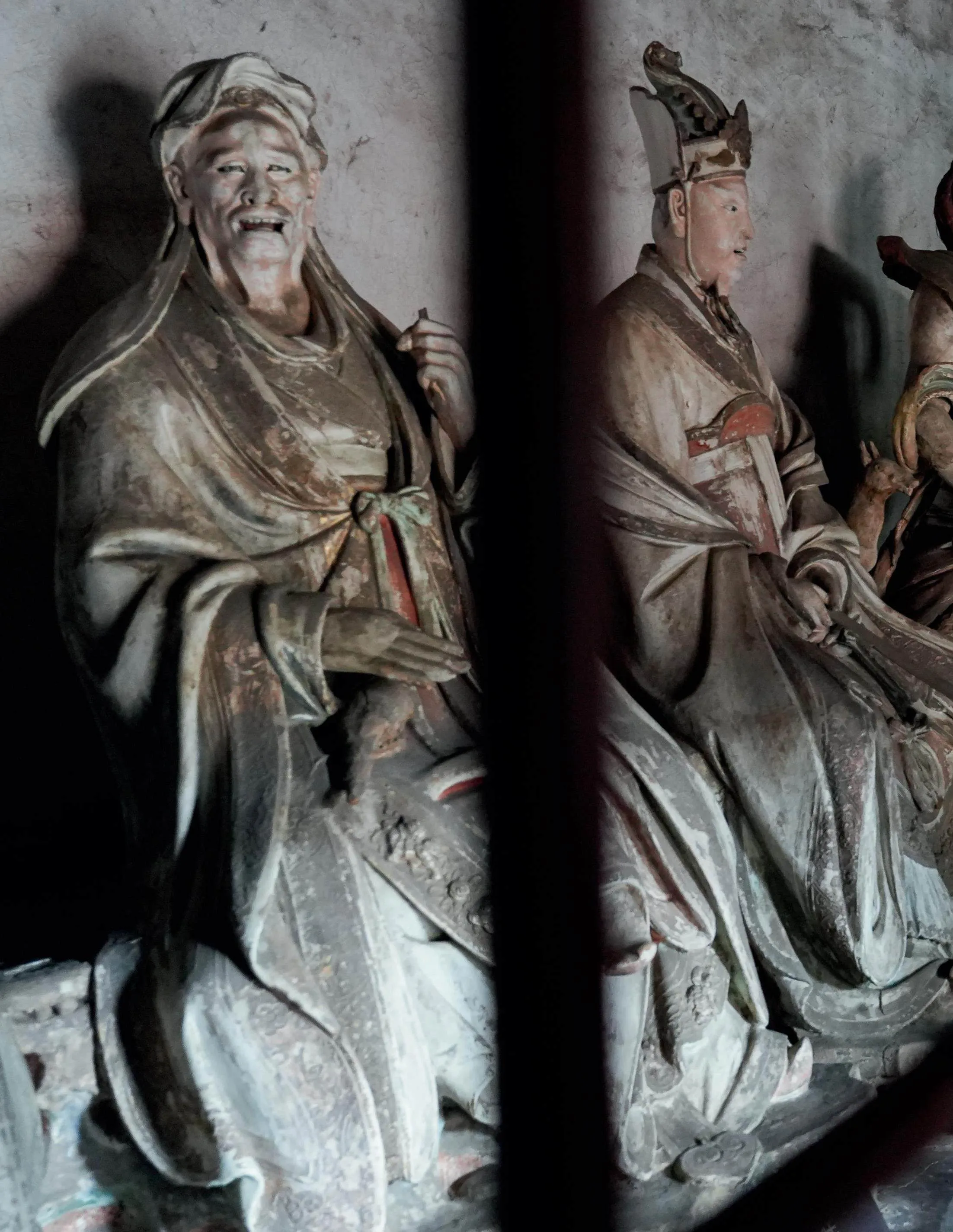
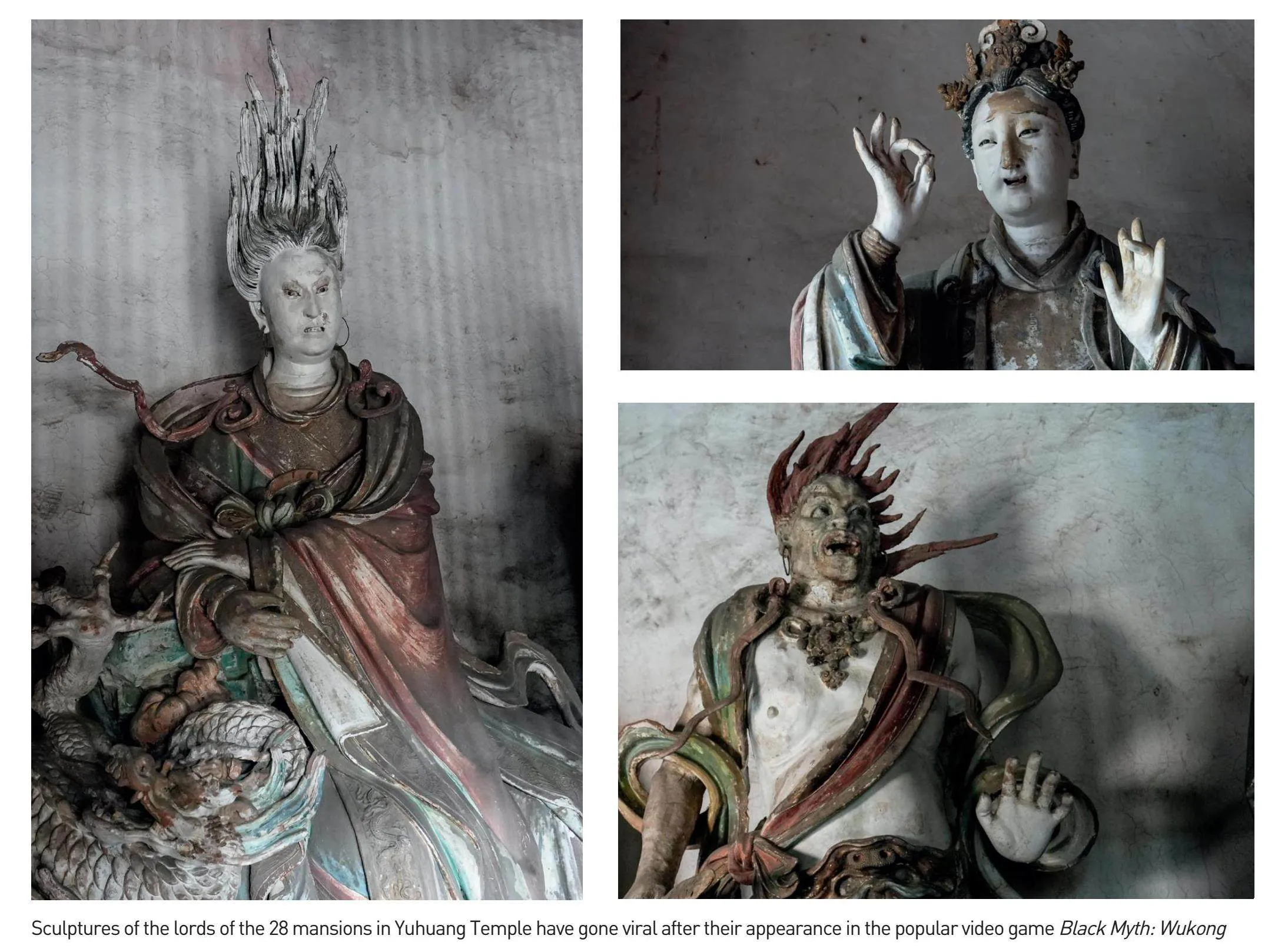
In addition to the “two immortals,” Confucius and Laozi (the founder of Daoism) are also featured in different halls in the temple. Similarly, Yuhuang (Jade Emperor) Temple in Fucheng village, whose sculptures of the lords of the 28 mansions went viral after being featured in Black Myth, honors gods in charge of the underworld and heaven, including the “Throat God (咽喉神),” worshipped by theater troupes, and the “Ox King (牛王)” and “Horse King (馬祖),” who are in charge of animals’ well-being. “Chinese people do not honor any useless gods,” as one folk saying goes.
When heritage comes with a price
When we arrive at Cuifujun Temple (or “Lord Cui’s Temple”), which was established in honor of Lord Cui, an honest and upright official-turned-judge in the underworld, we are met with closed doors. It’s nap time for the keepers, we figure. So we take a break ourselves and search for food. We settle for a local favorite: instant noodles with meatballs. They cost only 7 yuan a bowl and are delicious.
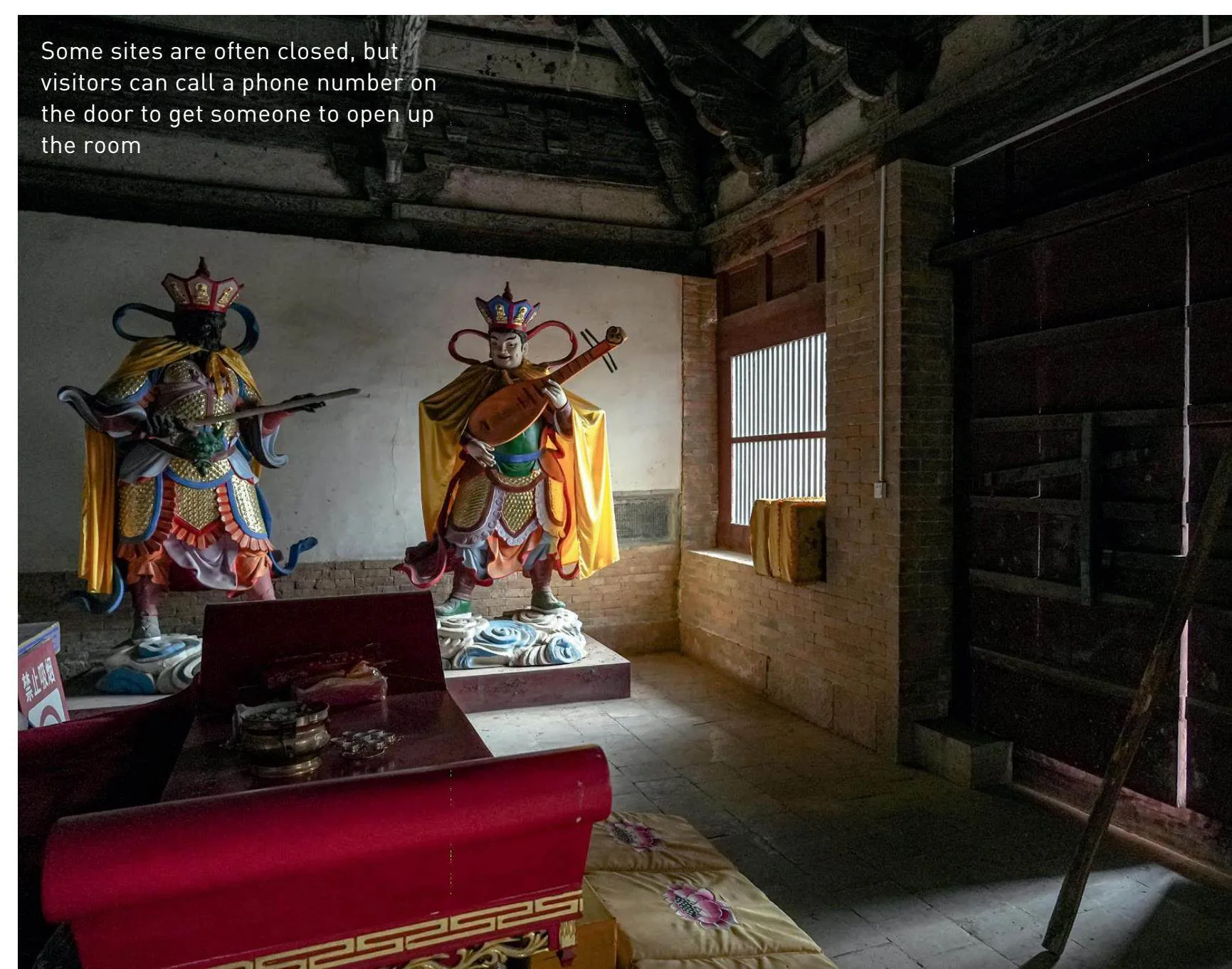
Eventually, we get in touch with the temple keeper by phone. He lets us enter via a side door. Behind us, several other people file in. The keeper, surnamed Zhang, explains that the temple usually opens on weekends, but he makes himself available by appointment, partly because he’s afraid disgruntled sightseers might report him to the authorities.
The 56-year-old has mixed feelings about this ancient temple, earning only 10 yuan per day to oversee its operations, regardless of how many visitors come each day. According to several visitors from neighboring cities, Jincheng is the only place in Shanxi that doesn’t charge tickets to all of its heritage sites. Most temples don’t allow the purchase or burning of incense, either, in order to safeguard the timber walls.
But Zhang still takes pride in Cuifujun Temple, which was first established in the Tang dynasty but was reconstructed in the Jin and renovated throughout the following eras. “My father had been its keeper since the 1980s, and I took over 20 years ago. I have deep feelings for every part of the temple,” Zhang says.
Many people of his generation were schooled in the village’s ancient temples, a common practice in the city decades ago. “Building schools was costly, so the villages used temples as makeshift schools until the 1980s, when the government began to prioritize the preservation of such sites.” a local relic lover surnamed Zhao from a neighboring village recalls.
Many other locals share Zhang’s deep sense of pride in their region’s wealth of historical treasures. A middle-aged volunteer surnamed Wei at Jincheng’s Kaihua Temple tells us that this temple, like others in the province, is open to showcase the treasures “left by our ancestors.” He notices some young visitors taking photos and goes up to them to explain what they’re looking at before taking them around to see the centuries-old steles.
However, middle-aged and retired visitors, many traveling in tour groups, still made up the majority during my visit, as it was after the holiday season. A man surnamed Li, who runs a local car-renting service, speculates that authorities want to boost the local economy by attracting more young tourists with Black Myth-associated tourism campaigns, but it can be challenging to turn protected sites into ticket-based attractions with limited personnel. “You may have also noticed: The popularity [of Jincheng] has already faded,” Li says to us, pointing to the food street recently set up next to Fucheng village’s Yuhuang Temple just before the National Day holiday. Now, most of the stalls are closed.
The city, whose gross regional production mostly comes from its (state-owned) coal mining industry, has promoted “health and wellness tourism” over the last few years, though to mixed results.
The maintenance of such sites is also costly. Zhao tells us that people in his village want to repair some of their temples whose walls are on the brink of collapse, but have only managed to raise around 800,000 yuan. According to a previous estimate, each square meter of one of these ancient walls can cost up to 7,000 yuan to repair. “Our ancestors have left us so many temples, but we’re unable to maintain them,” he sighs. “I feel ashamed.”
A survey by Shanxi authorities in 2022 showed that over 80 percent of the province’s more than 50,000 relics, at or below the municipal protection level, needed repair, including around 1,800 damaged during heavy rains in October 2021. Targeted rescue and restoration is estimated to cost over 8 billion yuan, while comprehensive repairs and protection would raise the total to over 20 billion yuan.
I can sympathize with the relic enthusiast Zhao. His sentiment is part of the reason so many tourists go to Shanxi: to seize the chance to visit historical sites while they’re still there, with their centuries-old elegance and beauty, which is hard to replicate in modern times. I can’t help feeling wistful looking up at the lords of the 28 mansions inside Fucheng village’s Yuhuang Temple, where one of the original heads of the constellations was replaced after it was stolen in 2006. It’s not quite what it used to be, but it’s better than nothing.
New life for old relics?
According to Zhao, only the sites under governmental protection, especially the national ones, can get enough funding for maintenance. This is the case for Jidu Temple, which houses the “water god” who governs the Ji River, in Jiannan village. “Over 10 years ago, villagers tried to renovate the seriously damaged temple, but the money ran out just after building up the gate,” Zhao says. “Later, the national funds came in.” Listed as a national protected site in 2013, the 8 million yuan restoration project on Jidu Temple’s 20 or so buildings took three years to complete, from 2017 to 2020.
But such efforts have not been without controversy. In 2018, the company in charge of renovating Jincheng’s Qinglian Temple caused a national outcry for “damaging” original historical and artistic elements by repainting the sculptures. The company argued it had followed the common rule of using the “original technique, skills, and material,” news media The Paper reported, but the public was not convinced.
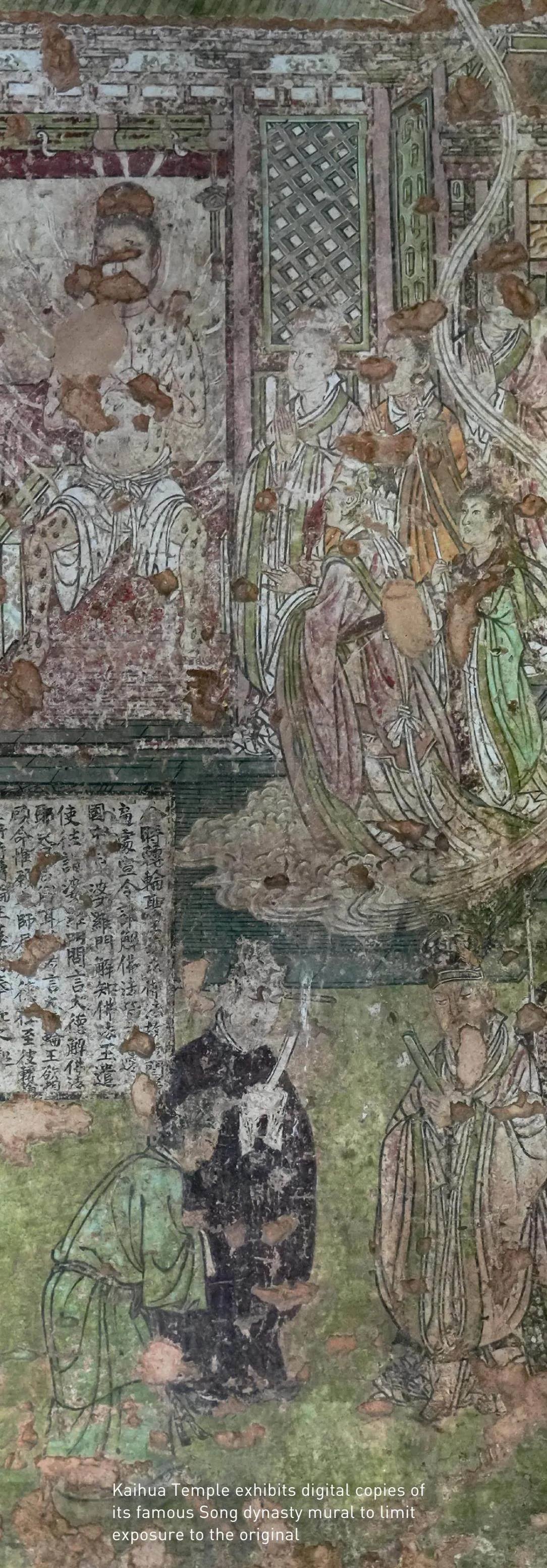
Jincheng’s Kaihua Temple exhibits digital copies of its famous mural, which spans over 88 square meters and features dazzling painting techniques from the Song dynasty (960 – 1279). However, during our visit, several groups demanded that the temple keeper open the door to the hall that houses the original murals, insisting that the digital copies were not a sufficient substitute.
The number of skilled craftsmen who can properly repair ancient buildings is declining. Over 80 percent of practitioners are over 50, while those under 35 make up only 4 percent, according to SanlianLifeweek magazine. To address this, in May 2022, several provincial authorities launched a program to train over 600 professionals in relic preservation over five years. Tuition and fees are covered, and graduates are guaranteed jobs at local preservation centers. Additionally, Gaoping city, under Jincheng, is replacing part-time temple keepers with full-time, better-paid young employees.
But old heads such as Xu aren’t planning on going anywhere. He asserts that he’ll continue to work at Xixi Erxian Temple, as visitors enjoy his services, for at least the next three years. “As long as I’m healthy and have the gods’ blessing,” he adds.
On the last morning before we leave Jincheng, we visit the new Baima (White Horse) Temple, which stands on the ruins of a 15th-century temple that was destroyed in the 1930s during World War II. It gained new life in the 1990s with public donations. Jinggong Tower is the only remaining historical building there and is now a municipal protected site.
A loudspeaker is blasting on repeat about how praying in the temple can grant people their wishes for everything from high test scores to job success to finding love. Compared to the older temples, this one feels more touristy, with visitors of all ages, perhaps a bit artificial.
On our way downhill, we encounter many more people walking up to see the temple. That’s when an idea pops into my head: That building up there, with its young architecture and relics, might well be considered a “treasure” by those who come centuries after us—if it persists.
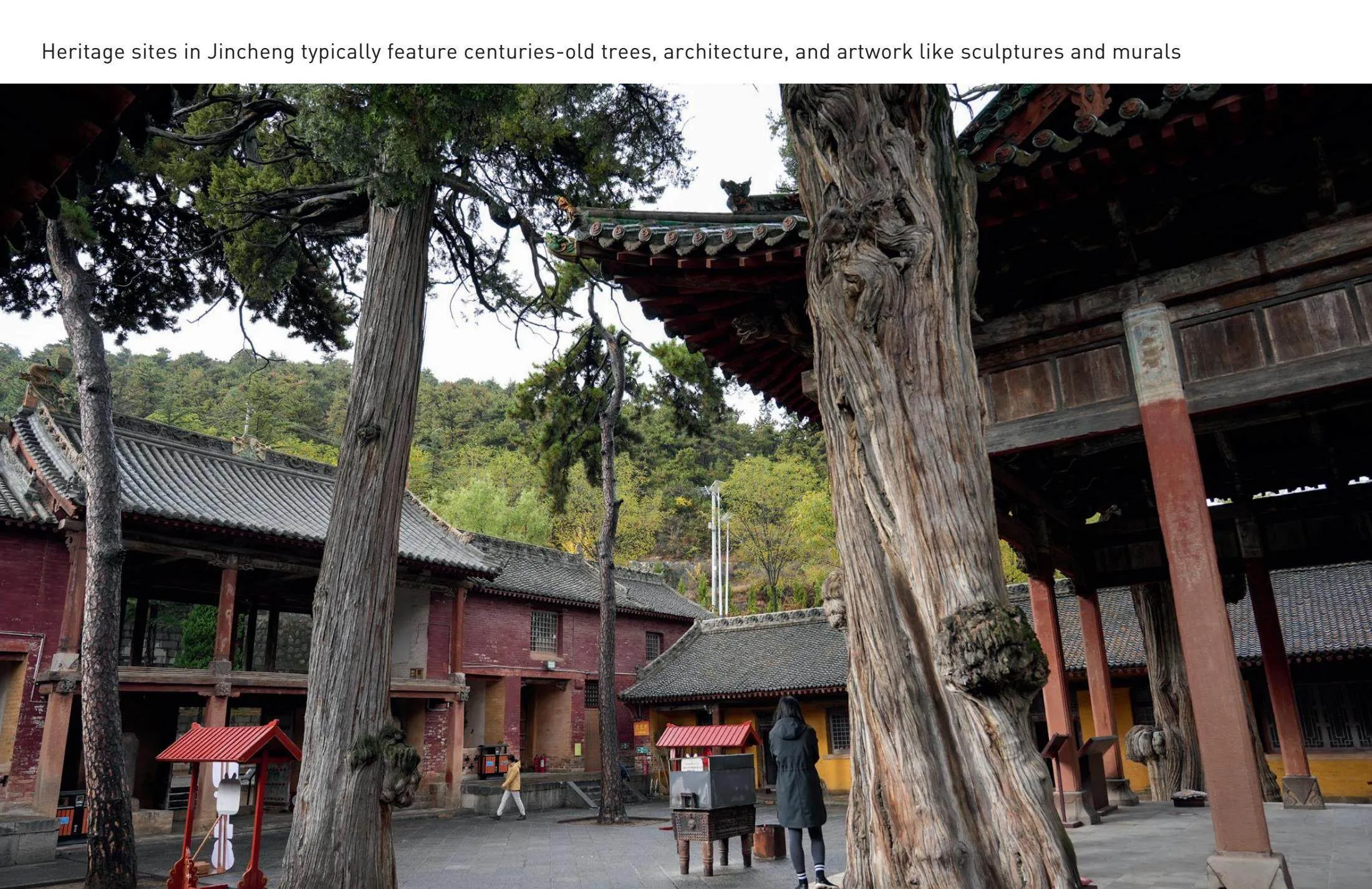
Heritage sites in Jincheng typically feature centuries-old trees, architecture, and artwork like sculptures and murals
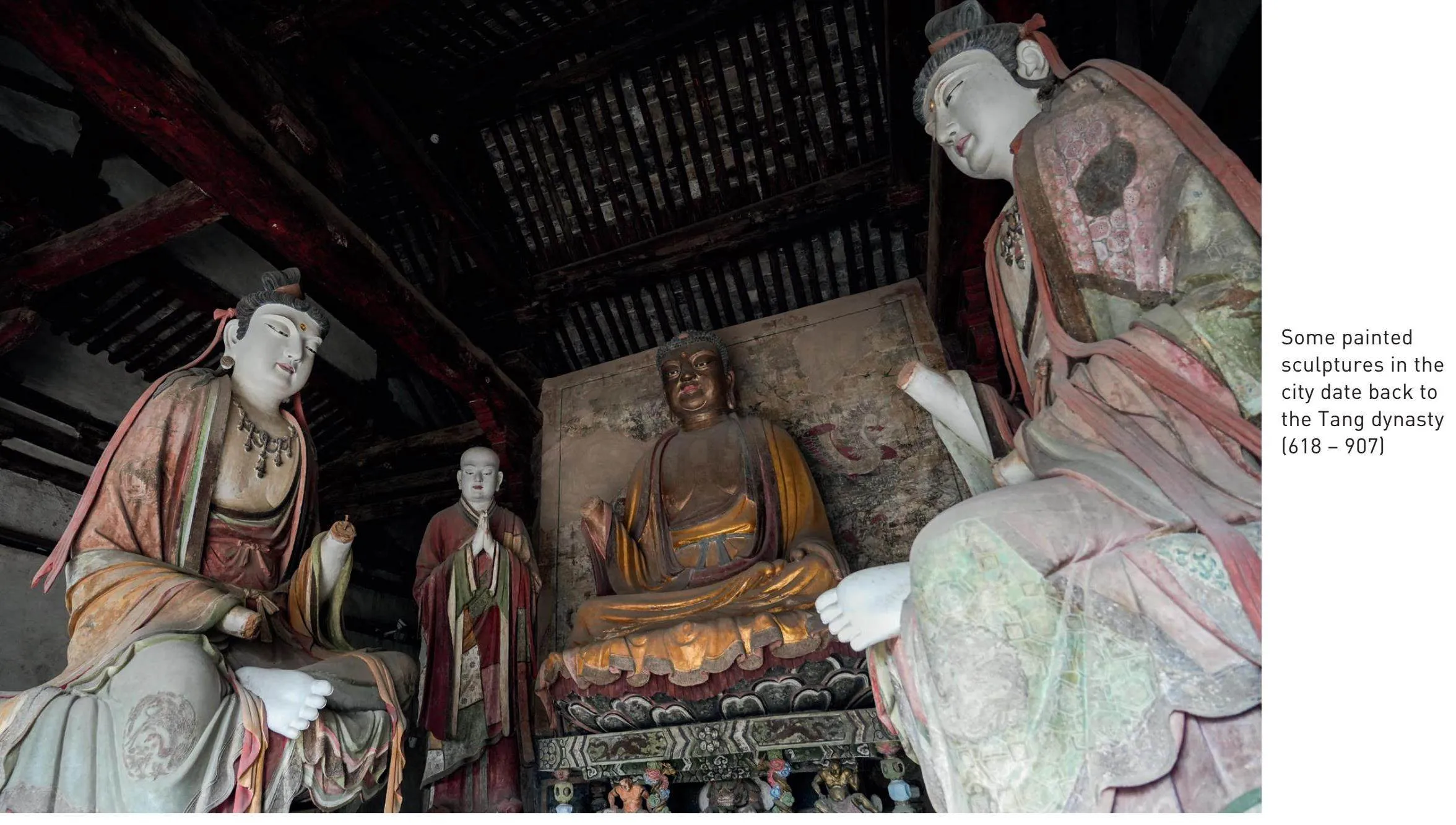
Some painted sculptures in the city date back to the Tang dynasty (618–907)
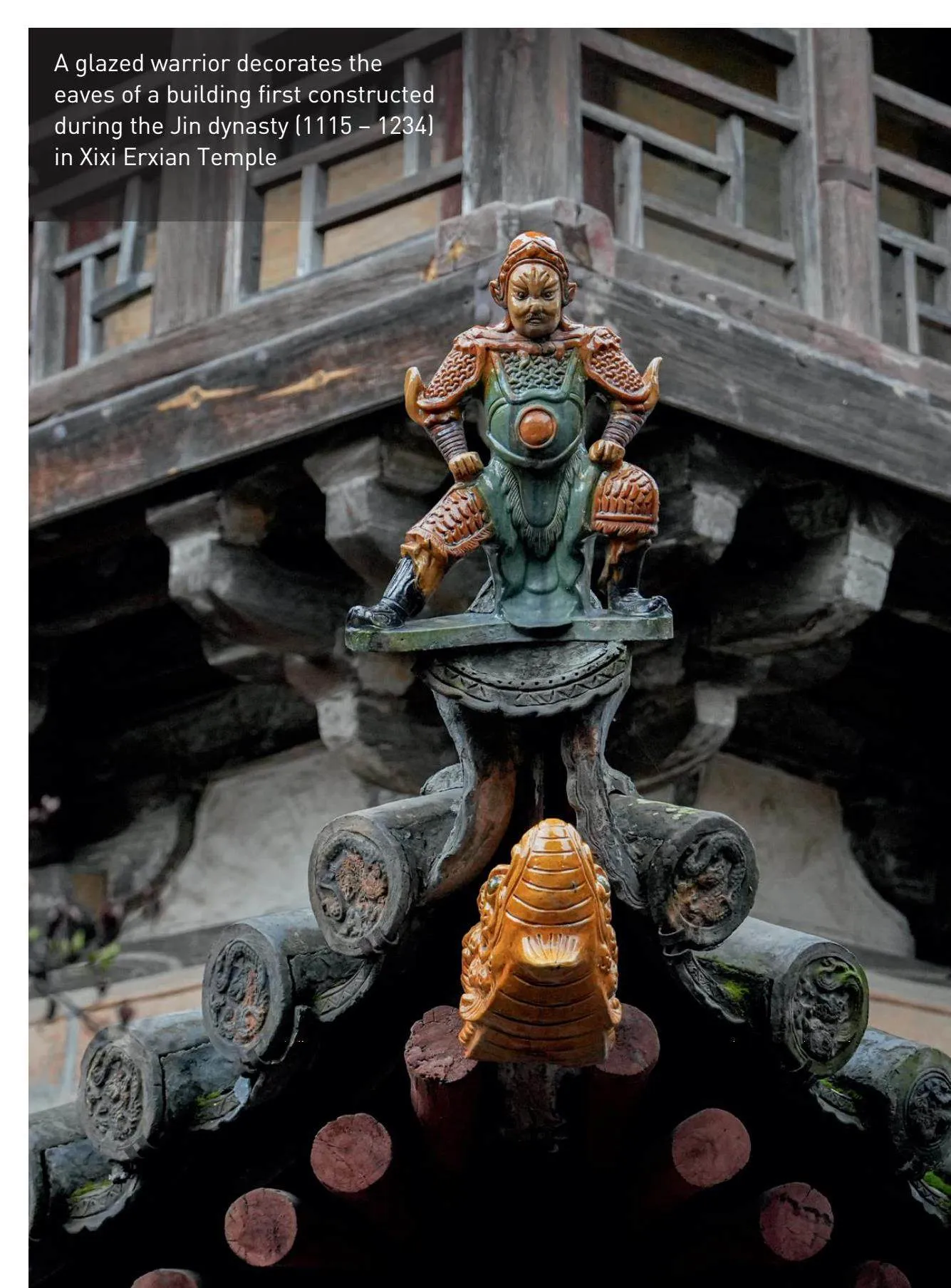
A glazed warrior decorates the eaves of a building first constructed during the Jin dynasty (1115–1234) in Xixi Erxian Temple
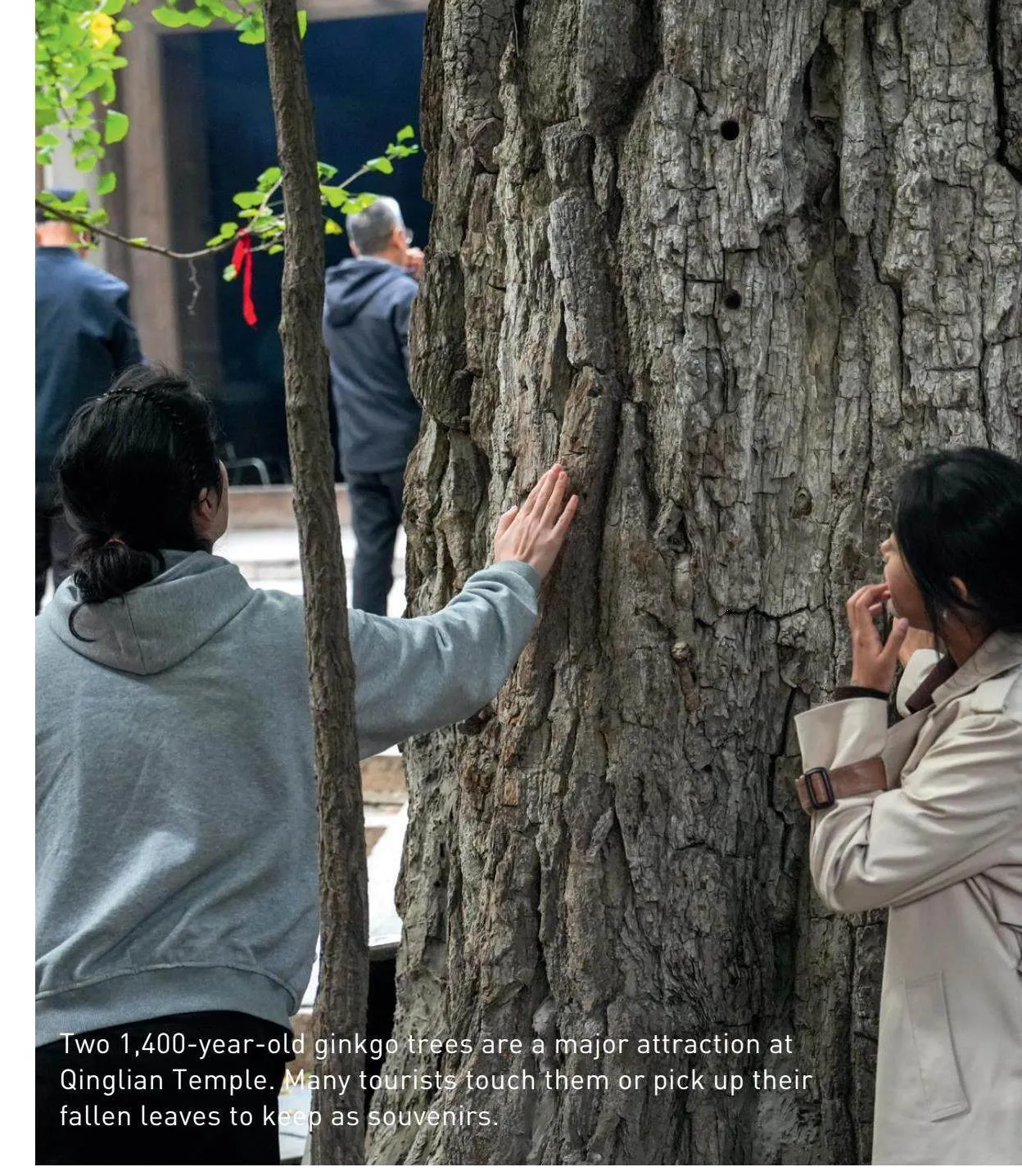
Two 1,400-year-old ginkgo trees are a major attraction at Qinglian Temple. Many tourists touch them or pick up their fallen leaves to keep as souvenirs.
Xu Longfu, a 69-year-old temple keeper, helps tourists identify the 12 Chinese zodiac animals on the trees
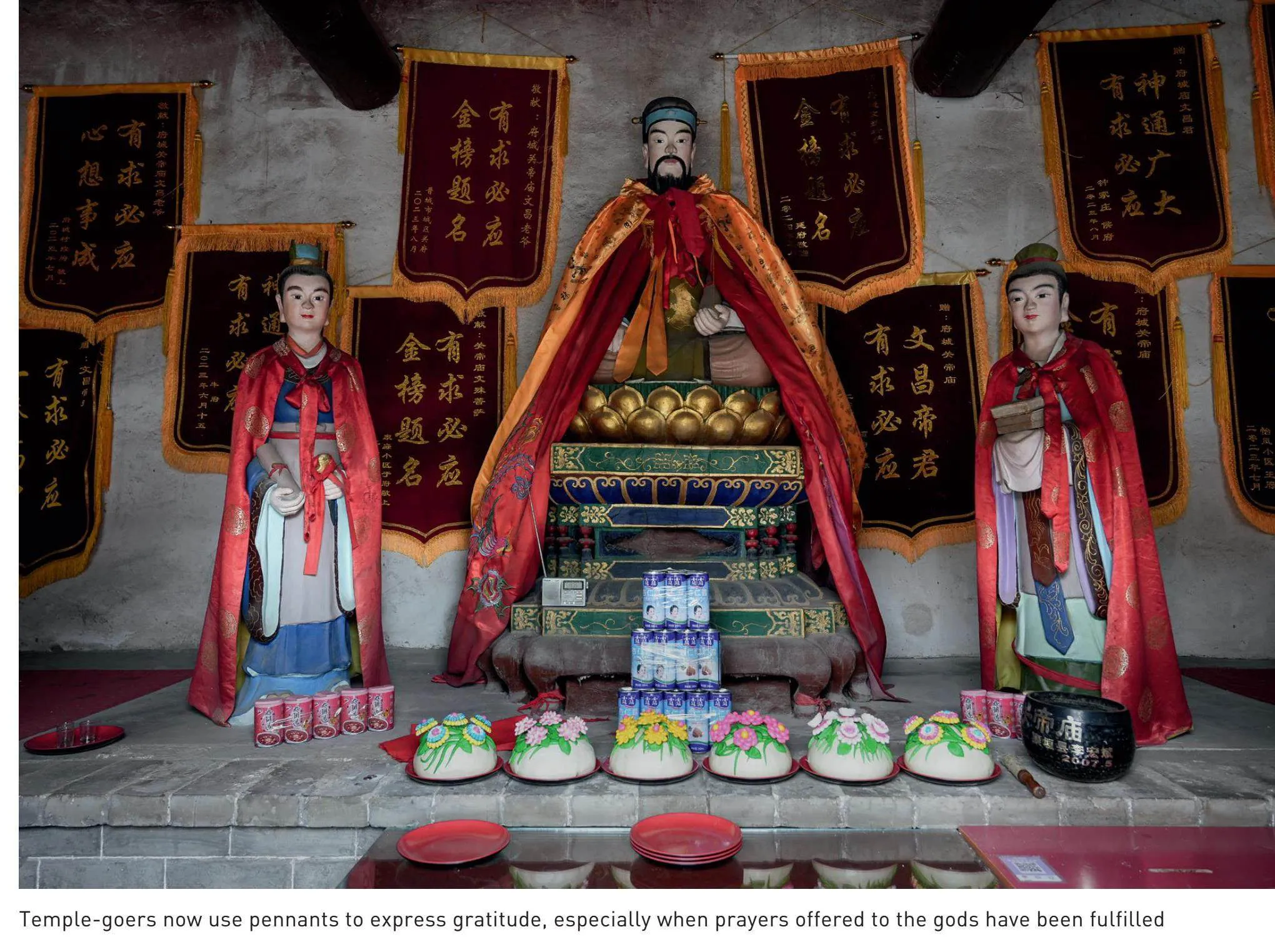
Temple-goers now use pennants to express gratitude, especially when prayers offered to the gods have been fulfilled
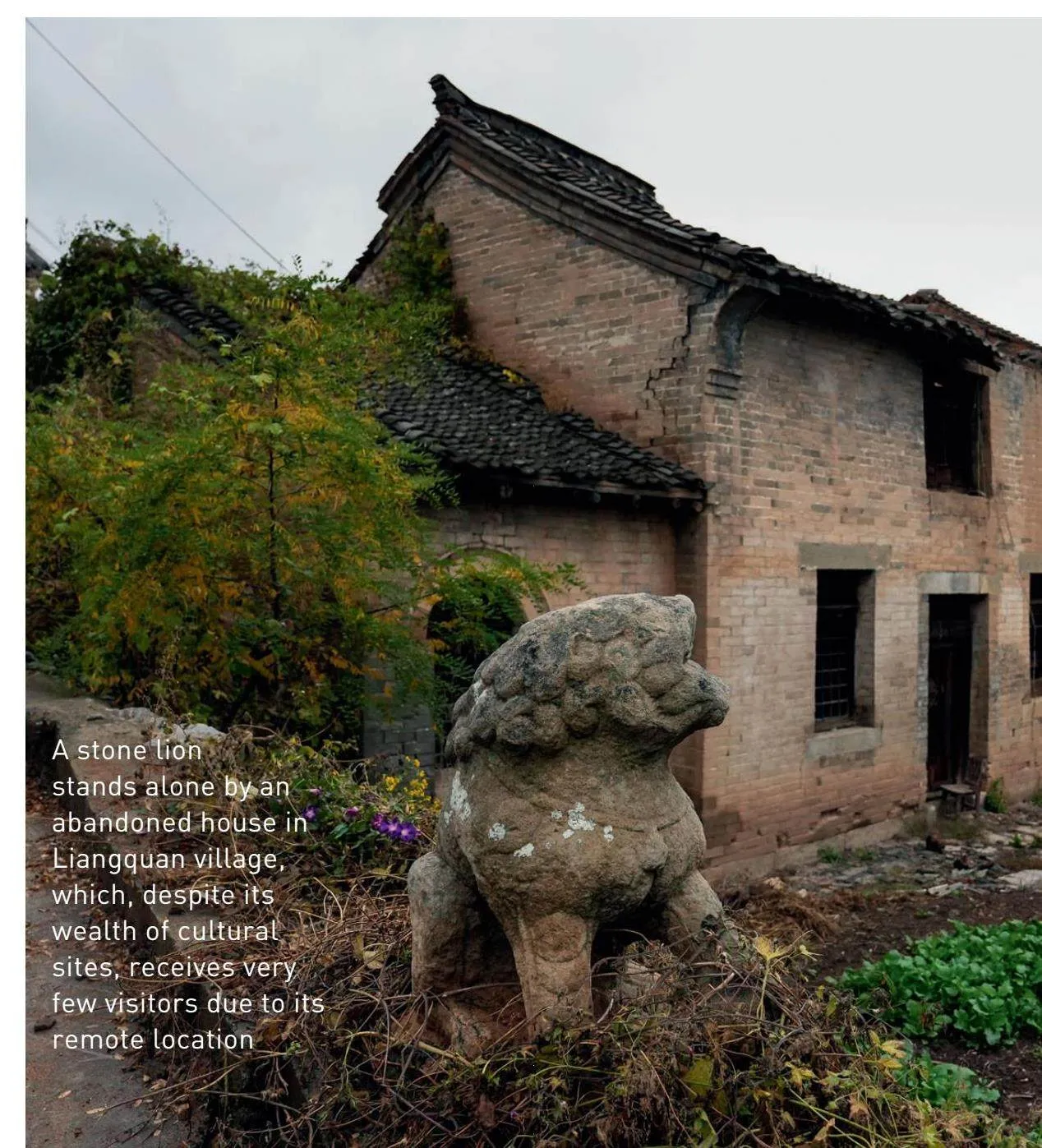
A stone lion stands alone by an abandoned house in Liangquan village, which, despite its wealth of cultural sites, receives very few visitors due to its remote location
Sculptures of the lords of the 28 mansions in Yuhuang Temple have gone viral after their appearance in the popular video game Black Myth:Wukong
Some sites are often closed, but visitors can call a phone number on the door to get someone to open up the room
Kaihua Temple exhibits digital copies of its famous Song dynasty mural to limit exposure to the original
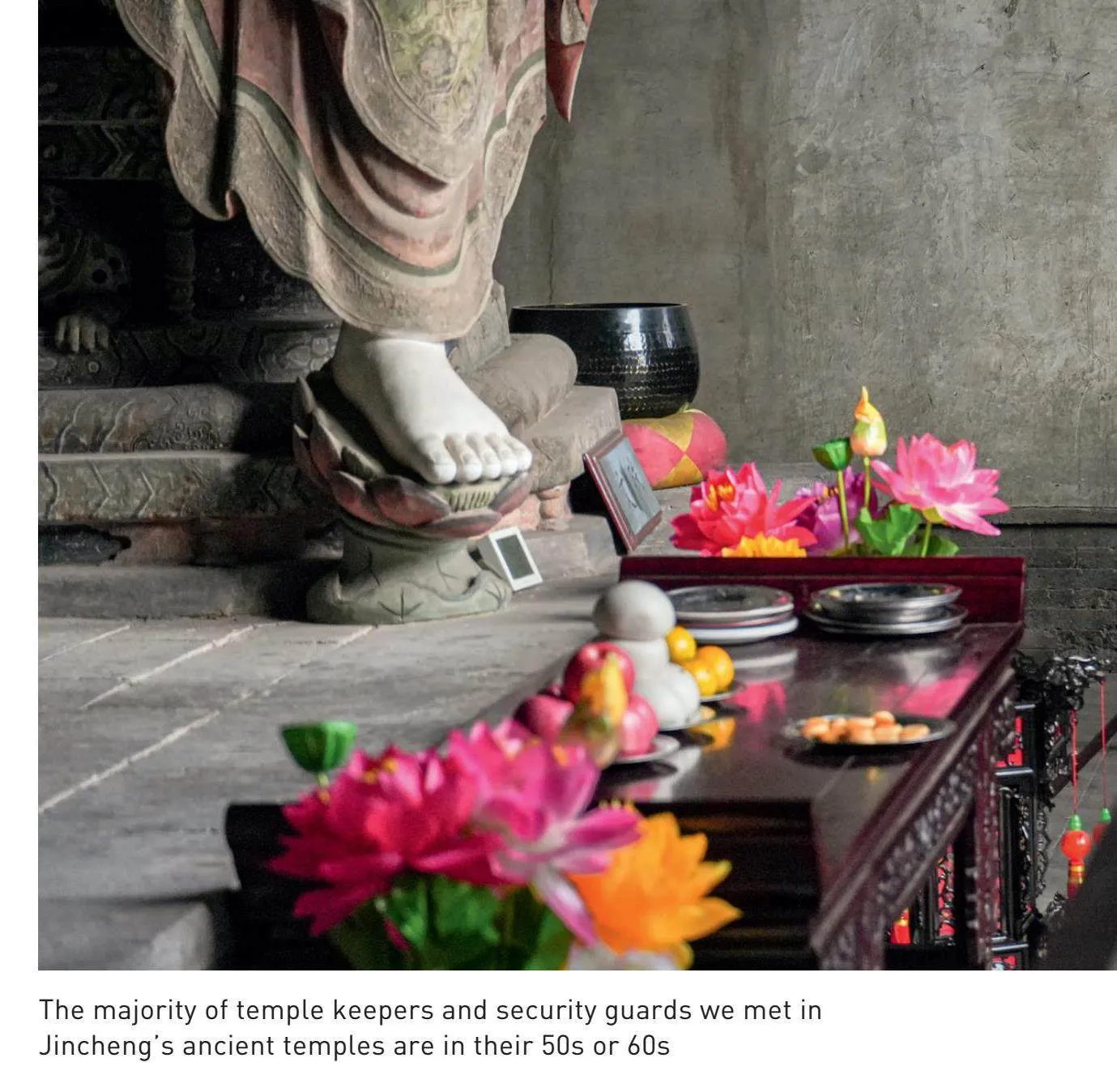
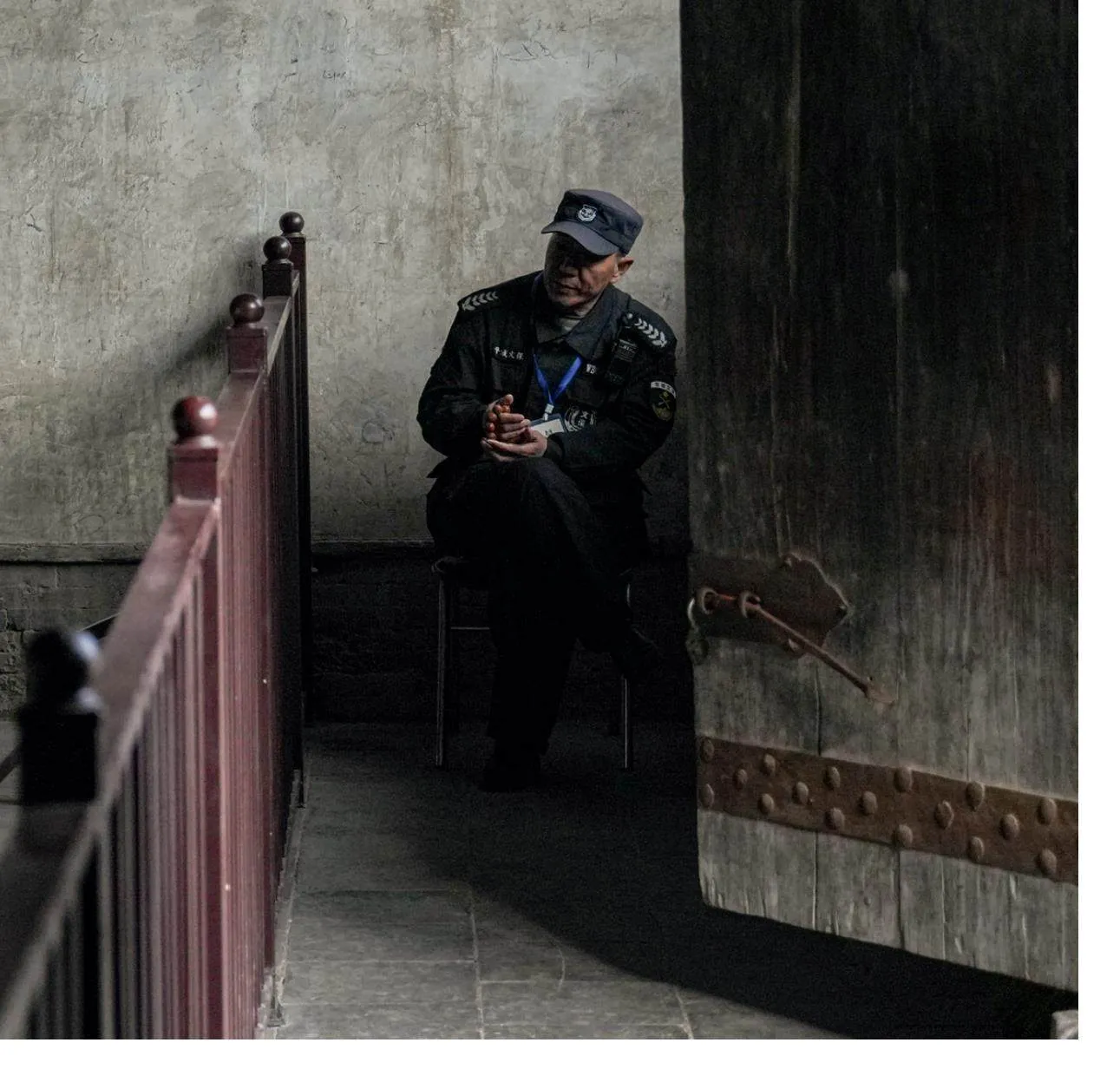
The majority of temple keepers and security guards we met in Jincheng’s ancient temples are in their 50s or 60s
猜你喜歡
家教世界(2022年13期)2022-06-03 09:07:18
家教世界(2022年7期)2022-04-12 02:49:34
中外文摘(2021年23期)2021-12-29 03:54:02
兒童繪本(2018年22期)2018-12-13 23:14:52
藝術啟蒙(2018年7期)2018-08-23 09:14:06
讀者·校園版(2018年13期)2018-06-19 06:20:12
英語學習(2016年2期)2016-09-10 07:22:44
Coco薇(2016年2期)2016-03-22 16:58:59
讀者(2016年7期)2016-03-11 12:14:36
爆笑show(2014年10期)2014-12-18 22:27:48