Dorm Dilemma
2024-12-28 00:00:00YangTingting
漢語世界(The World of Chinese) 2024年4期


Roommate conflicts and the lack of privacy in communal dorms have prompted many college students to seek off campus housing, only to find their options limited by financial and safety concerns
為什么這屆大學生不愛住宿舍了?
For two weeks in February, Xue Yang managed only a few hours of sleep each night—not due to study-related stress, but because of his roommate’s cacophonous snoring. The sleepless nights forced the 21-year-old college freshman to bunk down in an empty classroom for two nights before asking his counselor if he could change rooms.
Despite his predicament, Xue, who requested a pseudonym, was reluctant to move into another four-person dorm, as his counselor had suggested. “Chances are I’d just end up with other snorers,” he tells TWOC. “Adjusting to a new dorm would also take time.” He eventually got a room with only one other occupant, after much arguing with school officials. “I asked them why the school [randomly] assigned dorms like this. Why can’t students choose their roommates? That way, we could know if someone prefers to sleep early or late, or if they snore,” Xue says.
Xue is one of over 40 million college students currently living in dorms across the country. Conflicts naturally arise in cramped, high-pressure communal living, often due to differences in living habits. Yet many students have few options outside of official accommodations. Dorms are much cheaper to rent than the average apartment, and many colleges have banned off campus living, citing vaguely defined “safety concerns.”
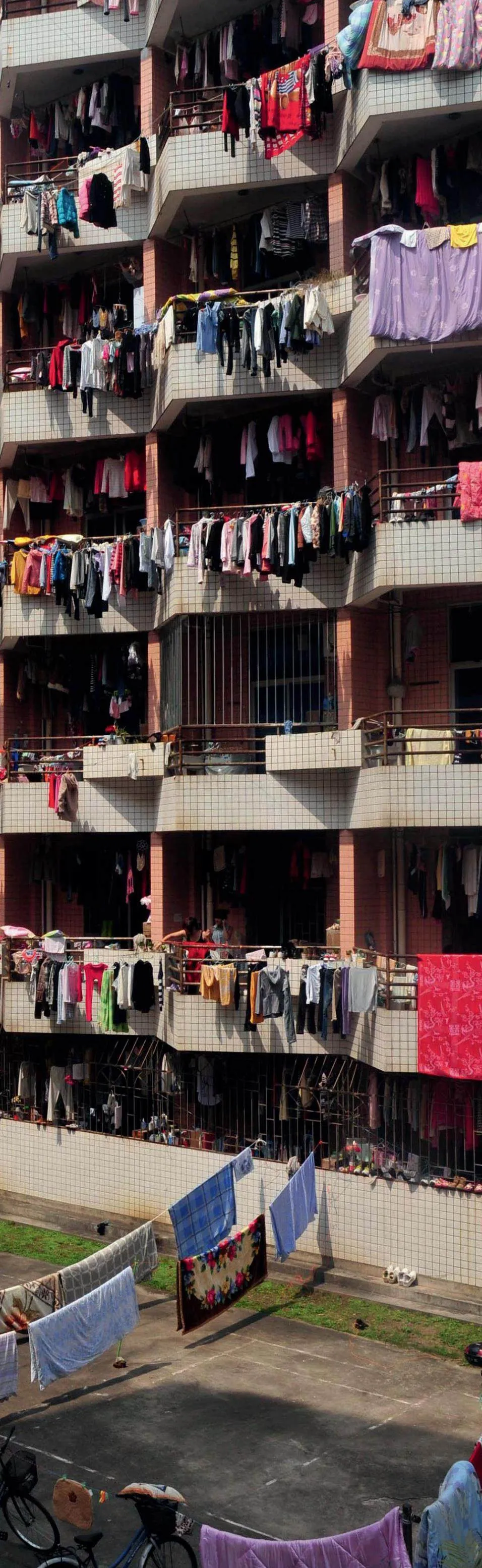
Student dorms have existed in China since the Song dynasty (960 – 1279), when literati lived in combined sleeping and study rooms calledzhaishe (齋舍). In modern times, one of the biggest shifts in dorm life came in the 1950s, when universities built barracks-style “tube buildings (筒子樓)” for easier management, inspired by the Soviet concept of collective living. Rooms in these buildings usually housed six to eight people in 10 square meters or less, and were equipped with little more than bunk beds and communal desks. Occupants used shared bathrooms on each floor and ate in communal canteens.
With the rapid expansion of university enrollment in the 1990s (the number of students increased by almost 50 percent alone in 1999, totaling around 1.6 million), universities began building student apartments from scratch or buying properties to convert. Unlike the US and some European countries, where dorm room applications can involve a long waiting list, undergraduates in China are typically guaranteed dorms for all four years of their studies, at very low prices. For a 30-square-meter dorm shared between four to eight students and a communal bathroom, students usually pay around 1,000 yuan (around 130 US dollars) per year, even in major cities like Beijing and Shanghai, where monthly rent could easily be double or triple that amount. Since 2018, the rapid growth in postgraduate enrollment has compelled some universities to discontinue offering graduate housing on campus due to limited supply.
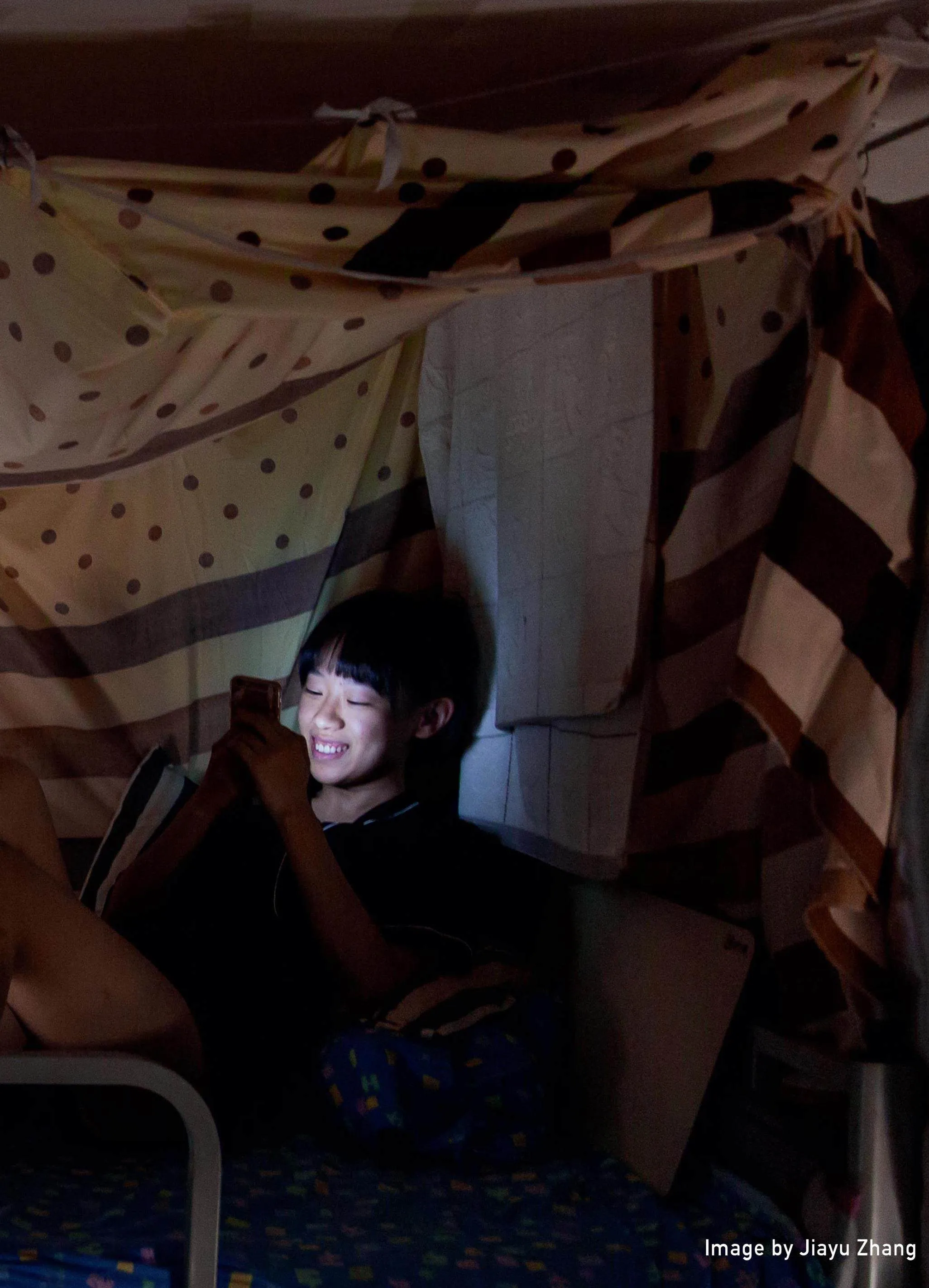
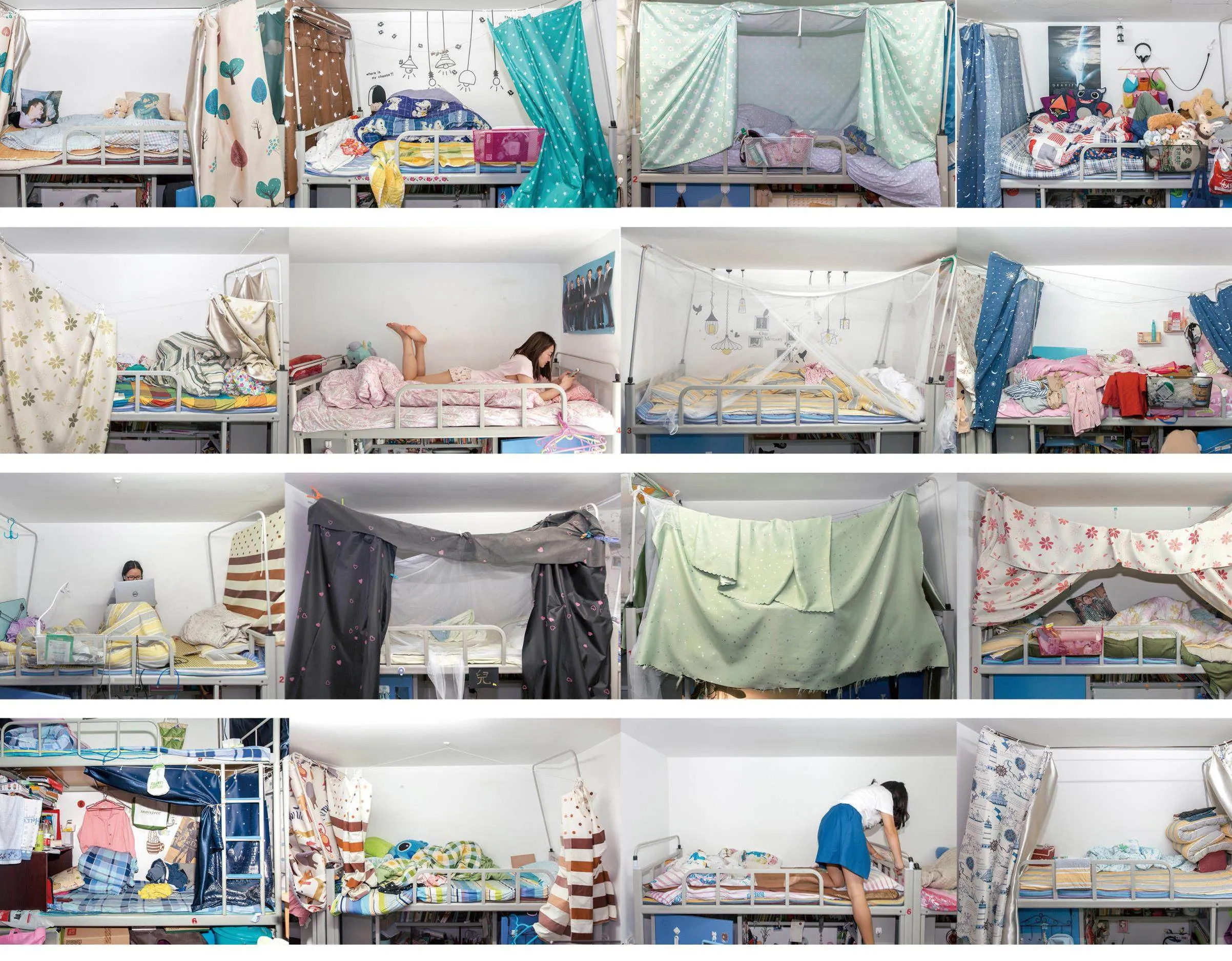
However, these cheap living spaces also come with strict regulations enforced daily by the in-house resident advisor, or suguan (宿管). “No trash in the trash can, no people in the beds, no books on the desks, no plugs plugged into the electrical outlets, and now no curtains around the beds,” shared one netizen on social media app Xiaohongshu of a dorm’s extreme policies. Makeshift curtains around the bunk beds—one of the few ways students can find privacy in dorms—were recently banned by some universities in Shandong, Hebei, Gansu, and Beijing due to fire hazard concerns. Some universities also claim that these curtains could hinder social interaction among dormmates.
Rooms are assigned by college counselors, who typically group students by the order of their ID numbers and majors to minimize conflicts from differing schedules, as students in the same major tend to have more classes together. Transfers are generally not allowed unless a student changes major.
As counselors know little about each student’s personality or lifestyle before assigning them roommates, disputes like Xue’s are common. Almost half of 958 students polled in a 2017 survey by China Youth Daily reported having conflicts with their roommates, mostly due to lifestyle differences, perceived rudeness, lack of hygiene, and privacy violations. The report also found that while around 48 percent of the students said they tried to use “active communication” to resolve such problems, nearly the same number said they either ignored the behavior (39 percent) or took an indifferent attitude (7 percent); 2 percent said they even resorted to settling differences via fights or arguments.
Huang Weijie, a college counselor from Shanxi province, believes that “handling such issues helps students transition into society. Whether it’s about fostering tolerance or learning to interact with a diverse range of individuals, these frictions are essential for personal growth.”
However, small but unsolved irritations can lead to deadly consequences, as several high-profile cases have demonstrated in national headlines over the years. Huang Yang, a doctoral student at Fudan University’s Shanghai Medical College, died in 2013 from multiple organ failure 16 days after drinking from the dorm’s water dispenser, which his roommate, Lin Senhao, had poisoned. Lin was detained and sentenced to death for murder a year later. Last December, former chemistry student Zhu Ling passed away at the age of 50 from a brain tumor after suffering permanent disabilities caused by thallium poisoning at Tsinghua University in 1994. Although the case remains unsolved, one of her former roommates was regarded as the chief suspect. More recently, a postgraduate student surnamed Zhou from Hunan province’s Xiangtan University was detained for the alleged involvement in the poisoning and death of his roommate this April.
While these extreme cases of murder are still exceptions, emotional abuse, or “cold violence,” is a common issue in dormitories. A 2017 paper found that about 60 percent of the 480 college students surveyed admitted to perpetrating cold violence, which is defined as insults, mockery, psychological pressure through ostracization, or silent treatment. Around 30 percent reported being victims of cold violence, and approximately 50 percent of these incidents occur in dormitories.
Lu Qi, a college student from Jiangsu province, tells TWOC how she began to spend more time alone after falling out with her roommates in her sophomore year. “I tried to fit in with them and blend into their group, but after some issues arose, I no longer wanted to…I felt like I had no one to chat or hang out with casually,” Lu explains. The 20-year-old ended up talking to her class representative and soon became good friends with her. However, that friendship ended when the class representative turned against Lu, further slandering her to her roommates. “With the betrayal of a friend, isolation from my roommates, and no close friends or family around, I felt very depressed,” Lu laments. Eventually, Lu was able to switch dorms.
To address the problem, some universities are trying new strategies—from analyzing students’ MBTI types to conducting pre-enrollment questionnaires—to group roommates based on shared personalities, lifestyles, and hobbies. In 2021, Ningbo Tech University launched a room selection system that allowed students to access information about their prospective roommates’ interests and hobbies. And in 2022, Shanghai Jiao Tong University began allowing freshmen to select their own roommates.
Ren Ming, a 29-year-old counselor from Jiangsu province, allows sophomores transferring from other majors to choose their own roommates. “If four students want to live together, I will put them in one dorm,” she says. However, Ren, who requested to be identified by a pseudonym, acknowledges that this approach doesn’t always prevent potential problems. “To be honest, when [students] form groups, they might not know one another particularly well. They may have chatted briefly and felt they were compatible, but the reality of living together might be different from what they discussed.”
Some students take dramatic measures to make their living environment more bearable. After the snoring incident with his roommate and several rounds of negotiations with counselors, Xue decided to suspend his studies for a year, return home, find work, and save money for an off campus apartment when he returns. Huo Ye, another student from Jiangsu, also tried to live off campus due to her roommate’s snoring. However, her counselor said it was “unprecedented” for an undergraduate to live off campus unless they resided with a parent, as per the college’s regulations. “My retired mother has to live with a 21-year-old university student. Isn’t it ironic that a parent needs to live with a student who can legally marry at 20?” Huo says.
Like Huo, other students who choose to live off campus often face strict approval procedures due to “safety concerns.” Since the mid-2000s, many universities have banned off campus living to ensure safety and “enhance self-management.” However, these measures are widely seen as a way for universities to avoid being blamed by parents in case of off campus incidents. At Ren’s college, counselors like her patrol the dorms at 11 p.m., and all students are expected to have returned to their dorm by then, even during the holidays. When one of her students wasn’t in the dorm during checks, “the parents just blamed us, rather than helping us find where he was,” she recalls. Without a clear division of responsibilities, a one-size-fits-all solution, requiring everyone to live on campus, is the only option, she explains.
In counselor Huang’s eyes, the biggest risk to students off campus is themselves: “[Moving off campus] could expose students to certain negative habits in society too early. They may not have good judgment, which could lead them to engage in activities like drinking, partying, or gambling.” Views like these, though, reflect what Chinese media calls the “high-schoolization” of university, where parents and school authorities become overly involved in the lives of legally adult-aged students—leading to policies like the bed-curtain ban.
After long negotiations with her school and obtaining a medical note, Huo finally secured permission to move off campus. To get a refund for the dorm fees, she had to submit more paperwork, which took over a month and a lot of other trouble. Huo now pays about 1,500 yuan per month for a rented room near her school. It’s a huge added burden compared to the 2,000 yuan per year she used to pay, but she doesn’t regret it. “It’s like living at home, with more space and fewer distractions,” she says.
Image by Jiayu Zhang
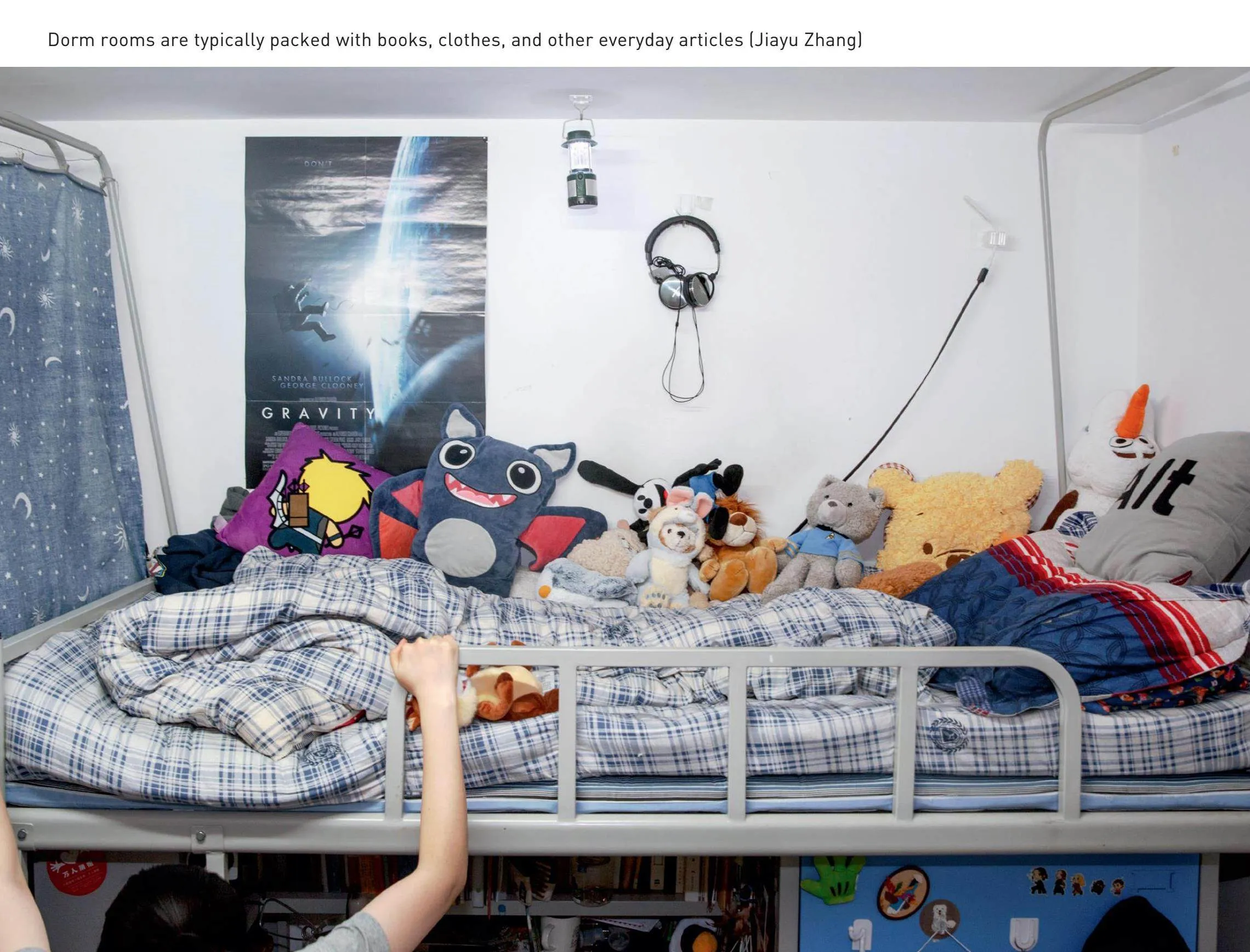
Dorm rooms are typically packed with books, clothes, and other everyday articles (Jiayu Zhang)
Conflicts with college roommates are triggered by differences in lifestyle and issues with privacy (VCG)
“Tube buildings” were once a common choice for university dormitories because they facilitated easier collective management of students (VCG)
Photographer and TWOC editor Jiayu Zhang recorded life in her dormitory building at Beijing’s Renmin University of China as an experiment in 2021, taking photos of over 60 beds and their residents
猜你喜歡
小雪花·初中高分作文(2021年4期)2021-08-27 09:21:34
下一代英才(酷炫少年)(2019年3期)2019-03-25 02:34:18
小雪花·初中高分作文(2018年4期)2018-12-12 10:32:28
絲路藝術(2018年8期)2018-09-27 09:24:40
黃河之聲(2017年14期)2017-10-11 09:03:59
北方音樂(2017年7期)2017-05-16 00:32:46
小雪花·初中高分作文(2016年2期)2016-05-30 16:36:19
小學生·新讀寫(2016年5期)2016-05-14 13:48:40
人間(2015年11期)2016-01-09 13:13:00
教育與職業(2014年16期)2014-01-19 01:24:34