New Goal for Coal
2024-12-28 00:00:00AnaChen
漢語世界(The World of Chinese) 2024年4期

Former mines are being turned into public gardens and tourist attractions as China looks to a post-coal future, but the transition has not been smooth
從廢棄煤礦到旅游度假區(qū)的艱難蛻變
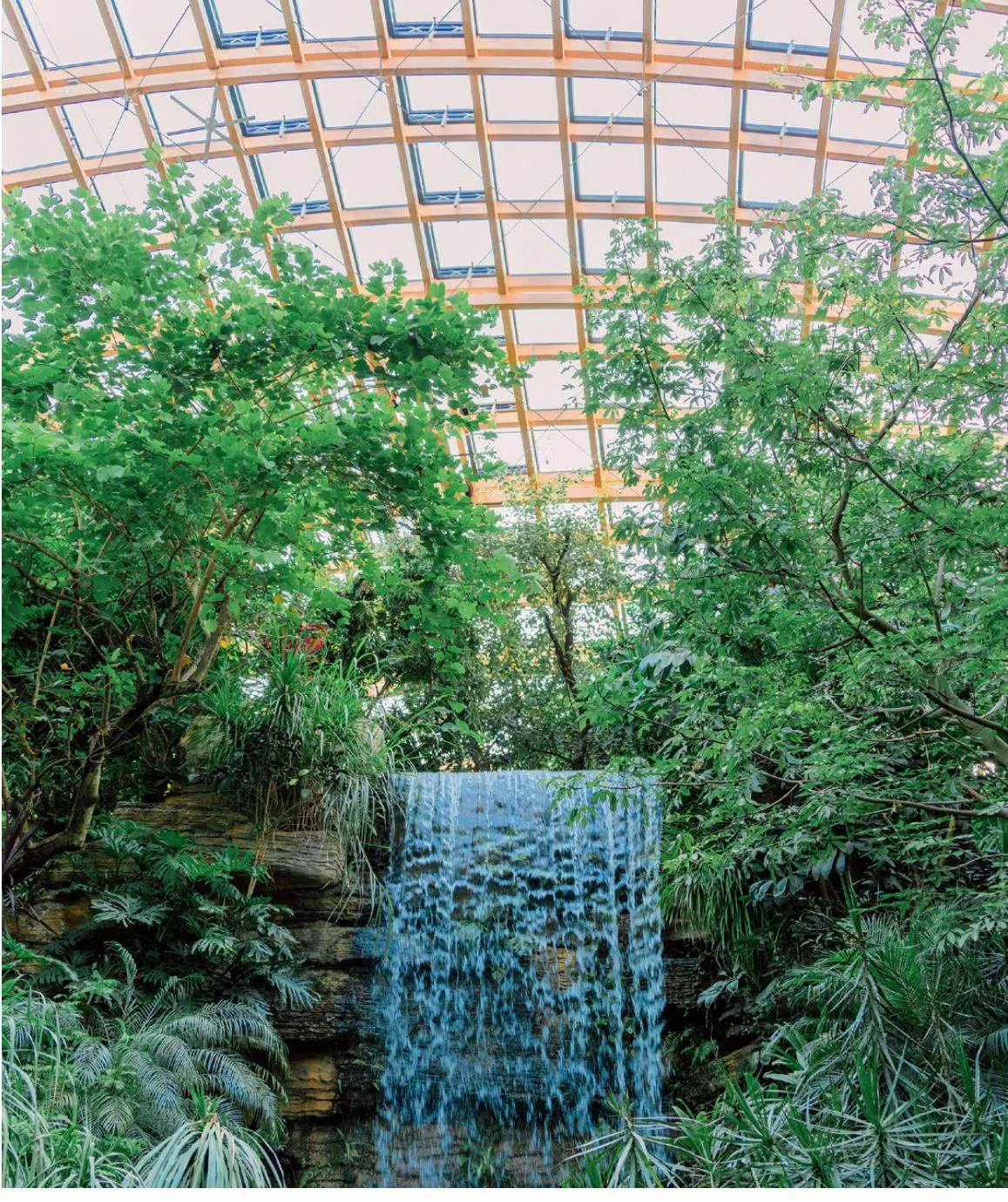
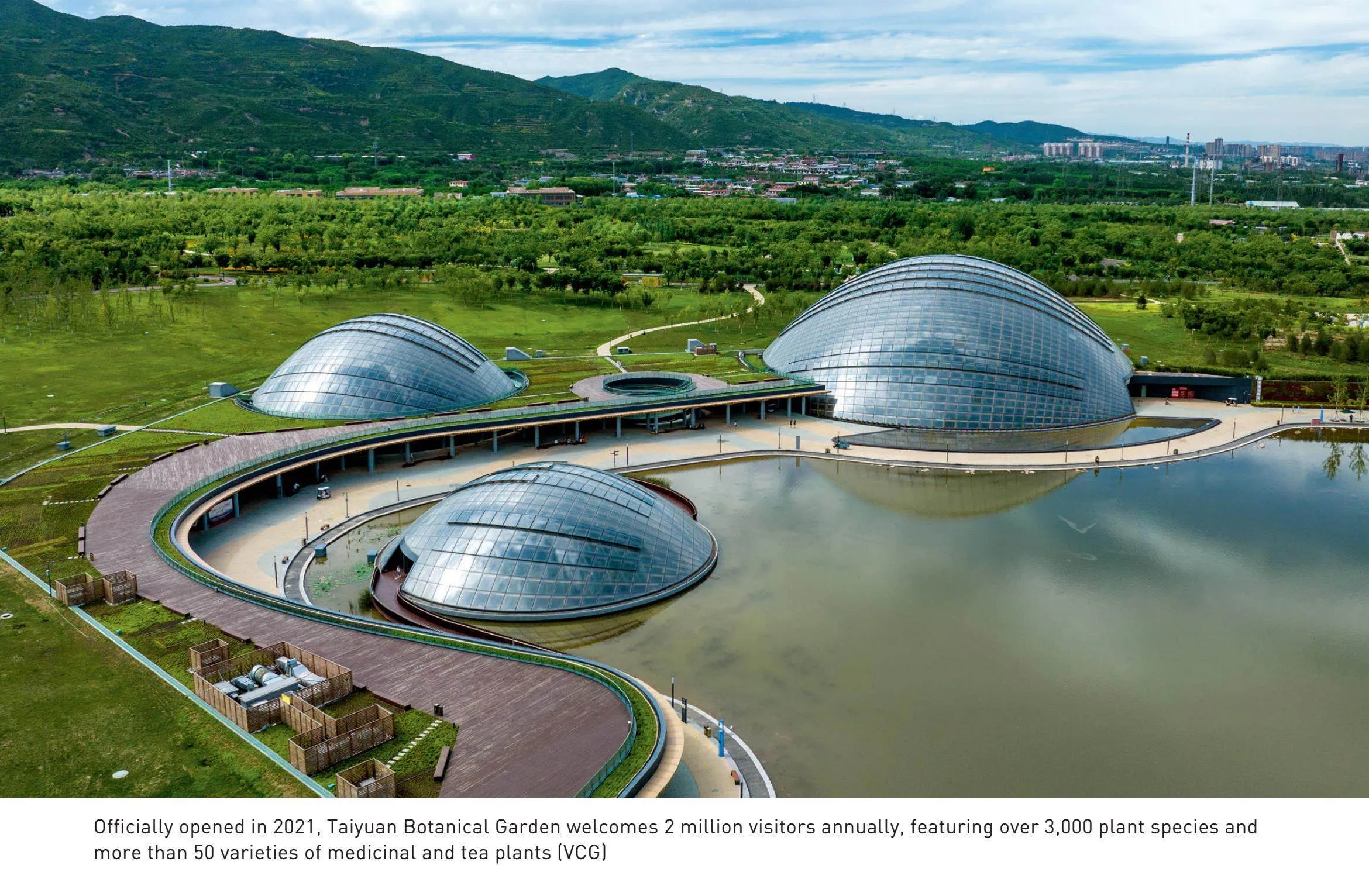
Red koi fish dart between lily pads and lotuses. Strangler figs and mango trees stretch toward a delicately latticed roof. Few would guess that underneath this beautiful botanical garden in Taiyuan, capital of northern China’s Shanxi province, lies an abandoned coal mine.
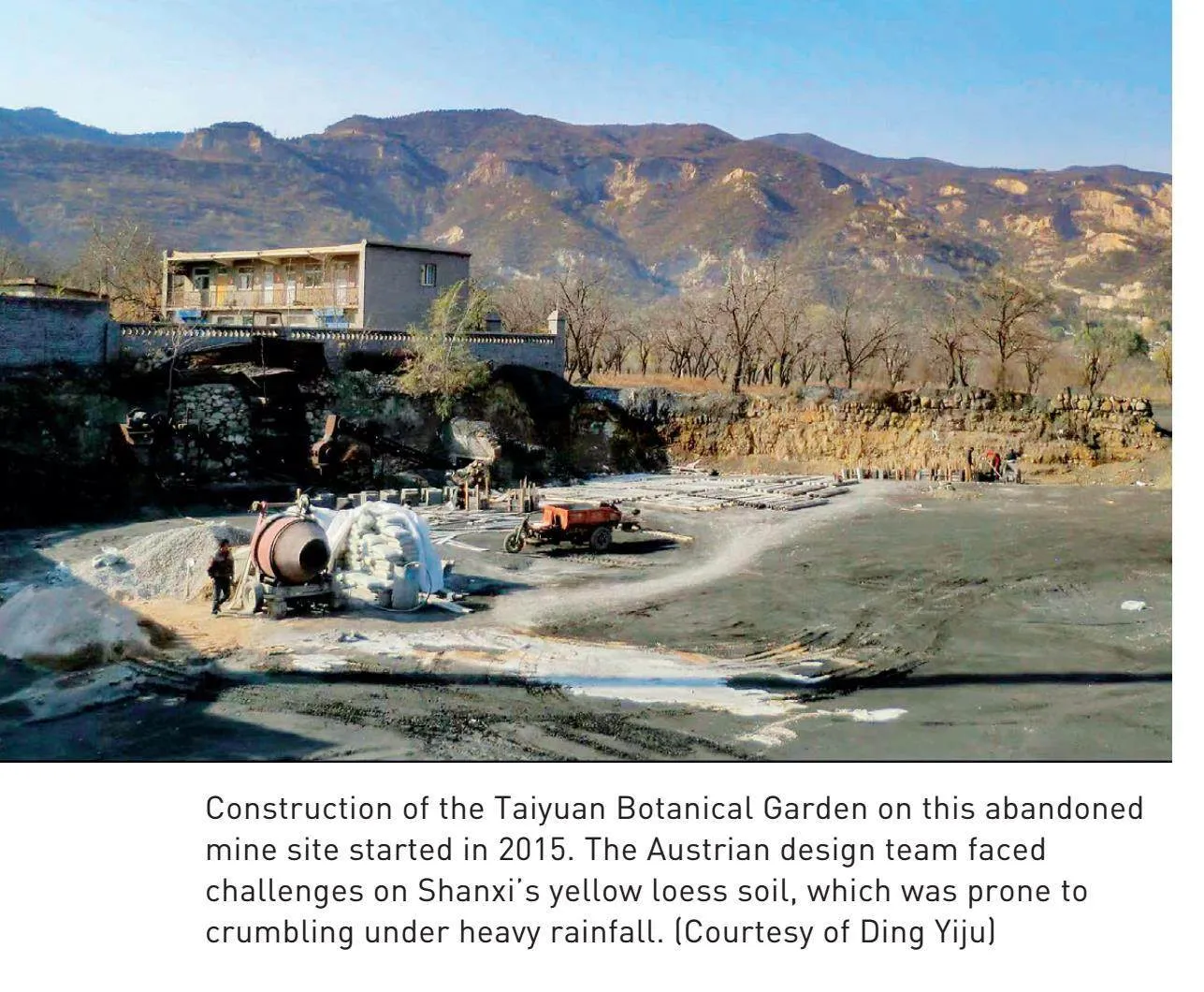
“[This area] was all black,” Ding Yiju tells TWOC. As the lead coordinator for the Taiyuan Botanical Garden project, he recalls the early stages of construction in 2015. “We even took a block of coal back to Austria, to show our team in Europe.”
Rich in coal resources, Shanxi has historically been a leading coal producer in China. However, the region has made a concerted effort in recent decades to reduce its economic dependence on coal mining due to environmental concerns and the need to plan for a post-coal future, leaving thousands of mines abandoned. While the local government and private companies have begun repurposing these sites for tourism and hospitality, strict safety regulations and the lack of established business models have stymied their transition efforts.
“Coal was everywhere back in the 1980s,” Chen Rui, a native of Taiyuan, tells TWOC. “Everyone was trying to get rich off of it.” He remembers washing his clothes after each walk home from school because the dust from nearby mines would stain his shirt collars black. His parents forbade him from playing by the river, as the currents could carry pollutants and chemicals into the city.
With over 48.3 billion tons of coal reserves locked beneath its mountains, Shanxi had produced around a quarter of China’s total coal and carbon coke output by the end of 2022. Coal production boomed in the 1980s and early 90s when the Shanxi government began to sell quarry deeds to private companies. Coal bosses, or meilaoban, quickly dominated the industry. Among the most famous of them was Yan Linze, the “richest man in Gujiao city,” who was rumored to have once held 2 billion yuan in personal assets after opening a chain of mining operations across the province.
Coal bosses and their private operations came under stricter regulations in the late 1990s and early 2000s, when China sought to reform its coal industry. Since then, the Shanxi government has closed around 10,000 mines deemed illegal or unsafe. Less than 1,000 mines are left in Shanxi today, most managed by state-owned enterprises such as China Coal Energy and Shanxi Coking Coal Group.
Thousands of abandoned mines now lie dormant across Shanxi, raising the question of how to safely repurpose and develop the land. According to a 2013 report by Economic Information Daily, over 5,000 square kilometers of land in Shanxi had been mined away, of which about 60 percent was undergoing subsidence—the gradual sinking of land. News of land collapses and the relocation of entire villages have made headlines over the years.
“It’s a complicated situation because each mine is different,” Zhang Yong, vice general manager of Beijing King Kong Samp;T Co, tells TWOC. The company, specializing in 5G intelligent mining operations, has worked in Shanxi’s labyrinthine mines since 2014. According to him, Shanxi’s mines vary greatly in depth and layout, owing to the proliferation of private enterprises and the lack of zoning regulations during the 1980s and 90s. There isn’t a universal formula for remodeling a mine, and the terrain is riddled with unforeseen dangers.
Ding Yiju’s team, part of the Austrian firm DeluganMeissl Associated Architects, struggled to build the botanical garden on Shanxi’s yellow loess dirt, which could easily crumble beneath heavy rainfall. However, “our biggest challenge was water,” Ding recalls the project’s design. Unpolluted water sources were rare in China’s arid northern provinces, and the team sought to preserve any clean water they could find in the pits.
Safety isn’t the only consideration. According to Han Juanxiu, a coal industry researcher who requested to be interviewed under a pseudonym, there is no established business model for converting a mine into a tourist attraction, and many renovation projects have failed due to the lack of supporting infrastructure in the surrounding area. This is particularly true for mines-turned-hotels, which boast hot springs as their main attraction. A search on the travel website Ctrip reveals about a dozen such sites, with prices ranging from 150 to 300 yuan per night—typical costs for a hotel stay in Shanxi.
“Many of the hotels that opened in abandoned mines are too far away from tourist sites,” Han tells TWOC. Most mining companies operated far from the city center, an inconvenience for tourists who wish to stay closer to the city’s main attractions.
Chen Rui agrees. A few years ago, he and his wife visited a hot spring hotel an hour from Taiyuan’s city center. Although he found the hot spring amusing and peaceful, with few other customers despite it being a weekend, it was not a place he would return to. “It’s just a hotel,” he tells TWOC. “There’s no real appeal to it, and getting there is a hassle.”
He speculates that China’s middle class now prefers a model of tourism that prioritizes convenience and speed over luxurious and isolated experiences like hot springs. This shift is particularly evident in the rise of “special forces style tourism,” where tourists visit as many attractions as possible in a short amount of time, and in the recent decline in average spending per trip.
So far, the only successful renovation projects have not been private or individual efforts, but rather large-scale, government-funded initiatives. According to a report from Xinhua News Agency, China’s official state news agency, the Department of Land and Space Ecological Restoration has restored more than 4.5 million mu (300,000 hectares) of abandoned mines across the country since 2016, converting them into housing, retail, and tourism spaces.
The Coal Museum of China, opened in 1989 in Taiyuan, was one of Shanxi’s earliest attempts to repurpose coal mines. With over 800 meters of abandoned mine shafts, the museum boasts Asia’s largest simulated coal mine experience. Today, it remains China’s only national-level museum dedicated to the modern coal industry.
The Coal Museum pioneered a nationwide trend of mine site renovations. Since 2004, the Chinese government has named 88 abandoned coal, mineral, and oil shale mines for renovation into tourist sites. The Jinhuagong National Mine Park in Datong, another coal-mining city in Shanxi, opened in 2012 after a cleanup and renovation project that cost over 463 million yuan, an investment beyond the reach of most commercial and private enterprises. Today, the park offers a series of immersive experiences to tourists, including riding in a mining cart, driving a mining machine, and operating an electric drill.
Both the Coal Museum and the National Mine Park have become popular attractions in Shanxi, especially among parents who want to educate their children about the province’s coal heritage. During the three-day Qingming holiday in early April this year, the National Mine Park welcomed more than 12,000 people daily. The Coal Museum welcomes over 100,000 guests from across the globe annually. Simon Cockerell, an American tour guide in East Asia, praises the Coal Museum of China on his blog: “I would recommend to anyone visiting Taiyuan, or anywhere near Taiyuan, as something odd, interesting, and educational all at the same time.”
The Taiyuan Botanical Garden officially opened in 2021. Today, it features two South American and African plant biomes, an exhibition hall for tropical flowers, and a live butterfly gallery. DeluganMeisslbegan work on the gardens in 2015, after attracting the attention of the Taiyuan city government for their work on other Chinese gardens. Seeking to clean up their polluted environment and hoping to improve the quality of life of its residents, the Taiyuan government invited Ding’s team to remodel three abandoned coal pits. The location of their mine gave the design team some advantage. “It’s much harder to work with shafts inside mountains,” he tells TWOC. “Our pits were exposed, so they were easy by comparison.”
After removing all the exposed coal left in the site, Ding’s team filled the main body of the pits with water and koi fish, forming an artificial lake with a floating restaurant. They constructed three latticed domes to house exotic plants and a research center to support conservation efforts for Shanxi’s native ecosystem. The garden’s most famous feature—a metal sky bridge overlooking the lake and domes—has become a hotspot for daka (check-in) tourism, where people visit sites and post about them online.
Though the gardens opened at the height of the Covid-19 pandemic, they skyrocketed to fame. Ding estimates that at least 2 million tourists visit annually, resulting in an annual revenue of 10 million yuan. “Most botanical gardens need a lot of government support,” he tells TWOC. “But we’ve become almost entirely self-sufficient.” He speaks proudly of the gardens’ international acclaim—their latticed timber domes are among the largest in the world.
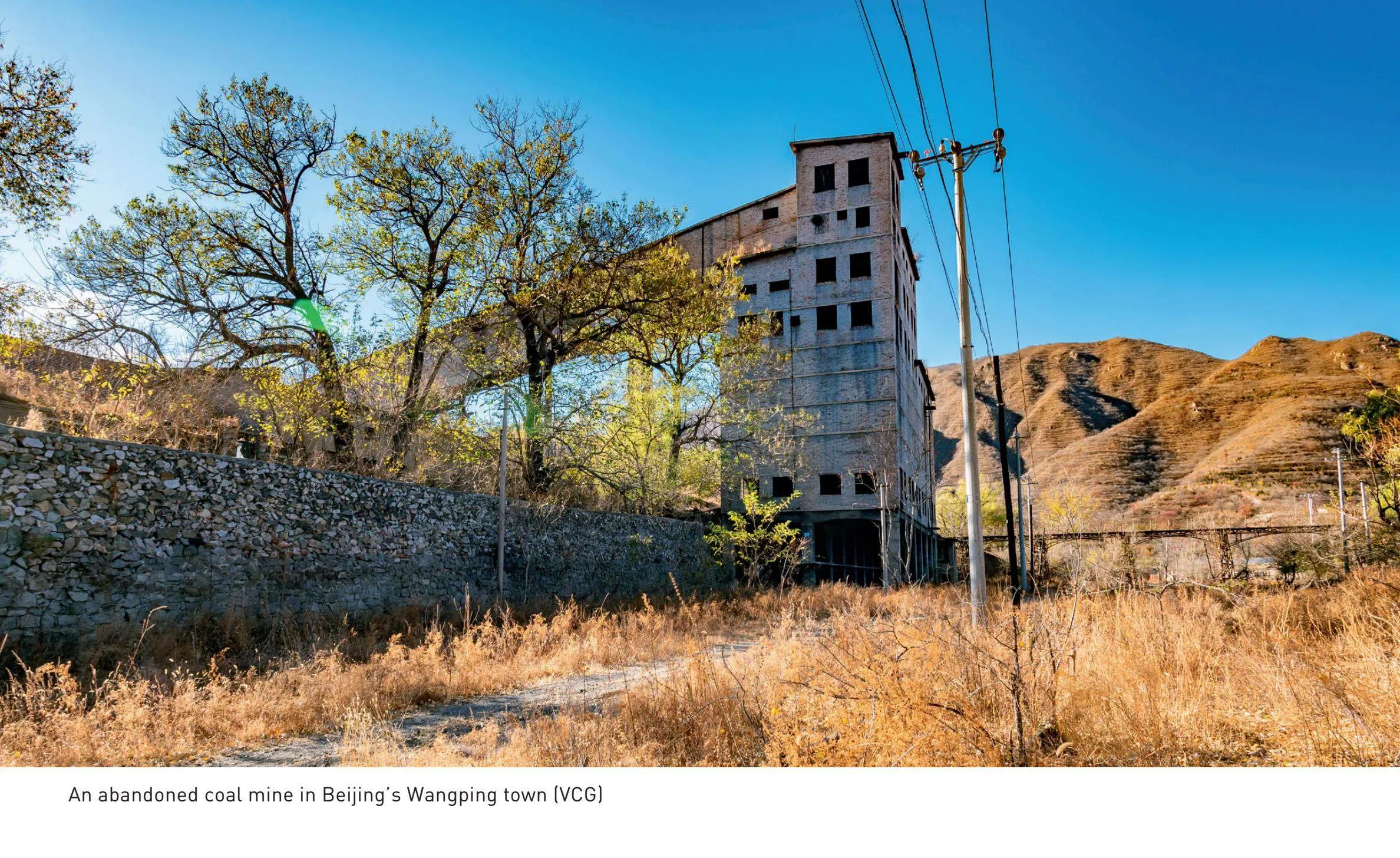
Learning from Shanxi’s successes and mistakes, cities across China are now beginning to follow in its footsteps. The government of Wangping town, a historic coal mining site in Mentougou district, Beijing, plans to construct a hot spring resort in an abandoned mine by 2026. Unlike the private projects of Taiyuan, the resort will have the full support and funding of the local government, which plans to repurpose the old mining train as a tourist vehicle, remodel the old miners’ dormitories into hotel rooms, and offer guests on-site amenities such as traditional Chinese medicine treatments. Lian Wenchao, the general manager of Beijing Jingxi Culture amp; Tourism firm, stated that the hotel would be opened alongside other attractions, such as a wetland park and a “culture street,” to create a “one-stop resort” for tourists.
These projects reflect the optimism among governments and companies across China. Ding is confident that the Shanxi government will continue to find ways to repurpose their mines despite the challenges. “They are really starting to care about the environment,” he says. “Taiyuan has completely transformed from what it was a decade ago.”
Image from VCG
Construction of the Taiyuan Botanical Garden on this abandoned mine site started in 2015. The Austrian design team faced challenges on Shanxi’s yellow loess soil, which was prone to crumbling under heavy rainfall. (Courtesy of Ding Yiju)
Officially opened in 2021, Taiyuan Botanical Garden welcomes 2 million visitors annually, featuring over 3,000 plant species and more than 50 varieties of medicinal and tea plants (VCG)
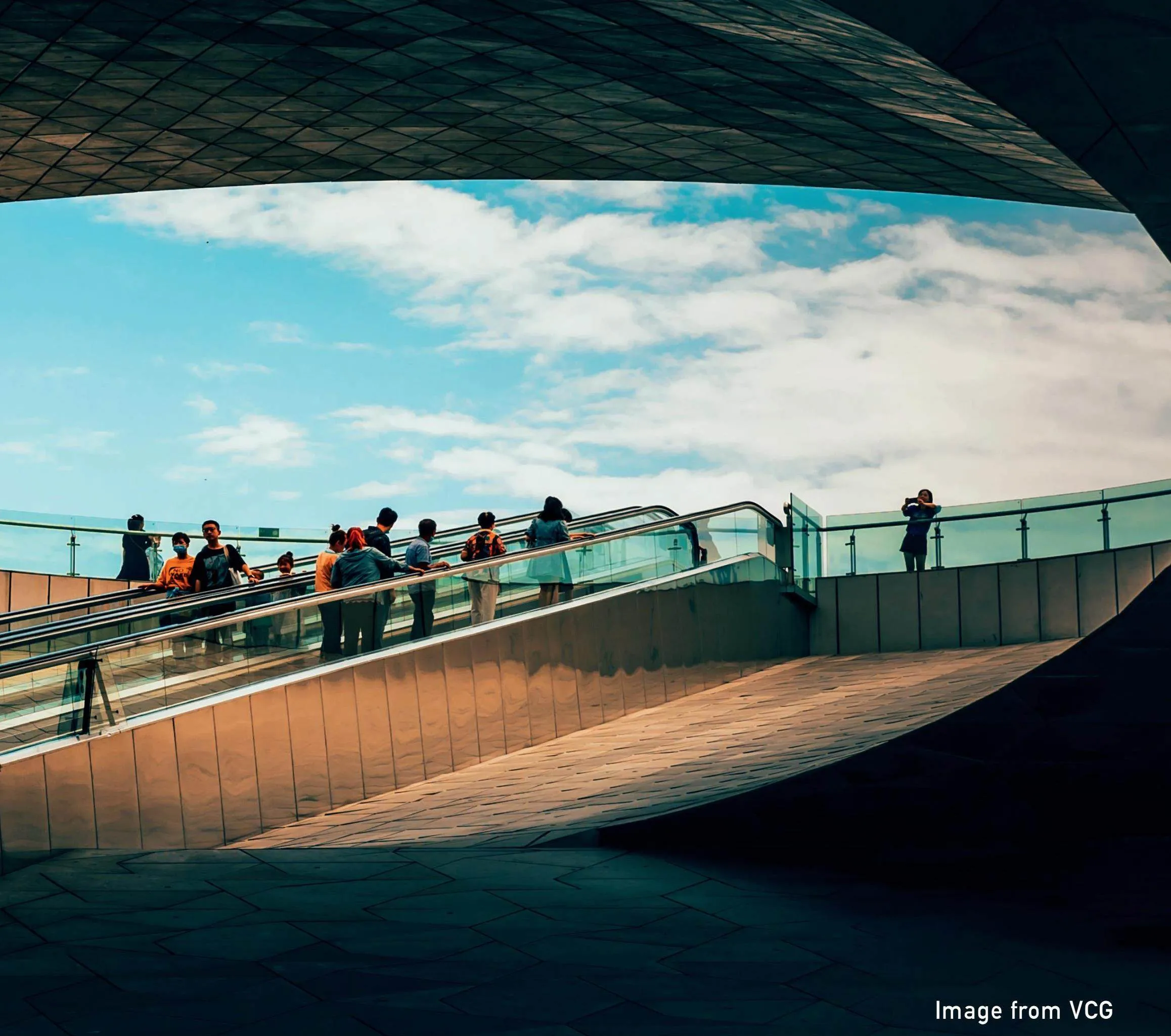
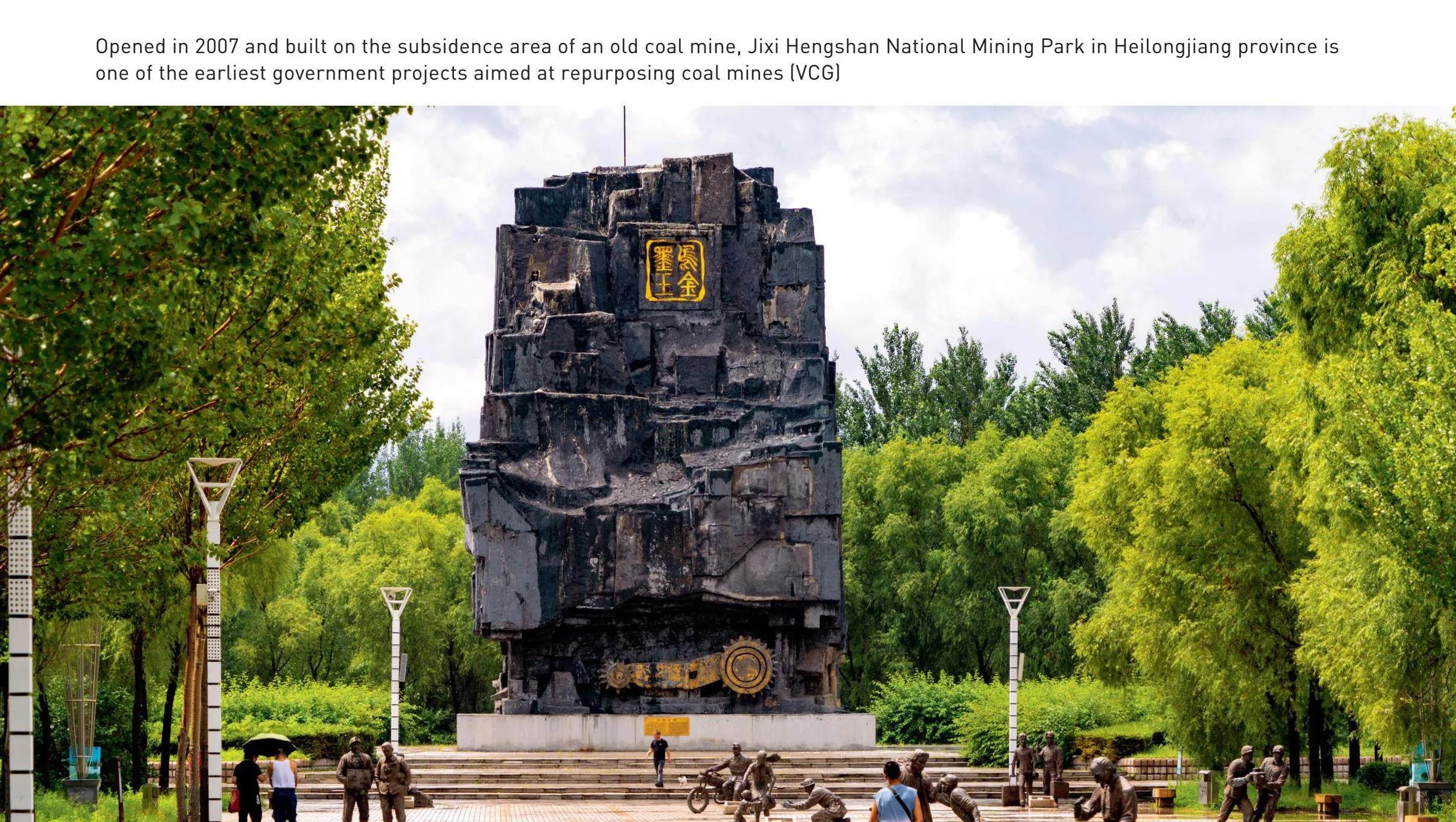
Opened in 2007 and built on the subsidence area of an old coal mine, Jixi Hengshan National Mining Park in Heilongjiang province is one of the earliest government projects aimed at repurposing coal mines (VCG)
An abandoned coal mine in Beijing’s Wangping town (VCG)
猜你喜歡
少兒科技(2022年4期)2022-04-14 23:48:10
好孩子畫報(bào)(2018年7期)2018-10-11 11:28:06
今古傳奇·故事版(2016年24期)2017-02-07 04:29:04
工業(yè)設(shè)計(jì)(2016年4期)2016-05-04 04:00:23
現(xiàn)代企業(yè)(2015年8期)2015-02-28 18:55:34
現(xiàn)代企業(yè)(2015年6期)2015-02-28 18:51:50
數(shù)學(xué)大王·低年級(jí)(2014年7期)2014-08-11 16:36:44
河南科技(2014年8期)2014-02-27 14:08:07
河南科技(2014年8期)2014-02-27 14:07:44
河南科技(2014年8期)2014-02-27 14:07:41