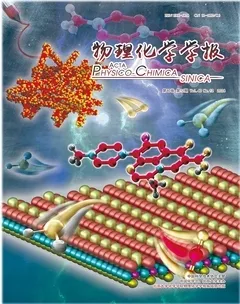
一種新型Carbon Quantum Dots/CdS/Ta3N5 S型異質結纖維光催化材料用于高效降解抗生素
2024-12-07 00:00:00李世杰戎珂王曉琴申楚琦楊方張青紅
物理化學學報 2024年12期


關鍵詞:碳量子點;S型異質結;Ta3N5纖維;協同效應;光催化
1 Introduction
The worldwide environmental issues triggered by thepervasive consumption of pharmaceuticals in contemporarysociety have stimulated ever-growing concerns 1,2.Levofloxacin, a famous third-generation quinolone antibiotic, isutilized extensively for curing infections in both humans andanimals by virtue of its broad-spectrum antibacterial features.Due to the unscientific treatment of levofloxacin beforeemission, its prevalence in surface water environments andgroundwater reservoirs poses an eminent threat to humans andecosystems 3.
Traditional treatment techniques fail to efficaciously eradicatethe recalcitrant antibiotics 4–6. Fortunately, to realize effectivewastewater remediation with inexhaustible sunlight andphotocatalysts offers a promising approach to address the aboveissue. In this context, enormous endeavours have been devotedto the exploration of preeminent photocatalysts for effectivedestruction of antibiotics and disinfection 7–17, among whichsingle-component catalysts encounter difficulties, such asinsufficient sunlight responses and significant electron/holereunion 18–25. For example, Ta3N5 (TN) emerges as a distinctivephotocatalyst because of its prominent sunlight absorption, andhigh photoelectrochemical activity, etc. However, thephotocatalytic performance of TN-based photocatalystsexplored up to date is still poorer-than-ideal for scale-upapplication, for which significant reasons are the rapidreintegration of photo-carriers and moderate photo-redoxpotential 26–33.
Encouragingly, scientific design and synthesis ofheterojunctions with controllable microstructures havemanifested promising outcomes in intensifying the catalyticproperties of materials 34–55. Accordingly, various Ta3N5-basedheterojunctions were devised and they manifested strengthenedphotoactivity 56,57. Although certain progress has been achievedin the exploration of Ta3N5-based systems, their catalyticeffectiveness still cannot meet the requirement of commercialapplication. Fortunately, the well-designed S-schemephotocatalysts are charming candidates for diversephotocatalytic applications (i.e., wastewater purification, H2O2generation, water splitting, CO2 reduction, etc.) owing to theiradvantages in achieving efficacious photo-carrier detachmentand strengthened redox power concurrently 47,58–67. Thus,integrating TN with a suitable semiconductor to build anartificial S-scheme heterostructure is a potent tactics to upgradethe catalytic effectiveness. Recent studies indicate that CdS (CS)holds significant superiority to be combined with TN as afavorable reductive component due to its negative conductionband and the matched energy band configurations 47,68–75.
Carbon quantum dots (CDs) with their advantages of specialcarbon core structure, excellent chemical inertness, distinctivephotoelectric property, cost-effectiveness, and nontoxicity isdeemed as an ideal co-catalyst for catalysis 76–78. CDs-basedcatalytic systems have been studied widely in the fields ofphotoelectric conversion, energy catalysis and environmentalprotection 76–79. In these systems, CDs can upgrade the sunlightresponsiveness and/or boost photo-carrier transport andseparation, leading to the reinforcement of the photoelectricconversion efficiency 80–83.
Herein, CDs/CS/TN S-scheme heterojunction fibers havebeen ingeniously manufactured for photocatalytic levofloxacineradication in water. The porous TN fibers serve as a superiorplatform for the even growth of CDs/CS, creating unique0D/0D/1D CDs/CS/TN ternary heterojunction fibers with tightlyconnected interface. The levofloxacin elimination efficacy hasbeen preeminently strengthened due to the improved S-schemecharge separation from the anchored CDs for effectivelywithdrawing photo-created electrons and then fosteringlevofloxacin decomposition dynamics. This study paves anavenue for the exploration of CDs-modulated S-scheme catalyststoward high-efficient environmental purification.
2 Experiment
2.1 Catalyst synthesis
Construction of TN nanofibers: TN nanofibers werefabricated based on our previous work 75. First, Ta(OEt)4 andpolyvinylpyrrolidone were added and dissolved in a mixedsolution with acetic acid and ethanol under agitation for 24 h.Next, the uniform Ta(OEt)4 solution was poured into a syringefor the synthesis of nanofibers via electronic spinning. After that,the production of Ta2O5 nanofibers were achieved via calciningthe electrospun fibers at 600 °C for 8 h. Subsequently, TN fiberswere obtained via calcining Ta2O5 at 800 °C for 8 h underammonia atmosphere.
Fabrication of CDs/CS/TN nanofibers: Briefly, 0.7 mmol ofCd(CH3COO)2?2H2O was dissolved well in 30 mL of deionizedwater under ultrasonic treatment. A certain of amount of CDswas dispersed in the above solution under sonication for 1 h,followed by the introduction of 100 mg of TN nanofibers. Next,10 mL of thiourea solution (0.07 mol?L?1) was injected into theabove suspension, which was further stirring for 1 h. 1 mL ofNH3?H2O was introduced into the above mixture, which wasstirred for 3 h at 90 °C. The final products were acquired afterwater washing, and drying treatment. The CDs/CS/TN productswith different addition amount (2, 4 and 6 mg) of CDs werelabelled as CCT-1, CCT-2, and CCT-3, respectively. CS/TNnanofibers were constructed adopting the identical route withoutCDs.
Carbon quantum dots (CDs) were fabricated through areported route with minor adjustment 84. Briefly, 1.0 g of ureaand 3.0 g of citric acid were dissolved in 10 mL of ultrapurewater with bath sonication and then the solution was placed in a50 mL autoclave and reacted at 180 °C for 5 h. After that, themixture was centrifuged (10000 r?min?1, 40 min) to remove thebulk samples. Finally, CDs were dried in a vacuum freeze dryerovernight.
2.2 Photocatalytic tests
Photocatalytic levofloxacin destruction reaction over CCTfibers was conducted in deionized water under visible light (300W Xe lamp, λ gt; 420 nm). Specifically, the nanomaterial (25 mg)was added in LEV solution (15 mg?L?1, 100 mL), followed bydispersing in dark for 30 min via magnetic stirring. Next, thelamp was switched on, initiating the LEV annihilation reactionin a reactor at 19 ± 2 °C. During catalysis, the LEV solution (1mL) was sampled every 15 min and its concentration wasanalyzed by a UV-Vis spectrophotometer (UV-2600, ShimadzuJapan).
3 Results and discussion
3.1 Characterization
The CDs/CS/TN nanofibers were synthesized via a facileelectrospinning-chemical synthesis route (Fig. 1a). Themorphologies of TN and CCT-2 were traced by scanningelectron microscope (SEM) (Fig. 1b–e). Pristine TN iscomposed of interwoven nanofibers (diameter: ~100–180 nm)(Fig. 1b,c). After chemical synthesis, CS NPs and CDs aredeposited onto TN nanofibers to create ternary heterojunctionnanofibers with hierarchical pores, reflecting that CCT-2perfectly inherits the structural advantages of TN nanofibers(Fig. 1d,e). Transmission electron microscope (TEM) imagereveals the size of CDs is primarily below 3 nm and its averagesize is about 2.3 nm according to the size statistics (Fig. 1f). Themicrostructure of CCT-2 was further revealed utilizing TEM,confirming the unique core-shell CDs/CS/TN fibrousheterostructure with intense binding, where numerous granularCDs/CS are compactly anchored on TN nanofibers (Fig. 1g,h).A high-resolution TEM (HRTEM) image (Fig. 1i) unveils twosets of lattice fringes with interplanar d-spacings of 0.31 and0.36 nm, corresponding to the (101) plane of hexagonal CS(JCPDS 41-1049) and (110) facet of monoclinic TN (JCPDS 89-5200), respectively. Notably, the close connected interfacebetween CS and TN is favorable to the spatial drift andsegragation of photo-carriers. The corresponding elementalmapping in Fig. 1j unravels that there are Ta, C, Cd, N, and Selements in CCT-2 hetero-structured fiber with a uniformdispersion, corroborating the triumphant fabrication of CCT-2.
The N2 adsorption-desorption measurements (Fig. S1) revealthat CCT-2 has the Brunauer-Emmett-Teller (BET) specificsurface area of 18.8 m2?g?1 with mesoporous configuration,markedly greater than TN (12.8 m2?g?1) and CS (17.9 m2?g?1).The superior hierarchical architecture with larger surface area ishelpful to the exposure of sufficient reactive sites for pollutantcapture and activation, fostering the catalytic process 85,86.
The X-ray diffraction (XRD) patterns of TN, CS, CCT-1,CCT-1, and CCT-3 were measured to identify their crystalphases (Fig. 2a). The distinct peaks at 2θ = 24.6°, 31.5°, 35.1°,36.2°, and 57.7° that are present in the XRD pattern of TNbelong to the (110), (203), (310), (113), and (?315) facets ofmonoclinic TN (JCPDS 89-5200) 63. Additionally, the peaks at2θ = 24.7°, 26.5.1°, 28.2°, and 43.7° that are present in the XRDpattern of CS are from the (100), (002), (101), and (110) planesof hexagonal CS (JCPDS 41-1049) 44,68. The XRD patterns ofCCT heterojunctions mainly exhibit TN peaks and oneemblematic peak of the (101) facet of CS, possibly due to thetiny diameter, and poor crystallinity of CS. Notably, the peaks ofCDs can barely be detected as a result of its low content in theseheterojunctions.
X-ray photoelectron spectroscopy (XPS) was deployed toscrutinize the chemical valence and surface configuration. Thesurvey spectra display that Ta, Cd, C, S and N exist in CCT-2(Fig. S2). Fig. 2b reveals the XPS spectrum of Cd 3d, displayingtwo peaks at 404.84 and 411.58 eV, which are from the Cd 3d5/2and Cd 3d3/2 of Cd2+ in CCT-2 47,87,88, respectively. As displayedin Fig. 2c, the doublet peaks at 161.18 and 162.40 eV correspondto S 2p3/2 and S 2p1/2, respectively 87,89,90. The Ta 4f spectrum ofCCT-2 reveals that the deconvoluted peaks at 24.50, 26.25 and27.75 eV correspond to Ta5+ cation (Fig. 2d) 27,28,33. The peaklocated at 395.85 eV is assigned to N 1s (Fig. 2e) 21,27,60. Fig. 2fpresents the C 1s spectrum of CCT-2, where the peaks at 284.80,286.25, 288.29 and 291.80 eV are originated from the C=C,C―O, C=O, and O=C―O, respectively 76. Compared withCS, the characteristic peaks of Cd and S elements in CCT-2 shifttoward greater BE values, while the peaks of Ta and N exhibit anegative movement toward a lower BE value in comparison toTN, providing crucial evidence for the S-scheme charge driftmode at the CCT hetero-interface 62.
3.2 Photocatalytic performance
To appraise the photocatalytic efficacy, the as-fabricatedfibers were utilized to annihilate LEV in water under visible light(Fig. 3a). The LEV destruction performance of tested catalystsis in the sequence: CCT-2 (91.9%) gt; CCT-1 (83.2%) gt; CCT-3(72.9%) gt; CS/TN (58.2%) gt; CS (31.4%) gt; TN (9.9%). Clearly,CS/TN shows much higher activity than CS and TN due to theestablishment of S-scheme junction that effectively improves theutilization of photo-carriers 62. The decoration of CDs on CS/TNfibers further promotes photocatalytic destruction process.Specifically, CCT-2 obtains the best photocatalytic efficacy bydestroying 91.9% of LEV within 60 min. CCT-3 showcases amoderate decrement in the activity compared with CCT-2, whichis primarily caused by the catalytic region and light absorptionbeing impeded by redundant CDs. The degradation data is wellfitted with a pseudo-first-order kinetic model. Based on theformula of lnC0/C = kt, the reaction rate constant k of samplesare obtained. CCT-2 exhibits a high rate constant of 0.0404min?1, with 7.2-, 39.4- and 2.1-fold enhancement compared toCS (0.0049 min?1), TN (0.0010 min?1) and CS/TN (0.0132min?1), respectively (Fig. 3b). This phenomenon indicates theintegration of CDs and S-scheme junction to achieve anintegrated CCT-2 photocatalyst is an efficacious strategy for theintensification of the photo-redox performance.
The photocatalytic effectiveness of CCT-2 towards LEVdestruction in the presence of various anions was tested (Fig. 3c).The LEV elimination rates are approximately 77.2%, 90.3%,83.8%, 84.6, and 87.1% in the presence of Na3PO4, NaCl,NaHCO3, NaNO3 and Na2SO4 salts. Clearly, the injection ofNa3PO4 hampers LEV destruction significantly, which mainlyresults from its embezzlement of ROS (Fig. 3c) 60,61.Furthermore, CCT-2 can maintain high treatment efficiencies intap water (89.2%), river water (84.9%), and seawater (76.3%),respectively, reflecting its significant potential in authenticapplication (Fig. 3d).
Cyclic test was implemented on CCT-2 to check its stability(Fig. 3e). CCT-2 maintains exceptional cycling durability, andthe LEV destruction efficiency remains at high level for eachrun, representing that CCT-2 is a robust catalyst with remarkablephoto-activity. Besides, the XRD and SEM characterizationaffirm that there is no significant variation in the crystal structureand microstructure of the recycled CCT-2 (Fig. S3).
The primary reactive oxygen species (ROS) for LEVdestruction in the CCT-2 system were investigated viaquenching tests (Fig. 3f). No significant activity loss appears inthe presence of IPA, excluding ?OH as the main ROS. Thedecomposition of LEV is inhibited considerably afterintroducing BQ or EDTA-2Na, unveiling that h+ and ?O2? are thecardinal ROS in this system.
To comprehend the decomposition process of LEV over CCT-2 during photoreaction, HPLC-MS analysis was conducted toidentify the intermediates (Fig. S4), which were summarized inTable S1. The destruction of LEV proceeds in three major routesvia oxidation of h+ and ?O2? (Fig. 4a) 60. In pathway I, thepiperazine cleavage occurring on LEV leads to the production ofP1 (m/z = 336), which is further transformed to P2 (m/z = 307)via demethylation and decarboxylation reactions. Subsequently,the deethylamino and demethoxylation reactions are responsiblefor the generation of P3 (m/z = 234). In pathway II, theproduction of P4 (m/z = 318) is accomplished by demethylationand decarboxylation. Afterwards, the piperazine-ring cleavagetakes places, generating P3 (m/z = 234). In pathway III, LEV istransformed to P5 (m/z = 378) via hydroxylation reaction. Theloss of methyl leads to the production of P6 (m/z = 364), whichfurther experiences decarboxylation reaction, giving rise to P7(m/z = 319). Afterwards, fierce photo-oxidation reactionscontributes to the comprehensive fragmentation of theseintermediates to decompose into P8 (m/z = 176), P9 (m/z = 161)and P10 (m/z = 90).
The toxicity assessment via adopting T.E.S.T. wasimplemented to probe the toxicity of LEV and its intermediates(Fig. 4b–d and Table S2). In Fig. 4b, the LC50 value of LEV forfathead minnow is higher than that of all the products, revealinga notable decrement in the acute toxicity of the intermediates. InFig. 4c, almost all the intermediates deliver the reduceddevelopmental toxicity compared with LEV, except P1 and P7.In Fig. 4d, all the products have a lower mutagenicity than LEVexcept P5. Encouragingly, P3, P9 and P10 are “mutagenicnegative”. Theses phenomena indicate that the CCT-2 is capableof effectively attenuating the toxicity of LEV.
3.3 Mechanism exploration
The sunlight responsive abilities of TN, CS and CCT-2 wereprobed utilizing UV-Vis diffuse reflectance spectrometer (DRS)(Fig. 5a). TN and CS manifest characteristic absorption edges of597 29,60 and 532 nm 47,74, respectively. CCT-2 unveils an evidentintensification in the absorption property in relative to TN andCS. In this case, the hybridization of CDs/CS with TN leads tothe effective optimization of sunlight responsiveness andutilization of CCT-2, which is favorable to photoactivityreinforcement.
The Kubelka-Monk profiles were employed to obtain thebandgap (Eg) of TN (2.14 eV) and CS (2.33 eV) (Fig. 5b).According to Mott-Schottky measurements, their conductionband potentials (ECB) were found to be ?0.48 and ?0.93 V (vs.NHE), respectively (Fig. 5c,d). With the aid of EVB = ECB + Eg,the corresponding EVB are determined to be 1.66 and 1.4 V (vs.NHE), respectively.
The work function (Φ) is a prime index for analysinginterfacial charge migration 61. Ultraviolet photoelectronspectroscopy (UPS) apparatus was employed to test the Φ ofcatalysts to uncover the mechanism of photo-carrierredistribution for antibiotic degradation over CCT-2 (Fig. 5e,f).Clearly, the Φ values of TN and CS are computed as 4.81 and3.93 eV, respectively. Correspondingly, their Fermi levels (Ef)are found to be ?4.81 and?–3.93 eV, respectively, reflecting alower Ef of TN compared with that of CS. Upon thehybridization of them, electrons (e?) autonomously drift from CSto TN until their Ef values equalize at the interfacial region, instrong agreement with the S-scheme charge redistributionmechanism.
The analysis of photo-carrier detachment kinetics is beneficialfor an in-depth comprehension of the reinforced photocatalyticeffectiveness of CCT-2. The photo-carrier separation property ofTN, CS, CS/TN, and CCT-2 was inspected byphotoelectrochemical measurements. The photocurrent-timeplots evidence that the photocurrent intensity of CCT-2 isstronger than that of TN, CS, and CS/TN (Fig. 5g), signifyingthe efficacious photo-generation of electrons and increasedphoto-carrier separation efficiency in CCT-2 59,62.Electrochemical impedance spectroscopy (EIS) curves manifestthat the semicircle radius of CCT-2 is the minimum, suggestingCCT-2 possesses the best charge transportation property (Fig.5h). The fostered segregation of electron-hole pairs in CCT-2 isfurther corroborated by PL spectra (Fig. S5). Evidently,benefiting from the synergistic effect of CDs modification andS-scheme junction, the photo-carrier reunion is blockedprofoundly with expedited electron drift kinetics in CCT-2.
The reactive oxygen species (ROS) in TN, CS and CCT-2systems were further probed by electron paramagnetic resonance(EPR) tests (Fig. 5i) 61. No ?OH signals is detected in thesesystems, due to their deficient photo-oxidization ability forgenerating ?OH. By contrast, these systems display distinctsignals of ?O2?. Among them, CCT-2 possessed the mostprominent peak intensity, revealing the great redox potential ofCCT-2 for producing abundant ?O2?. This phenomenon affirmsthat the segregation and migration of photo-createdelectrons/holes proceeds in an S-scheme course, in accordancewith the XPS and UPS detections (Figs. 2 and 5e,f)
Based on the above outcomes, a plausible photocatalytic LEVdestruction process over CCT-2 is proposed (Fig. 6). When theternary heterojunction is established, the divergence in their Eftriggers the spatial e? drift from CS to TN through the interfacialregion until the equilibrium of the Ef, which results in theoccurrence of an IEF and band bending at the heterointerface.Under light illumination, the e– in the VB of TN and CS is drivento jump into their respective CB. Under the cooperative impactof IEF, curved bands and Coulomb attraction, the invalid e? inthe CB of TN is propelled to enter into the VB of CS, where theinvalid e? and h+ are reunited. Of note, CDs not only act asexcellent e? collectors to advance the S-scheme carrierseparation but also as eminent sunlight harvesters to strengthenthe sunlight utilization of the system. Specifically, the highenergetice? and h+ are effectively accumulated in the CDs andTN’s VB, respectively, guaranteeing the simultaneousintensification of the integrated catalyst’ carrier segregation andredox ability for antibiotic purification 7,58,61. Moreover, theporous fiber-shaped architecture of CCT-2 could offer amplereactive sites, which are conducive to antibiotic capture anddegradation. As a consequence, abundant ?O2 – and h+ aregenerated in CCT-2 system and then involved in the effectivefragmentation of LEV into nonpoisonous molecules. Thephotocatalytic LEV annihilation process over CCT-2 is asfollows: (Eqs. (1)–(4)).
CDs/CS/TN + hυ → CDs/CS/TN (e? + h+) (1)
e? (TN) + h+ (CS) → reunion (2)
e? (CDs) + O2 → ?O2 – (3)
?O2 – /h+ + LEV → CO2 + H2O + harmless molecules (4)
4 Conclusions
In summary, this work skillfully fabricated CDs/CS/TNheterojunction fibers via electrospinning-chemical synthesisstrategy. The optimal CDs/CS/TN manifested significantlyhigher catalytic ability and excellent recyclability, with the firstorderrate constant drastically increasing by 39.4-, 7.2- and 2.1-fold compared with TN, CS and CS/TN. The upgradedmechanism of photo-activity is accredited to the intense internalelectric field, effective photo-carrier separation and great redoxability of S-scheme junction with CDs as the e? receivers. Thiswork offers a rational direction for devising highly active andrecyclable fiber-shaped photocatalysts via integrating CDs andS-scheme junction into an integrated system.
Author Contributions: Conceptualization, Shijie Li;Methodology, Shijie Li and Qinghong Zhang; Software, KeRong and Xiaoqin Wang; Validation, Ke Rong, Xiaoqin Wangand Chuqi Shen; Formal Analysis, Ke Rong and Xiaoqin Wang;Investigation, Ke Rong and Xiaoqin Wang; Resources, FangYang and Qinghong Zhang; Data Curation, Ke Rong; Writing,Original Draft Preparation, Shijie Li; Writing, Review amp;Editing, Shijie Li and Qinghong Zhang; Visualization, Ke Rong,Chuqi Shen and Xiaoqin Wang; Supervision, Shijie Li; ProjectAdministration, Shijie Li; Funding Acquisition, Shijie Li, FangYang and Qinghong Zhang.
Supporting Information: available free of charge via the internet at https://www.whxb.pku.edu.cn.