Development and Establishment of Unity Collaborative Public Spaces in Inter-Provincial Border Areas within Ethnic Autonomous Regions: Based on Investigation of Ethnic Areas in Southeast Chongqing
2024-10-12 00:00:00ZhangHuayan
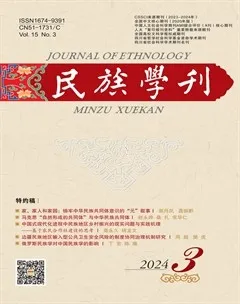
民族學刊 2024年3期
JOURNAL OF ETHNOLOGY, VOL. 15, NO.03, 46-54, 2024 (CN51-1731/C, in Chinese)
DOI:10.3969/j.issn.1674-9391.2024.03.006
Abstract:
Southeast Chongqing is the only concentrated and contiguous area of ethnic minorities mainly inhabited by the Tujia and Miao ethnic groups in Chongqing. It is located in the hinterlands of the Wuling Mountains, encompassing five counties: Qianjiang District, Xiushan Tujia and Miao Autonomous County, Youyang Tujia and Miao Autonomous County, Pengshui Miao and Tujia Autonomous County, and Shizhu Tujia Autonomous County. Therefore, Southeast Chongqing can be considered a typical ethnic autonomous region. Geopolitically, it shares borders with the provinces of Hubei, Hunan, and Guizhou, establishing it as a widely recognized inter-provincial border zone. What is more, this region intersects with national strategies for both western regional development and the rise of the central region, making the construction and development of unity collaborative public spaces in inter-provincial border areas particularly important.
Since 2016, the governments of these five counties, alongside neighboring provincial administrations, have actively implemented national ethnic unity policies: They have cooperated in multiple aspects and constructed unity and cooperation public spaces in inter-provincial border areas, emphasizing six key dimensions: 1) Fostering a sense of community for the Chinese nation, and reinforcing grassroots Party organizations to ensure political guarantees; 2) implementing regional development strategies to set up joint platforms for coordinated development; 3) deepening security and stability initiatives to create safe border environments; 4) strengthening economic integration through public interaction to promote joint industrial development; 5) facilitating cultural exchanges to innovate and preserve ethnic heritage; and 6) close cooperation during the epidemic in the area of public health measures and disease control in border areas.
Studies also suggest that after years of hard work by grassroots leaders and the masses at the forefront, some achievements have finally been made. However, this investigation finds that there are many persistent problems in the construction of unity collaborative public spaces, mainly manifested across four aspects: 1) Deficient understanding of shared governance and construction, coupled with a lack of resource integration; 2) insufficient emphasis on sharing and coordination; 3) inadequate depth and scope of the “six-unions” mechanism; 4) insufficient interaction, communication, and integration among the people, resulting in limited emotional engagement. These problems are bound to hinder the process of constructing unity and cooperation public spaces.
An objective analysis of the reasons for these problems should identify five key factors: 1) Inadequate top-level design, characterized by a lack of specific policies and standardized pilot projects; 2) inconsistent policies governing public space cooperation, complicating grassroots implementation; 3) an absence of assessment and evaluation mechanisms, inducing insufficient internal motivation for cadres and the people; 4) weak brand recognition, imprecise goals for unity and cooperation; and 5) insufficient ideological awareness, impeding the formation of social cohesion. In response, five sets of countermeasures and suggestions are proposed: 1) Strengthen top-level design, create precise goals; 2) integrate resources, build brands, and improve management systems; 3) strengthen public outreach, enhance ideological awareness; 4) strengthen cultural exchange activities, stimulate ethnic interaction and integration; and 5) reinforce campus education, continuously foster a sense of community for the Chinese nation.
Key Words:
ethnic autonomous regions; unity collaborative public spaces in inter-provincial border areas; southeast Chongqing ethnic region; construction and development of public spaces