Practical Problems and Mechanisms for Rural Revitalization in Ethnic Minority Areas in the Process of Chinese Modernization: Based on the Idea of Constructing of Farmer Cooperatives
2024-10-12 00:00:00GaoYongjiu
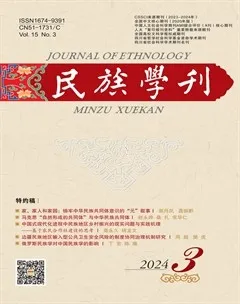
民族學刊 2024年3期
JOURNAL OF ETHNOLOGY, VOL. 15, NO.03, 28-38, 2024 (CN51-1731/C, in Chinese)
DOI:10.3969/j.issn.1674-9391.2024.03.004
Abstract:
Due to a combination of natural constraints and historical conditions, most ethnic minority areas in China are still in the transition from comprehensive poverty alleviation to all-round revitalization. Within the process of Chinese modernization, comprehensive rural revitalization of ethnic minority areas is still facing some practical obstacles. These include the need for strengthening grass-roots organizations, the prevalent phenomenon of rural depopulation, the imperative to enhance levels of industrial modernization, the precarious nature of inter-ethnic relations, and the intertwined pressures of ecological governance.
At present, rural revitalization efforts in ethnic regions seem to confront numerous practical problems that necessitate adjustments in both productive forces and production relations. Drawing upon basic Marxist theory such as the inevitability of transitioning from small-scale peasant economies, the primacy of productivity in shaping production relations, and the centrality of people as the agents of social practice, it can be inferred that farmer cooperatives emerge as representative products of the symbiotic evolution of rural social productive forces and production relations. In this regard, farmer cooperatives can be viewed as a new type of production and business operation, facilitating the socialization of rural production and the integration of rural human resources in ethnic minority areas. This conceptualization has become the generating principle of farmer cooperatives in rural revitalization initiatives in ethnic minority areas.
Farmer cooperativesare economic cooperation and social service organizations that are closely embedded within rural society, sharing weal and woe with local industries, and being inherently aligned with the well-being of farmers’ livelihoods. These cooperatives should give full play to their organizational efficiency in the rural revitalization efforts in ethnic areas. Specifically, farmer cooperatives could serve as supplementary bastions of grassroots participatory democracy, a good platform for endogenous development across all ethnic groups, the primary agents driving adjustments in the ethnic industrial structure, a natural platform for the education of ethnic unity and progress, and the organic role of coordinating the relationship between humans and nature. This multifaceted task potentially enables farmer cooperatives to contribute significantly to achieving the five-dimensional goals including effective governance, an affluent life, making industries thrive, and creating a civilized social atmosphere and a livable ecological environment. In this way, all ethnic groups will be encouraged to jointly pursue socialist modernization through endogenous development.
In conclusion, farmer cooperatives can be considered as a representative product of endogenous development, rooted in rural ethnic minority areas, and they can potentially promote a “reorganization” of diverse ethnic peoples. On the one hand, they may serve as conduits for integrating external aid with endogenous resources, and on the other hand, they can transform external aid resources into endogenous development momentum, which could help ethnic minority areas to take the road of endogenous modernization in the process of Chinese modernization, using the organization type of cooperatives. Of course, the role of farmer cooperatives in rural revitalization in ethnic minority areas has its own advantages and limits. Using a coordinated governance framework, encompassing multiple forces while trying to synchronize external aid and endogenous resources, it is deemed necessary to jointly promote a comprehensive revitalization of rural ethnic minority areas and stimulate the modernization of all ethnic groups in the construction of the community for the Chinese nation.
Key Words:
rural revitalization; Chinese modernization; cooperatives of farmers; ethnic minority areas; endogenous development