Tales of Her銀幕上的“亦舒女郎”抓住了當代女性的流量密碼?
2024-09-30 00:00:00ByZhengYiwen
漢語世界(The World of Chinese) 2024年3期
Hong Kong novelist Yi Shu’s works are being adapted for movie and TV, but not everyone is sold on the messaging of these female-centric stories
Under a brilliant autumn sky, Huang Yimei glides down the open road. A black leather jacket clings to her form. Her motorcycle hums with power. As she rides, the yellow leaves of the trees lining the street blur into a golden haze. “From now on, the world points wherever I want to go, and I embrace my being, fully and utterly,” she says.
This declaration has become a popular mantra among viewers of the hit show . Adapted from the 1981 novel of the same name by renowned Hong Kong writer Nee Yeh-su, better known by her pen name Yi Shu (亦舒), the show explores 20 years in the life of Huang, a good-looking art curator born into an intellectual family in Beijing. Portraying Huang is Liu Yifei, known for playing the lead in Disney’s (2020). The show dominated ratings from the start, setting a record high for urban dramas on Chinese streaming platform Tencent Video.
Its success was predictable. Adaptations of Yi Shu’s novels have surged on the Chinese mainland in recent years. In 2017, the drama —which tells the story of a housewife rediscovering herself after a divorce—topped the annual ratings, with total online views surpassing 10 billion. Since then, Yi Shu’s works have become a goldmine for script adaptations, resulting in the 2020 drama , the 2020 film , and the 2024 drama . All are hit dramas depicting female heroines living in big cities and sparked heated discussion among viewers.
“Youth drama and women-centered themes have been highly successful in the Chinese market, both in terms of popularity and commercial success,” Qin Haojun, a young screenwriter and a member of the Audiovisual Arts Committee of the Beijing Literary and Art Critics Association, tells TWOC.
Born in 1946, Yi Shu wrote novels primarily from the 1970s to the 1990s, a period marked by Hong Kong’s economic boom and evolving social values. Her works often center around women of this era, imbued with a strong feminist conscience. Yi Shu’s heroines share certain traits: They are well-educated and financially independent career women who hold respected jobs like journalists, doctors, and lawyers; they have refined tastes and live elegant lifestyles.
Yi Shu is affectionately referred to as “Reverend Mother (師太)” by her readers, and many women have considered her a life mentor. China Youth Daily newspaper has praised her for depicting women who are economically, spiritually, and romantically independent. They choose partners on their own terms, and have the strength to leave unsatisfactory relationships, thereby breaking traditional gender norms in China.
But Yi Shu’s works are also controversial. Despite their professional success and multiple romance entanglements, her heroines’ ultimate goal is still to find a man who can provide long-term financial security. Their academic and professional achievements are a means to elevate their social status and allow them to marry into wealth. In Yi Shu’s 1979 novel , the protagonist Hay Bo is an accomplished, beautiful, and charming woman studying at Cambridge University. But she chooses to become the mistress of a wealthy older man, securing a good material life for herself.
Book critics have also excoriated Yi Shu’s female characters for acting without scruples and pursuing pleasure at all costs. In the original novel , Huang has never worked a day in her life, as she hails from a wealthy family. Her life is a whirlwind of romances with at least nine suitors. At 16, she meets Zhou Shihui, a 30-year-old married man who falls in love with her at first sight. He divorces his pregnant wife for her, making Huang the other woman in their relationship. But their relationship doesn’t last, and Huang ends up marrying a wealthy elderly man whose son is also infatuated with her. When the son discovers that Huang has become his stepmother, he is heartbroken—a plot twist that many netizens have described as “melodramatic.”
To appeal to modern viewers and pass censorship, adaptations of Yi Shu’s novels usually go through what critics call “extreme makeovers,” often by enhancing the characters’ professional storylines. In the drama adaptation of , Huang is reimagined as the daughter of professors at the prestigious Tsinghua University. Instead of a wealthy socialite, she becomes a career woman after graduating from college. The drama also trims her love interests from nine to four and removes the plotline with the married man to better align with mainstream Chinese values.
Instead of focusing solely on romance, many adaptations highlight social issues pertinent to current Chinese society. The 2024 TV adaptation of centers the narrative around helicopter parenting, depicting the heroine’s struggle to balance filial piety with staying true to herself. The adaptation of explores tensions that rise from a marriage between people from different socioeconomic backgrounds.
“The core of Yi Shu’s original novel is actually timeless. In adapting the series, adjustments were made primarily to align with the contemporary environment and shared values,” Qin tells TWOC. “The screenwriters also considered the current audience’s emotional and aesthetic preferences when adjusting the plot and characters’ relationships.”
As a result, the female protagonists become near-perfect role models in these adaptations—they are stunningly beautiful, exceptionally insightful, open-minded, and have refined tastes. Any choices that go against contemporary values, like cheating or having affairs with married men, are removed. Not all viewers are happy with these changes, especially the book fans. They believe that this kind of perfection diminishes the complex personalities, which include traits like vanity and calculation, of the characters in the original novels.
These flawed characters also make sense given the historical context of the novels. Women living in ’80s Hong Kong struggled with anxiety and insecurity arising from the intense pressure to survive in the materialistic, affluent, yet indifferent society of the time. The protagonist in famously said, “I want a lot of love; if not, a lot of money will do.”
However, most TV adaptations change these settings to mainland cities like Shanghai and Beijing, where the economy was just about to pick up pace with the start of market reforms in the ’80s. Yi Shu’s original tone is more somber and gray, whereas the characters in the TV adaptations are filled with positivity and painted in vibrant colors. A commentator on the streaming platform Bilibili argues in a video that “Yi Shu’s works reflect the unique contradictions of Hong Kong, and simply inserting some local dialect into the script does not seamlessly transplant the stories.”
Qin Wen, screenwriter of (adapted from Yi Shu’s 1982 novel of the same name), said in an interview in 2017: “I just borrowed a seed from Yi Shu and planted it in the soil of Shanghai, where it grew into a tree of its own…Modern society’s views on marriage and relationships have evolved with the times, and the backgrounds and upbringing of the characters are different, so many new characters were added to the show.” The TV series is set in 2010s Shanghai and deviates significantly from the book by adding a new leading male character and a new ending.
While adaptations of Yi Shu’s works have received mixed reviews, it’s clear that there is a growing demand for female-centric stories in China. As more stories of this kind—including Yi Shu’s other novels—make their way to the screen, retaining their literary charm while meeting the ever-evolving preferences of the audience will remain a challenge for creators.
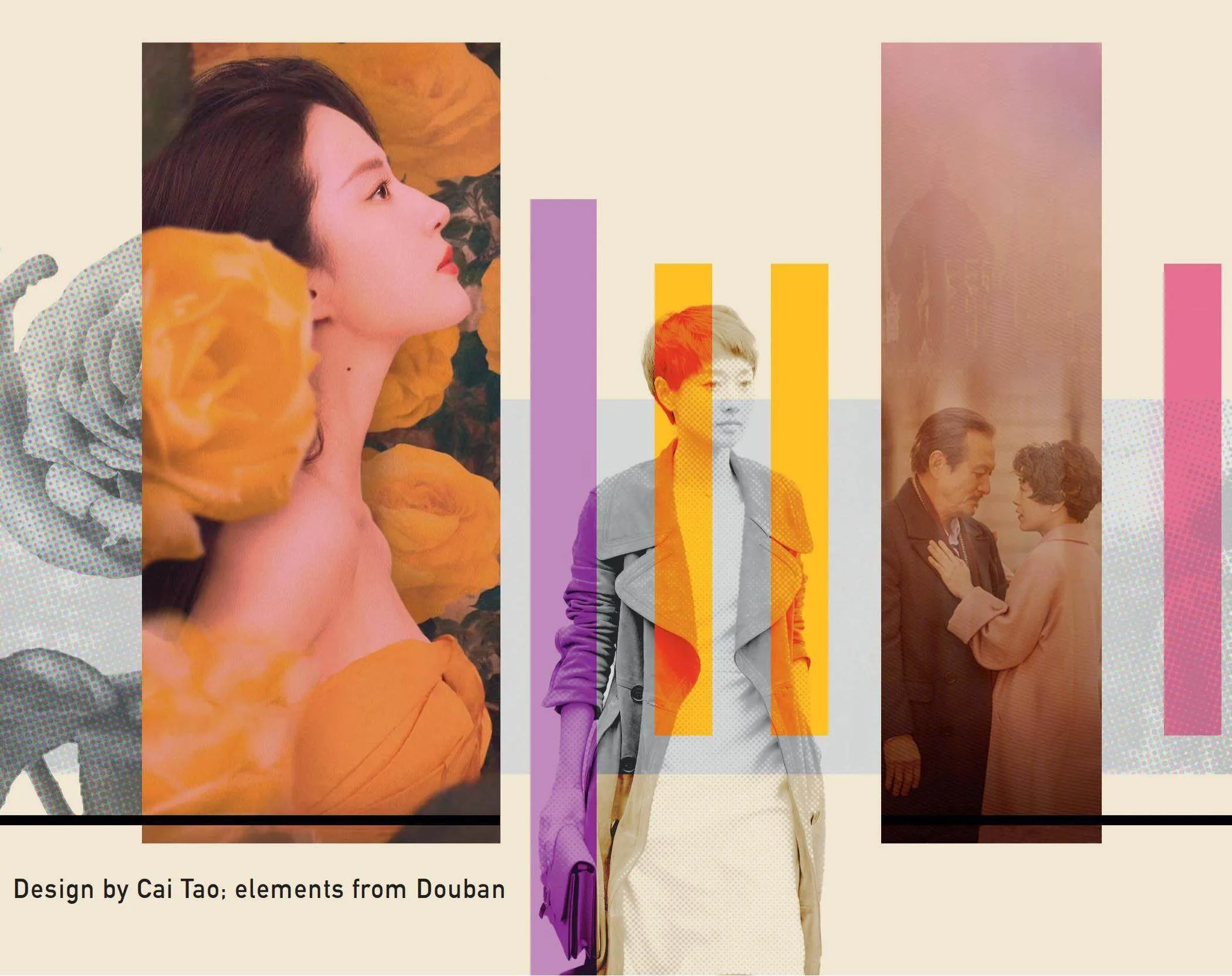
Design by Cai Tao; elements from Douban
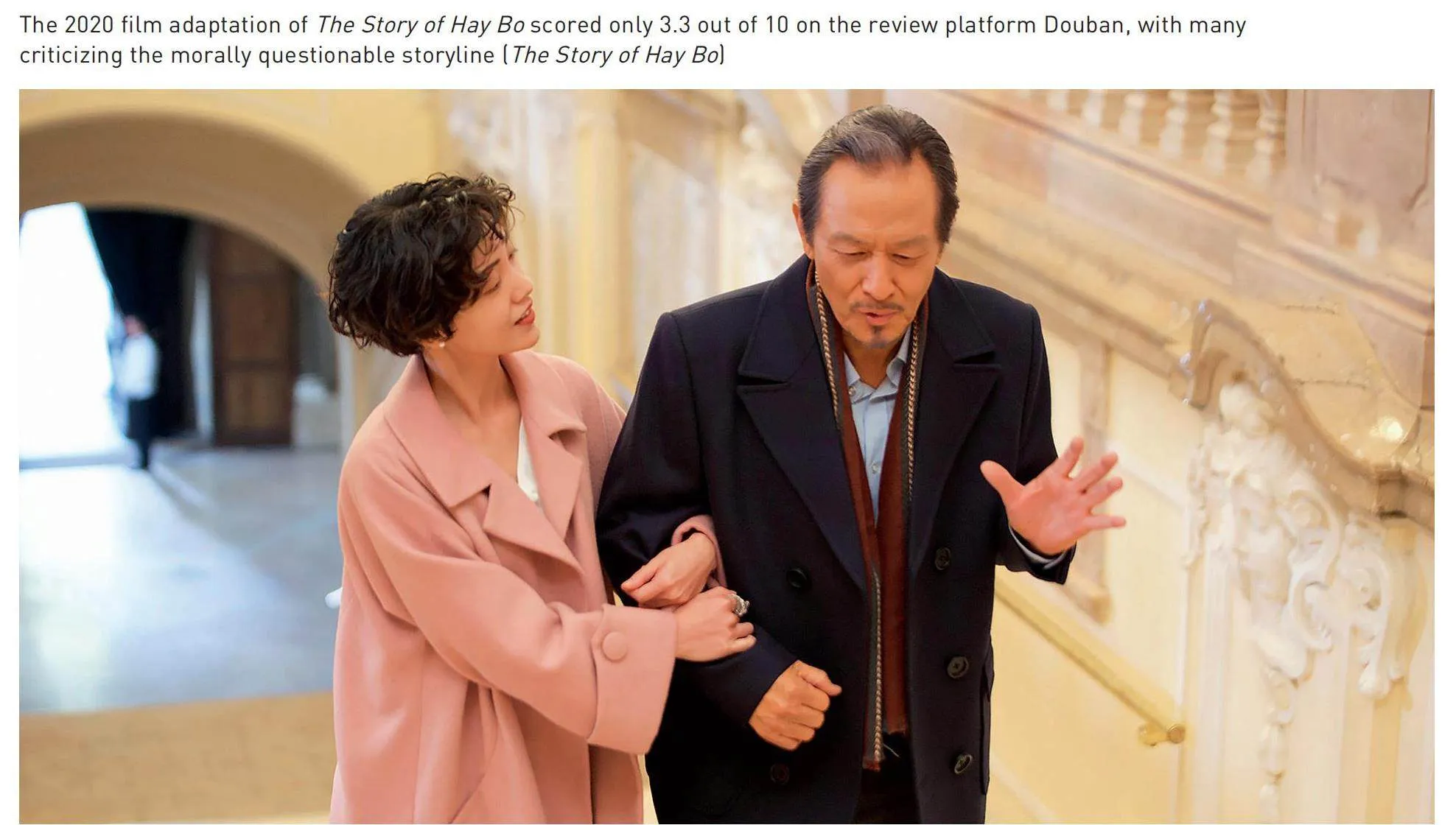
The 2020 film adaptation of scored only 3.3 out of 10 on the review platform Douban, with many criticizing the morally questionable storyline ()
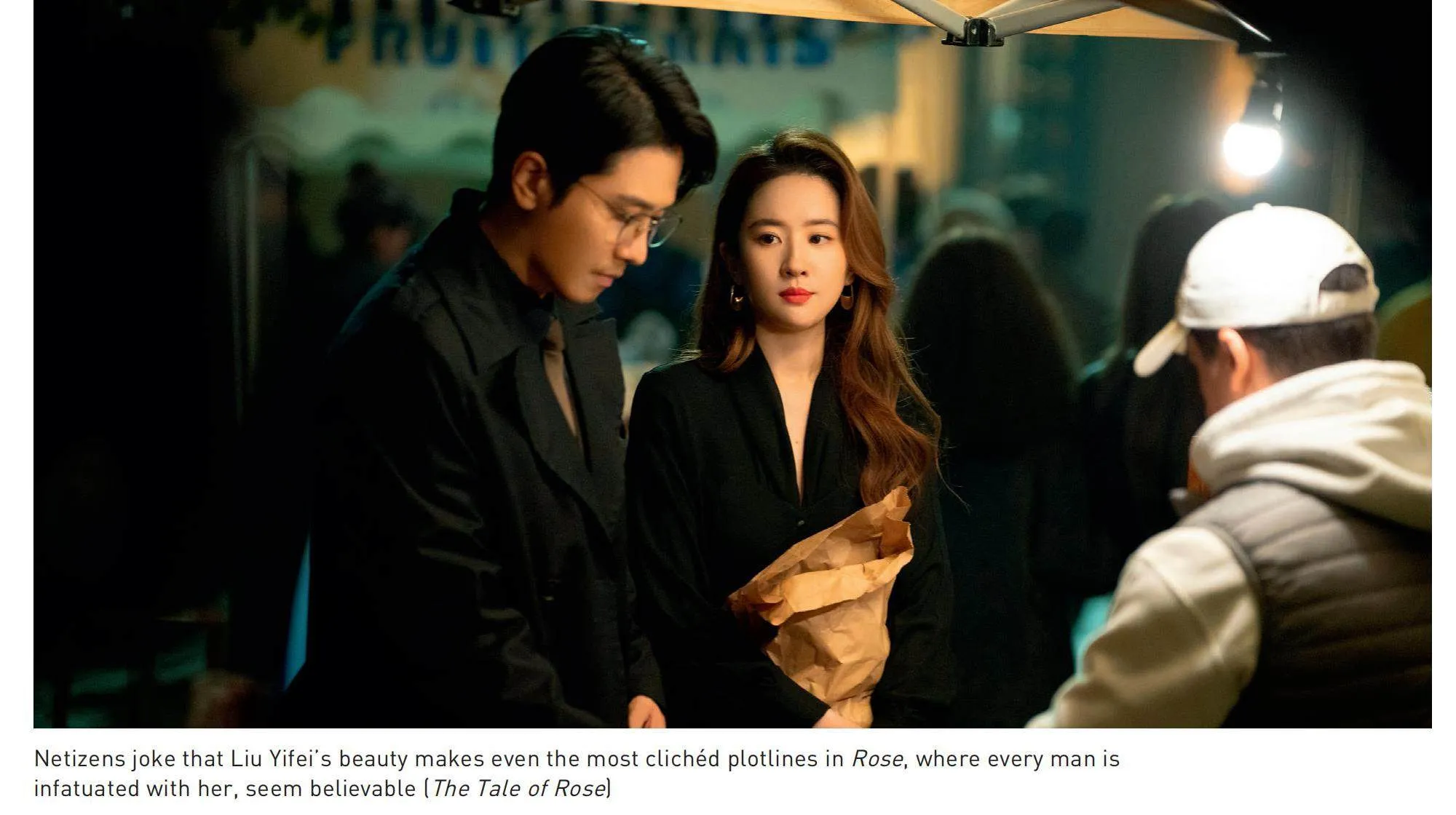
Netizens joke that Liu Yifei’s beauty makes even the most clichéd plotlines in , where every man is infatuated with her, seem believable ()