Primal Fear?都市里的孩子需要什么樣的自然課?
2024-09-30 00:00:00ZhengYiwen
漢語世界(The World of Chinese) 2024年3期
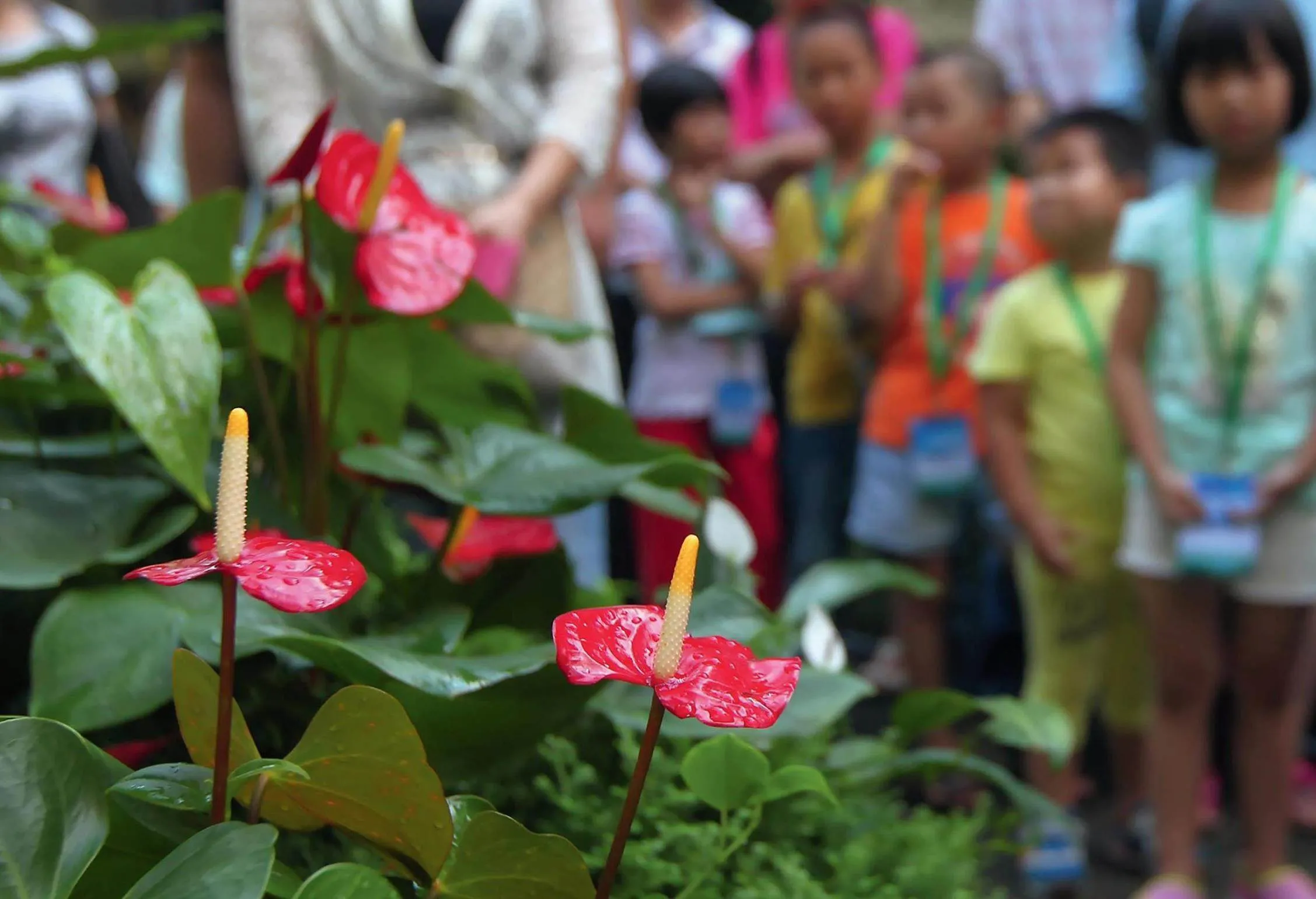


Urbanization and screen addiction are creating a generation of children lacking nature awareness, but some are hoping to reverse the trend
On a sweltering August afternoon in Beijing’s Chaoyang Park, with the temperature reaching 32 degrees Celsius, a dozen children aged 3 to 7 huddle together in the shade. The woods buzz with mosquitoes, which leave itchy welts on the children’s arms and legs before being fanned away by attentive parents.
Despite the discomfort, the children are captivated as their teacher introduces them to the , commonly known as the rhinoceros beetle for the large horn on the male’s head. The teacher carefully removes a squirming larva from a box and encourages the children to pass it around. Some recoil, others squeal in fright, yet all gradually find the courage to hold the tiny creature.
The class is organized by Tinker Garden, a startup offering nature and ecological education courses for children under 7. Parents are eager to fork over 300 yuan for a single session, telling TWOC that nature education is notably lacking in most of China’s public schools, where children rarely have a chance to play outside. These days, their time is mostly consumed by school, sleep, after-school tutoring, and ubiquitous mobile devices.
In 2021, a team from Beijing Normal University released a national report titled “Regional Education Quality Health Checkup.”The report reviewed seven years of data collected from over 4,000 elementary, middle, and high schools across China, and concluded that smartphone dependency, excessive after-school tutoring, and sleep deprivation are seriously eroding the quality of education most children receive.
The increasing reliance on electronic devices, combined with academic and extracurricular pressures, leaves little time for Chinese children to engage in outdoor activities or connect with nature, raising concerns about “nature-deficit disorder,”or NDD, a term coined by American author Richard Louv in his 2005 book . NDD refers to the growing divide between children and the natural world, which can lead to various physical, psychological, and emotional issues such as obesity, attention deficits, anxiety, and reduced creativity and social skills. In 2015, the Shenzhen Mangrove Wetlands Conservation Foundation, China’s first local non-governmental public fundraising foundation focusing on environmental issues, released a report stating that 16 percent of children exhibited NDD tendencies.
“NDD is not a medical diagnosis. It primarily describes the phenomenon of having fewer opportunities to engage with nature,”Liang Zhetao, founder of nonprofit nature education group Natural Folding, explains. “Ignorance of the natural world and a weakened ability to perceive the natural world are symptoms of children’s loss of connection with nature, rather than a disease.”
Dirty and dangerous
After working in nature education for six years, Liang has seen many behaviors typical of NDD among Chinese children. “During a botany class, I invited the children to stand on the grass after it had just rained. A little girl burst into tears, crying that the ground was dirty,”he recalls. “It was different from the concrete, wooden, and tiled surfaces she was used to. That was the first time I so clearly saw signs of NDD.”
To Liang, NDD isn’t just a lack of knowledge about nature, but a loss of connection to it. It leaves children less encouraged to explore and appreciate the natural world, or causing them to avoid doing so instinctively. “Children are becoming increasingly unfamiliar with natural environments and their discomforts, such as temperature and humidity. During hikes, they frequently ask to quickly return home to enjoy the air-conditioning, play video games, or watch TV,”says Wu Xuying, co-founder of outdoor experiential learning company Fuzhou Youth Origin Education in southeastern China.
“Even when they are exhausted from hiking, some children refuse to sit on the ground because they think it’s dirty; they are afraid of dirt, insects, and worms,”says Wu. During an outdoor hike, she recalled a parent receiving a call from a panicked child cryioWHqOyUkulK9ubG/CJcP1A==ng, “Help!”—it turned out he had been terrified by some ants.
Over the past 40 years, China has witnessed the most rapid urbanization in human history. According to national statistics, China’s permanent urban resident population rose from 172.45 million in 1978 to 920.71 million by 2022, accounting for over 60 percent of the total population now. According to Liang, children born and raised in cities are urban natives. Despite the presence of urban parks, public green spaces, and gardens, they spend most of their time in synthetic and controlled environments.
In 2023, Masashi Soga, an associate professor of ecosystems at Tokyo University, argued that biophobia—the fear of nature—is on the rise in more urbanized and economically developed societies. Soga and his team warn that this trend could negatively impact people’s physical and mental health, reduce support for conservation efforts, and potentially put ecosystems in further jeopardy.
“People who have lived in cities for a long time can easily develop the misconception that we are no longer a part of nature, leading to an increasingly anthropocentric view—the belief that humans dominate nature,”Liang tells TWOC. “This mindset reduces nature to something we can manipulate at will, such as by casually picking flowers or harming trees, and diminishes the awareness necessary to protect the environment.”
Nature on paper
The rote, textbook-based nature science classes in most of China’s public schools are driving children further away from the natural world.
“My son’s schedule only includes one nature class per week, and I’ve never heard of any outdoor classes taking place at his school,”Ms. He, the mother of a third-grader attending a public school in Shanghai’s Putuo district, tells TWOC. She had considered signing her son up for an educational night hike to observe fireflies, but he refused due to the hot weather.
According to Ms. He, her son is an only child who was often lonely at home during the three years of on-and-off Covid-19 lockdowns that commenced in 2020, leading to a heightened dependence on screens.
The mother of another Shanghai third-grader, surnamed Zhang, tells TWOC that her son has two 40-minute nature classes per week taught by his Chinese language teacher. The class covers basic principles of geology and physics, focusing more on scientific concepts rather than hands-on learning. “The school has never talked about nature education specifically, and we don’t know much about it. We just know it’s important for kids to get outside more, like by playing soccer, but my son doesn’t seem very interested in going to parks,”she says.
Safety concerns are often cited as the primary reason for limited outdoor education in public schools. According to Wu, this is why Fuzhou’s public schools offer very few nature education courses that involve going outside.
“Nature education in public schools primarily involves textbook knowledge, which leads to a rather one-dimensional understanding,”says Wang Yan, an academic advisor for WildWonder, a Beijing-based nature education startup for children and adults. “Nature is a broad concept, and while children engage in activities like fishing, shrimp-catching, and bird-watching, they often lack guidance on how to do these things scientifically, nor do they understand how nature is connected to themselves.”
WildWonder collaborates with various public and private schools in Beijing to provide nature exploration courses. “Only a few public schools in Beijing partner with us for courses, like bird-watching competitions or gardening lessons on school grounds,”Wang tells TWOC. Most public schools lack the budget for such programs, highlighting the disparity in educational resources even within the same city.
In developed countries, though disparities still exist among school districts and between urban and rural communities, nature education tends to be better integrated into public school curriculums. Generally, there is also a stronger emphasis on experiential learning, environmental stewardship, and physical activity.
For example, starting in the 1990s, state schools in the UK that have adopted the Forest School movement regularly take students into woodlands to let them play in nature, overseeing activities as simple as tree climbing and rolling in leaves. Some US public schools have outdoor gardens that students are taught to maintain as a way to understand nature, science, and sustainability. Furthermore, the “No Child Left Inside Act,”introduced in the US Senate last year, aims to make outdoor and environmental education available to every child by adding it to public school curriculums nationwide.
In the weeds
Approaches to nature education vary widely across China in both content and quality, as these programs are often outsourced to private companies, many of which are still nascent startups. The four companies surveyed by TWOC all differ in their teaching methods and educational philosophies, and the country still lacks a dedicated national curriculum.
“The understanding of nature and the interpretation of ecology can vary significantly in China. Some companies focus on sensory learning, such as encouraging children to hug trees and feel connected to nature, while others emphasize knowledge-based learning, like identifying species and understanding geography,”says Wang, the educator in Beijing. Some companies have imported their nature education curriculums from the US and UK, while others just take children on activities like hiking.
“Some commercial organizations even use the concept of NDD to fuel parental anxiety,”Wang adds. He has seen companies promote the idea that children who don’t engage with nature might develop health problems, like obesity or depression, to sell more courses. Rather than fear-mongering, Wang believes nature education marketing should emphasize its positive impacts on both mental and physical well-being.
Some organizations, like Tinker Garden, take a more practical approach, taking kids outdoors to complete nature-related puzzles, learn about ecology through crafts, and interact directly with animals. However, Wu, in Fuzhou, argues that nature education need not be overly complicated. “The core idea is simple: immerse children in real natural environments to help them understand the human-environment relationship,”she tells TWOC. Wu believes children’s curiosity is innate and doesn’t require artificial stimulation; the younger the child, the more naturally curious they are.
She describes how children in her courses light up as soon as they board the bus for trips into the mountains. “They eagerly ask about everything they see, such as smokestacks. When we encounter challenging terrain, they naturally start to climb. Just put children in nature, and they’ll invent their own games—often more engaging than anything adults could design,”Wu says. “Nature provides endless inspiration and room for the imagination to grow.”
– Special thanks to Li Jiacheng, Zhang Runchao, and Yu Jiehong for their assistance in the reporting of this story.
Image from VCG
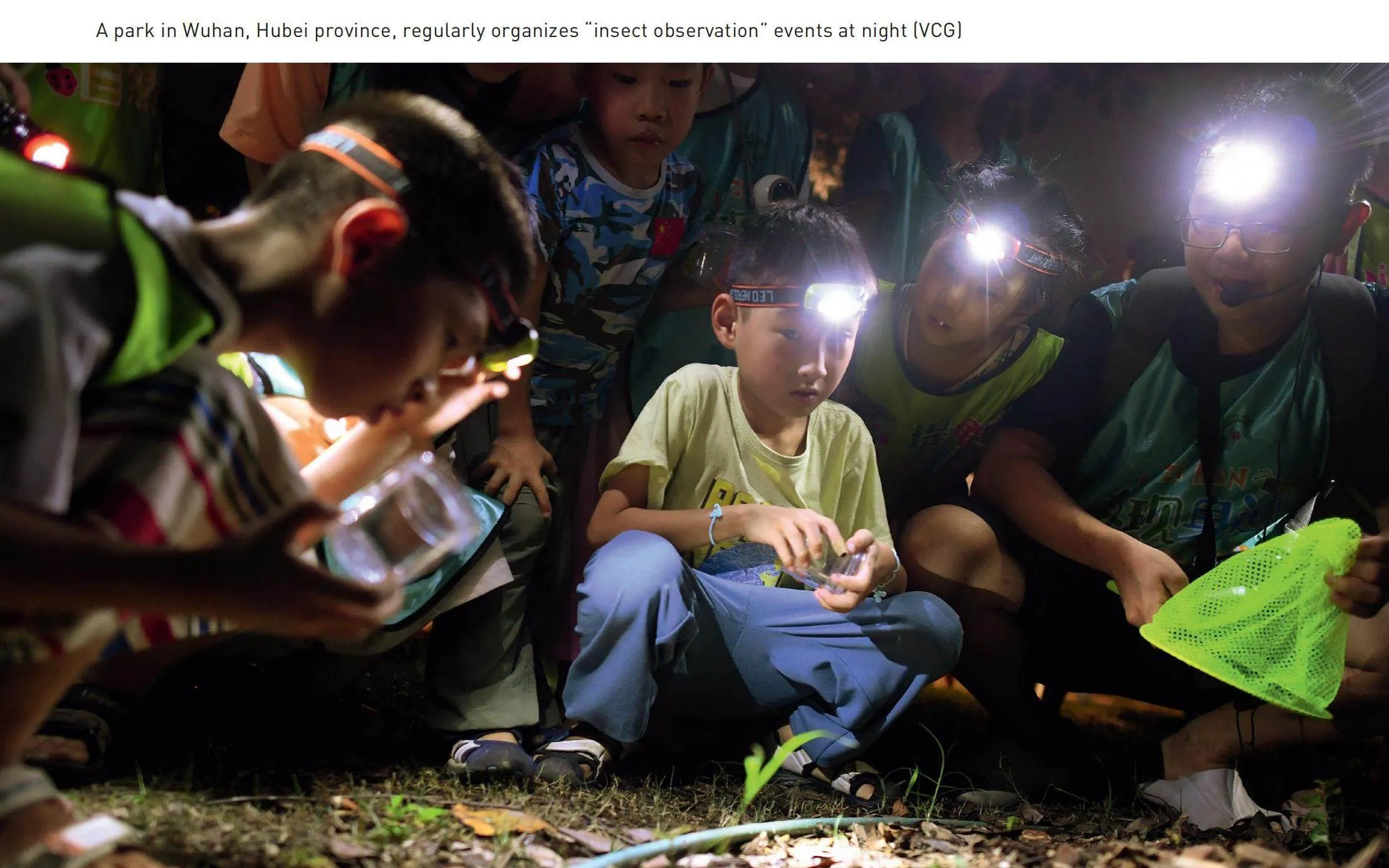
A park in Wuhan, Hubei province, regularly organizes “insect observation” events at night (VCG)
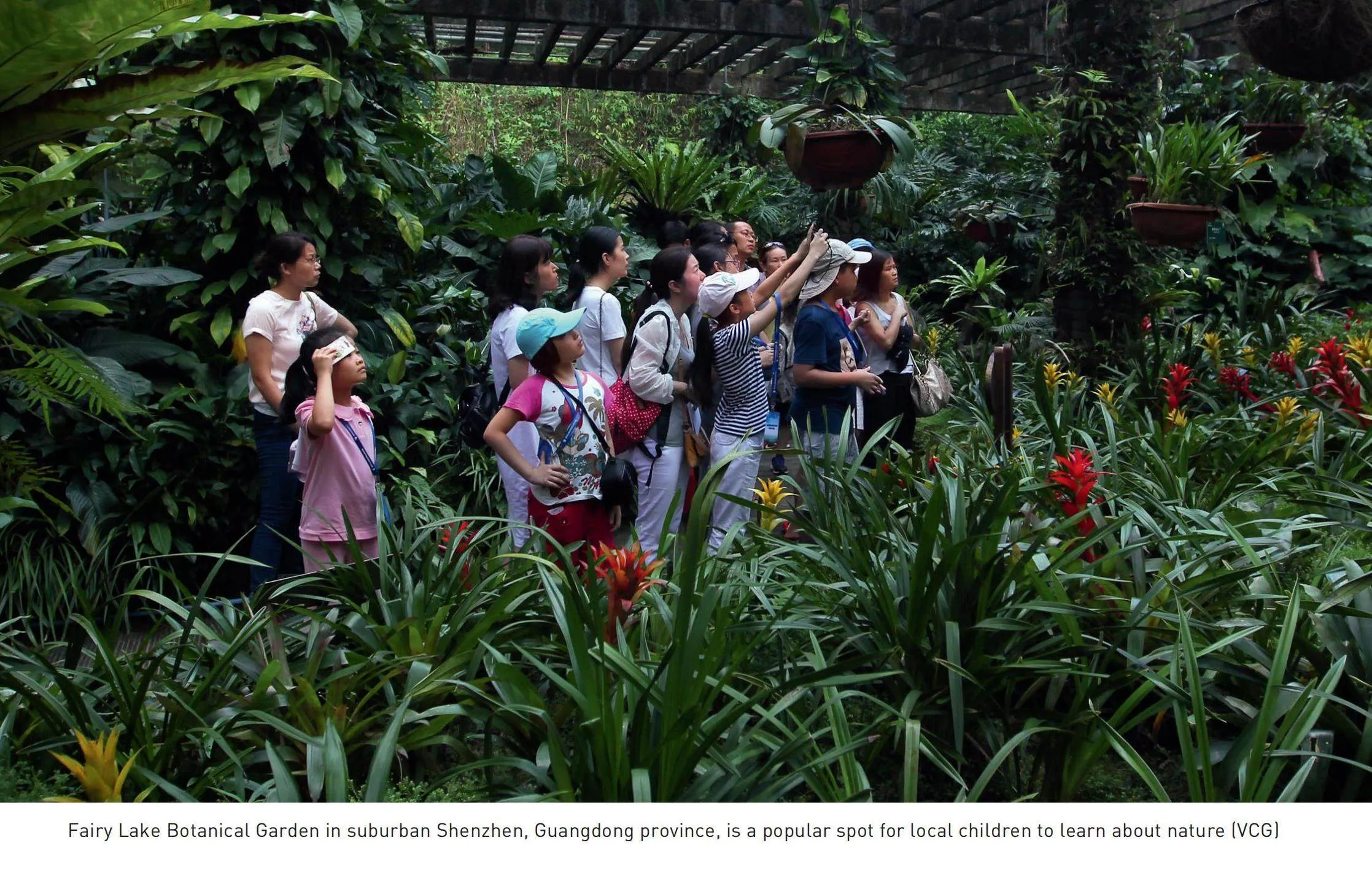
Fairy Lake Botanical Garden in suburban Shenzhen, Guangdong province, is a popular spot for local children to learn about nature (VCG)
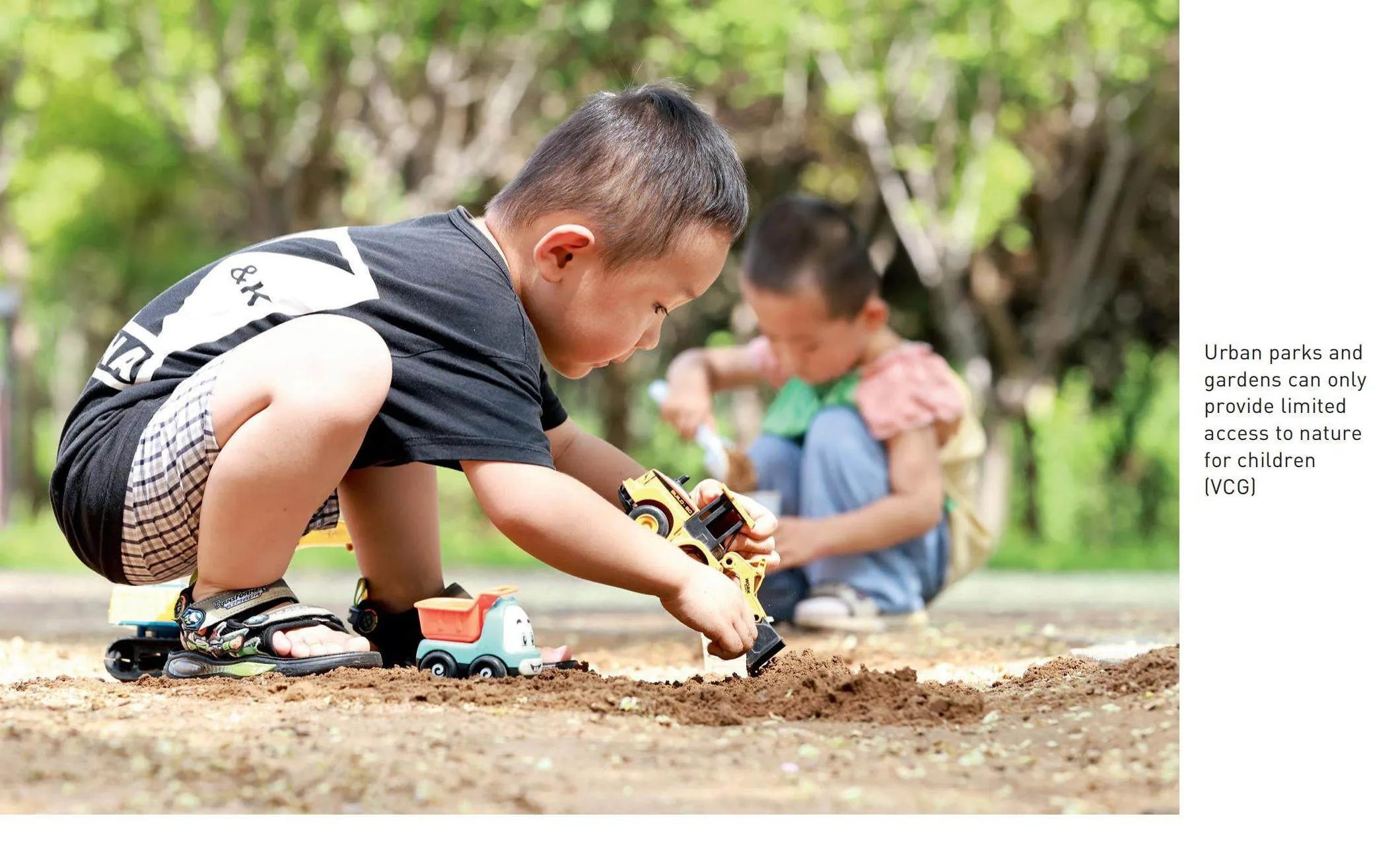
Urban parks and gardens can only provide limited access to nature for children (VCG)
Kindergarteners in Xinyu, Jiangxi province, can step in the mud, catch fish, and build wooden bridges during their nature education class (VCG)
A rural kindergarten in Zhejiang province offers nature lessons by taking children outdoors. Rural students often struggle with cellphone addiction due to limited adult supervision, as many of their parents work in cities. (VCG)
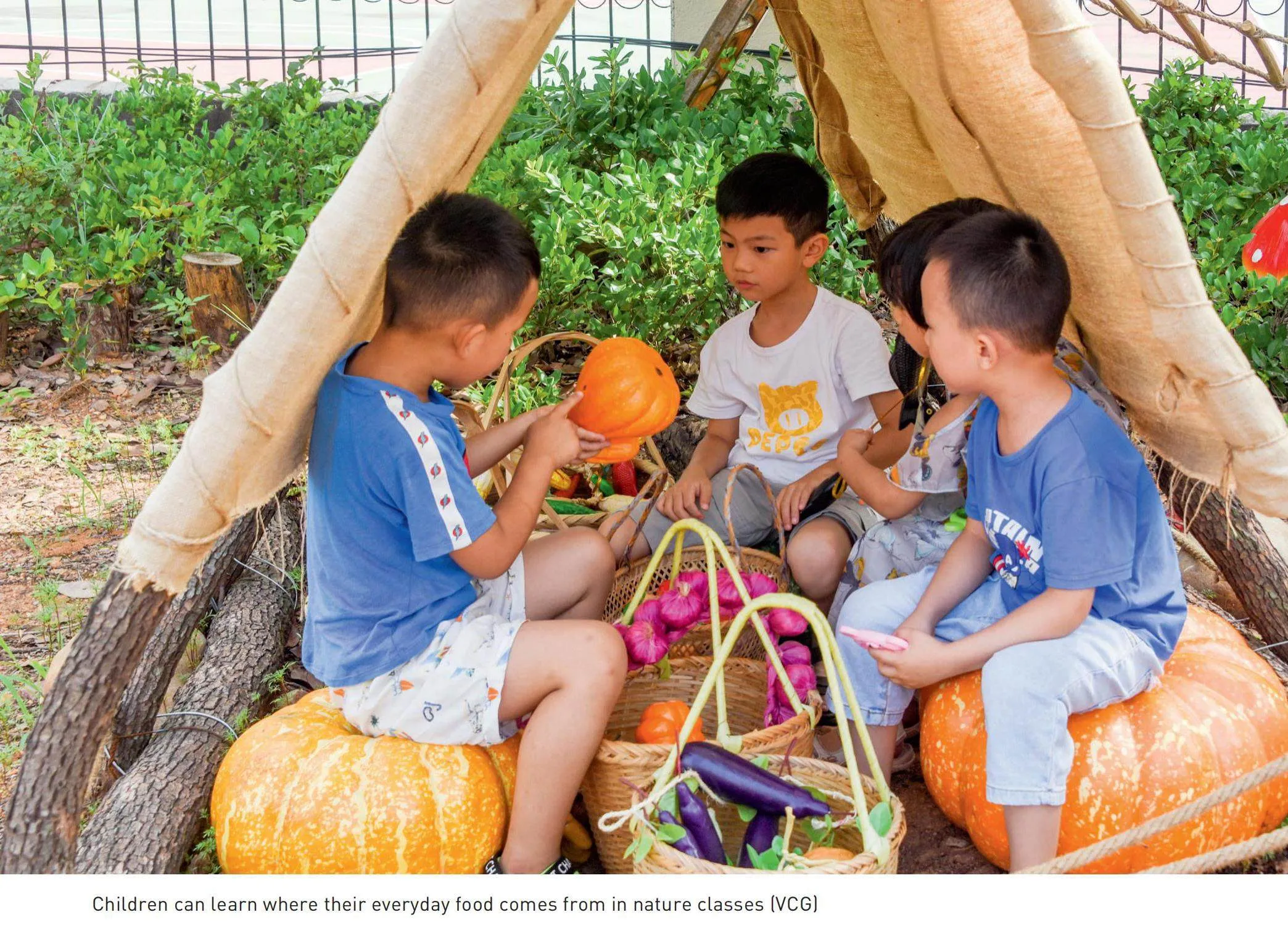
Children can learn where their everyday food comes from in nature classes (VCG)