玉米、大豆帶狀復合種植模式下不同大豆品種適應性分析
2024-08-24 00:00:00楊永森金龍田宇
安徽農學通報
2024年15期
關鍵詞:經濟效益
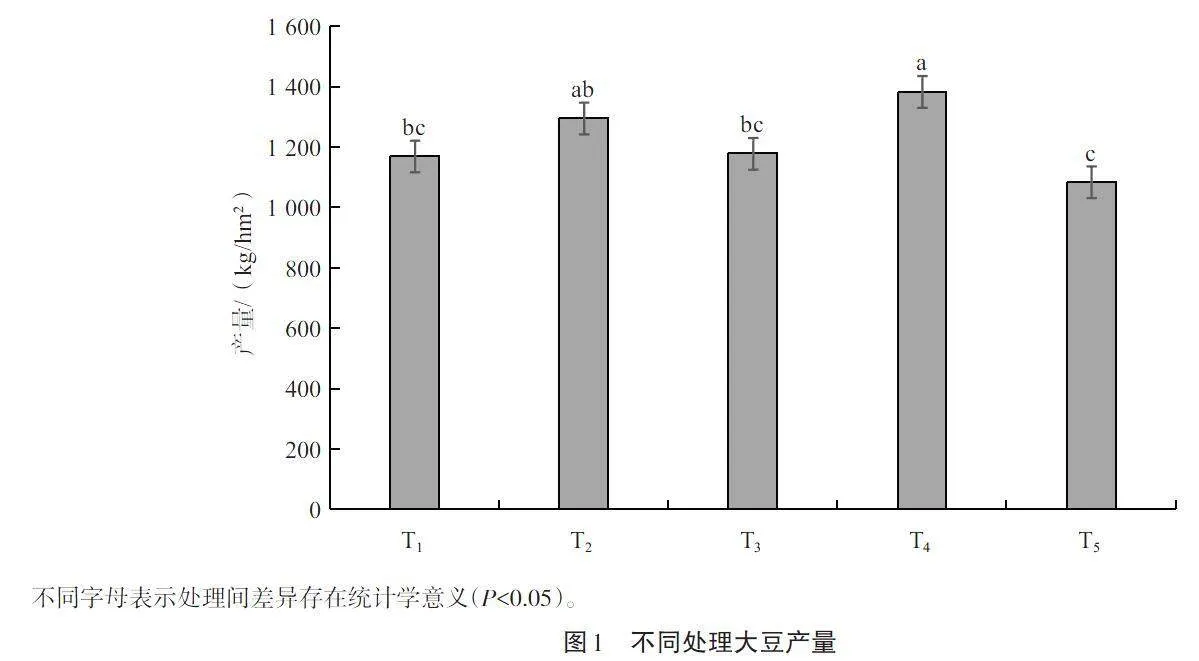
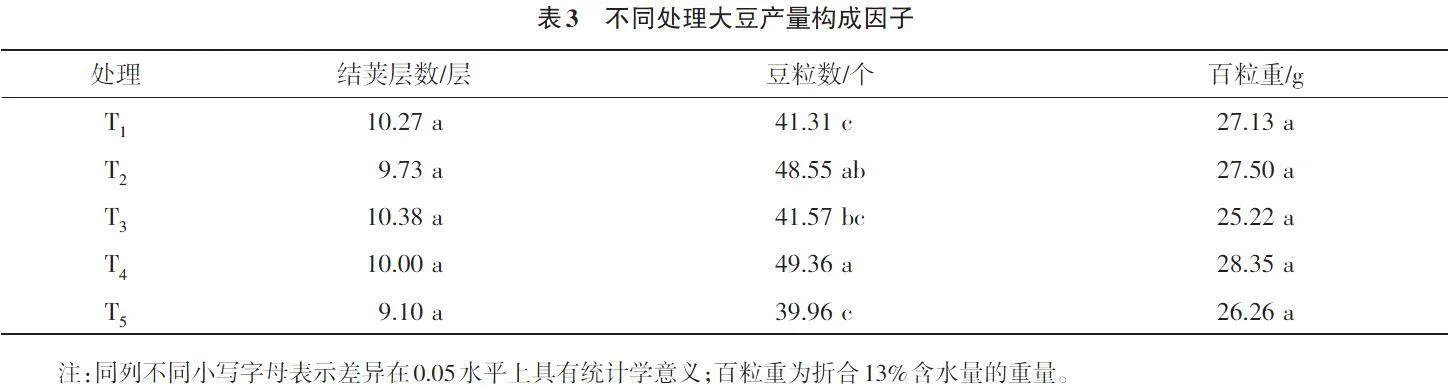

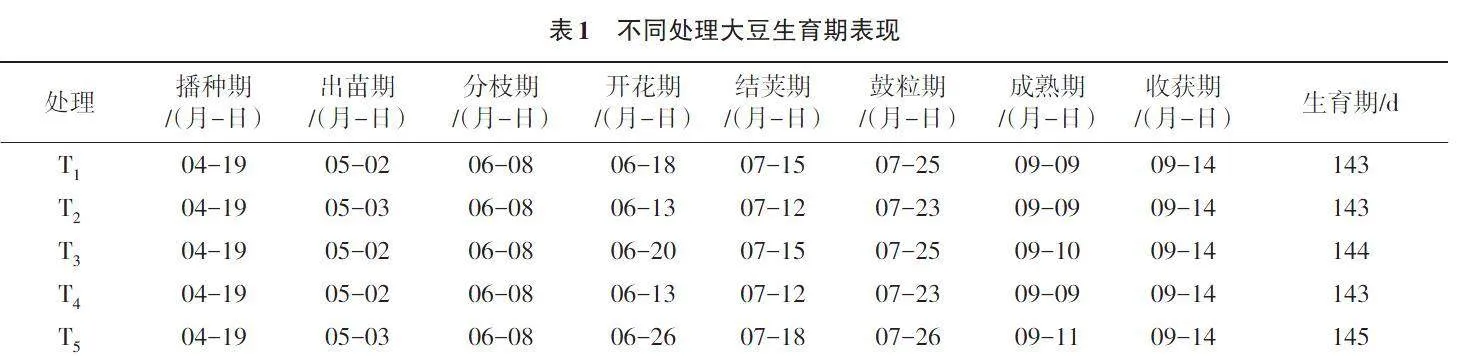
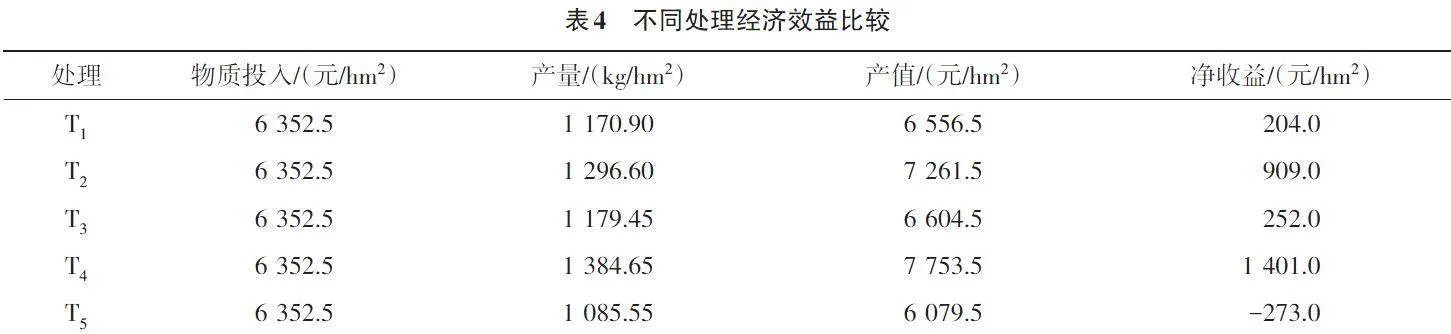
摘要 為篩選適宜玉米、大豆帶狀復合種植模式推廣使用的大豆品種,本試驗采用“4+4種植模式”(4行玉米+4行大豆),設5個處理3次重復,分別為T1(寧豆6號)、T2(中黃318)、T3(承豆6號)、T4(鐵豐31)和T5(遼豆15號),玉米品種均為先玉1225,對比分析各處理大豆的生育期、農藝性狀、產量及經濟效益等。結果表明,各處理大豆生育期在143~145 d,株高、底莢高等農藝性狀以T4處理表現最好;單株豆粒數以T4和T2處理較多,分別為49.36、48.55粒,產量以T4處理最高(1 384.65 kg/hm2),T2處理次之(1 296.60 kg/hm2);經濟效益與產量變化趨勢一致,以T4處理最高。綜合各品種表現,篩選出大豆品種鐵豐31適合在研究區(qū)作為玉米、大豆帶狀復合種植模式中的優(yōu)質大豆品種推廣種植。
關鍵詞 復合種植模式;大豆品種;生育期;農藝性狀;大豆產量;經濟效益
中圖分類號 S532.06" " 文獻標識碼 A" " 文章編號 1007-7731(2024)15-0026-04
DOI號 10.16377/j.cnki.issn1007-7731.2024.15.007
Adaptability of different soybean varieties under maize and soybean strip compound planting model
YANG Yongsen1" " JIN Long1" " TIAN Yu2
(1Tongxin County Agricultural Technology Extension Service Center, Wuzhong 751300, China;2Tongxin County Agricultural Comprehensive Law Enforcement Brigade, Wuzhong 751300, China)
Abstract In order to screen suitable soybean varieties for the promotion of corn and soybean strip composite planting model, this experiment adopted a “4+4 planting model” (4 rows of corn+4 rows of soybean), with 5 treatments repeated 3 times, namely T1 (Ningdou No. 6), T2 (Zhonghuang 318), T3 (Chengdou No. 6), T4 (Tiefeng 31), and T5 (Liaodou No. 15). The corn variety was Xianyu 1225, and the growth period, agronomic traits, yield, and economic benefits of each treatment of soybean were compared and analyzed. The results showed that the soybean growth period of each treatment was between 143 and 145 days, and the T4 treatment performed the best in agronomic traits such as plant height and bottom pod height. The number of beans per plant was higher in T4 and T2 treatments, with 49.36 and 48.55 seeds respectively. The highest yield was observed in T4 treatment (1 384.65 kg/hm2), followed by T2 treatment (1 296.60 kg/hm2). The trend of economic benefits and yield changes was consistent, with T4 treatment being the highest. Based on the performance of various varieties, the soybean variety Tiefeng 31 was selected as a high-quality soybean variety suitable for promotion and planting in the study area as a belt shaped composite planting model for corn and soybean.
Keywords compownd planting model; soybean varieties; growth period; agronomic traits; soybean yield; economic benefits
玉米是重要的糧食、飼料和工業(yè)原料作物[1],種植面積較大、產量較高,對保障糧食安全和農業(yè)經濟健康發(fā)展具有重要作用[2]。大豆也是重要的作物之一,大豆中蛋白質含量較高,也被稱為“植物肉”[3]。豆制品在餐桌上較為常見,例如豆?jié){、豆腐、醬油和豆油等的原料均是大豆,此外,大豆也被廣泛應用于工業(yè)和醫(yī)藥領域,如以大豆制成的卵磷脂和硬脂酸等[4]。
玉米、大豆作為大宗糧油飼農產品,常年需求量大[5]。玉米、大豆為同季旱糧作物,一般以單作生產方式種植,而實際生產中,單靠增加耕種面積來提高玉米、大豆產量的方法難度較大[6]。為合理提高大豆、玉米的產量,提高種植效益,相關學者進行了大量研究,楊文鈺等[7]對玉米、大豆帶狀復合種植技術體系創(chuàng)建與應用進行研究,提出了一系列適用于該項目的種植原理和種植技術,為提高玉米、大豆生產能力,促進農業(yè)可持續(xù)發(fā)展提供了新途徑;……
登錄APP查看全文
猜你喜歡
現代畜牧科技(2021年9期)2021-10-13 06:38:48
建材發(fā)展導向(2021年6期)2021-06-09 05:57:54
建材發(fā)展導向(2021年6期)2021-06-09 05:56:52
現代經濟信息(2020年34期)2020-06-08 06:02:20
經濟技術協作信息(2018年8期)2019-01-14 03:06:18
現代營銷(創(chuàng)富信息版)(2018年10期)2018-10-12 03:01:30
消費導刊(2018年8期)2018-05-25 13:19:54
現代園藝(2017年19期)2018-01-19 02:50:29
現代工業(yè)經濟和信息化(2016年12期)2016-05-17 05:37:44
中國市場(2016年12期)2016-05-17 05:10:05