The Historical Context of the Silk Road
2024-05-14 06:50:12
中國新書(英文版) 2024年2期
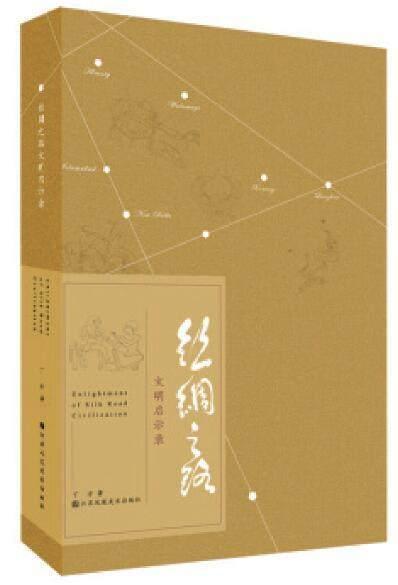
Revelations from the Civilizations of the Silk Road
Ding Fang
Jiangsu Phoenix Fine Arts Publishing House
December 2020
78.00 (CNY)
Ding Fang
Ding Fang is the former dean of the School of Art at the Peoples University of China, doctoral supervisor, member of the Oil Painting Art Committee of the China Artists Association, director of the China Oil Painting Society, and dean of the Renaissance Research Institute at the Peoples University of China.
“The Silk Road” is not a new term. Since the Chinese government launched the Belt and Road Initiative and vision in 2013, the connotations and extensions of the Silk Road have been completely redefined, becoming an integral part of the grand rejuvenation of the Chinese nation and a conduit for China and the world to co-build a “community with a shared future for humanity.” The proposal of the “Belt and Road” concept is based on ample current and historical evidence. It represents two paths for China to engage with the world: one is the Silk Road Economic Belt, starting from Changan in China, then passing through the Hexi Corridor, the countries of the Western Regions, Central Asia, West Asia, the South Russian steppes, all the way to the Mediterranean and Europe. The other is the Maritime Silk Road, starting from the coastal port cities in Southeast China, through the South China Sea, the islands of Southeast Asia, the Indian Ocean, the Persian Gulf, crossing the Red Sea — the Suez Canal to the Mediterranean, and finally reaching Europe by sea. The narrow interpretation of “Belt and Road” refers to the Eurasian continent, while the broad interpretation encompasses Africa, Oceania, and the Americas across the Pacific. In other words, any civilization unit of human society should be included within the scope of the “Belt and Road.” This distinction between narrow and broad interpretations embodies the full concept of community with a shared future for humanity as advocated by China, moving beyond any “Central Kingdom” versus “barbarian states” bias, forsaking regionalism, and embracing a vision where all of humanity shares one Earth in the so-called community with a shared future for humanity.
To understand the “Belt and Road,” it is a prerequisite to clarify all issues related to the Silk Road, starting with tracing the origins of the Silk Road through cartography. Frequent trade between the East and the West, predominantly from East Asia to the Mediterranean, had already commenced since ancient times. The broad context for these trade activities is the history of human migration, marked by the dissemination routes of iron tools and wheat, along with the “Jade Road,” “Gold Road,” “Ivory Road,” “Spice Road,” “Gemstone Road,” “Silk Road,” “Tea-Horse Road,” and others. Among these complex routes, the term “Silk Road” stands out for its representativeness. It was first coined by the German historian Ferdinand von Richthofen in 1877 and immediately received broad recognition from the international community.? As the most valuable commodity on this international trade route, Silks value is reflected not only in monetary units but also due to its miraculous manufacturing process, which long puzzled Westerners. This is a unique flower that bloomed during the long-term development of the agricultural culture of the Chinese nation. It is rich in fragrance and depth. During the era of the “Shennong tasting hundreds of herbs” under the Flame Emperor, people discovered an animal called the “silkworm,” a magical creature that can spin long threads of silk and encase itself in a cocoon. Our ancestors, through long periods of careful observation, finally discovered that silk could be woven into fabric through the process of reeling, producing textiles that were soft and skin-friendly, bringing comfort and delight when worn. Its worth noting that before silk was invented, the finest human clothing was made from coarse or fine linen, while earlier garments consisted of leaves or a mix of vines, hemp, and grass woven together and draped over the body, which was damaging to the skin. The above-mentioned silk production process requires a systematic and precise system, from agriculture to sericulture, from silk reeling to weaving, forming a complete system to transform the silk spat out by animals into beautiful silk garments. Even those civilizations regarded as great-- the Mesopotamian, Egyptian, Hebrew, Persian, Greek, and Indian civilizations -- were either entirely unaware of this or, even if they had some knowledge, could not articulate it clearly. The secret of silk textiles is contained within the history of the migration of the Chinese nation and the development process of Chinese agricultural civilization, which is truly one of ancient human societys most remarkable legends.
Although the Silk Road had already silently connected various civilization units through commodity trade, in the realm of Chinese culture, the Silk Road did not appear in historical records until 138 BCE, nearly two centuries after Alexanders eastward campaign. It was in this year that Zhang Qian, the special envoy of the Han Empire, completed his “journey to cut through the void” exploring the Western Regions. Both the Empire of Alexander and the Han Empire were ambitious and enterprising dynasties, respectively representing the youthful vigor of Greek and Chinese civilizations. Before setting out, Alexander distributed all his possessions among the people and boldly declared that he only kept “hope” for himself. Zhang Qian, on the other hand, volunteered with determination, bravely embarking on the long journey westward. The concept of “cutting through the void” symbolizes the resolute pursuit of the impossible, reflecting the boundless imagination and spirited ambition of Chinese civilization. Despite a population of just over 10 million, the Han Dynasty was filled with passion for exploring the world and the ambition to achieve greatness, leaving behind a series of legendary tales: Zhang Qians mission to the Western Regions, Wei Qings campaigns against the Xiongnu across the desert, Huo Qubings “Enclosure of Wolves at Xushan,” Li Guanglis expedition to Dawan for the Ferghana horses, Fu Jiezis solo mission to behead the ruler of Loulan, Dou Xians “inscription on the Yanran Mountain,” Chen Tang and Gan Yanshous annihilation of the Northern Xiongnu, and the Ban familys pacification of the Western Regions. A nations strength is not merely a matter of population, national power, military forces, or GDP output, but rather a matter of “essence, energy, and spirit.” Zhang Qians “penetrative” journey to the Western Regions is a hallmark of the Han dynastys imaginative and fantastical voyages. Emperor Wu of Han, upon hearing that the Xiongnu, his archenemies, had defeated the Dayuezhi, a once-dominant nomadic power on the steppes, forced them to flee their ancestral homelands near the Qilian Mountains and resettle far away. Intrigued by envoys to the Han court who reported that the Dayuezhi had crossed the Pamirs and found a new home in Bactria, he was inspired to initiate Zhang Qians mission. Thus, Emperor Wu of Han issued a public decree, recruiting envoys willing to risk their lives to venture into unknown lands in search of the Dayuezhi. Originally, this was based on a highly speculative legend, without a shred of evidence, yet remarkably, it was carried out as an act of state policy. And yet, there was someone like Zhang Qian, who voluntarily accepted the challenge, a phenomenon that likely could only have occurred in the Han Dynasty, an era characterized by its youthful innocence and limitless imagination.
Daxia held a certain mystical allure for China but was also accessible because China needed to transport its silk through Daxia to the rest of the world. Daxia, in turn, would receive gold from Siberia, gems, spices, and ivory from India and South Asia, as well as Chinese tea and other specialties. This location was a significant hub on the Silk Road, with globally recognized minting rights, even richer than Changan. Recent archaeological discoveries and exhibitions reveal that the region was abundant in gold. On March 17, 2017, the Forbidden City hosted the “Rebirth from the Fire -- Treasures from the Afghanistan Museum” special exhibition, where exquisite crafts such as gold, lapis lazuli, and turquoise captivated the audience, essentially melding the essence of various civilizations along the ancient Silk Road into one, representing the collective wisdom of Greek, Persian, Indian, Chinese civilizations, and the nomadic tribes that bridged these major cultural regions. The land of China and other civilizations on the Eurasian continent became increasingly interconnected, forming an early version of a community with a shared future for mankind. From Chinas perspective, the Silk Road started from Changan, crossing the Mediterranean and Europe. With continuous research, the understanding and scope of the Silk Road have been expanding and enriching, leading to terms like “Oasis Silk Road,” “Steppe Silk Road,” and “Maritime Silk Road.” Due to its growing significance, the “Silk Road” has gradually become synonymous with the bridge and bond for political, economic, and cultural exchanges between the East and the West. The Silk Road is not just a combination of four Chinese characters but also carries the comprehensive interaction, evolution, and innovation of Eastern and Western civilizations on different levels.