
辣條:何以成為國民零食?
2024-04-24 19:36:46RomanKierst
漢語世界(The World of Chinese) 2024年1期
Roman Kierst


Stripped Down
How simple, greasy, cheaplatiao(literally “spicy strips”) became the peoples snack
辣條:何以成為國民零食?
By Roman Kierst
It seems that everyone who grew up in China during the 2000s has some memory oflatiao. The spicy strips of greasy dough were the perfect cheap snack for students to blow their pocket money on. One could buy a tiny bag for 1maoor even individual strips for 1fena pop after class, wipe thelatiaogrease off the keyboard between matches ofCounter-Strikeat the local internet cafe, or stealthily share with a classmate while the teachers back was turned.
Even TWOCs editors, mostly born in the 1990s, have fond memories of the snack. “It was like currency to us,” says Hayley Zhao, who grew up in Beijing in the 2000s. “We bought it near the school and then traded it during recess.”
While the shape and taste of the snack vary slightly depending on the manufacturer,latiaoof all kinds are united by a mix of recent history, culture, business, and politics that gave its status today as the “peoples snack.”
Humble beginnings
Latiaois one of Chinas most ubiquitous snacks. Since it emerged in the 1990s in Hunan province, plastic packs of the snack have taken over shelves in supermarkets, mom-and-pop shops, convenience stores, and even street food stalls where they can be added to spice up a meal. “It was sold in small stores right outside the school gate, and there were also vendors selling them from the back of their tricycles,” Zhao remembers.
Some sellers still make it fresh to order, earning a modest living by selling bowls oflatiaoto passersby for a few yuan each. Meanwhile, the biggest brands of the packagedlatiaoare now multi-billion-yuan companies listed on the Hong Kong stock exchange.
Last year, consumers bought over 100,000 tons of packagedlatiao, contributing to a total production value of 60 billion yuan. Even during the pandemic, when other industries were reeling, thelatiaobusiness kept growing—probably due to a combination of low cost, widespread availability, and clever marketing by industry leaders like Weilong, which is known for simple but effective slogans like “Eat a pack of spicy strips to calm down!”
But the numbers today mask the inauspicious origins of this snack 20 years ago. In the summer of 1998, torrential rains in central China caused the heaviest flooding along the Yangtze River basin in half a century. Over 200 million people were affected, with an area three times the size of the Netherlands submerged and 15 million farmers losing their crops.
Hunan was one of the hardest-hit provinces. Amid nationwide food shortages and the rocketing price of soybeans, three business-savvy locals in the small town of Pingjiang sought a solution to the local food industrys reliance on soybean flour. They substituted it with the more readily available wheat flour, which became the basis forlatiao. An additional epiphany came when they visited a rice noodle factory in the city of Changde, saw machines squeezing out long strings (tiao) of noodles, and concluded it could be used on wheat dough. Once the wheat dough strips were processed they added spicy (la) seasoning, andlatiao(辣條, literally “spicy strips”) was born.
Pingjiang has since become home to 126latiaobusinesses that employ a whopping 70,000 people involved in a local industry worth 20 billion yuan. Butlatiaomanufacturing spread from Hunan, most notably to central Chinas Henan province where businessman Liu Weiping founded Weilong Delicious—one of the oldest and largestlatiaomanufacturers, now a household name in China. Liu adapted the taste to be sweeter for northerners unused to spicy food. Weilong became the firstlatiaocompany listed on the Hong Kong stock exchange in late 2022 after their revenue had grown steadily from 3.4 billion yuan in 2019 to 4.8 billion yuan in 2021 at the height of the pandemic.
A dodgy reputation
In Tongzhou district on the southeastern outskirts of Beijing, far from Weilongs mega factories, 53-year-old Xin Xianmin makes fresh, Henan-stylelatiaoto order for 10 yuan a box. At the back of his shop, just a few square meters large and tucked up a small side street, are two machines: one to knead the dough, and another to squeeze out what looks like a long flat noodle. “When it comes out of there, its already cooked. I use scissors to cut it into short strips, season it, and its good to go,” Xin says, pointing to the machinery.
The manufacturing process is basically the same for small producers like Xin as it is for the big corporations, and hasnt changed much over the years: Wheat-based flour is mixed with salt, water, and a few other ingredients, and made into a dense dough. This is then fed into the second machine, and cooked by pressure and heat in the process of being squeezed out. The long dough string is cut into shorter strips, and then seasoned.
Xin is originally from Sanmenxia in Henan and used to work in a small mom-and-poplatiaostore. “We could sell a thousand-yuan worth oflatiaoa day,” he says about his business in Henan, although his sales in Beijing have yet to reach that level. “We source the flour locally, but the right spices we can only order from Henan,” he says, motioning at containers with cumin, sesame, and various red powders sitting in a giant metal bowl.
This sense of place, of real and imagined geographic features that are believed to affect the taste of food and give it authenticity, is called terroir in wine-making. The terroir oflatiaois all in the spices. “Weilong has four large factories where Im from,” Xin says proudly.
A customer in her 20s appears at the door and orders a box of sweet and spicy flavoredlatiao. Xin gets to work. He prepares freshlatiaowith base seasoning and then adds the flavors the customer asked for. She smiles behind her face mask when TWOC asks whether sweet and spicy is her favorite flavor: “To us born in the 1990s, this is the taste of our childhood,” she says.
That childhood love oflatiaowas to the chagrin of many parents and teachers who considered it unhealthy and unsanitary, especially after several food safety scandals in the early 2000s that vilifiedlatiaoas the ultimate junk food.
In 2005, state broadcaster CCTV exposed unsanitary conditions at several unlicensedlatiaofactories, many of them small family-run workshops that proliferated at the time due to the snacks simple manufacturing process and low market entry barriers. Another CCTV report from that year exposed the use of prohibited food additives inlatiaoproduction.
Along with a growing number of more general food safety scandals, the most infamous resulting in the death of six babies from melamine-laced milk formula in 2008, adult consumers began to distrust the safety and nutritional value oflatiao. “The school had the teachers give lectures about not buying food from outside vendors,” Zhao remembers. “But some older students had good rapport with the store owners, and made secret purchases at lunchtime through the holes in the school wall.”
In 2018, the State Administration for Market Regulation even tried to curb the sale of junk food near schools.Latiaoappeared first on their list of regulated foods that were deemed “unhealthy due to their high content of fat, sugar, salt, sweetener, and preservatives,” clocking in at around 500 calories per 100 grams.
Despite efforts like these, ultra-processed snacks continue to be readily available. But consumer concerns persist: “My mom saidlatiaois made from plastic bags,” reads one comment under a popular 2022 video aboutlatiaomanufacturing on the social media platform Xiaohongshu. “My mom just threw mylatiaoin the trash, [so I] didnt even get to eat a single strip,” reads another comment under the same video.
Economy of memories
“Ourlatiaois made without additives; its just the dough and the seasoning, which we get from Ningxia, nothing else,” asserts 43-year-old Yang Hua from Beijing. Its late afternoon, and a cold wind is blowing over the district of Changping on the northwestern outskirts of the capital. Still, customers are queuing outside and ordering through the window of Yangs tiny shop, which is big enough to fit just herself.
Yang sells up to 15 kilograms of freshlatiaoevery day, made in her shop to order. Half a kilogram, served in a paper bowl, costs 15 yuan. For customers who live too far for food delivery services to reach, she sends their orders through the mail.
Yang stresses that herlatiaois clean and above board. She has a business license, a food business certificate, and a sanitary certificate as stipulated by Chinas Food Safety Law and the strict rules of Chinas food delivery platforms.
“The packagedlatiaois no good. Those additives will wipe humanity off the earth; theyre messing with our genes,” Yangs husband interjects as hes handing her a delivery of spices through the shop window.
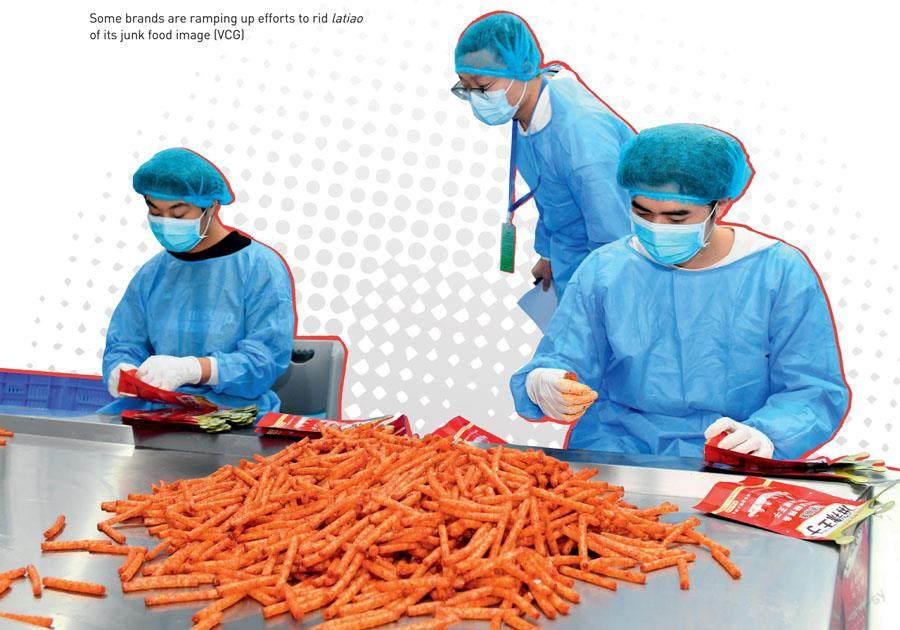
Manufacturers are doing their best to changelatiaos reputation. The brand Weilong has ramped up efforts on social media to educate consumers about the sanitary and standardized manufacturing process. “I showed this to my mom, she finally let me eatlatiaonow,” reads one comment under a video posted by Weilong on Xiaohongshu.
There is even a museum dedicated tolatiao(backed by the Food Association of Pingjiang and Mala Wangzi, a major locallatiaobrand) in Changsha, the provincial capital of Hunan, which spreads the good word. A slogan above the entrance to the museum, which opened in 2020 and is free to enter, reads “Do you still dare eatlatiao? Exposing the unknown truth.”
Inside, the museum looks like a lab, populated with staff dressed in white gowns handling microscopes and other scientific contraptions. In one room, large glass vats hold basic ingredients like flour and vegetable oil for visitors to inspect. In another room, spices like cassia bark are available for visitors to touch and smell. The message delivered here is thatlatiaois a healthy snack, made with just a few natural ingredients under strict standards. The museum is largely without branding but hosts alatiaoeating competition that prominently features Mala Wangzi.
The same museum recently opened a temporary exhibition in Chengdu, Sichuan province, with plans for additional pop-up events around the country. “The museum was open for 16 days and attracted over 100,000 visitors…A lot of people said that after visiting the museum, they feel more at ease eatinglatiaonow,” Li Manliang, museum director and vice manager of the Pingjiang Food Industry Association, tells TWOC. Hes confident that Pingjiangs 126latiaobusinesses will benefit.
Butlatiaois not just for large corporations. Its also for small sellers and their nostalgic customers. Back in Tongzhou, another customer appears at Xins cramped shop, a young man in his 20s. “Its my comfort food. Ill have it with my chicken tonight,” he says, pointing at a plastic bag of fried chicken in his right hand before heading back out into the cold Beijing winter afternoon. Despite a bumpy history,latiaoremains Chinas ultimate cheap comfort food. For just a few yuan, the chewy dough provides memories of childhood and simpler times—one spicy strip at a time.
Cover illustration by Wang Siqi
Xin Xianmin makeslatiaoof his native Henan style at his small shop in Beijing (Roman Kierst)
Scan the code to watch Xin Xianmin at work
Some brands are ramping up efforts to ridlatiaoof its junk food image (VCG)
 漢語世界(The World of Chinese)2024年1期
- 漢語世界(The World of Chinese)的其它文章
- 光影
- 麻煩阿姨
- 學漢語
- 一個漢字,一部文明史
- 職場必修課:招聘廣告和求職簡歷的“語言藝術”
- 耍惹石主和他的三萬平舊廠房“畫布”