
Attitudes of the public and medical professionals toward nurse prescribing: A text-mining study based on social medias
2024-02-27 11:33:40QiZhouYiqingXuLiliYngRshidMenhs
Qi Zhou ,Yiqing Xu ,Lili Yng ,* ,Rshid Menhs
a The Fourth Affiliated Hospital of School of Medicine,Zhejiang University,Yiwu,Zhejiang,China
b Cardiopulmonary Sciences,School of Allied Health Professions,Loma Linda University,Loma Linda,USA
Keywords:
ABSTRACT Objectives: This study aimed to explore the public and medical professionals’ concerns and attitudes toward nurse prescribing using text-mining method to analyze social media data.Methods:Python was used to automatically mine data related to the keywords “nurse prescribing” and “prescription” that were posted on four Chinese internet platforms between January 1,2017,and November 1,2022.The four Chinese internet platforms included social media sites such as Zhihu and Weibo,as well as medical forums like Aiaiyi Medical Hotspot and Dingxiangyuan Medicine.We conducted personnel,topic,and sentiment analysis techniques using SnowNLP,Bayesian Latent Dirichlet Allocation (LDA),and BosonNLP.Finally,we conducted content analysis using Nvivo 11 based on the results of the topic and sentiment analysis to obtain comprehensive and insightful results.Results:We acquired 2,823 comments totaling 92,859 words on the four Internet platforms to conduct analysis.The analyze result showed that many public and medical professionals held a negative attitude toward nurse prescribing,and few had a prudent positive attitude.The public is concerned about the impact of nurse prescribing on medical professionals and the competency requirements for nurses.Medical professionals are concerned about the current and future status of nurse prescribing in China and the difficulties in implementing nurse prescribing.Conclusion:Nurses should gradually gain recognition for their expertise and win the acceptance of the public and medical professionals on their ability of nursing prescribing by striving to enhance their professional capacity and self-authorization capabilities.Nurse administrators and educators need to recognize the advantages of nurse prescribing and address the challenges and issues in its implementation through promoting legislation,education,and heightening public awareness of its benefits.
What is known?
· The practice of nurse prescribing is affected by current culture and society,as people of different cultures may view medical decision-making and diseases differently.The views of the public and medical professionals are important to the implementation of nurse prescribing.
· The internet has provided individuals with a public platform and anonymity,allowing them to express their feelings and thoughts.
What is new?
· The public in China had expressed concerns about the impact of nurse prescribing on medical professionals and the competency requirements for nurses.
· Medical professionals in China had expressed concerns about the current and future status of nurse prescribing in China and the difficulties in implementing nurse prescribing.
1.Introduction
Nurse prescribing is the right of nursing practitioners to prescribe the most effective treatment for a patient’s health issue in nursing practice [1].According to the report State of the World’s Nursing 2020,an effective nurse-led care program can address the health needs of a growing population [2].In 1971,to address inadequate medical resources and improve access to health care,Idaho became the first state in the United States (US) to allow legislative nurse prescribing.Since then,countries such as Canada,the United Kingdom (UK),and Australia have adopted similar programs[3].They have granted nurses the privilege to prescribe in three forms: independent,supplementary,and patient cohort prescribing.Independent nurse prescribing means a nurse with nurse prescribing is fully responsible for the patient’s treatment.Supplemental nurse prescribing means that the nurse prescribes care only after a treatment plan is signed by doctors.Patient cohort prescribing means a physician or nurse can only prescribe medications according to a drug treatment protocol formulated by an interdisciplinary expert team[4].Some pilot programs in China are limited to nurse supplemental prescribing [5],which could not satisfy the practice needs,and nursing professionals in China are increasingly hoping for nurse prescribing [6,7].
Experiences of Spanish nurses in the rollout of nurse prescribing were explored[8-10],which can provide references for us.Nursing organizations certify and monitor nurse prescribing within the policy framework.Multiple studies on the therapeutic effects of nurse prescribing have shown that it is as effective as physician-led models of care [4,11,12].The implementation of nurse prescribing has improved patient outcomes [8,9] and patient satisfaction [13]and reduced patient admission rates and lengths of stay[14].Nurse prescribing improves patient service by reducing the time required to receive drugs and allowing nurses to ask extensive questions.Nurse prescribing fosters professional autonomy and enhances professional satisfaction and identity for nurses.Nevertheless,several factors diminish patient and staff satisfaction with nurse prescribing.Because of the continuity of care,patients may feel a lack of connection with their physicians,and nurses may feel an increased workload and legal risk [15].
Differences in medical policies,culture,and economic conditions in developing countries have led to limited research on nurse prescribing status and satisfaction.Only eleven developing countries’ studies have demonstrated that nurse prescribing alleviates the primary physician shortage [16,17].Meanwhile,some studies have pointed out that patients are inclined to choose physicians over nurses when choosing services under the long-standing concept of prioritizing doctors over nurses [16].As the largest developing country,China’s large number of chronic disease patients and aging population have increased the demand for primary care,necessitating the practice of nurse prescribing.China’s stable political and economic growth provides a solid foundation for developing the nursing profession and advancing nurse prescribing [5].Actually,there are still barriers to the successful application of nursing prescribing.A study of clinical nurses found that intensive clinical care,the absence of an official legislative framework at the national level,and insufficient hospital propaganda hampered clinical nurses’ comprehension and concern about nurse prescribing,leading to the slow development of the nursing prescribing program in the hospitals and hinder the development of the nursing profession [18].Following the publication of the first domestic expert consensus in 2021,Chinese researchers launched some studies on nurse prescribing in various specialties,including gastroenterology [19],cardiovascular disease [20],and oncology nursing[21].The practice of nurse prescribing is affected by current culture and society,as people of different cultures may view medical decision-making and diseases differently [5],and individuals have different expectations regarding drug accessibility and utilization of medical resources [13,22].Previous studies showed that Chinese researchers were more concerned about administrators’ and educators’ perspectives on nurse prescribing [7,18].Insufficient attention had been paid to the medical professionals’ and the public’s opinions about nursing prescribing [23].Different roles hold different opinions about nursing prescribing.Medical professionals are more concerned about the professionalism of nursing and the therapeutic effects of nurseprescribing services [22,23].At the same time,as a purchaser of services,the public is worried about the availability,cost,and humanistic care of relevant medical services [22].The public and medical professionals’ acceptance and attitude can be one of the impact factors for implementing nurse prescribing.It is important to understand their acceptance and attitudes towards nurse prescribing.
When conducting interviews to gather feedback on nurse prescribing from medical professionals and the public,researchers may face difficulties obtaining honest opinions from them due to the fear of causing offense if negative attitudes and feelings are expressed.The internet has provided individuals with a public platform and anonymity,allowing them to express their feelings and thoughts [24].Social media functions as virtual communities that allow the public to communicate about life-related topics.Medical forums are professional communities where medical professionals can discuss medical topics.Analyzing text comments from social media and medical forums can be an approach to exploring stakeholders’ realistic concerns and attitudes toward nurse prescribing.Text mining algorithms have the advantages of processing large-scale texts and improving analysis efficiency.Researchers recommend using text mining algorithms to analyze the topic and sentiment of texts.Natural language processing(NLP)is a technology that enables computers to understand and interpret human language.SnowNLP is a Python library for processing Chinese text.Latent Dirichlet Allocation (LDA) is a probabilistic topic modeling technique that is used to identify the underlying topics within a large corpus of text data.BosonNLP is a software development kit that provides tools for processing and analyzing natural language text data.These technologies have been widely used in Chinese and English text analysis [25-27].Based on these technologies,we conducted text mining algorithms to answer the following questions on the topic of nurse prescribing: a) What are the public and medical professionals’ concerns toward nurse prescribing? b) What are the public and medical professionals’ attitudes toward nurse prescribing?
2.Material and methods
2.1.Data source
Based on previous research findings and medical professionals’usage habits,this study selected four Chinese Internet platforms to acquire data,including social media platforms Zhihu,Weibo,Aiaiyi Medical Hotspot Forum,and Dingxiangyuan Medicine Forum.These social media platforms and medical forums have many users and high activity in China,facilitating the researchers’ data collection.
Subsequently,Python automatically mined data and recognized the keywords “nurse prescribing” and “nurse prescription” in the relevant networks from January 1,2017 to November 1,2022.Due to the complexity of the online information,we removed URLs,reference information,items only containing one Chinese character,and duplicate information.
Finally,we collected a total of 2,823 comments that were incorporated into the text with a total of 92,859 words,including 1,165 comments on social media platforms Zhihu and Weibo and 1,658 comments on medical forums Aiaiyi Medical Hotspot Forum and Dingxiangyuan Medicine Forum.Each data point included comments,self-references,and response times.
2.2.Data analysis
Text mining was used to explore the public and medical professionals’ concerns and attitudes toward nurse prescribing from irregular internet data,including personnel,time,topic,and sentiment analysis.
First,we conducted a personnel analysis to identify the professional categories of users in social media and medical forums.We then used time analysis to determine whether medical professionals and the public increasingly value nurse prescribing.
Second,topic analysis [28-32] was used to explore public and medical professionals’ concerns.The Bayesian LDA models were used to generate different topic clustering parameters by adjusting the number of hidden topics (represented by k values) [32].The optimal models for different topic clustering parameters are judged by calculating confusion and consistency.Finally,we found the Bayesian LDA model with parameters(k=2)suitable for this study.
Third,SnowNLP,Bayesian LDA models,and BosonNLP were used to explore public and medical professionals’ attitudes.SnowNLP adds up the scores of positive and negative words identified.According to Huang’s suggestion,this study categorizes words with a score of 0.5 as neutral,greater than 0.5 as positive,and words with a value less than 0.5 as passive [27].The Bayesian LDA model is based on the HowNet sentiment analysis dictionary.This model uses a single potential keyword to infer the sentiment attitude of the whole sentence,partially representing the whole sentence with sentiment judgment [30,32].BosonNLP is based on the Boson Sentiment Dictionary,which weights all positive and negative words in a sentence and then sums their scores [26].
Based on the topic and sentiment analysis results,we used Nvivo 11 for content analysis to obtain comprehensive and insightful results.Content analysis consists of three steps.First,we combined the topic and sentiment analysis results to get the different topics.Second,we identified the participants’ perspectives and attitudes toward nurse prescribing by integrating and comparing the different topics.Finally,we conducted text analysis on the public and medical professionals’perspectives and attitudes toward nurse prescribing to obtain comprehensive and insightful results.
3.Results
3.1.Time and personnel analysis
Time analysis showed that from 2017 to 2022,the number of comments on social media and medical forums showed an increasing trend regarding nurse prescribing,with 652 comments in 2017,723 in 2018,787 in 2019,986 in 2020,1,421 in 2021,and 1,393 in 2022.There were three significant increases in the volume of comments and discussions on nurse prescribing in December 2017,July 2021,and June 2022.These increases may be attributed to the following events:in 2017,Anhui province granted test-passing nurses limited prescribing privileges to improve community service;in July 2021,a medical forum proposed a discussion on nurse prescribing;and in June 2022,Shenzhen issued a revised version of Medical Regulations of Shenzhen Special Economic Zone,which specifies that nurses with specialist certificates would be authorized to issue examination applications,treatment applications,topical drugs and other professional activities in nursing specialist clinics or community health service institutions.Personnel analysis revealed that medical professionals posted their comments on medical forums,while those comments on social media reflected the public’s perspective,supplementing this content.
3.2.Topic analysis results
The results of the source and clustered words generated by the LDA topic analysis represent the public and medical professionals’perspectives on nurse prescribing,as shown in Table 1.The main source words from the public are“Specialists”and“Doctors.”Under the word “Specialists,” “Seniority,” “Degree,” and “Professional knowledge” were included from the source;Under the word “Doctors,” “Reduced burden,” “Efficiency,” and “Responsibility”were involved.The main source words from medical professionals were “No” and “Prescription.” Under the word “No,” “China,”“Practice,” “Hope,” and “Opportunity” were included;Under the word “Prescription,” “Developed countries,” “Law,” “Nursing workforce burden,” “Examination,” and “Contradiction” were include.
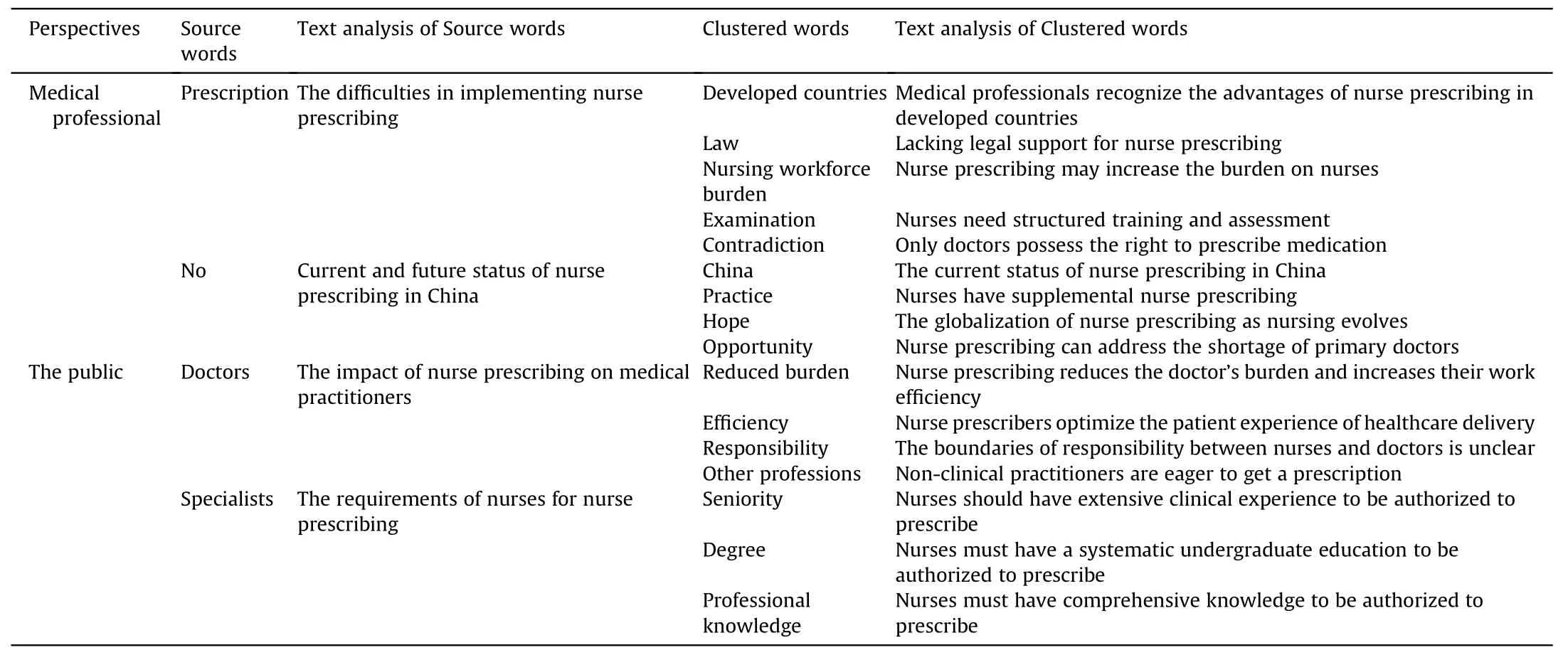
Table 1 The results of topic analysis and text analysis.
3.3.Sentiment analysis results
Based on the sentiment analysis of the LDA model,we found that on medical forums,68.5% of users had negative attitudes,while 31.5% had positive attitudes.On social media,55.4% of users had negative attitudes,while 44.6%had positive attitudes towards nurse prescribing.
Based on the sentiment analysis of the BosonNLP,we found that on medical forums,73.4% of users had negative attitudes,while 26.6% had positive attitudes.On social media,61.7% of users had negative attitudes,while 38.3% had positive attitudes towards nurse prescribing.
Based on the sentiment analysis of the SnowNLP,we found that the medical forum text had 78.6%positive,14.5%negative,and 6.9%neutral words.In the text,the words “developed countries,” “opportunity,” “law,” and “hope” are positive;“contradiction” and“waste” are negative,and “practice” is neutral.Social media texts had 63.4%positive,24.1%negative,and 12.4%neutral words.In the text,the words “burden reduction,” “seniority,” “degree,” and“expertise” are positive words;“lack” and “burden” are negative,and “efficiency” is neutral.
3.4.Results of qualitative analysis
Through topic analysis,we gained two topics: “No” and “Prescription” from medical professionals’ perspectives of nursing prescribing and “Specialists” and “Doctors” from the public.The public is concerned about the impact of nurse prescribing on medical professionals and the competency requirements for nursing professionals.Medical professionals are concerned about the current and future status of nurse prescribing in China and the difficulties in implementing nurse prescribing.The text analysis results are shown in Table 1.
4.Discussion
This study used text-mining algorithms to explore the authentic concerns and attitudes of the public and medical professionals toward nurse prescribing.This approach provides a new research perspective by analyzing social media views of public and medical professionals,which reflect the socio-cultural aspect of nurses’working environment.This study brings in-depth thoughts on nurse prescribing implementation strategies and nursing professional development.
4.1.The public and medical professionals’ attitude toward nursing prescribing and challenges
There has been a change in the attitudes of the public and medical professionals towards nursing prescribing despite the existence of negative intentions.The sentimental analysis in this study showed that many of the public had a negative attitude toward nursing prescriptions,such as“nurses do not possess medical knowledge as doctors do” and “nursing prescriptions will lead to bad consequences.” This negativity primarily resulted from social discrimination against the nursing profession,consistent with Heller’s report in the USA[33].The stereotype of nursing is rooted in history,as nurses were viewed as physicians’ assistants and inferior to physicians [34].
In this study,the medical professionals explicitly stated that prescribing belongs to physicians.It is said that nurse prescribing would divert a portion of patient resources,resulting in a decline in social status and financial loss of primary physicians and a crisis of trust between nurses and primary physicians.Nursing prescribing may confuse patients and increase nurses’ workloads.Medical professionals’negative attitudes toward nurse prescribing resulted from questioning the competence of nurses and conflicts of interest.However,medical professionals expressed concerns that nursing prescribing should not be rushed until proper legal protections,training,and competency evaluations are in place in the future.Current long-term qualifications and short-term continuing education for nurses lack sufficient content on pharmacology and evidence-based competency development[35,36],so clinicians are concerned about the consequences for the quality of care and patient safety if nurses prescribe.Clinicians argued that the current curriculum instruction and clinical training must be revised to support nurse prescribing,supported by Zarzeka[37]and Kerozen [38].In addition,the conflict between nurse prescribing and the physicians’ vested interests is consistent with the findings of Rana [39],Cooper [40],Patel [41],and Darvishpour [42].The author believes that the initial purpose of a limited scope of nurse prescribing was to complement physicians’ work [8],thus alleviating shortages of primary physicians.However,professionals’ negative attitudes contradict the findings of Wang [43],Haririan [35],and Funnell[44].In their studies,the hospital surveyors conducted the survey,which may contain social desirability bias,and found positive results.The relatively private environment on the internet is likely to encourage respondents to express their honest opinions actively.
Nevertheless,several challenges to implementing nursing prescribing in China must be addressed.Firstly,there is currently little legislation in China that offers protection for nursing prescribing.The boundaries of responsibility between nurses and doctors must be clarified;otherwise,it leads to patient confusion when choosing a healthcare provider.The result is consistent with Fan’s study,in which doctors are seen as the primary providers of prescriptions in many healthcare systems,while nurses play a supportive role[23].Some studies have concluded that legislation benefits healthcare policy,nurse competence,and patient interests.Legislation contributes to managing health care insurance [5],improving nurses’ability to provide comprehensive health care [45,46],and putting the patient interests first [47].Secondly,the public’s and medical professionals’ negative attitudes toward nursing prescriptions could significantly challenge the implementation of nursing prescription programs.Researchers believed that three conceptsinvolvement,acceptance,and intention impact the implementation of the nurse practitioner’s role [48].Among those concepts,acceptance refers to recognizing the role and willingness to work with the new role[48]by the team members and the public.Delvin et al.stated:“Attempting to establish a role that would overlap the skills and knowledge of medicine,a profession sitting at the top of the hierarchy in the healthcare system,is not an easy task.” [48]Therefore,strategies must be developed to win the acceptance.The authors in this study believe it is essential to enhance people’s awareness of nurse prescribing to win acceptance.Some suggested that social media campaigns can boost patient awareness of nurse prescribing and the social status of the nursing profession[24].We firmly believe that nurses should prioritize developing their competencies before implementing nurse prescribing.This draws attention to the third challenge that we face in China.The training and supervision system has yet to be set up to ensure the competence of nursing prescriptions.According to Black [49]and Wang [50],nurse prescribing needs to be assessed and supervised.Furthermore,several studies[49-52]have demonstrated that only 75% of nurse prescription meets the needs of patients.Therefore,researchers believe nurse prescribing can be effective if comprehensive training and regular supervision during practice are met [50].
4.2.The opportunity and future development
Zhan [53] believes that the expansion of the nursing service demand [54] and the shortage of doctors have created a good opportunity for nurse prescribing.In our study,some of the public believed that nursing prescribing performed by competent nursing specialists could reduce doctors’ burden,increase work efficiency,and optimize the patient experience of healthcare delivery.Studies by Xing[13],Feng[55],and Tian[18]provided supportive evidence about nursing prescribing,indicating that prescribing nurses were able to correctly diagnose illnesses and understand medication choices,dosages,and interactions.There was no significant difference between nurse prescribing and physician prescribing in the accuracy of patient care [56].Ding,Heller,and Burkett et al.[7,33,57] confirmed that nurse prescribing optimized the patient’s healthcare experience and facilitated outpatient care and health insurance payment.Patients consult with nursing specialists primarily for minor ailments,which can partially replace the consulting role of the primary care physician [58].Those positive comments and clinical outcome data provide support for implementation of nurse prescribing.
Although nursing prescribing was viewed negatively by most public and medical professionals,this perception has been changing.In 2017,when Anhui first stated that test-passing nurses would be authorized supplemental nurse prescribing,the public and medical professionals had negative attitudes.However,when Shenzhen enacted legislation on nurse prescribing in 2022,the public and medical professionals began to express positive attitudes [59].This evolving phenomenon is consistent with Zhang’s study due to the nurse prescribing practice pilot and the rigorous evaluation systems in Shenzhen’s program,which clarified the scope of nurse prescribing services and optimized the patient’s healthcare experience [60].This change shed light on the future development of nursing prescribing programs.With the official release of Measures for Training and Administration of Specialized
Nurses in Shenzhen,we believe that policymakers have recognized the value of nursing prescribing and paved the way for developing nursing prescribing.It will positively affect the public and medical professionals’ attitudes to some extent.In our study,doctors and medical students in the medical forum actively engaged in the discussion of nurse prescribing,which is consistent with the results of the previous studies conducted on physicians or nurses by Haririan [17],Heller [33],Zarzeka [37],Kroezen [38,61],and Funnell [44].This phenomenon denoted that nurse prescribing has won medical professionals’ attention.
As the legislation is enacted,the nursing education and evaluation system will be updated to ensure competency.It is noteworthy that some developed countries have pioneered education and evaluation systems for others to take as references.Countries have different educational requirements for the right to prescribe,which can be categorized into two groups[62,63].The first group of countries considered prescribing skills and competencies as part of the nurses’ education,such as the Netherlands,Spain,Poland,Estonia for a Bachelor’s degree,and Cyprus for completing a Master’s degree[46,62,64].The second group of countries has separate educational pathways and requirements for nurse prescribing,such as 30 to 45 UK credits in the UK,20 to 40 European Credit Transfer System (ECTS) in Ireland,and the mandatory 45 ECTS in Finland [62,65,66].Nurses need to take this turning point of professional development opportunity to improve their knowledge and competency to win the acceptance of the public and other team members.Nursing prescribing is not the destination for the nursing profession,but to achieve the equity of healthcare and promote the profession's value in today’s complex healthcare settings.
4.3.Limitations and future research
Based on the different perspectives of the public and medical professionals,this study can provide a comprehensive understanding of the urgent need and practical feasibility of nurse prescribing.In addition,this study validates the feasibility of all Chinese sentiment analysis algorithms and analyzes the scope of applications and features.However,this study has several limitations.Firstly,we selected only medical forums and social media with a high level of attention and activity in this study,and discussion in the form of non-websites and forums,such as the WeChat platform,was not included.This study did not remove comments in which positive and negative sentiment words alternated in the same sentence and emotionally different preceding and following sentences in a paragraph,which reduced the model’s accuracy.Secondly,inconsistencies in the scores given by different emotion dictionaries or in the weights allocated may lead to different results.Finally,we did not analyze nurses’ comments in medical forums separately.Moreover,the data was sourced from internet platforms,with more young and middle-aged users,which may not represent the overall population.
5.Conclusion
We found that many public and medical professionals held a negative attitude toward nurse prescribing,and few had a prudent positive attitude,which might be an obstacle to implementing nurse prescribing in China.Nurse administrators and educators need to recognize the advantages of nurse prescribing and address the difficulties in its implementation through promoting legislation,education,and raising public awareness of its benefits.By striving for excellence to ensure safe practice,nurses will gradually win the recognition and acceptance of the public and medical professionals for nursing prescribing,ultimately leading to equity and accessibility of the healthcare service.Shenzhen’s initiative for nursing prescribing marked a significant paradigm change for nursing practice and announced an excellent opportunity for nurses to excel in China.Nurse leaders should seize this opportunity to be active in the political arena to push national legislation for nursing prescribing.In the future,nurses will follow national policies and develop competency through formal or continuing education to improve the quality and efficiency of nursing.
Funding
Nothing to declare.
Data availability statement
The datasets generated during and/or analyzed during the current study are available from the corresponding author upon reasonable request.
CRediT authorship contribution statement
Qi Zhou:Conceptualization,Methodology,Validation,Formal analysis,Investigation,Resources,Data curation,Writing-original draft,Writing -review &editing,Supervision,Project administration.Yiqing Xu:Conceptualization,Methodology,Validation,Formal analysis,Investigation,Resources,Data curation,Writing -original draft,Writing -review &editing,Supervision,Project administration.Lili Yang:Conceptualization,Methodology,Validation,Formal analysis,Investigation,Resources,Data curation,Writing -original draft,Writing -review &editing,Supervision,Project administration.Rashid Menhas:Conceptualization,Methodology,Validation,Formal analysis,Investigation,Resources,Writing -review &editing.
Conflict of interest
No potential conflict of interest was reported by the authors.
Acknowledgments
We thank Tao Zhou for his contribution to the technological support of this study.
Appendix A.Supplementary data
Supplementary data to this article can be found online at https://doi.org/10.1016/j.ijnss.2023.12.005.
 International Journal of Nursing Sciences2024年1期
- International Journal of Nursing Sciences的其它文章
- Editorial Board of International Journal of Nursing Sciences
- Chinese Abstract
- Corrigendum to “Relationship between nurses’ perception of professional shared governance and their career motivation in Egypt:A cross-sectional study” [Int J Nurs Sci 10/4 (2023) 485-491]
- 《國際護理科學(英文)》進入中科院分區護理類2 區
- 關于翻譯量表使用授權的問答
- Summary of Guide for Authors