結構健康監測在土木工程中的應用
2023-12-13 08:29:22王寧睿
施工技術(中英文) 2023年21期
王寧睿
(上海市建筑科學研究院有限公司,上海 200032)
0 Introduction
With the advancement of society, engineering structures are becoming larger and more complicated to meet the needs of human life. As a result, structures such as ultra-high-rise buildings and large-span bridges have emerged. In these circumstances, it cannot be ignored that the engineering accidents are becoming increasingly common, hence, it is necessary to pay attention to the safety of structures. As an effective method to monitor and evaluate the real condition of structures and effectively avoid the occurrence of engineering accidents, structural health monitoring technology is by no means of great engineering significance.
The paper illustrates the importance and popularity of structural health monitoring. The research on structural health monitoring methods and algorithms is reviewed and summarized. The UAV monitoring method is also explained in detail.
1 Necessity and popularity of structural health monitoring
Structural health monitoring refers not only to the strategy and process of identifying and characterizing structural damage, but also to the on-site application of nondestructive sensing technology for monitoring structural damage and degradation by analyzing the structural system’s characteristics, including structural response[1].
The data in the following pie chart (see Fig.1) are derived from Scopus. The data processing method is to define the search category in line with civil engineering,and the search time ranges from 2017 to 2022. By searching the occurrence times of publication keywords,the occurrence proportion of each keyword can be used for analysis. Thus, the pie chart illustrates the most popular topics in civil engineering worldwide in the past five years. The popularity of structural health monitoring is the third one; moreover, structural health monitoring is also an important means of checking the safety of engineering. Fig. 2 shows the number of annual publications and citations related to "structural health monitoring" in civil engineering since 2016. The statistics are based on a search of the Web of Science.Recent years have seen a dramatic increase in research related to structural health monitoring. Therefore, it becomes a hot issue in civil engineering research on how to evaluate the residual bearing capacity and reliability of structures and how to identify the damage status to make a correct decision on whether the structures can continue to be used or need to be strengthened.
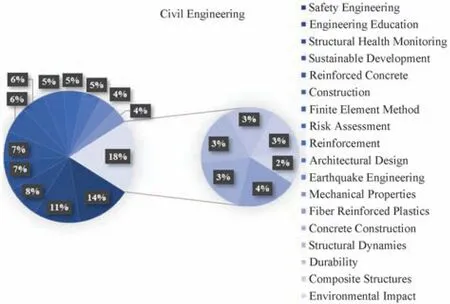
Fig.1 Keywords in civil engineering from Scopus
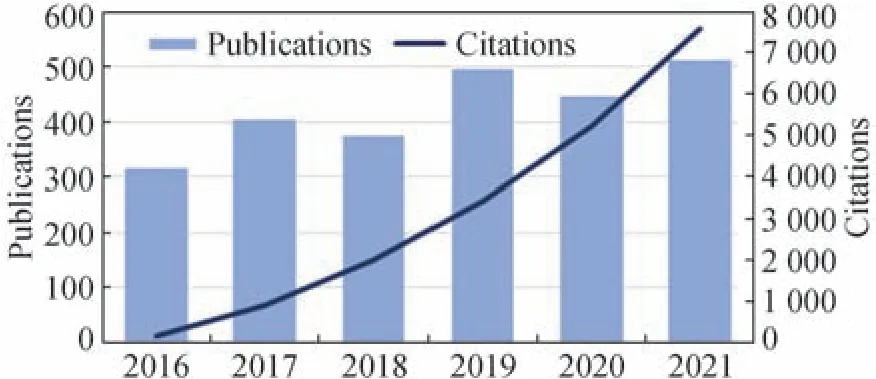
Fig.2 Publications and citations related to structural health monitoring
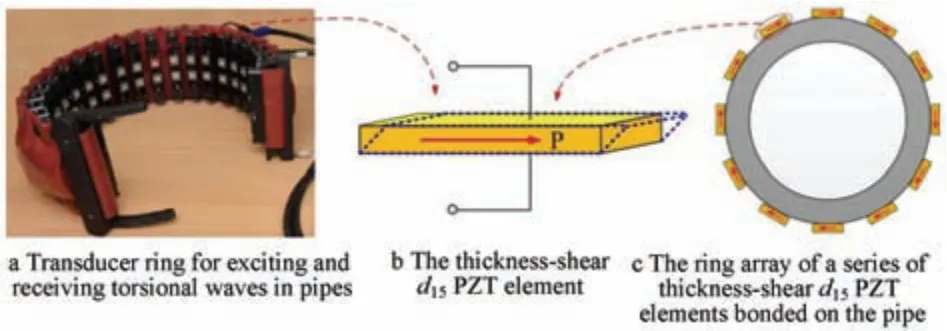
Fig.3 Shear horizontal wave transducers
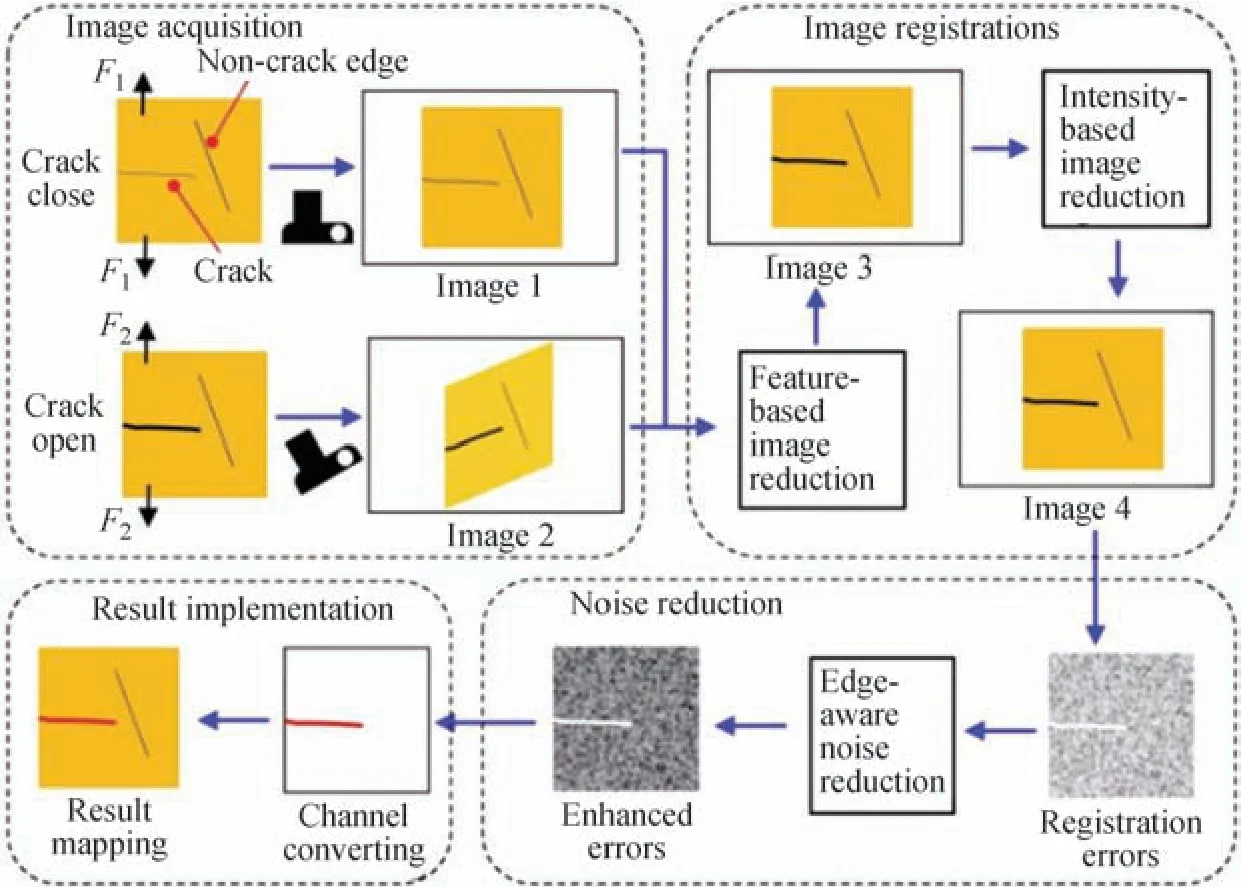
Fig.4 Overview of the methodology for crack detection
2 Current research status of structural health monitoring
2.1 Overview
The technology of structural health monitoring is at the intersection of many subjects and fields, including sensor technology, wireless data transmission technology, data analysis, database establishment,structural analysis, and so on. Structural health monitoring can be used to monitor bridges, reinforced concrete structures, steel structures, composite structures, and so on. A series of full-field non-contact measurement methods can be applied to data acquisition, such as high-speed digital holographic interferometry[2],laserspotinterferometry[3],continuous scan laser doppler vibrometry method[4]and digital image correlation method[5-7].
The system of structural health monitoring consists of several sub-modules: sensor and instrument systems;dataacquisition,management,transmission,processing, and control systems; identification of structure state and structure diagnosis; structural performance evaluation and prediction. Among them,the sensor systems, which are used to collect all kinds of real-time data, can transmit the real-time monitored signals to the data acquisition system for further analysis, processing, and judging[8]. The data acquisition and analysis systems are generally composed of several computers with powerful computing functions. The monitoring center will trigger alarm signals when the structure's health condition is abnormal. At this point, the module with the diagnostic function aims to analyze the location and severity of the damage and discover the cause to ensure the safety and reliability of the structure.
The main contents of structural health monitoring are: load monitoring, including wind, earthquake,temperature, and traffic load; geometric monitoring:damage detection, crack detection, parameter estimation, and the static deformation of each part of the structure; static and dynamic responses: strain,stiffness, modal analysis, vibration analysis, and natural frequencies[9].
2.2 Application of structural health monitoring system
Many scholars have studied the common application fields of structural health monitoring. In order to detect deflection or damage to the infrastructure and obtain the dataonvibrationfrequencies,piezoceramic transducer[10], guided waves ultrasonic testing(GWUT)[11], 3D laser vibrometry[12], IoT sensor system[13], Fiber Bragg Grating sensor-based damage response monitoring[14],camera-based noncontact vision sensor[15], and micro-electro-mechanical systems(MEMS) accelerometers are usually sed for testing,and convolutional neural networks[16]and region-based deep learning[17]are usually used as analysis methods.Aiming at the detecting damage and evaluating damage severity in multi-story frame structures, some scholars proposed using signal processing and artificial intelligence technology[18]to successfully detect structural damage at the following three levels: damage occurrence, damage severity, and the location of the damage.
Tables 1 and 2 show structural health monitoring methodsand algorithm methods in the field of structural health monitoring, respectively.
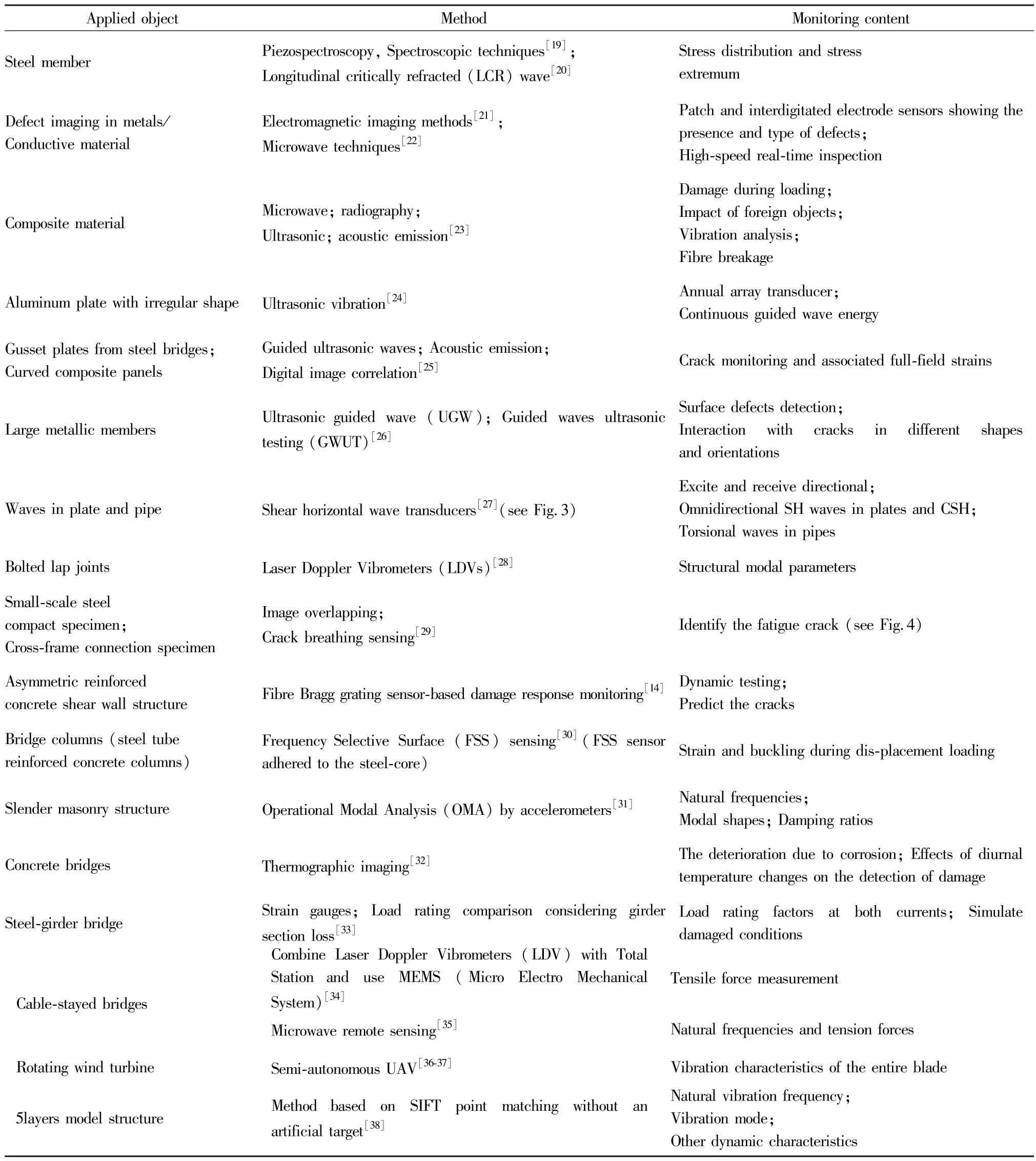
Table 1 Research related to structural health monitoring methods
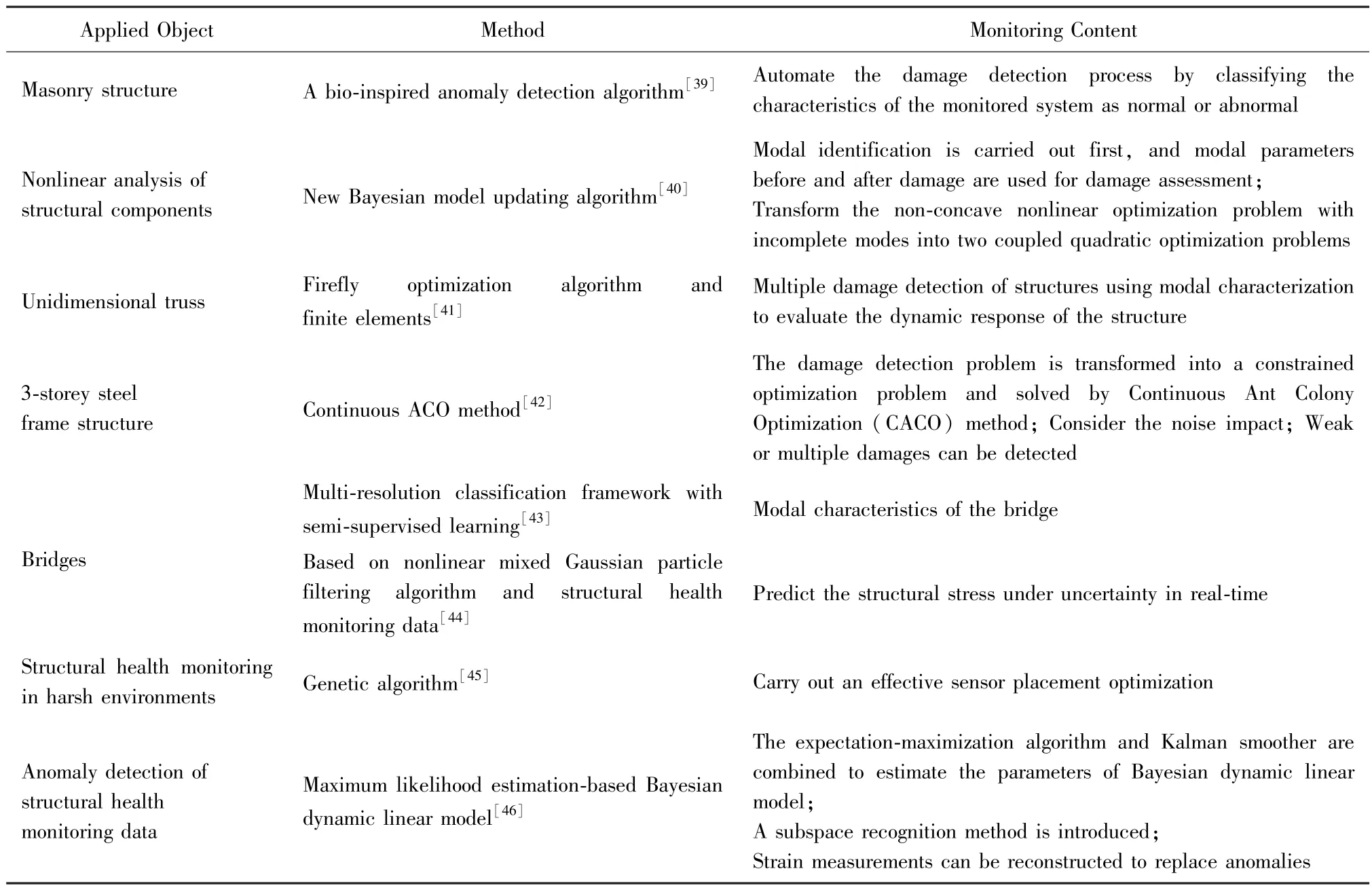
Table 2 Correlation studies of algorithm methods
3 Application of Unmanned Aerial Vehicle(UAV)
3.1 Overview
For the exterior walls of high-rise buildings and bridges, which require high-altitude monitoring, the traditional detection methods are too risky. In this case, UAV is applied for structural health monitoring to avoid such problems, and its obvious advantages are flexibility, offline real-time control, and so on. The Sankarasrinivasan’s group[47]used UAV to monitor the structural health of buildings in real-time, and compared the cracks in the actual building with the those in the processed photographs. This crack detection method uses the high brightness characteristics of concrete surfaces, namely the low brightness of the crack in the photo, to detect the cracks. The simulation results are shown in Fig.5. The experimental results show that the algorithm can effectively detect the efflorescence part of masonry.
3.2 Application case
UAVs may be a better way to measure the length of cracks due to their spatial flexibility. For measuring the crack length under the condition of elevation and according to the imaging principle of the camera, it can be concluded that there is the following relationship between the size of the object in the photo and the actual size of the same object (assuming that the crack extends horizontally, measure the transverse length of the crack), as shown in Eq(1),
Where,Lis the actual transverse length of the crack,l′ is the number of pixels of the crack in the photo,his the transverse size of the complementary metal-oxidesemiconductor (CMOS) sensor,h′ is the number of transverse pixels in the whole photo,Dis the distance between the object and the CMOS sensor of the camera, andfis the actual focal length of the camera.
For example, we used this method to measure the length of a brick, and the actual length of the brick measured with a ruler is 560mm; the distance between the UAV and the wall is measured by using the obstacle avoidance function of the UAV, which is 2 000mm;and the horizontal distance between the rotor tip and the camera CMOS is 200mm;thus,it can be concluded that the distance between the CMOS and the wall is 2 200mm. Ten consecutive photos were taken by UAV,and two of them are taken as examples shown in Fig.6 below. The pixel measurement results between the two points of the brick are shown in Table 3 below. The error is calculated as shown in Eq(2). And then, the parameters of the lens can be obtained according to theinstruction manual of the UAV. The total pixel(h′) of the horizontal resolution of the photo is 5 472px; the transverse width (h) of the CMOS lens is 13.2mm; the distance between the object and the camera’s CMOS sensor (D) equals to 2 200mm, andfis the actual focal length of the lens, which equals to 12.87mm. By the Eq (1), the length of the bricks is 0.602l′. The calculation results obtained by adding the brick length pixel value are shown in Table 4. The brick length estimation accuracy obtained by UAV is high, the maximum error is 4.41%, the average brick length is 554.11mm, and the relative error is 1.01%.

Table 3 Pixels between the dots on both sides of a brick

Table 4 Measured lengths compared with actual lengths
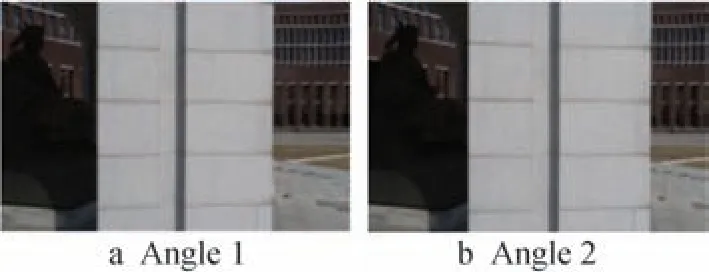
Fig.6 Two examples of photos taken by UAV
Moreover, the neural network has strong nonlinear mapping and learning abilities. In UAV structural health monitoring, the probabilistic neural network( PNN) is used to establish the corresponding relationshipbetweenstructuralcharacteristic parameters and various damage modes and evaluate the probability density of structures in different damage states under various characteristic parameters[48]. The first stage is to select the sample data (including acceleration, strain, and other reference quantities) in the pictures. Secondly, use data to train a PNN neural network. In the last stage, the reference data which need to be identified are input into the PNN neural network to complete the classification.
The evaluation results of the input sample X belonging to classq, as shown in Eq(3)[48],Where,Noutis the classification number of structural damage modes, and(X) is the weighted average of Bayes probability densityfq(X) for obtaining the fusion probability density.
Finally, the clustering algorithm is used to preprocess the set of characteristic parameters,calculate the normalized information decision table,and then calculate the geometry attribute set and the importance of each conditional attribute to get the highest conditional attribute set. When using data for damage identification, its accuracy should be ensured to confirm that the proposed health evaluation indicators are appropriate.
4 Conclusion
Structural health monitoring technology is a product of the combined development of engineering theory and actual construction, which is an important symbol of high-tech integration. On the one hand, the structural health monitoring system can not only make the IntelliSense network cover every aspect of urban construction but also prevent the occurrence of serious accidents. On the other hand, there exist a great many monitoring methods supporting the monitoring of load conditions, dynamic response, and geometric deformation. When making a choice among these methods, we should first have a general understanding of the working principles and the service environment of different monitoring methods, then optimize the selection of them according to the actual situation and specific requirements of the monitoring project to achieve the purpose of monitoring and improve the work efficiency.
However, due to the high cost of structural health monitoring systems,they are only applied to large-scale projects at the present stage. It is believed that this situation will be solved with technological progress in related fields so that they can be widely used in all kinds of structures. In addition, the data acquisition equipment for structural health monitoring is significantly affected by the environment. Therefore, it is necessary to develop high-precision and intelligent monitoring instruments for the improvement of structural health monitoring. Meanwhile, it is necessary to develop signal processing technology to achieve signal noise reduction and improve information authenticity. In addition, there remains a lack of indexes to evaluate the degree of structural damage,and the relevant technical standards have not yet formed a complete system. And some experimental research results fail to be applied in practical engineering; thus continuous efforts and exploration of research are still needed. Hence, the civil engineering informatization, which is the combination of the information network technology with the traditional civil engineering industry, is also one of the strategic tasks in China’s engineering construction field.
猜你喜歡
國家教育行政學院學報(2022年9期)2022-10-10 10:02:28
哲學評論(2021年2期)2021-08-22 01:53:34
少先隊活動(2021年5期)2021-07-22 09:00:02
家庭影院技術(2020年11期)2020-12-28 01:22:42
中華詩詞(2019年7期)2019-11-25 01:43:04
小小藝術家(2019年6期)2019-06-24 17:39:44
影視與戲劇評論(2016年0期)2016-11-23 05:26:01
今古傳奇·故事版(2016年15期)2016-09-07 06:57:32
小雪花·成長指南(2015年3期)2015-05-04 00:04:37
人民中國(日文版)(2015年10期)2015-04-16 03:53:59