Cambodia’s New Rules of Origin Law to Better Facilitate International Trade
2023-12-03 16:02:21ArendseHuld
中國-東盟博覽(政經版) 2023年9期
Arendse Huld
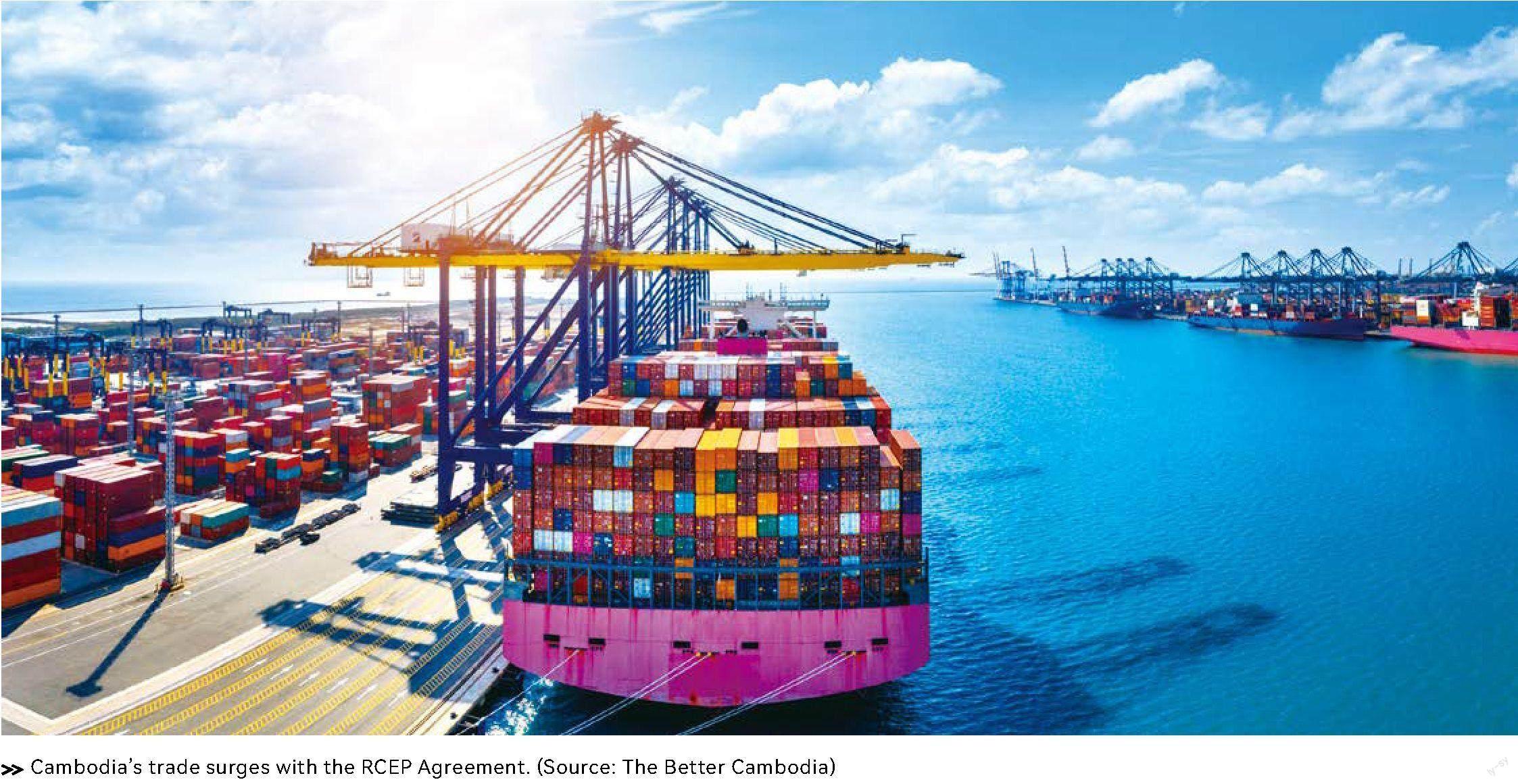
On July 5, 2023, the Cambodian government approved a new ROO law, to be in line with the standards of the WTO. This will provide businesses with clear and uniform criteria for identifying the source of a product. More importantly, it will enable importers and exporters to access preferential trade treatment — where ROO provisions are met. Finally, the new law gives the government a legal basis to impose trade restrictions where necessary and crack down on counterfeit goods.
The new ROO law has been formulated with assistance from WTO and the UN Conference on Trade and Development (UNCTAD), thereby ensuring consistency with existing free trade agreements (FTAs) and agreements with other WTO member countries.
What is ROO?
ROO or rules of origin is a set of criteria to determine the country from which a product is derived from. This includes, for instance, the permitted scope of “substantial transformation” that allows a product to be classified as originating in the country in which it is manufactured or processed. As commodities may be subject to varying duties, restrictions, or preferential treatment depending on their origin status, it is essential to have in place an accurate and consistent classification process.
In addition to facilitating trade, certificates of origin (COO) can also help to improve the recognition of products, increase brand value, and prevent counterfeiting by providing buyers with proof of the product’s origin and quality. This is especially true for specialty goods, such as artisanal or agricultural products.
ROO for products subject to non-preferential treatment are determined individually by each country and therefore can differ greatly, although they must generally adhere to WTO standards if the country in question is a member. Meanwhile, ROO criteria for products subject to preferential treatment are usually integrated into trade agreements like FTAs. Under the agreement, two or more signatory countries agree to the same rules to provide preferential treatment for market access or sourcing of certain products, thus boosting bilateral or multilateral trade.
What is in Cambodia’s ROO?
The implementation of Cambodia’s ROO law is in line with its commitments to adhere to the WTO Agreement on Rules of Origin. Under the WTO Agreement, a country cannot “create restrictive, distorting, or disruptive effects on international trade” and “shall not pose unduly strict requirements or require the fulfillment of a certain condition not related to manufacturing or processing, as a prerequisite for the determination of the country of origin.”
Cambodia’s new ROO law outlines criteria for the origin of products that are subject to preferential and non-preferential treatment. For preferential products, the ROO defaults to those set by the trade agreements in effect, such as the Regional Comprehensive Economic Partnership (RCEP). Cambodia’s ROO law thereby officially confirms its adherence to these regulations within its legal framework.
Meanwhile, for non-preferential products, the law outlines new ROO criteria. As is required by the WTO Agreement, the law stipulates that a product must be either wholly obtained or have undergone “substantial transformation” in the country for it to be classified as having originated in that country.
The Cambodian ROO law also stipulates penalties for the falsification of a product’s origin and outlines mechanisms for dispute resolution.
How will Cambodia’s ROO facilitate foreign trade?
Cambodia’s new ROO, when adopted, is widely expected to strengthen its foreign trade partnerships. A stronger ROO regime will provide clarity and predictability for foreign traders, particularly those from countries that are not part of an existing FTA with Cambodia.
Clearer criteria will also make it much easier for traders to obtain COOs for their products, while also easing compliance with the ROO of both Cambodia and its trading partners. Inconsistent implementation of rules and a lack of clear guidance has previously made it harder for Cambodian authorities to tackle counterfeit products, which serves to devalue domestically produced export products. Cambodian manufacturers and producers, therefore, have a harder time proving the source and authenticity of their products. Regional traders also face difficulties in third markets if their products have been sourced from Cambodia at any stage.
The new ROO will ensure Cambodian exporters benefit from preferential treatment given to products that have been either wholly produced or manufactured domestically, as they will be better able to prove their origin in Cambodia. This could help to increase the country’s overall exports and boost economic growth.
At the same time, better ROO standards will improve Cambodia’s ability to impose trade restrictions, such as anti-dumping duties, as it will make it harder for exporting countries subject to certain restrictions from circumventing restrictive policies by re-exporting products through a third country and claiming their origin there. This will allow the government to better protect Cambodia’s economy and producers.
Why is Cambodia implementing a new ROO now?
Cambodia is a party to a handful of FTAs, including bilateral FTAs with China and South Korea. It is also a member of the RCEP, an expansive FTA between 15 countries in the Asia-Pacific, and the ASEAN-Australia-New Zealand FTA (AANZFTA).
ROOs are incorporated into the trade treaties to determine whether or not a product is derived from an FTA member country, and thereby eligible for preferential treatment. For this reason, Cambodia is already subject to various ROO for trade with certain countries.
Finally, the new ROO law will place Cambodia in better standing for negotiating future FTAs, as it increases its reliability as a trading partner and provides a basis upon which to formulate bilateral ROO with FTA trade partners.
Source: ASEAN Briefing
This article only represents the author’s views, not the stand of the magazine.