
Perceived HIV risk and factors associated with condom use among women aged 40 and older: A cross-sectional survey
2023-11-26 05:22:20XueyunZhongShuyingChenHongXioXuelingXioSiminYuYnShenChenChenHonghongWng
Xueyun Zhong ,Shuying Chen ,Hong Xio ,Xueling Xio ,Simin Yu ,Yn Shen ,Chen Chen ,Honghong Wng
a Xiangya School of Nursing of Central South University, Changsha, Hunan, China
b Fred Hutch Cancer Research Center Seattle, WA, USA
c School of Public Health of Zhejiang University, Hangzhou, China
d Department of Vascular Surgery, Henan Provincial Key Medicine Laboratory of Nursing, Henan Provincial People’s Hospital, Zhengzhou, Henan, China
Keywords:Adult Aged Condoms Female Health knowledge Attitudes,practice HIV infections Middle aged Prevention
ABSTRACT Objective: A noticeable increase in HIV-positive cases among women,particularly those of middle and old age,has been observed worldwide.This study aimed to describe women’s perceived HIV risk,HIV/Acquired Immunodeficiency Syndrome (AIDS) knowledge,attitude,and sexual behaviors to determine factors associated with condom use among these women in Hunan,China.Methods: A cross-sectional study was conducted from July 2019 to August 2020 among 958 women aged 40 and older in four regions of Hunan,China.We collected data on sociodemographic characteristics,perceived HIV risk,HIV/AIDS knowledge and attitude,condom use,and sexual behaviors.Univariate and multivariate logistic regression were performed to identify factors related to condom use.Results: Out of 958 participants,60.6% perceived no risk of HIV infection,and 46.8% reported they had never used a condom during their past sexual life.Those who were older,had lower monthly household income for family,had not received HIV education in the past year,were unwilling to use condoms,could not determine condom use during sexual activity,and had more negative attitudes towards HIV/AIDS and HIV-positive people were less likely to use condoms in their past sexual behaviors.Conclusions: In Hunan Province,most women aged 40 and older perceived themselves as having a low or no risk of HIV infection;their rate of condom use was low,and six factors were associated with condom use.It is imperative to strengthen HIV prevention and control programs among women aged 40 and above,particularly focusing on those who may use condoms infrequently or not at all.
What is known?
· The age range of women newly infected with HIV is now gradually extending to 40-90 years.
· Perceived HIV risk is considered a prime step in motivating the engagement of HIV prevention behaviors.
· There’s a positive correlation between perceived HIV risk and the frequency of condom use among women.
What is new?
· Most women aged 40 and older perceived themselves as having a low or no risk of HIV infection in Hunan Province.
· The rate of condom use was low among most women aged 40 and older in Hunan Province.
· Six factors were associated with condom use: age,monthly household income for family,whether having received HIV education in the past year,willingness to use condoms,whether one could determine condom use during sex,and attitudes to HIV/AIDS and HIV-positive people.
· It is imperative to strengthen HIV prevention and control programs among women aged 40 and above.
1.Introduction
The human immunodeficiency virus (HIV) epidemic continues to pose a significant public health issue globally.As per the Joint United Nations Programme on HIV/AIDS (UNAIDS),an estimated 38.4 million individuals worldwide were living with HIV in 2021[1].A noticeable increase in HIV-positive cases among women,particularly those of middle and old age,has been observed worldwide[2-4].In China,women above the age of 40 accounted for 55.9%of HIV-positive cases in 2016[5,6].Consequently,the age range of women newly infected with HIV is now gradually extending to 40-90 years [7].
It’s important to note that women are at a potentially higher risk of infection,which may often be overlooked.Heterosexual intercourse is the primary mode of HIV transmission for middle-aged and older women,primarily facilitated by intrafamily spousal transmission [5,6,8,9].These women often have lower literacy,limited access to HIV/AIDS knowledge,and are less likely to use condoms with their regular partners[8,10].However,men aged 50 and above tend to have active and varied sexual desires,and some of them might have a higher tendency to engage in commercial or homosexual sexual behavior.This tendency or behavior might serve as a transmission bridge,potentially spreading HIV contracted from men who have sex with men or female sex workers to their regular female partners [6,8].
Perceived HIV risk,defined as the personal assessment of one’s risk for HIV acquisition,is considered a prime step in motivating the engagement of HIV prevention behaviors,such as condom use and acceptance of HIV testing [11,12].There’s a positive correlation between perceived HIV risk and the frequency of condom use among women[13,14].Pringle K et al.reported those who perceive no risk of HIV infection are more likely to engage in unsafe sexual behaviors,such as inconsistent condom use and having multiple sex partners[11].However,most women,especially older women,have inadequate perception of HIV risk and rarely see themselves at risk for HIV [12,13,15,16].Healthcare providers may even not discuss sexual health with these women,because contraception might not be a requirement [8].Thus,there is an urgent need to enhance their awareness of their potential HIV risk.
Considering there have been no studies on HIV risk perception and its correlation with condom use among women aged 40 and older in China.This study aims to 1) describe perceived HIV risk,HIV/AIDS knowledge and attitude,and condom use among women aged 40 and older in Hunan,China;and 2) identify factors associated with condom use.
2.Participants and methods
2.1.Study design, settings, participants
A cross-sectional survey was conducted in Hunan Province,China,which was home to 66.4 million permanent residents in 2020 and had 43,133 HIV-positive patients by the end of October 2020 [17,18].
There are a total of 13 cities and one autonomous prefecture in Hunan Province.We performed a two-stage stratified cluster sampling method to recruit participants consecutively.In the first stage,four cities were selected.In the second stage,we stratified under each city and selected one district and one township.Meanwhile,two healthcare centers and two villages (residents could receive physical examination here) from each selected district and township were chosen.Thus,a total of 16 study settings were included(Fig.1).The heads of healthcare centers and villages helped us issue the recruitment information.All women aged 40 and older who were having a physical examination at these selected study sites were invited to participate in the study.
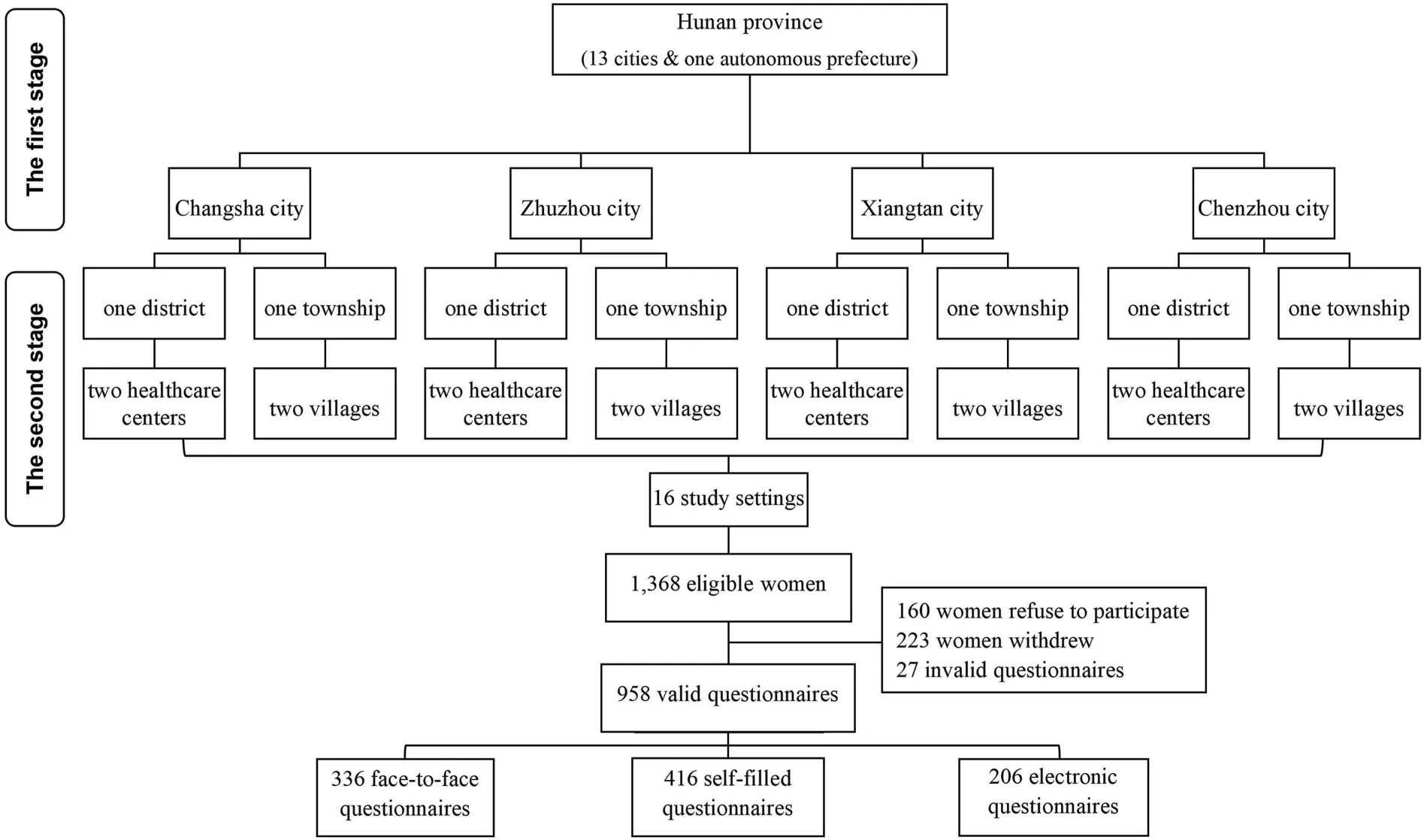
Fig.1.Flow diagram of participant recruitment.
Participants were eligible if they are women,aged 40 or above,had resided at the study sites for more than six months,and were able to read or answer questions.Participants were excluded if they had severe visual or hearing disorders or were critically ill.
2.2.Variables and measurements
2.2.1.General information
A general information sheet was used to collect sociodemographic characteristics,including age,area of residence,marital status,education level,and monthly household income for family,etc.Additional information included whether the participant had received HIV education in the past year.
Perceived HIV risk was measured by asking: “How would you rate your risk of contracting HIV?” (no,low,moderate,high risk,don’t know) [19,20].We categorized the responses as a dichotomous variable (0=no risk,1=at risk),which did not include the“don’t know” selection [12,13].
2.2.2.HIV/AIDS knowledge,attitude,and sexual behaviors
Li et al.developed the Questionnaire of HIV/AIDS-related Knowledge,Attitude and Behavior for Adult Female Residents in Rural China,with an overall Cronbach’s α coefficient of 0.846[21].It included three sections: knowledge,attitude,and behavior,with 20,28,and 39 terms respectively[21].After conducting a literature review and the Delphi method,we revised this questionnaire to make it more relevant and suitable for women aged 40 and older,with a content validity of 0.985 [22].
The knowledge section included 18 terms,covering 1) general HIV/AIDS facts,2) HIV transmission routes,and 3) HIV prevention and treatment.Some items were added,such as “Do HIV-positive individuals appear healthy?” or “Can tubal ligations or vaginal rings prevent HIV?”.While some items,like “Not all HIV-infected individuals have AIDS” were removed.Each correct,unknown,and wrong response was scored 3,2,and 1 point,respectively[21].The higher the correct response rate (number of correct answers/total number of questions),the better the knowledge of HIV/AIDS.Cronbach’s α coefficient was 0.629.
The attitude section consisted of 22 items,including attitudes to HIV/AIDS,HIV-positive people,and unsafe sexual behaviors.For positive attitude items (e.g.,“People should not discriminate against HIV-positive people”),the score of agree,don’t know,or don’t agree ranged from 3 to 1,while the score is exactly opposite for negative attitude items (e.g.,“HIV prevention is nothing to do with me”).Higher scores indicated more positive attitudes.The Cronbach’s α coefficient was 0.63.
The behavior section mainly referred to condom use and sexual behaviors,containing 9 terms.The frequency of condom use in past sexual life was measured by asking: “How often do you use a condom when having sex?” (0=never,1=sometimes,2=often,3=always).We dichotomized condom use (0=Never,1=Any condom use) at analysis.Other condom uses and sexual behaviors were assessed by asking about their status of sexual behaviors currently,such as whether they know how to use a condom correctly,whether they used a condom for the first sex,the number of sexual partners,and whether they had commercial sex,etc.
2.3.Data collection
We collected data from July 2019 to August 2020 with the help of the Hunan Women’s Federation.Before the formal survey,a pilot study was conducted among 30 eligible women,which demonstrated the questionnaire was understandable and feasible;10-20 min were required to complete it.
In the formal study,data were collected in three ways by five trained researchers or research assistants,depending on participants’ age,literacy,eyesight,and willingness.1) Paper-pencil questionnaires were administered through self-administration if the participants could read and preferred to handwrite.2) Electronic questionnaires were administered via the Wenjuanxing online survey platform(www.wjx.cn),with the same instruction and content.A printed Quick Response Code was presented at the study spot;participants who had a smartphone and could answer an online questionnaire could scan the code and click the informed consent to fill it out.We also set some personal qualifications to control the quality of questionnaires.If the respondent’s age or gender did not meet our inclusion criteria,or the IP address was not located in Hunan province,or there were any blanks on the questionnaire,they could not submit it.3)Face-to-face interviews were conducted when the participants could not complete the questionnaire through the former two;research assistants assisted participants in filling out the questionnaires.
All questionnaires were filled in on the study spot,and research assistants checked them at once to ensure their completeness and accuracy.Research assistants checked electronic questionnaires within 48 h,depending on the duration it took to complete the questionnaire and the degree of similarity in each selection.
2.4.Ethics considerations
Ethical approval was acquired from the institutional review committee of Xiang Ya Nursing School,Central South University(approval number: E201924).The present study’s purposes,benefits,and risks along with the participants’rights were introduced to eligible participants.Informed consent was obtained orally from all respondents,and they had the right to quit at any time.To ensure participants’privacy,participants completed the questionnaire in a private space.The questionnaire was filled in anonymously,and each was marked with a code unrelated to participants’ personal identification.In the instruction,it was emphasized that there are no right or wrong answers to the questionnaire,and participants should answer based on their own understanding and feelings to avoid any bias.When the questionnaire was completed,participants received 20 CNY (about US $2.9) as compensation for their time.
2.5.Statistical analysis
The completeness and logicality of the data were checked manually.SPSS version 23.0 was used to analyze the data.Demographic characteristics,perceived risk,knowledge and attitude toward HIV/AIDS,and sexual behaviors were described by frequencies and percentages.Multivariate logistic regression was used to detect factors associated with condom use.Variables identified as statistically significant in the univariate logistic regression were then analyzed by multivariate backward stepwise logistic regression.Odds ratios (OR) with 95% confidence intervals (CIs) were calculated as the logistic regression analysis results.P-values less than 0.05 demonstrated statistical significance.
3.Results
3.1.Participants’ characteristics
In total,1,368 women were eligible;958 questionnaires were valid;160 refused to participate;223 withdrew during the survey;27 presented invalid questionnaires.The effective response rate is 70.03%.There were 336 face-to-face questionnaires,206 electronic,and 416 paper-pencil self-filled(Fig.1).The participants were aged between 40 and 85,averaging 51.3 (SD=8.6).Around 98.4% of respondents were of Han nationality;99.2%had no religion;92.4%were married or cohabitating.Regarding the area of residence,50.5% of the participants were rural dwellers;49.5% were from urban areas.About 61%reported not receiving HIV education in the past year (Table 1).
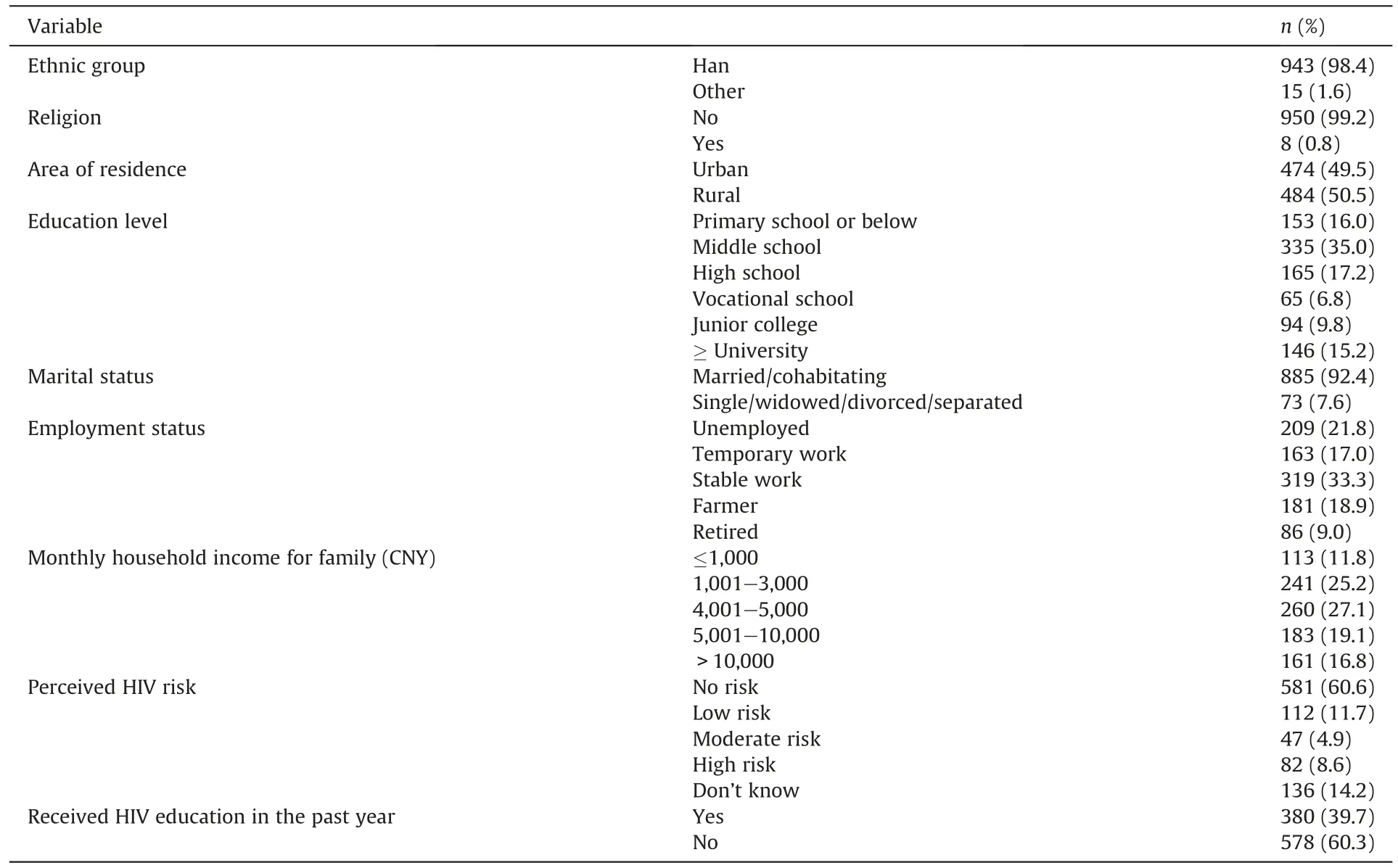
Table 1 General information of participants (n=958).
3.2.Perceived HIV risk
Of 958 women,60.6%(95%CI 57.5%-63.8%)thought they had no risk of HIV infection;11.7% thought had low risk;14.2% women didn’t know(see Table 1).
3.3.HIV/AIDS knowledge
The mean score of HIV/AIDS knowledge was 42.8(SD=4.3),and its overall correct response rate was 51.7%.Among these 18 questions,the item“Mosquito bites cannot transmit HIV”had the lowest correct response rate of 18.9%,and 34.1% participants correctly answered the item “Tears and sweats cannot transmit HIV”.
3.4.HIV/AIDS attitude
In our respondents,attitude scores ranged from 24 to 58,with an average score of 40.6(SD=5.8).About half(52.4%)of them did not want to work or live with HIV-positive individuals,and about two-thirds (60.8%) thought HIV-positive people should not get married.
3.5.Condom use and sexual behaviors
Table 2 shows 448 (46.8%) women had never used condoms during their past sexual activity;the rate of willingness to use a condom was 52.1% (499),while 308 (32.2%) women did not know how to use a condom correctly.Seventy-four percent of participants (709) reported being sexually active.Only 2.9% (28) statedhaving multiple sexual partners,and 1.4% (13) stated having commercial sex.

Table 2 Condom use and sexual behaviors among women aged 40 and older in Hunan,China(n=958).
3.6.Factors associated with condom use
Univariate analysis found a significant association between the use of condoms in previous sexual life and various factors,including age,area of residence,marital and employment status,educational level,monthly household income for family,number of sexualpartners,willingness to use condoms,HIV/AIDS knowledge and attitude to HIV/AIDS and HIV-positive people,whether perceived HIV risk,whether having received HIV education in past one year,whether knowing how to use a condom correctly,whether using a condom for the first sex,and whether can determine condom use during sex (P<0.05).These variables were included in the multivariate logistic regression.
In the multivariate logistic regression,only six variables were found to be significantly relevant to no condom use (value=0) in the past sexual life: older age (OR=0.813,95% CI 0.784-0.843),lower monthly household income for family (≤1,000 vs.>10,000,OR=2.583,95%CI 1.152-5.792),having not received HIV education in the past year (no vs.yes,OR=2.171,95% CI 1.442-3.267),not willing to use condoms(no vs yes,OR=4.058,95%CI 2.696-6.110),and could not determine condom use during sex (no vs.yes,OR=2.191,95% CI 1.194-4.019),and more negative attitudes to HIV/AIDS and HIV-positive people(OR=1.036,95%CI 1.000-1.073)(see Table 3).
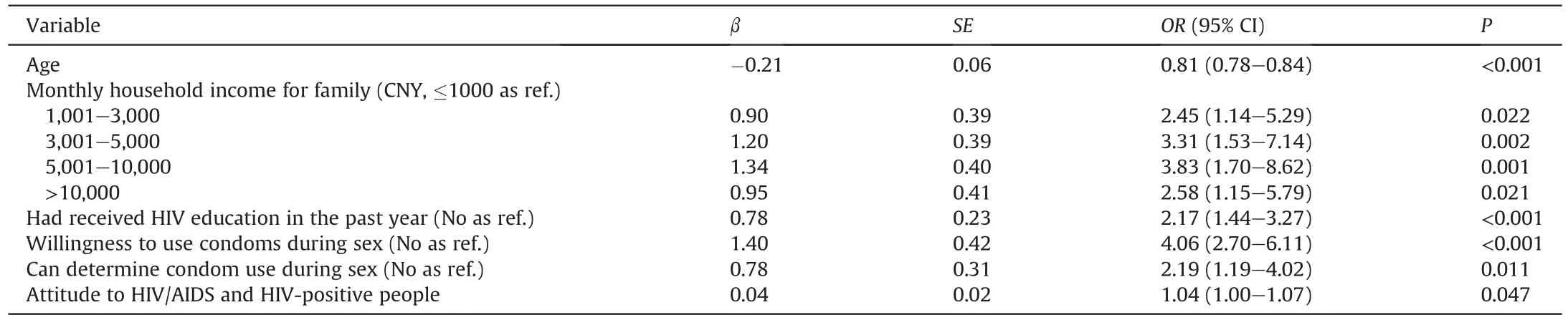
Table 3 Multivariate logistic regression analysis for condom use among women aged 40 and older in Hunan,China (n=958).
4.Discussion
This is,to our knowledge,the first study investigating perceived HIV risk and factors associated with condom use among women aged 40 and older in China.We found most women (72.3%)perceived themselves as having low or no risk of HIV infection.The rate of condom use (46.8%) was low,and six factors are associated with condom use.These findings are crucial in raising the awareness of these women and directing health care practitioners to focus on this group.
Most women perceived they were at no risk of HIV infection(60.6%),which is consistent with previous studies [15,18,23,24].Given their old age,lower educational level,and limited HIV education,these women generally lack HIV awareness and have insufficient access to HIV prevention knowledge.Their low rate of correct response to HIV/AIDS knowledge partly proved this(51.7%).It is similar to a previous study among women aged 50 and older(51.7%)and is slightly higher than those in Fujian Province(34.8%)[15,24].However,it falls short of the 85% awareness rate of AIDS/HIV prevention and control knowledge among residents,a target set by the Chinese government in 2017 [25].
HIV-related discrimination and stigma remain prevalent in China.Women,particularly those of middle and older age,are likely to experience discrimination and stigma more acutely than their male and younger counterparts [26-28].Otherwise,most of our participants had negative attitudes towards HIV/AIDS and HIVpositive people,which could potentially exacerbate discrimination and stigma.This,in turn,might make them more reluctant to engage in discussions about HIV [28].Consequently,these women lack adequate HIV prevention and intervention education.Hence,it is crucial to implement and disseminate HIV-related education among these populations to enhance their understanding and attitude towards HIV/AIDS.
Half of the participants (46.8%) had never used a condom,and their willingness to do so was low(52.1%).Our findings suggest that age and willingness to use condoms correlate with the frequency of condom use in their past sexual life.Specifically,participants who were old and unwilling to use condoms were less likely to use condoms in their past sexual experiences.This is consistent with Taylor et al.’s research,which indicates that condomless sex is common among older adult females[10].It might be attributed to 1)middle and older aged women are less likely to have multiple or commercial sexual partners and might trust their regular partners,fearing the loss of trust if they suggest using condoms;2) their partners are unwilling to use condoms;3) potential stigma associated with purchasing and using condoms;4) potential stigma associated with purchasing and using condoms;and 5)a reduced or non-existent need for condoms as a method of birth control,as most them had received tubal ligations or placed vaginal rings,partially due to China’s One-Child Policy instituted in the 1980s[6,29].Further research is needed to explore the specific challenges these women face regarding condom use.
However,women who have the autonomy to insist on condom use during sexual activities are more likely to engage in safer sexual behaviors[30].Those with higher monthly household incomes for family and who have received HIV education in the past were found to be more likely to use condoms [31].This phenomenon may be attributable to these women having more exposure to HIV/AIDSrelated knowledge and easier access to condoms [4,32].It’s imperative for policymakers to take action to ensure equal rights and interests for women.
This study has several limitations.Firstly,participants were recruited only from four regions in Hunan,China,which might restrict the generalization of our findings.Secondly,we adopted three methods of data collection,which may impact the reliability of our study.However,we analyzed the data and showed no significant differences for the main variables in three different collecting methods.In addition,this survey involves a lot of private content,and some questions need recalling.Although we implemented some strategies to ensure the correctness of each answer,some respondent or recall bias could not be entirely eliminated.Finally,using cross-sectional data is a weak method for demonstrating the correlations among variables.Therefore,caution should be taken when interpreting these findings.
5.Conclusion
In this study,most women perceived no or low risk of HIV infection;they had a low correct response rate of HIV/AIDS knowledge and a low rate of condom use.The results highlighted six factors associated with condom usage among middle-aged andolder women.Consequently,it is important to pay more attention to adult women who are old,have low household incomes and poor knowledge about HIV/AIDS,and hold negative attitudes towards HIV/AIDS.It is crucial to develop targeted HIV prevention and control programs and provide them with tailored HIV-related education.
Funding
This work was supported by the Central South University Innovation-driven project under grant [2019zzts784];and Hunan Women’s Research Association under Grant[18YB08].
Data sharing statement
The data from this study are available upon request to the corresponding author.
Ethical approval
Was acquired from the institutional review committee of Xiang Ya Nursing School,Central South University (approval number:E201924).
CRediT authorship contribution statement
Xueyuan Zhong:Conceptualization,Methodology,Data curation,Writing -review &editing,Project administration.Shuying Chen:Conceptualization,Methodology,Data collection,Data analysis,Writing-review&editing.Hong Xiao:Conceptualization,Data collection,Data analysis,Writing -review &editing.Xueling Xiao:Conceptualization,Data collection,Data analysis,Writing -review &editing.Simin Yu:Conceptualization,Data collection,Data analysis,Writing -review &editing.Yan Shen:Conceptualization,Data collection,Data analysis,Writing -review &editing.Chen Chen:Conceptualization,Methodology,Data collection,Formal analysis,Funding acquisition,Writing -original draft.Honghong Wang:Conceptualization,Methodology,Writing -review&editing,Funding acquisition,Supervision.
Declaration of competing interest
The authors declare that they have no conflict of interest.
Acknowledgments
We would like to thank Chulei Tang,Yan Peng and Ting Zhao for their assistance in paper revision and data collection;the Hunan Women’s Federation assisted in recruitment,and all women who participated in this survey.
Appendix ASupplementary data
Supplementary data to this article can be found online at https://doi.org/10.1016/j.ijnss.2023.09.017.
 International Journal of Nursing Sciences2023年4期
- International Journal of Nursing Sciences的其它文章
- 《國際護理科學(英文)》2024年征稿
- 歡迎訂閱2024年《國際護理科學(英文)》
- Strengths,weaknesses,opportunities and threats of peer support among disadvantaged groups: A rapid scoping review
- A systematic review of the factors significantly influencing the quality of life of living liver donors
- Effectiveness of fit testing versus fit checking for healthcare workers respiratory protective equipment: A systematic review
- Bilingual modified flipped learning in international nursing education:A discursive approach