
Consent,Camera,Action
2023-09-15 10:14:32ByAmarsanaaBattulga
漢語世界 2023年3期
By Amarsanaa Battulga
Cover image courtesy of Zheng Yifei
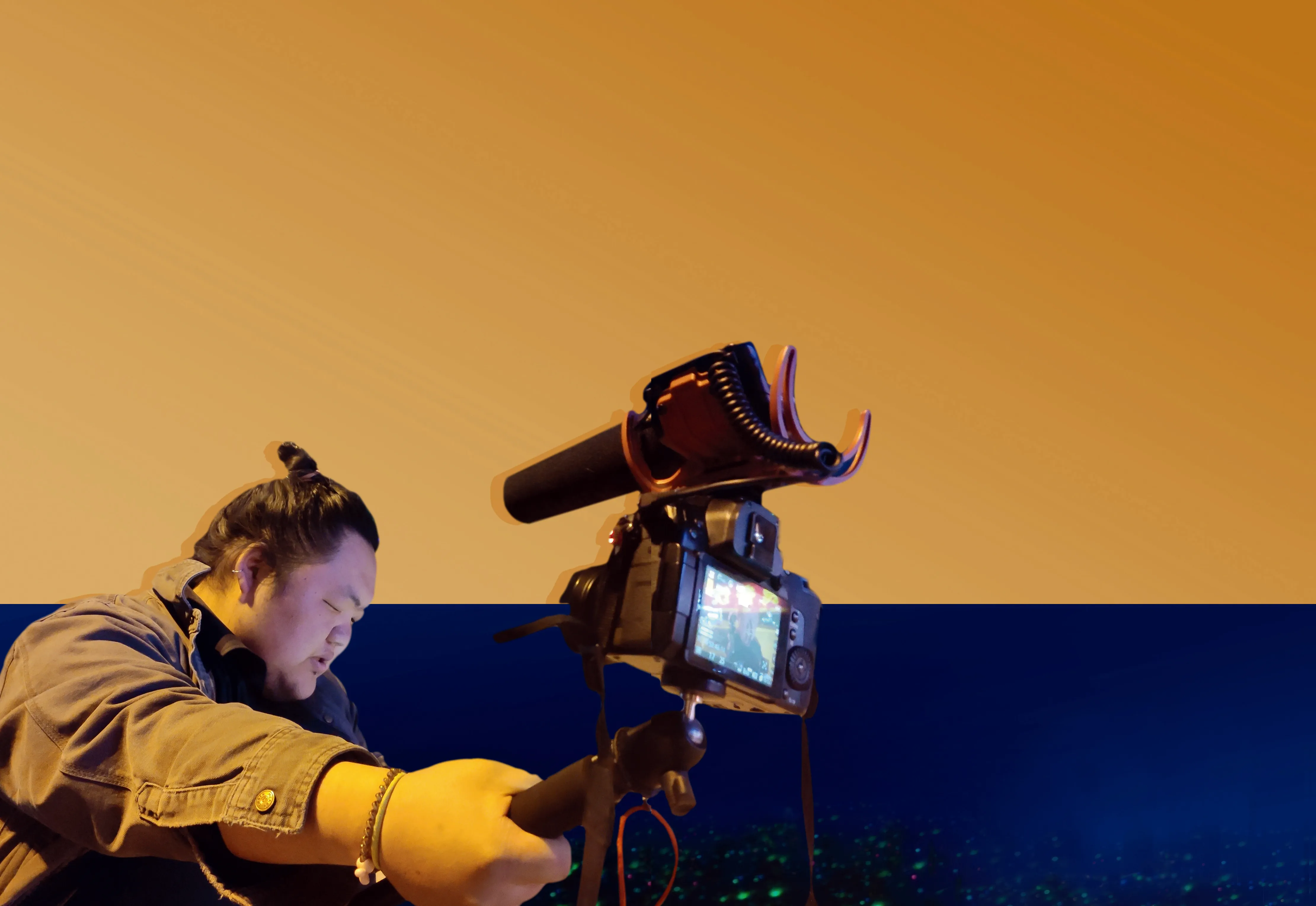
Careless practices and low media literacy have put both participants and filmmakers at risk when making documentaries
紀錄片倫理困境:拍攝者與拍攝對象的權利邊界在哪里?
“R emember not to be scared, film it first, edit it first, and screen it first,”said William Kwok, co-director of coming-of-age documentaryTo My Nineteen-Year-Old Self, during his acceptance speech for best film at this year’s Hong Kong Film Awards on April 16.
Audiences were livid.Kwok and veteran director Mabel Cheung’s film, which followed the lives of six teenage students at Ying Wa Girls’School for ten years, was already in hot water,having been removed from cinemas in early February for alleged violation of its subjects’privacy.In an op-ed in Hong Kong news outlet Ming Pao Weekly, Ah Ling, one of the film’s participants, argued that the film was initially meant to be an internal project with limited screening outside the school.
Later, when Ah Ling objected to the filmmakers’ decision to screen to the general public, they allegedly dismissed her concerns and threatened legal action.“My emotions began to shift from anger to fear, then to despair,” she wrote.Despite the controversy, the title went on to also win Best Picture honors at the Hong Kong Film Directors’ Guild Awards.
In China, filmmakers have been reflecting on how to make documentaries more ethically—or ethically at all.Zhang Laodong, film critic and producer who manages and writes for a popular blog called Aotu Doc, considers Kwok and Cheung’s actions “arrogant,” he writes on the blog.“When we enter someone’s private life,that should have been after knocking the door,and based on mutual respect.”
Director Zheng Yifei, whose debut documentaryTrashy Boywon the Audience’s Choice Award at last year’s FIRST International Film Festival in Xining, Qinghai province, agrees.“As a documentary filmmaker,you must find a way to earn the trust of your subjects,” he tells TWOC.He believes the risk of having to discontinue a project because “a lot of the footage may not be used or that the film cannot be made available to the public” is inherent to the trade.But with a lack of focus on ethical issues in filmmakers’ education,compounded by the public’s lack of media literacy, many practitioners find the matter challenging to navigate.
“China has undergone rapid urbanization in the past 20 to 30 years and the stories of marginalized people were a key part of the macro narrative...but these people are not really familiar with the camera.”
Until the late 1980s, all documentaries in China were state-produced in the style of news journalism, striving to objectively display reality.By contrast, ever since the “new documentary”movement gained momentum in the early 1990s,emergent independent documentaries sought to tell stories that cover a broader range of topics.
The vast majority of Chinese indie documentaries from the 1990s to 2010s zoomed in on members of vulnerable or marginalized communities.Chen Weixi—who co-directed76 Days(2020), an award-winning documentary shot inside Wuhan hospitals during the early days of the Covid-19 pandemic, andHappiness Is£4 Million(2021), an Academy Award-shortlisted short documentary about an infamous real estate speculator—believes the reason is both an artistic and a practical one.
“On one hand, China has undergone rapid urbanization in the past 20 to 30 years and the stories of marginalized people were a key part of the macro narrative,” he tells TWOC.“On the other hand, these people are not really familiar with the camera and they are more likely to open up while being filmed, meaning that the job is easier for the documentary filmmakers.”
At the start of the 21st century, the dissemination of digital video (DV) technology in China made filmmaking more accessible and less costly than ever, but also made it easier to intrude on the lives of documentary subjects.
In March 2009, a screening of director Xu Tong’s documentary at the YunFest Documentary Film Festival in Kunming, Yunnan province, was greeted with awards—and protests.The film in question,Wheat Harvest, shot with a handheld DV recorder, presents the double life of 20-year-old Niu Hongmiao, who engages in sex work in Beijing in between periods of helping her parents with the harvest in their rural hometown.
Volunteers at a feminist NGO in Kunming demanded that Xu stop circulation and exhibition of the film, as Xu hadn’t sought informed consent from his participants.The film even includes scenes where participants ask him to stop filming or delete the footage afterward.Moreover, the filmmaker hadn’t clearly revealed his intentions to the subjects.It was only thanks to the internet that Niu later discovered that her story was touring the international festival circuit, and asked Xu to cease screenings.Nevertheless, the film went on to screen at festivals in Hong Kong and Taiwan, each time followed by protests and criticism online.
Nevertheless, Xu’s and some other documentarians’ works did bring about open discussion of morality among scholars and critics.In October 2011, Xu’s film became the focus of a seminal forum on documentary ethics that was held at the now-shuttered China Independent Film Festival in Nanjing, Jiangsu province.Participating scholars focused on the position of filmmakers in relation to their subjects of lower socioeconomic status and debated whether the latter can “meaningfully consent to the agendas of those who are more powerful,” referring to the fact that these subjects have no real power to enforce the“contract” if the filmmakers choose to breach it.Several filmmakers disagreed.They signed a manifesto, where they sternly warned against a “totalitarianism” of theory and argued that“documentary cinema is an art form possessed of an innate logic that can only be appreciated outside the realm of rational reasoning,”in protest to scholars monopolizing the discourse around documentary ethics.
In the field, a more participatory mode of filmmaking has been gradually taking shape.Even as early as in 2005, Wu Wenguang, whoseBumming in Beijing(1990) is widely considered China’s first independent documentary,started the Village Video Project.Rather than holding the camera himself, Wu put it in the hands of ten villagers from nine provinces around China.Over the next four years, he helped them make documentaries about their own hometown.Other filmmakers have stepped in front of the camera and included themselves in the story, or included footage filmed by the subjects as a way of giving them more agency.
These practices are carried on inTrashy Boy, in which Zheng follows Big Sponge, a struggling wannabe rapper hailing from the filmmaker’s own native Gansu province in northwestern China.The film includes smartphone footage of Big Sponge freestyling in a public square, recorded by the rapper himself.
Zheng believes he and Big Sponge are in it for mutual benefits.“I wanted to make a documentary and he also wanted someone to record his life,” he says.Big Sponge has been active in promoting the film, attending postscreening discussions and giving interviews.In a Southern People Weekly article, he expressed gratitude for Zheng: “At that time [in my life],I didn’t know what to do.I was very conflicted and there was no one to guide me.But now I’m not that conflicted anymore.”
This was also the case for Chen Weixi.With76 Days, which includes many raw, unflinching moments of sickness and separation, many wondered how Chen bypassed the strict pandemic restrictions to film it.“I just took a train from my home in Nanjing to Wuhan,went to a few hospitals and directly asked them if they’re willing to appear on camera.Some[hospitals] refused, but I luckily found one that allowed me to film,” Chen recalls.“Actually, the staff and the patients wanted someone to help them record too.”
However, Chen says he lost contact with all of the patients after they were discharged from the hospital.“On one hand, they’re unwilling to confront that experience and on the other, they don’t want to recall the content that I filmed,”he speculates.
Another evolving aspect of the filmmakerparticipant relationship is the awareness of consent—“Almost everyone,” Zheng says,referring to both young and veteran filmmakers,“secures consent forms now.”
But some filmmakers believe this presents unique difficulties in China.Between 2015 and 2019, Clarissa Zhang, a Shanghai-based filmmaker, produced five seasons of a China-set National Geographic travel documentaryRouteAwakening.Even though the film didn’t deal with any sensitive subjects, she recalls a man who was fine with being interviewed on camera, but “his son was quite concerned that [signing the release form] might bring trouble to the man’s job.”
Zhang believes that consent forms are still an unfamiliar concept to most in China.“It’s also [written] in a language that is not very user-friendly.So, most of the time, [the participants] ask a lot of questions and get very concerned,” she adds.
Jocelyn Ford, who spent some 20 years in Beijing working in journalism and documentarymaking, and who now teaches nonfiction storytelling at the United International College(UIC) in Zhuhai, Guangdong province, says her students balk at the idea of getting written consent before filming.“The people [whom my Chinese students] interact with may feel more threatened by it, rather than protected by it,”she tells TWOC.“In the US, people can and do sue you.But in China, that’s not the way it works.Nobody’s going to win against [state broadcaster] CCTV.” She believes the forms are “really to protect the filmmaker” more than the subject.
Even students of documentary filmmaking have “very low awareness” on the issue, laments Dai Fei, Ford’s colleague at UIC who previously worked for CCTV’s documentary channel for eight years.She notes that in her research on 10 documentary textbooks used in major Chinese universities, most of them don’t have a chapter on ethics, a major difference with Western textbooks.
Chen Weixi says he presents the consent form to his participants only after they’ve watched the completed film.“If there’s a problem during production, you should communicate with them and explain why you hope they can continue,” he says.“If there’s no way to resolve the issue, then you cut your losses and change your participant as quickly as possible.”However, although he got the subjects’permission before filming76 Days, he wasn’t able to show the completed film to them since they lost contact.
Consent forms are “really to protect the filmmaker”more than the subject, argues Jocelyn Ford.
ForTrashy Boy’s Zheng Yifei, respect is key.“If the participant really doesn’t want to be filmed[at certain points], the right thing to do is not to film,” he says, noting one exception: “That is,unless you’re dealing with a subject who owes accountability to the public.If you’re filming something related to the government and social issues and the participant doesn’t allow you to do so, then you must find various ways to do it.”
At this stage, many in the field find the issue of documentary ethics to be an unavoidable yet unsolvable problem.“Because as long as you start filming, there exists a relationship of watching and being watched,” Zheng says.“What we filmmakers can do is to try to handle the issue as humanely as possible for both parties.”
猜你喜歡
紅領巾·萌芽(2022年10期)2022-11-24 06:03:38
小讀者(2020年4期)2020-06-16 03:33:50
文苑(2020年12期)2020-04-13 00:54:08
傳記文學(2019年3期)2019-03-16 05:14:34
電影(2018年12期)2018-12-23 02:18:40
傳記文學(2018年11期)2018-11-13 08:48:26
環境保護與循環經濟(2017年8期)2017-03-22 01:28:58
環境科技(2016年3期)2016-11-08 12:14:20
社會科學(2016年6期)2016-06-15 20:29:08
人生十六七(2015年2期)2015-02-28 13:08:04
