
Development Thoughts on Promoting China’s Tea Export
2023-05-30 02:28:39ByLiuLan,ShiYue,LiuShuhui
China’s foreign Trade 2023年1期
By Liu Lan, Shi Yue, Liu Shuhui
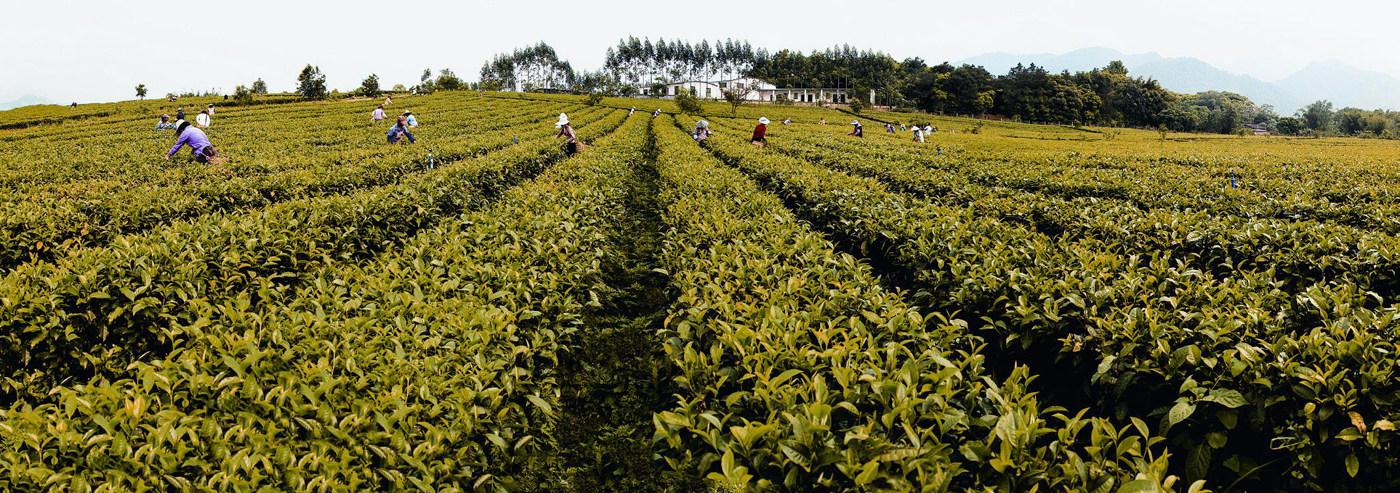
Ranking the first in tea production and sales globally, China occupies a decisive position in the global tea market. However, Chinas tea export still faces problems such as low average export price, few international brands, single export market, and weak ability of market entities to deal with technical barriers to trade. Therefore, the analysis and summary of promotion measures for tea export taken by India and Japan is of great significance to the formulation of Chinas tea export promotion policies, the realization of increasing agricultural efficiency and farmers incomes, and the promotion of high-quality development of agricultural trade.
I. The Current Situation and Characteristics of Chinas Tea Trade
According to statistics from the International Tea Committee, the global tea production was 6.26 million tons in 2020, and China, as the worlds largest tea producer, produced 2.98 million tons of tea, accounting for 47.6% of global production. The second and third biggest tea producers in the world were India and Kenya, with outputs of 20.1% and 9.1% of global production respectively. In 2021, Chinas tea production reached 3.029 million tons, breaking the 3-millionton mark for the first time.
China is in the forefront of the world in both tea export scale and export value. According to the customs data, the overall situation of Chinas tea trade remained stable in 2021, and the import and export of tea saw synchronous growth, reaching a historical new high. In 2021, Chinas tea export volume totaled 369,000 tons, up by 5.89% year on year. Chinas total export value was USD 2.29 billion, up by 12.82% year on year; the average export price was USD 6.22/kg, up by USD 0.38/kg year on year, or 6.55%. Since 2013, Chinas tea export value and average export price have shown a growth trend, realizing a compound annual growth rate of 7.95% and 6.28% respectively. On the whole, Chinas tea trade is showing a promising future, but the export is facing bottlenecks.
First, the export price has been at a low level for a long time, and the export price is lower than the selling price at home. Lets take green tea, a tea which dominates in export, as an example. According to data from the Analysis Report on Chinas Tea Import and Export Trade in 2021, the export price of green tea in 2017 was USD 3.91/kg, and in 2021 it was USD 4.78/kg. Although the export price has risen, the increase of the export price of tea is very limited when taking into consideration the increase in labor cost, the rising price of means of production and the change in the exchange rate. In fact, the average price of tea exports is even lower than the selling price in Chinas domestic market. According to data from the China Tea Marketing Association, the average price of Chinese tea sold at home was 135.5/ kg in 2021, which was USD 21 based on the annual average exchange rate in 2021, much higher than the average export price of USD 6.22/kg.
Second, most of Chinas export target markets are developing economies, while it only takes a small share in exports to developed countries markets. In 2021, the top ten countries and regions ranking high in importing Chinese tea were Hong Kong, Malaysia, Morocco, Vietnam, Ghana, Mauritania, Senegal, the United States, Uzbekistan and Togo. The total value of tea imported by those 10 countries and regions was USD 1.69 billion, accounting for 73.5% of Chinas total tea export value. Among the top ten economies that imported tea from China in 2021, apart from Senegal, the other nine are the same as those in 2010 (Germany was among the top ten importers in 2010). Over the past decade, Chinas tea export market has not changed much, but the market share it took in developed countries was relatively small and has declined significantly. In 2010, the proportion of tea imported by the United States from China was 8.8% and that by Japan was 6.2%, which respectively dropped to 3.8% and 2.4% in 2021. The decline in the proportion of tea imported from China by developed countries means that the growth rate of Chinas tea export scale and amount has dropped in real terms, which is also an important reason for the low average price of tea exported from China.
Third, the ability to deal with technical barriers to trade is weak, and product quality needs to be further improved. In recent years, the most serious challenge faced by Chinas tea export was the technical barriers to trade introduced by some countries, among which the green barriers to trade had the greatest impact. The European Union (EU) is the largest tea consumer market in the world, but the import scale of Chinese tea has been low for a long time. The main reason for this is the green barriers to trade imposed by the EU. At present, China has no specialized agency to help tea export enterprises cope with trade barriers. The fact that the tea is uneven in quality and the level of pesticide residues exceeds that required by standards now and again leads to the weak ability of China to cope with trade barriers for tea exports.
Fourth, the building of tea brands is lagging behind, and there are few trademarks or products with high recognition in the international market. Most of Chinas tea enterprises produce and market all by themselves, so they are small in size and they lack awareness and investment in brand building. Tea brands and trademarks are used in chaos, and the brands are weakly recognizable in the world market. Although raw materials and production technology of Chinese teas are one of the top in the world, due to brand construction lagging behind, teas exported are mainly low-end teas.
II. Indias Policies and Measures to Promote Tea Export
Learning from the successful experience of other countries will help to break through the bottleneck of Chinas tea export. According to statistics from the International Tea Committee, in 2021, China and India ranked the top two countries in terms of tea export volume, which were 380,000 tons and 160,000 tons respectively. Although Indias export scale of tea is not as large as that of China, India is stronger in overall competitiveness, especially shown by the emergence of such internationally influential brands as Assam and Darjeeling. India has provided valuable experience in tea trade management and brand building that is worth learning from.
First, build international brands by improving the export competitiveness of tea through auction. India has formulated relatively perfect rules for tea trading by auction and relevant systems. The volume of tea sold by auction accounts for more than half of Indias tea production, 80% of which is for export. Under the guidance and support of the government, the auction mechanism is conducive to controlling the pricing power in the international tea market, as it can not only lift the tea export price, but it can also become a reference system for tea prices under other trading methods. Further, it is conducive to promoting the standardization of the tea market. Lets take black tea as an example. India uses the national standard consistent with ISO3720 to grade teas and ban teas that do not meet this standard from entering the auction market, which is conducive to the successful cultivation of famous international tea brands. The auction mode has important functions such as finding price, assuring quality, standardizing products, etc., enabling India to cultivate world famous tea brands such as Assam and Darjeeling.
Second, set up a special management agency to formulate and implement relevant industrial policies. In order to promote the development of the tea industry, India has established a tea management agency, the Indian Tea Association, to formulate effective policies and measures to improve the export quality and scale of Indias tea. Its functions are reflected in two aspects: regulating the tea industry to a certain extent and unifying the logo of products exported. The products of Indian tea enterprises must be approved by the government to obtain the logo of “India Tea”, an important symbol of highquality tea. The association provides various forms of subsidies and financial supports to the tea industry to help enterprises expand production scale and increase output. For example, in view of the difficulty of weak financial strength of small-scale tea plantations, the association formulated a “Plan for Subsidizing Small Tea Planters”to give planting bonuses to small tea plantations.
Third, attach importance to scientific research to improve quality and meet the needs of highend consumer markets. India has set up many biological and chemical organizations for the research on tea with government allocations, providing important support for improving tea varieties and production technology. Lets take the tea research institute as an example. The institute focuses on research on the consumption trend of target market countries and regions, introduction of new technologies, improvement of existing production technologies, research and development of new varieties, etc., to constantly meet the needs of consumers, especially those of developed economies.
III. Japans Policies and Measures to Promote Tea Export
In 2021, Japan exported 7,816 tons of tea, far less than Chinas export volume of 380,000 tons, and as a result Japan is not considered a major country in tea export. However, the average price of tea exported by Japan in 2021 was USD 26/kg, which is four times of that of China. So, judging from the average price of tea exports, Japan can be called a powerful country in tea export. The Japanese government attaches importance to the investment in the scientific research on tea, the improvement of product quality, and the export of tea culture, which provides a reference for China to raise export prices, deal with trade barriers, and enhance the international influence of its products.
First, attach importance to technology upgrading, improve productivity and increase production efficiency. According to the trade statistics of Japans Ministry of Finance, the United States is Japans largest green tea importer. In 2021, exports to the United States amounted to 10.3 billion Japanese yen (about USD 78 million), up by 22% year on year. At the same time, exports to Germany and other European countries increased by 17% year on year, reaching 6,178 tons, a new record. However, Japan is currently facing problems related to the aging of tea growers and shrinking planting areas. In order to improve production efficiency and tea quality and meet growing market demand of European and American countries, the Japanese government has given plenty of subsidies for the technical transformation of old tea gardens, the cultivation of new tea gardens, and the application of new technologies and equipment. For example, a 50% subsidy is provided for agricultural machinery and equipment to improve the mechanization of tea planting.
Second, products are produced by referencing to the standards of target markets to deal with technical barriers to trade. In recent years, Japan has actively promoted the cultivation of organic green tea to cope with the green barriers to trade in Europe and other regions or countries. In 2019, the volume of green tea rated by JAS (the Japanese Agricultural Standard) rose to 3,644 tons, twice that of 2014. The Ministry of Agriculture, Forestry and Fisheries of Japan not only provides subsidies to growers of organic tea, but also provides subsidies to production materials such as isolation nets used to isolate pesticides from nearby fields. It aims at the access standards of target markets from the production end and strives to overcome the impact of the green barriers to trade.
Third, promote tea culture globally to establish a healthy image of products and promote high-valueadded products. In the process of promoting tea exports, Japan pays attention to the communication and promotion of tea culture and product attributes. Lets take Uji tea as an example. The Uji Municipal Government cooperates with local tea enterprises to improve the international popularity of Uji tea by holding various international tea culture exchange activities. They publicize the characteristics of Japanese teas to local consumers through TV, Internet and other media in the target markets and establish its safe and healthy image by emphasizing its functional attributes such as anti-allergy and inhibiting fat absorption. They developed cake, coffee, ice cream and other products that integrate the elements of matcha. The promotion of matcha flavor to the world not only enables more people to understand and love matcha, but also cultivated an enormous global market.
IV. Thoughts on Promoting Chinas Tea Export
Based on the relevant experience, combined with the actual situation, the specific thoughts for promoting Chinas tea export are presented as follows.
First, set up a national tea export promotion alliance and other professional organizations to guide and promote the development of tea trade. The Indian government has always taken supporting the tea industry and promoting exports as an important task, which has effectively promoted the development of the tea industry and improved its competitiveness in the international market. At present, China has had national organizations in tea industry and circulation, but there is still no tea export promotion agency with wide coverage and strong expertise. To this end, China can follow Indias example to set up a special tea export promotion alliance for tea trade policy research, trade situation analysis, export market development and other work in order to promote the healthy and orderly development of tea trade.
Second, actively respond to technical barriers to trade by improving product quality and continuing to increase participation in the formulation of international standards. From the experience of Japan, we find that improving the quality of tea and practicing the development principle of green, healthy and safe teas are the fundamental way to deal with the frequent revision of pesticide residue standards and the restriction of Chinas tea exports with green barriers to trade by European and American consumer markets. China shall build a product quality and safety traceability system for the whole process, from tea planting to production, in order to create green ecological low-carbon tea gardens. In addition, China shall actively participate in the formulation of international standards on tea and actively collect information on changes in green barriers to trade from tea importing countries on order to actively take response measures.
Third, develop multi-functional products by strengthening scientific research and improve the added-value of products. In order to improve the competitiveness of Chinas tea products in the international market, investment must be increased in product research and development, especially with focus on the combination of the forwardlooking goals in the scientific research of tea and the goals of practicality in the markets. Learning from Japans experience in the promotion of matcha products in overseas markets, China shall study on the functional attributes of Chinas main export varieties and develop diversified products that better meet the needs of the target markets, such as food and beverage and diversified products, with increased investment in intensive processing.
Fourth, use international platforms to spread Chinese tea culture and promote tea brands to go global. Compared with Japanese tea, Chinese tea is richer in cultural connotation and historical origin. To make Chinese tea go global and establish a brand image in the international market, first of all, Chinese tea culture should be communicated to the outside world. China can actively promote Chinese tea culture and promote Chinese tea brands to the overseas markets by making good use of international platforms and projects such as China International Tea Expo, “International Tea Day”, and One Country - One Priority Product by Food and Agriculture Organization of the United Nations (FAO). Global tours of Chinese agricultural brands can also be organized to seek domestic and foreign exhibition and sales platforms for brand tea enterprises. Taking the opportunity of the addition of “Traditional tea processing techniques and associated social practices in China” to the UNESCOs Representative List of the Intangible Cultural Heritage of Humanity, China will promote the integration and understanding between tea cultures, and bring more people around the world to be big fans of Chinese tea.
(Authors from Agricultural Trade Promotion Center of the Ministry of Agriculture and Rural Affairs)

- China’s foreign Trade的其它文章
- The Smartphone Industry Expects Innovated Growth
- Industrial E-commerce Develops in Full Swing
- Excavators Sales Growth Indicates Recovery of Infrastructure Building
- The Commercialization of Artificial Intelligence Speeds Up
- China’s Game Industry Sees Business Opportunities Overseas
- China’s Consumer Market Sees Robust Growth