Abstracts of Major Papers
2023-02-09 02:51:05
出土文獻(xiàn) 2023年4期
Further Discussion on the Relationship Between the Text and the Endnote ofYiliand Its Completion Time Based on Tsinghua ManuscriptDafushiLi
Ma Nan
Abstract:Traditional Confucian studies believe that the endnote 記文 ofYili儀禮 records the situations not discussed in the text 經(jīng)文 and serves as a supplement so that its completion must be later than the text. However, the content characteristics cited by those studies cannot be used as absolute standards for judging the distinction between the text and the endnote and their time sequence, which can be concluded by using the method of philology to study the Tsinghua manuscriptDafushiLi大夫食禮, the Wuwei Han manuscriptYiliand the current version ofYili. The opposite conclusion can be drawn thatYiliis completed by the Confucian scholars in the Warring States period through arranging, sorting, integrating, and merging similar ritual texts 禮類文本, and the parts which are inconvenient to integrate have to be included as sequential attachments, thus the text and the endnote are the simultaneous products of this compilation process. According to the above conclusion,Yili,Liji禮記 andDadaiLiji大戴禮記 should be studied as their formation process and analyzed from the structual level of chapters 章 to determine the relative chronological orders of related chapters and articles 篇. In addition, as the final products of integrating ritual texts, the seventeen articles ofYiliindeed present the characteristics of neat sentences and mutual reference, which are neater than the Tsinghua manuscriptDafushiLi.
Key words:Yili,Liji,Dafushili
Textual Restoration and Functional Analysis of Two Kinds of Music Books in the Tsinghua Manuscripts
Cheng Hao
Abstract:The two kinds of music books written during the Warring States period in Tsinghua manuscripts reflect the widespread application of the traditional five tone system in the pre-Qin period. TheWuyintu五音圖 records five sets of sound names based on the five tones in the form of pictures, which should be a usage instruction on how to pronounce each string of a five stringed instrument. The 17 double tone names in the first part ofYuefeng樂(lè)風(fēng) are closely related to the expression of positional relationships in the second part, and share a common pattern to follow. Through comparison, it can be seen thatCixia次下,Daxia大下,Cishang次上, andDashang大上 respectively represent the string positions ofGong宮,Shang商,Zhi徵, andYu羽 on the five stringed instrument. The first part ofYuefengrecords the pitch that needs to be reached when the chime is tuned, while the second part explains how to operate a five stringed instrument to obtain this tone. TheWuyintuandYuefengare both explanatory documents for five stringed instruments similar to theJunzhong均鐘 unearthed from the tomb of Marquis Yi of Zeng.
Key words:Tsinghua manuscripts, music books, five tone,Junzhong
The Preliminary Study on thePentatonicDiagramof Tsinghua Manuscripts
Hu Qiwei
Abstract:ThePentatonicDiagramof Tsinghua manuscripts is the visual manifestation of the “Trisection Addition and Loss Method” inGuanzi管子and other documents. The pentachord of different octave groups is modified by words such as, 上,大, 少, 左, 右 and 反, which is also a popular musicology practice since the Spring and Autumn Period. The synonyms presented by the pentatonic diagram are the lower octave with the affixes “—上—大—右” and the higher octave with the “左—少—反,” and the two groups of affixes respectively represent the same octave. Therefore, including the higher octave of “巽反” and the omitted quintuple, the vocal range presented by the pentatonic diagram is actually four octaves.
Key words:Tsinghua manuscripts, the pentatonic diagram, the vocal range, synonyms
The Relevant Researches inYuefengof Tsinghua Manuscripts
Li Qingwei
Abstract:Yuefeng樂(lè)風(fēng)of the Tsinghua manuscripts recorded a score of Chu during the Warring States period. In this document, the charactersDa大,Xi厀 andShao少 respectively represent the ranges of each notes.Daindicates low octave whileShaoindicates high octave.Xihas been interpreted as “second,” which represents the range betweenDaandShao. The charactersJieandJueare the only two verbs in the text. According to the analysis,Jiecould be interpreted as “coverage” which indicates a method of playing two notes simultaneously that normally been called as chord.Juecould be interpreted as “strike” since researches reflect that Qin in the pre-Qin period were more likely to be the hammered string instruments. ThusJueindicates a method of striking the strings to product sounds.
Key words:Chu manuscripts,Yuefeng, ancient music score,guqin古琴, music of pre-Qin period
Samples of New Glyphs and Exegesis in Vol.ⅩⅢ of Tsinghua Manuscripts
Shi Xiaoli
Abstract:Vol.Ⅹ Ⅲ of the bamboo slips of Warring States collected by Tsinghua university is constructed by 5 manuscripts:DafushiLi大夫食禮,DafushiLiji大夫食禮記,Wuyintu五音圖,Yuefung樂(lè)風(fēng) andWeitianyongshen畏天用身. We found some new glyph forms and exegesis in these manuscripts, which can offer some new cognition and thus weighs with the abundance of Chinese paleography glyphs, new solutions to remaining problems in previous documents and promotion on the study of relationship between Chinese characters and words.
Key words:Tsinghua manuscripts, relationship between Chinese characters and words,yi揖,rong茸,song送
Retrospective and Prospective Records in theZhiRi(Event Calendar) Manuscripts Unearthed from Shuihudi
Huang Haobo
Abstract:Among the records in theZhiRi質(zhì)日 (Event Calendars) of the Shuihudi Han manuscripts, there were events that the scribe did not take part in person but were added retrospectively, as well as events that had not yet happened but were recorded in advance. The former type of records could be called “retrospective records,” whereas the latter “prospective records.” Investigating their relevant contents, it is shown that records in these “event calendars” were not simply produced gradually on a daily basis. Rather, sometimes there were temporal leaps caused by “prospective records” and returns to earlier moments because of “retrospective records;” some of the events documented by “prospective records” did not even come to pass.
傳統(tǒng)知識(shí)服務(wù)商在集成海量二次文摘與引文數(shù)據(jù)庫(kù),并擁有用戶行為數(shù)據(jù)的基礎(chǔ)上,對(duì)期刊、論文、學(xué)者、機(jī)構(gòu)進(jìn)行評(píng)價(jià),以對(duì)期刊評(píng)價(jià)以便進(jìn)行期刊評(píng)級(jí)(如影響因子、CS);對(duì)學(xué)者的科研能力評(píng)估,對(duì)機(jī)構(gòu)的科研能力與創(chuàng)新力等進(jìn)行評(píng)估,以幫助機(jī)構(gòu)尋找合作者、引進(jìn)人才、發(fā)現(xiàn)投資項(xiàng)目等。
Key words:“Event Calendars” of the Shuihudi Han slips, retrospective records, prospective records
Restoring the FragmentedZhiRi(Event Calendar) Manuscripts Unearthed from Shuihudi
Lei Hailong
Abstract:TheZhiRi質(zhì)日 (Event Calendars) bamboo manuscripts from Shuihudi were arranged in a manner consistent with theWesternZhouDynasty(Gonghe)totheWesternHanDynastyCalendar, and the distribution of the Heavenly Stems and Earthly Branches (a system of cyclical counting) follows a regular pattern. The spacing between columns on the bamboo slips is an important factor in reassembling and sequencing the slips of the manuscripts. By combining calendrical information, the distribution pattern of the stems and branches, column spacing, and the style of notation and handwriting, it is possible to successfully reassemble and sequence the fragments. This allows for an initial restoration of the fragmentedZhiRicalendars.
Key words:“Event Calendars” of the Shuihudi Han slips, rejoining, sequencing
New Evidence for “Shuo Zu” inGuantangJilin
Zhang Guangyu
Abstract:This article, through the newly seen vessel “Wuqizu” 無(wú)俎 which was found using the characterzu俎 to refer to itself, justifies the credibility ofzuas the name of the extant ritual vessel that often comes with a ladle and a cauldron. In theLijing禮經(jīng) (BookofEtiquetteandCeremonies),zuwas a vessel for holding meat, and had nothing to do with the “chopping board” used for cutting meat in later times. Over the past decade or so,was commonly regarded by scholars assi肆 and interpreted as “cutting the animal body” 解牲體, this point of view is re-examined in this article. Through examining the original meaning of the ceremonial setup “arranging the ladle and thezu-vessel along with the cauldron” 匕俎從設(shè) in theLijing, together with further evidence from archaeological excavations, it reveals thatding鼎 (cauldron) andbi匕 (ladle) always appear together, whiledinganddao刀 (knife) never do. Moreover,daodoes not appear in the received text of theYili儀禮 even when it refers to the ritual procedure. A careful examination of the ancient graphshows that it carries thebicomponent rather thandao; the ancient graphs for the two are similar in shape, which accounts for the misreading. It is thus inappropriate to treatassi肆. This new evidence strengthens the argument presented by Wang Guowei in his article “Shuo zu” 說(shuō)俎 ofGuantangJilin觀堂集林.
Key words:Wuqizu,Yili, arranging the ladle and thezu-vessel along with the cauldron,si, cutting the animal body
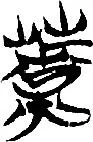
Tan Shengli
Key words:cuan,laishaped component,chui垂,chui炊
The Study on the Calendar of Early Han Dynasty Based on the Newly Published Slips of Hujia Caochang
Yue Guanlin &Zhang Shuyi
Key words:Hujia Caochang Western Han Dynasty bamboo slips, the early Han calendar, Yin calendar, Zhuanxu calender, Quartile calendar, intercalation
A Supplementary Study of Native Place Record in the Han Dynasty
Li Boyang
Abstract:Since the Warring States period, during the development of the system ofJun郡 and the evolution of regional concept, the records of native place in the Han Dynasty experienced a process of standardization, which was changed from the name ofXian縣 to the form of “×Jun×(Xian)”. Combining with bamboo slips, stone carvings and other materials, the details can be further discussed. In the Western Han Dynasty, there were many records of “×Jun×(Xian)” in bamboo slips. There was “Jun” in the records, but no “Xian.” This was a transitional form in the evolution of native place records. The words “Jun” and “Xian” in the records of native place were either explicit or implicit, behind which was the change of administrative system and concept. With the homogenization ofJunandXian, the forms of native place records had gradually been shaped in both handed down and unearthed documents.
Key words:native place record,Junsystem,Jun-Xiansystem, regional concept
A Study on Official Business of County-Level Officials in Bamboo and Wooden Slips Unearthed from Changsha
Xu Chang
Abstract:The operation of the Qin and Han dynasties was not only through document administration; in addition, a large number of officials were dispatched to handle frontline affairs, usually recorded in literature as corvée. Due to the frequent discussion of corvée by civilians rather than officials, this article discusses the official business of county-level officials during the Eastern Han and Three Kingdoms periods, using the record ofJunjiao君教documents in Changsha bamboo and wooden slips. Through research, it has been found that compared to county magistrate令,cheng丞andwei尉were more often sent to perform official business. If the county magistrate was out, the chief clerk should carry the main administrative responsibility.
Key words:county-level officials, the Eastern Han and Three Kingdoms Periods, official business
The Collation Based on Recently Discovered Stone Engravings of “Ancient Script” (Guwen) of Tang Dynasty and an Analysis of the Background of the Reappearance of “Ancient Script”
Cheng Wandong
Abstract:This paper includes two parts. The first part arranges and enumerates 22 recently discovered Tang Dynasty stone engravings in ancient script, which supplement the materials for the study of “transcribed ancient script” 傳抄古文. The second part investigates the background behind the reappearance of stone engravings with ancient script and argues that it has a relationship with the flourishing of Taoism and the “ancient prose movement” 古文運(yùn)動(dòng).
Key words:stone engravings, epitaphs, ancient script, Taoism
Review onPhilosophyonBamboo:TextandtheProductionofMeaninginEarlyChinaby Dirk Meyer, Translated by Liu Qian
Xiao Qing
Abstract:The Chinese translation of Dirk Meyer’s bookPhilosophyonBamboo:TextandtheProductionofMeaninginEarlyChinahas been published by Chung Hwa Book Company in 2021. By discussing the meaning construction strategies of the texts in Guodian Tomb One, this book reveals how different communities use text to achieve their philosophical purposes, thus forming a new interpretation of the relationship between early Chinese thought, material carrier and meaning construction. It is a work worthy of careful interpretation by scholars at home and abroad.
Key words:international Sinology, the GuodianLaozi, Dirk Meyer, text production, early china
Didactic Narrative and the Art of Self-Strengthening: Reading the Bamboo ManuscriptYueGongQiShi
Yuri Pines
Abstract:Yuegongqishi越公其事 is a recently published manuscript from the Tsinghua University collection. The manuscript provides a new version of the well-known story of King Goujian of Yue, who turned defeat into victory and overcame Yue’s formidable rival, the state of Wu. My exploration of this text focuses on its two most notable aspects. First, the story about the policy of self-strengthening allegedly adopted by Goujian offers new insights into the evolution of political thought in the Warring States period. Second, the text allows deeper insight into the genre of didactic historical narratives that became prominent at a certain point of time between the Springs-and-Autumns and the Warring States periods.
Key words:Tsinghua manuscripts, didacticism, historiography, state building, Wu, Yue