A CANNY TREAT
2022-12-30 03:42:32TEXTBYSlYlCHU褚司怡ILLUSTRATlONSBYWANGSlQlPHOTOGRAPHSFROMVCG
漢語世界 2022年6期
TEXT BY SlYl CHU (褚司怡)ILLUSTRATlONS BY WANG SlQl PHOTOGRAPHS FROM VCG
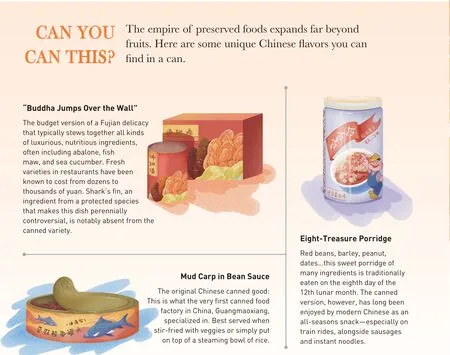
Wang Kai’s grandma pronounced him sick,and the bittersweet wait began. He sat at home twiddling his thumbs, as grandma marched downstairs to the corner shop,eventually returning with a potbellied glass jar glowing with golden slices of peaches that swam in syrup inside. Wang would wait a few minutes longer, while she set the jar on the balcony for a proper chilling from Harbin’s icy winter cold, before he could finally gulp down this sweet,refreshing delight.
Wang, now 33 and living in the southern city of Xiamen, Fujian province, says that whenever he got sick as a child, the adults in his Northeastern family treated him with canned yellow peaches. “After eating the peach, I would feel better after just a few moments,” he recalls on the phone with TWOC.
Many who grew up in Dongbei,China’s Northeast, during the 1980s and ’90s share Wang’s nostalgia for canned fruits. Some netizens even swear by the foodstuff to alleviate anything from nosebleeds to menstrual cramps to the side effects of Covid-19 vaccines, crowning the syrupy treat “Dongbei penicillin.”
Some say this uncanny property is pure placebo effect, while others say the tart and sweet taste helps improve the appetite, leading to the impression that one has recovered from illness.Wang’s grandma used to offer him a different explanation: It’s because the character 桃 (táo, peaches) sounds the same as 逃 (to escape), so that “the sickness would run away.”
From imported luxury to detested health hazard to essential Covid lockdown supply, canned fruits have had a complicated relationship with Chinese consumers水果罐頭沉浮錄:80、90后童年記憶里的奢侈品能否再度崛起?
In 1809, 180 years before Wang was born, Frenchman Nicolas Appert won 12,000 francs from the government for his invention of the process that slows down food decay by heating it inside a sealed glass jar.
The first Chinese canned foods factory was established in Guangzhou,Guangdong province, in 1893, but the 1950s saw around 50 factories mushroom in major cities across China, mostly manufacturing for military needs or export to other socialist countries, according to Chinese newspaper Economic Daily.In 1995, during Wang’s childhood, the number of factories nationwide had risen to 1,775.
Throughout those decades, canned fruits remained a luxury for the sick or special occasions. News reports and blog posts state that in the ’70s, a jar of canned fruit cost around the price of half a kilogram of pork. And in the’90s, “where I’m from…there weren’t many fresh fruits in winter,” Wang recalls. Canned peaches became a close substitute, earning it a perennial place on Chinese New Year dinner tables around Dongbei.
But in recent years, even as Chinese consumers become more willing to splurge on food, health concerns and more enticing options have pushed canned fruits off the pedestal.
“When I was sick, [the adults] gave me slices of fresh apples, but never canned peaches,” Xi Xi, who grew up in the late ’90s and early 2000s in the southern city of Shenzhen, with Dongbei lineage from her mother’s side, tells TWOC. “They thought it was too sweet, and therefore unhealthy.”
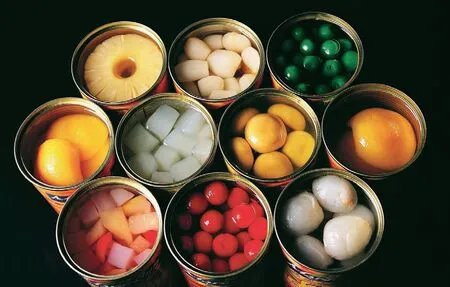
For Xi, a second generation Dongbei emigrant, canned fruits typically referred to those imported via Hong Kong: fruit cocktails of artificially pink maraschino cherries, pineapples in a seductively bright yellow, and white chewy fruit bits that she could not identify. All the vibrant colors from the tropics swirled together in the sugary liquid of Xi’s memory into one impression: “Fancy,” she says.
Unlike Dongbei, the warm,burgeoning southern port of Shenzhen in the ’90s saw no lack of fresh fruits in winter months. To Xi,decadent snacks that came in lush dark green tin cans decorated with foreign letters tasted better than the fresh alternatives. “Sweet things must be good; and what your parents didn’t want you to eat must be good…it felt more mysterious and noble,”she recalls.
Toward the end of her elementary school years, however, these forbidden fruits fell further from glory in the Xi household. “At some point, they all started saying, ‘Don’t eat canned foods. They’re made from rotten fruits,’” Xi recalls.
That was the mid- to late-2000s,when a plethora of food safety issues shook Chinese consumers’ confidence.In 2006, the carcinogenic chemical dye Sudan Red was found in eggs;in 2008, close to 300,000 infants were diagnosed with kidney diseases after melamine was detected in milk powders from major dairy brands;and in 2010, many restaurants were found to be using illegal “gutter oil,”potentially toxic oil recycled from food waste or literally taken from gutters.
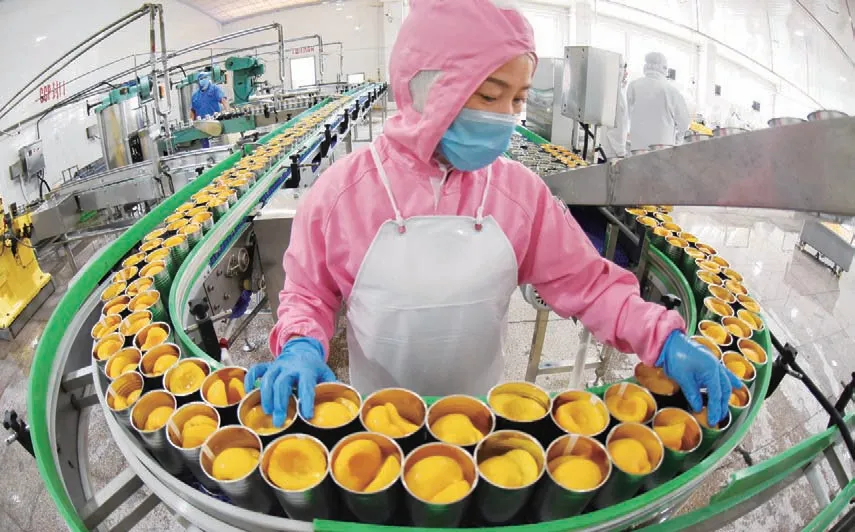
A factory in Lianyungang,Jiangsu province, is one of many in China producing canned peaches on an assembly line for export abroad
Meanwhile, starting in 2003, an article called the “World Health Organization’s List of 10 Junk Foods”went viral in China, even getting reposted by state media organizations such as China Daily. On the list were fried foods, carbonated drinks, and anything canned.
Although the WHO finally debunked the article in 2015, denying it ever issued such a list, the reputation of canned foods never fully recovered.Lin Nan, founder of Linjia Puzi,a Dalian-based brand for canned fruits, complained to Southern People Weekly this year, “We’ve been saying for 30 years that there are no preservatives in cans. But if you ask people on the street, 90 percent wouldn’t know that. But why don’t they treat jellies or hot sauces in the same way?”
At the same time, China’s logistics and shipping is seeing exponential growth: Whether it’s coconuts from the island of Hainan, passionfruit from Guangxi, or apricots from Xinjiang, fresh produce from any corner of the country can be delivered rapidly to urban consumers with just one click. Southern People Weekly cites industry reports to estimate that in 2019, China’s fresh fruit market was 45 times the size that of canned fruits.However, cans became relevant again this year as many around the country bulk bought supplies in fear of citywide pandemic lockdowns, such as the months-long ordeal Shanghai experienced in spring. Canned goods feature prominently on checklists of recommended lockdown supplies,precisely because of the property they were originally invented for—long shelf life.
Canned fruit companies are also attempting to recapture consumers’attention. On e-commerce platform Taobao, one can find canned fruits that boast chic, Instagrammable design and promising to use lowcalorie sweeteners in lieu of sugar.There are also those that fully embrace the nostalgia wave with retro graphics and an emphasis on “crystalized sugar.” Some brands are eager to break the myth that canned food is less healthy than fresh food, with one canned peach brand advertising that they “only pick the big peaches from the tree tops.”
Wang claims to have outgrown canned yellow peaches, which are not easily found in Xiamen’s shops. When a friend from southern China got sick once, Wang eagerly relayed the tale of being cured by canned peaches in Dongbei’s winter, “and they thought I was childish,” he laughs.
Now he only gets his fill of the treat when he visits home during the Lunar New Year. When it came to stocking up amid a wave of Covid outbreaks in Xiamen, he “bought cold and fever medicine instead.”
Xi agrees the treat has lost some of its cachet. “I miss how I felt when I ate canned fruits, but I don’t get that same feeling any more when I eat them now,” she says. She still fondly remembers the bright yellow of the pineapples, her favorite in the fruit cocktail, but doubts if anything could give her that sense of mysterious, noble satisfaction anymore. She’s observed that China’s restaurants and food companies have gotten creative with how they vie for picky consumers’attention, with novelties like edible flakes of gold on ice creams or tea flavored with exotic fruits. “They have to take their craft to an extreme level to really impress me.”
“But [canned fruits] in childhood gave me the bluntest, crudest, purest happiness,” Xi adds. “That’s something I could only appreciate back then.”