
Symmetrical peripheral gangrene triggered by Escherichia coli sepsis
2022-10-17 12:28:40ShenoyManjunathMalaBendigeriMukhtharAhmed
Journal of Acute Disease 2022年5期
Shenoy Manjunath Mala, Bendigeri Mukhthar Ahmed
1Department of Dermatology, Yenepoya Medical College, Deralakatte, Mangalore, India
2Department of Medicine, Yenepoya Medical College, Deralakatte, Mangalore, India
ABSTRACT Rationale: Symmetrical peripheral gangrene is a rare acute condition triggered by several medical conditions. It needs to be recognized early and treated as an emergency.Patient’s Concern: A 40-year-old patient without any comorbidities presented with sudden onset of pain, swelling, blistering and bluish discoloration of the fingers and toes associated with fever and constitutional symptoms. Later the fnigers and toes turned dark and they were cold to touch.Diagnosis: Diagnosis of symmetrical peripheral gangrene was made and investigated. Blood culture isolated Escherichia coli indicating a possible role in the causation of symmetrical peripheral gangrene.Interventions: Patient was managed with antibiotics and anticoagulants along with supportive care.Outcomes: There was improvement in patient’s general condition along with development of gangrene demarcation line of the fnigers and toes.Lessons: Awareness of this condition is needed and an early management is recommended including recognizing the cause and supportive therapy to prevent complications.
KEYWORDS: Gangrene; Symmtrical; Perioheral; Escherichia coli;Anticoagulant
1. Introduction
Symmetrical peripheral gangrene (SPG) is a rare clinical entity first described by Hutchison[1]. It has been associated with many medical conditions which are both infective and noninfective[2].It not only presents with peripheral cyanosis that progresses to gangrene of fingers and toes but can also affect ears, nose, lips, and external genitals. Acral microcirculatory insufficiency in the absence of an established major vascular occlusive disease is the hallmark of SPG[2]. It has a poor prognosis with high mortality and morbidity,often necessitating amputations of various degrees[2].
2. Case report
Informed written consent was obtained from the patient for this case report. The patient has given his consent for images and other clinical information to be reported.
A 40-year-old male patient hailing from a village in southern India (Hasan district, Karnataka state) presented with an abrupt onset of fever with chills, followed by painful swelling and bluish discoloration of the hands and feet within two days. He was a healthy person with no known diabetes, hypertension, ischemic heart disease, peripheral vascular disease, or thyroid disease. He was a smoker for the past 15 years. On the 5th day, blackish discoloration of the fingers and toes was noticed, due to which he sought medical attention at our center. He was afebrile when examined, and his vital signs and general and systemic examination did not reveal any other abnormalities. Erythematous and blackish discoloration of the fingers and toes was strikingly symmetrical. Color changes extend from the fingertips up to metacarpophalangeal joints and beyond (Figure 1, 2). They were cold to the touch with pain on active and passive movements. There was associated edema, erythema, and hemorrhagic bullae on the feet and legs (Figure 2). SPG was diagnosed and investigated. Edema and blistering subsided over three weeks of treatment in the hospital, leaving behind dry gangrenes of multiple fingers and toes (Figure 3).
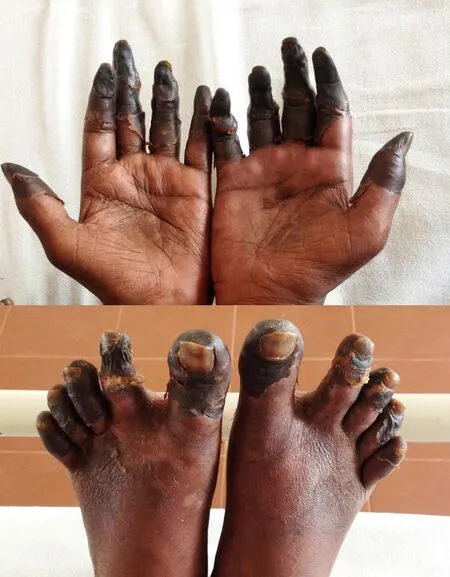
Figure 1. Symmetrical gangrenes of the fingers and toes.
The patient’s total leukocyte count was 20 800 cells/mm3(range 4 500-1 1000 cells/mm3) with normal differential count and erythrocyte sedimentation rate (15 mm/Hr, range 0-15 mm/Hr).Blood sugar and liver and renal function tests were within normal limits. Serology for syphilis (venereal disease research laboratory test), HIV (spot test), hepatitis B, hepatitis C, and enteric fever (Vidal test) were negative. Fluorescent microscopy for malarial parasites was negative. Chest X-ray and abdominal ultrasonography were normal. Arterial Doppler studies of lower limbs did not reveal any larger arterial occlusion. Immunofluorescent anti-nuclear antibody test, antineutrophil cytoplasmic antibody, and antineutrophil cytoplasmic antibody were also within normal limits. Skin biopsy taken from the blistering lesion was nonspecific on histopathology,thus ruling out vasculitis. A significant laboratory result was the blood culture finding of isolation ofEscherichia coli.
The patient was managed with antibiotics (meropenem and linezolid), fondaparinux (anti-coagulant related to low molecular weight heparins), non-steroidal anti-inflammatory drugs, supportive care with fluids, and nutritionand wound care. He was hospitalized for about a month. We believe that early critical care led to the subsidence of edema, blisters, and associated sepsis and confined the gangrenes to the fingers and toes (Figure 3). He was discharged and was advised a follow-up after a month for surgical intervention if needed.
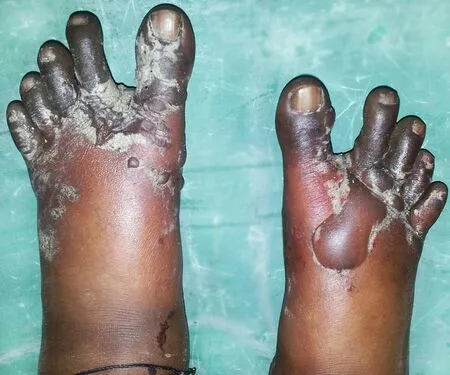
Figure 2. Oedema, hemorrhagic bullae, and gangrene of the toes.
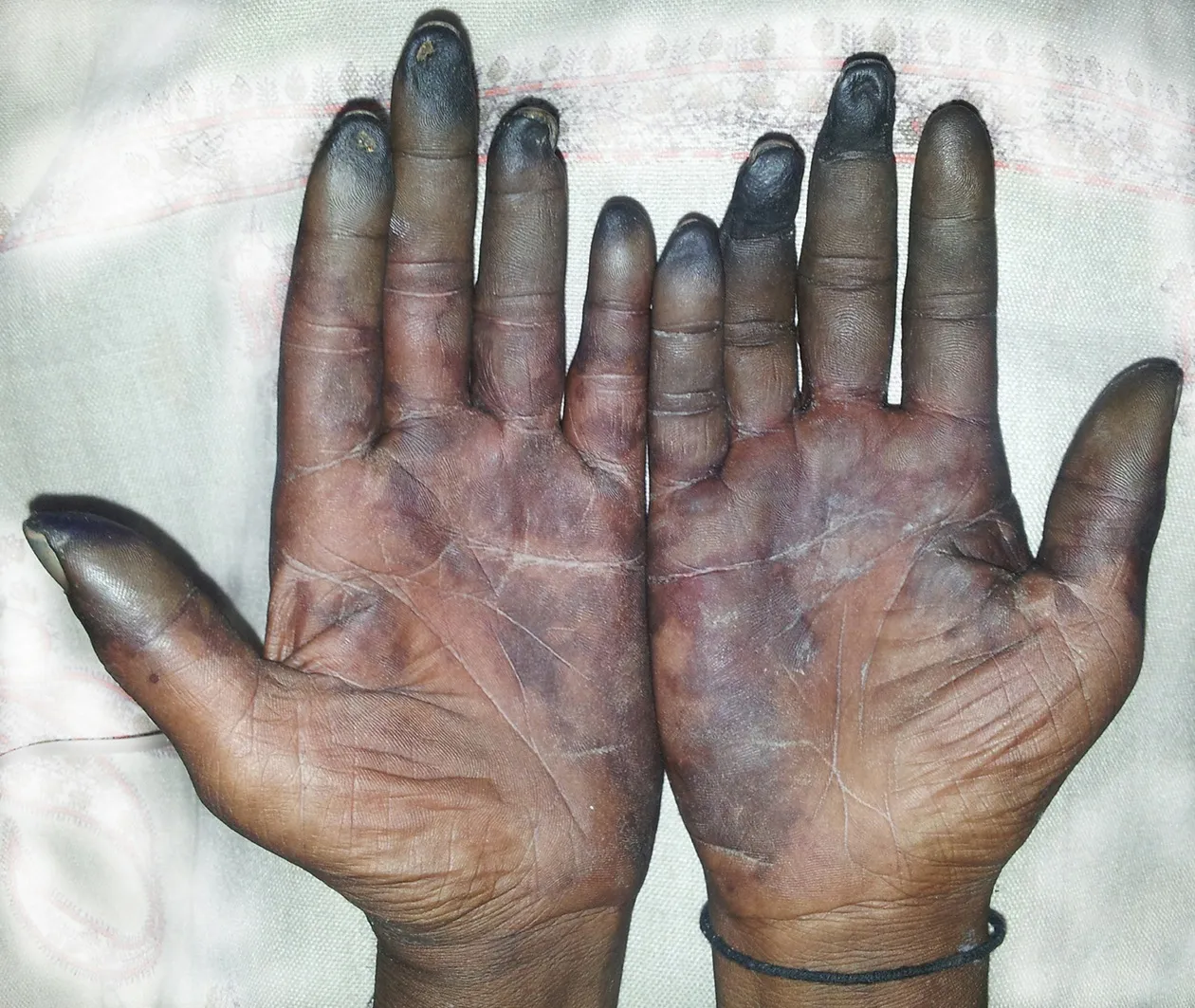
Figure 3. Established peripheral gangrene of the fingers.
3. Discussion
Gangrene is a result of arterial occlusion associated with various etiology, and generally in the absence of local bacterial infection.Common causes include diabetes mellitus, atherosclerosis,thromboangiitis obliterans, connective tissue diseases like scleroderma, vasculitis, vaso-occlusive drugs, frostbite, trauma, and certain infections[3]. SPG is a rare clinical syndrome characterized by symmetric ischemia associated with gangrene of distal extremities and certain other parts. This occurs in the absence of major vaso-occlusive disease thus making it essentially diagnosis by exclusion. Several infective and non-infective causes have been linked with this disease, such as sepsis, myeloproliferative diseases, and hyperviscosity conditions[2,4]. It is associated with significant morbidity and mortality. Mortality rates of up to 40%and amputation rates of 70% have been reported[2,5,6]. SPG is therapeutically challenging. It has diverse etiology with a final result of peripheral vascular occlusion resulting in acral gangrenes[2].Our patient was a healthy male with no known precipitating causesexcept for smoking. He had an abrupt onset, and rapid progression leading to symmetric gangrene involving multiple fingers and toes.His relevant examinations were within normal limits except for the isolation ofE. coliin blood culture. Considering the initial febrile episode, the rapidity of the disease, and the isolation ofE.coliin blood culture, we consider that sepsis due toE. coliinfection as a precipitation of the event.E. colisepsis as a cause of SPG has rarely been reported[7,8]. It is generally believed that SPG is a result and manifestation of disseminated intravascular coagulation (DIC) and a cutaneous hallmark of DIC[2,7]. Histopathology of most SPG specimens showed microthrombi in the capillary lumen of superficial and deep vascular plexus, accompanied by the deposition of fibrin and subtle extravasation of red blood cells[2].
When underlying medical disorder is managed, DIC is likely to resolve spontaneously. Additional measures specifically aimed at correcting the coagulation system abnormality may be required in some cases[2,9]. Fondaparinux was hence given in an attempt to halt the progression of gangrene. Evidence-based guidelines for the treatment of SPG are lacking and stopping disease progression,identifying and removing the causative factors, preventing secondary infections, and providing supportive care are the goals of the therapy[2]. Management of the initial critical phase is the most important since death may occur in this phase[10]. Other therapies like likes sodium nitroprusside, papaverine, streptokinase, dextran,hyperbaric oxygen, and sympathetic blockershave been tried[10].
Survivors of SPG with established gangrene will eventually undergo amputations (surgical or auto). SPG is a rare clinical entity and early critical care is important for its management.
Conflict of interest statement
The authors report no conflict of interest.
Funding
This study received no extramural funding.
Authors’contributions
S.M.M and B.M.A both developed the concept and the design of the study, defined intellectual content, acquired data, edited and reviewed the manuscript. S.M.M also did literature search and preparation for the article.
 Journal of Acute Disease2022年5期
- Journal of Acute Disease的其它文章
- Congestive heart failure masquerading as acute abdomen: A case report
- Successful management of depression skull fracture in a boy with dog bite injury: A case report
- COVID-19 presentation as acute pancreatitis: A case report
- Effect of pH, lactate, electrolyte, and strong ion difference variability on prediction of intensive care unit mortality: A retrospective study
- Effectiveness of ChAdOx1 nCoV-19 coronavius vaccine in preventing severe disease and mortality during the second wave of pandemic: A case-case analysis from a tertiary care center in South India
- Comparative efficacy of ketamine, lidocaine, acetaminophen, and dexmedetomidine combined with morphine patient-controlled analgesia in treating opium-addicted patients undergoing tibia fracture surgery: A randomized clinical trial