吳子熊:讓玻璃藝術走向世界
2022-08-26 09:42:28包建永
文化交流 2022年8期
文/包建永
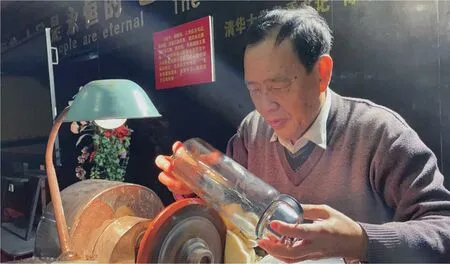
只要一臺砂輪機,吳子熊就能隨心所欲地在玻璃杯上刻畫和“寫字”。With a grinding wheel, Wu Zixiong is able to carve and “write” on glass jars at will.
他的玻雕技藝,已爐火純青。
飛輪轉動,隨手拿起一個玻璃杯,以輪為筆,一件玻雕藝術品,瞬間可就。花鳥蟲魚,栩栩如生;砂輪題字,筆走龍蛇。
看他表演玻雕技藝,是一種享受。
許多慕名而來的游客,就是為了一睹玻雕大師現場獻技的風采。 “真快!”“真好!”這樣的贊美,幾乎每次展示都能聽到。
贊美的背后,是中國工藝美術大師、浙江省非物質文化傳承人吳子熊對玻雕藝術的不懈追求,以及對實現人生價值的無限渴望。
吳子熊與玻雕藝術打交道六十多年,雖然名滿天下,但他從未改變工匠本色,一直自稱“老工匠”。
在臺州市民廣場西側,有幢二層樓的灰色建筑,這就是吳子熊玻璃藝術館,每天游客駱驛不絕。藝術館免費對外開放,每當有組團而來的游客,他常常親自當導游,啟動砂輪,為游客展示玻雕藝術的魅力。
其實在游客驚奇于吳子熊的玻璃藝術品時,人們更驚嘆于他的傳奇人生經歷。他從一名小乞丐、搓澡工、車間工人,成長為享譽世界的工藝美術大師。他的玻雕作品,深受世界各國人民喜愛,先后收到三萬余件外國友人的題詞和簽名。
找到一生的事業
1942年秋,吳子熊出生于臺州仙居縣田市吳橋村。他的祖父是清末秀才,曾行過醫,教過書。父親自幼跟隨祖父讀書習醫。在他出生當晚,父親夢見一只大黑熊竄進屋里,驚出一身冷汗;醒后不久,兒子出生。父親給他取名“子熊”。
吳子熊在家排行老六,上有兩個哥哥和3個姐姐。在他出生的時候,正值抗戰相持階段,吳家家境已經非常貧困。全家借住在村旁的尼姑庵里。
1946年初,母親在貧寒交迫中,痛苦離世。1948年,父親在海門(今屬椒江)行醫,他與10歲的姐姐少秋和8歲的哥哥和中相依為命,自力更生。半年后,他們才被接到海門,與父親團聚。
在海門,吳子熊從三年級才開始插班上學。
然而,好景不長,父親因病去世。為了生存,繼母不得不改嫁。
小學畢業后,吳子熊深知繼母不容易,他賣過大餅、饅頭,做過乞丐,挨過打,受凍挨餓是生活常態。
后來,他漸漸長大。有一年夏天的黃昏,他百無聊賴地走在海門街上,內心煩躁至極。
不知不覺走到海門玻璃廠門口,一個穿著短褲的中年男子,站在陰涼處乘涼。
“同志,您這里需要學徒嗎?”吳子熊大著膽子上去問。
“小鬼,你多大了?”是一個外地口音。
“16歲。”
“明天過來吧。”中年男子摸摸他的頭說:“我們正好缺一個爐頭送瓶人。”
真是“踏破鐵鞋無覓處,得來全不費工夫”。
吳子熊的人生軌跡,就這樣不經意間發生了改變。
他成了國營企業海門玻璃廠的工人。他的工作,是把爐臺上一只只還在溶液中演變成型的各色玻璃器皿,用竹棒插入斷口之中,以最快的速度,送到15米外的退火窯窯口。退火工人再用長鐵叉接過器皿,送入烈火熊熊的退火窯內。
吳子熊平均每天要送500多個玻璃器皿,也就是在15米的距離內,來回走500多趟,相當于在高溫的車間里快步走至少15公里的路程。
他珍惜這份工作,早上班,晚下班,埋頭苦干,毫不抱怨。
后來,廠里決定在眾多的徒工中選拔一個去研發新的花色品種,大家一致推薦了吳子熊。于是,他被調配給一個師傅當助手,做噴花。
1960年,他又被選中,派去旅大玻璃制品廠參觀學習3個月。此次去學習的,還有全國各地玻璃廠派去的幾十名技術人員。
在當時,旅大玻璃制品廠是中國玻璃行業的老大,技術上獨領風騷。在陳列室里,各種顏色、各種造型的花瓶、花籃、頂燈,絢麗多彩,讓人眼花繚亂。美麗的金魚,開屏的孔雀,嬉水的游蝦,仿佛是晶瑩玉石上的天然之作。
吳子熊嘆為觀止。
和他一起來學習的同行都想學藝。但是,廠里只許參觀,不傳技術,也不許拍照。
“這么難得的機會,我一定要學到本領。”在吳子熊的請求下,他被分配到刻花車間參觀。他用心默記車間師傅精湛的雕刻技巧,每一片花瓣,每一條枝丫,每一個連接圖案,他都用筆畫在手掌上;手上畫滿了,就借口上廁所,在廁所里迅速把圖案分拆,畫在香煙殼上。晚上回宿舍,再把香煙殼和手掌上的圖案,重新組合起來,畫在稿紙上。
師傅們技術捂得緊,他就用真心換真情。每天早上,他第一個到車間,幫助師傅把木桶里的水盛滿,把車架擦干凈。下班后,又搶著幫助執勤的師傅搞衛生。得知車間里有3位女師傅家里困難,他省下口糧,送給她們5斤、10斤的全國糧票。
日久見人心。師傅們終于松口了,把各自擅長的雕刻手法和技巧都傳授給了他。不久后,組內撥出一架空置的砂輪機,讓吳子熊等人輪流上崗練習技藝。有時候,師傅們有事或請假,也會讓吳子熊代為磨刻。在此期間,他還跟隨廠里的師傅,參與了北京人民大會堂的吸頂燈刻制。
晚上和周末的時間,吳子熊也不浪費,他去百貨商店、博物館、展覽館等場所參觀,凡有玻璃器皿造型和雕刻圖案,他都一一畫下來。不到3個月時間,他已經摹畫下了近千幅圖案資料。
“玻雕藝術讓人著迷,我決定為它奮斗終生。” 吳子熊雄心勃勃。
讓觀者驚為絕技
見過了大海,便不滿足于在湖泊里遨游。
從旅大玻璃制品廠回來后,海門玻璃廠黨支部研究決定,由吳子熊組建刻畫車間,培養人才。
與旅大玻璃制品廠的刻畫技術相比,海門玻璃廠的噴砂技術顯得非常落后—經過噴砂的玻璃器皿,只留下砂痕,并沒有其他圖案。噴砂車間不但砂灰飛揚,環境惡劣,還有一定危險性。
吳子熊的首要任務,就是造一臺砂輪刻畫機。他嘗試著改進工藝,試了幾次,都失敗了。
他四處尋訪,找到一位叫邱兆法的老工人。邱師傅在上海中華玻璃廠工作過,曾親見日本磨花玻璃技師的操作過程。回海門時,他向廠里的老師傅購買了一堆廢棄的小砂輪。
“您的小砂輪能賣給我們嗎?”
“不用買,我也為海門玻璃廠的發展盡一點力吧。”
在邱師傅的指導下,一臺簡易刻花機很快就做成了。全廠職工翹首以盼,等待試驗成功。
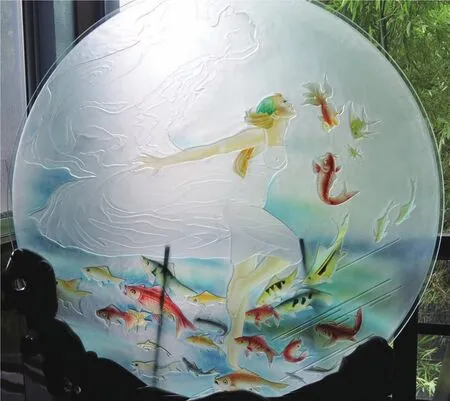
玻雕作品。A work of glass carving and sculpture.
吳子熊既激動,又忐忑。他坐下,開動電動機,小砂輪呼呼地轉動起來。他緊握玻璃杯,在砂輪尖上輕輕一碰,劃出一道白色弧線,正當他要雕刻花瓣時,“啪”的一聲,杯子裂了。他拿起第二只杯子,又是“啪”的一聲……連續試了5次,裂了5次。
工人們興奮而來,一個個無聲走開。
沒有人比吳子熊更懊惱,但也沒有人比吳子熊更堅持。
滿足廣大農村地區讀者的閱讀需求是新聞出版公共服務體系的重點之一。到2017年,我國已建成農家書屋60萬個,覆蓋了全國具備基本條件的行政村,建成數字農家書屋3.5萬個,城鄉閱報欄(屏)10萬個,形成了形式多樣、內容豐富的立體傳播體系。
他不氣餒,去請教車床師傅。車床磨刀師傅告訴他,砂輪轉速快,沖力大,磨刀的力量也大;反之,磨刀的力量也小。“要磨出一把鋒利的切割刀,砂輪轉速很關鍵。不知道刻玻璃是否也是這個道理?”
一語點醒夢中人。吳子熊記得旅大玻璃制品廠的刻花機轉速在400至600轉/分鐘,他跑回廠里測試,這臺簡易刻花機的轉速居然達到了1000轉/分鐘以上。這么高的轉速,玻璃豈有不破之理!
解決了癥結所在,海門玻璃廠第一只刻花玻璃杯很快出品。技術就是紅利。海門玻璃廠嘗到了甜頭,生意火了,刻花機也從1臺迅速發展到80臺,超過了旅大玻璃制品廠的規模。
吳子熊發現,旅大玻璃制品廠的雕刻師傅雖然技藝高超,但他們是按圖刻樣,一旦離開圖紙,就束手無策,而畫圖的人,又不會雕刻。
他既會畫圖,又會操作,這是他的優勢。
在海門玻璃廠第一臺刻花機上操作嘗試幾個月后,吳子熊便不再滿足于依樣畫葫蘆。此時,他回望旅大玻璃制品廠,那些師傅的技藝不再可望而不可及;旅大玻璃制品廠陳列室里的展品,也不再那么神奇。
他決定創新,走出一條獨一無二的玻雕之路。
他把中國傳統水墨畫藝術,融入到玻雕藝術之中。齊白石的“蝦”,徐悲鴻的“奔馬”,潘天壽的“蒼鷹”,他都下過功夫仔細研究。
漸漸地,一只“活蝦”,兩只“活蝦”……千百只“活蝦”活躍于吳子熊的胸中。
從此,不論何時何地,只要一臺砂輪機,一只玻璃杯,他就能在幾十秒內刻出一只“活蝦”來。
觀者驚為絕技。
吳子熊變得“多愁善感”起來,世間太多的美好,讓他留戀。“自然界中的一朵花,一只鳥,一次偶然的變化,一個微妙的象征,都會喚起我心頭的美感。我要把這種美好的體驗刻到玻璃作品之中,分享給更多的人。”
令世界為此贊嘆
在特殊的十年里,海門玻璃廠業務量大減。這是吳子熊沉寂的十年,也是他技藝精進的十年。
這十年,他利用廠里的碎玻璃,在砂輪上反復練習,嘗試各種雕刻手法,最終到達了只要腦中能想到、手下就能刻出的境界。
繪畫的線條和構圖、書法的走筆、音樂的節奏,都融合在他的玻雕藝術之中。他的作品,匠人按部就班的痕跡沒有了,藝術的美感更濃郁了。
改革開放后,吳子熊迎來高光時刻。1978年,人民大會堂浙江廳整修,西廂壁上兩盞玻璃雕花壁燈上的馬蹄花圖案,就是指定他雕刻完成的。之后,他在北京、香港、上海等地亮相,精湛的表演,令觀者無不為之叫絕。
“吳子熊”的名字,不脛而走。國外的邀請函,也如雪花般飛來。從1986年起,他先后到訪德國、荷蘭、英國、澳大利亞、美國、日本、新加坡、意大利等國家,所到之處,現場獻藝,無不驚艷四座。
離國越遠,越牽掛祖國;出國越多,越覺得祖國可親。
吳子熊在各國享受鮮花和掌聲的同時,也深刻地感受到,許多外國人對中國缺乏基本的了解。1989年2月6日,是農歷春節。他應邀在澳大利亞布里斯班市中心的“Myer”連鎖商場表演。“Myer”是澳大利亞最大的百貨商店集團。但是,當他走進豪華的商場時驚呆了。眼前,四根毛竹支起一個茅棚,茅棚邊一把竹梯、一盆樹景、四只籮筐—一幅原始的“中國家居圖”,與周圍環境極不相稱。
“中國不是這樣的,我不能在茅棚下工作。”吳子熊說。
在他的要求下,組辦方另設工作臺,重新布置現場。
他的表演一如既往的精彩。他在日記中寫道,看著自己的表演和玻雕作品在異國他鄉深受歡迎,“一股民族自豪感在胸中洋溢”。
吳子熊以玻雕為媒,自覺擔負起文化使者的角色,積極走出去,讓世界了解中國。一件件玻雕作品,成了他與數以萬計的陌生人建立友誼的紐帶。至今,他共收到外國友人題詞、簽名三萬余件,其中不乏各國領導人和文化名人。
2004年5月,位于臺州中心大道東側的吳子熊玻璃藝術館落成。該館為國家3A級旅游景區,免費對外開放。
以藝術館為陣地,立足臺州,傳播文化。吳子熊的人生,又翻開了新的一頁。
正像他在玻雕作品《生命的力量》里表現的那樣—生命是頑強的,他所經歷的種種苦難和失敗,到最后,都成了他不斷努力、走向成功的寶貴經驗和財富。
“馬的一生,是奔跑一生,死時都是保持站立的姿勢。我要像馬一樣,在絢爛的有情世界里,在透明的玻璃世界里,接受考驗,奔跑不止。”吳子熊說。
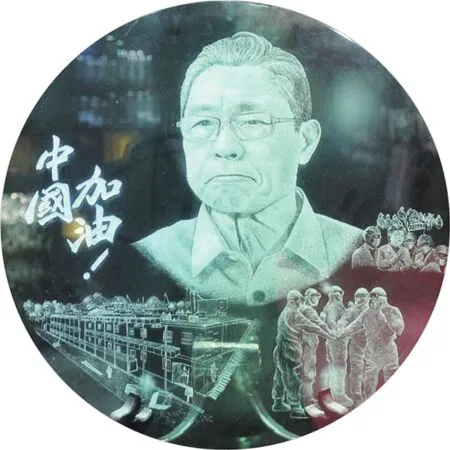
吳子熊玻璃藝術館第二代傳人、中國玻璃藝術大師吳剛和徒弟孫亮的玻雕作品《中國加油—眾志成城戰疫情》。Go China — Stand United to Fight the Epidemic, a work of glass carving and sculpture by Wu Gang, a second-generation craftsman of the Wu Zixiong Glass Art Gallery and a Chinese master of glass art, and his apprentice Sun Liang.
Making Glass Art Known to the World
By Bao Jianyong
He has perfected the art of glass engraving and carving.
When the flywheel turns, he picks up a glass cup with the wheel as the pen, and a piece of glass engraving art can be done in no time. Patterns of flowers, birds, insects and fish are just lifelike,and the inscription fully shows the beauty of Chinese calligraphy.
It is simply a pleasure to watch him perform his glass engraving and carving skills.
Many tourists come here to watch the master’s skills on display. “That was quick!” “Bravo!” Such compliments can be heard almost constantly.
Behind all these lie the unremitting pursuit of glass art and the infinite desire to realize the value of life for Wu Zixiong, a master of Chinese arts and crafts and an inheritor of intangible cultural heritage in Zhejiang province.
Wu has been into the art of glass engraving and carving for more than 60 years. Although he is famous all over the world, he has never changed his true character as a craftsman and always calls himself as such — “an old craftsman”.
On the west side of the People’s Square in Taizhou city, stands a two-story gray building, the Wu Zixiong Glass Art Gallery,which is open to the public free of charge. Whenever there are tourists who come in groups, Wu often acts as a tour guide and starts the grinding wheel to show the charm of the glass art to them.
While visitors are amazed by Wu’s glass artworks, they are more fascinated with his legendary life. From a small beggar to a workshop worker, Wu eventually grew into a world-renowned master of arts and crafts. His glass sculptures are loved by people all over the world and have received more than 30,000 pieces of inscriptions and signatures from foreign friends.
Wu was born in the autumn of 1942, into a rural family in Wuqiao village, Xianju county. In fact, his grandfather was a scholar in the latter years of the Qing dynasty (1616-1911), who had practiced medicine and been a teacher. Wu’s father studied under his grandfather. It was said that on the night Wu was born,his father dreamed of a big black bear running into the house and awoke with a cold sweat. Soon afterwards, his son was born. His father therefore named him Zi Xiong, literally “Son Bear”.
Wu is the sixth child in his family. He has two elder brothers and three elder sisters. At the time of his birth, the War of Resistance against Japanese Aggression was in stalemate, and the Wu family was already very poor. The whole family lived in a Buddhist nunnery near the village, and his two elder sisters were given to others as child brides.
In early 1946, Wu’s mother died in poverty and suffering. In 1948, his father started practicing medicine in Haimen (now part of Jiaojiang district, Taizhou city), where he was left to fend for himself with his 10-year-old sister Shaoqiu and 8-year-old brother Hezhong. Half a year later, they were brought to Haimen and reunited with their father.
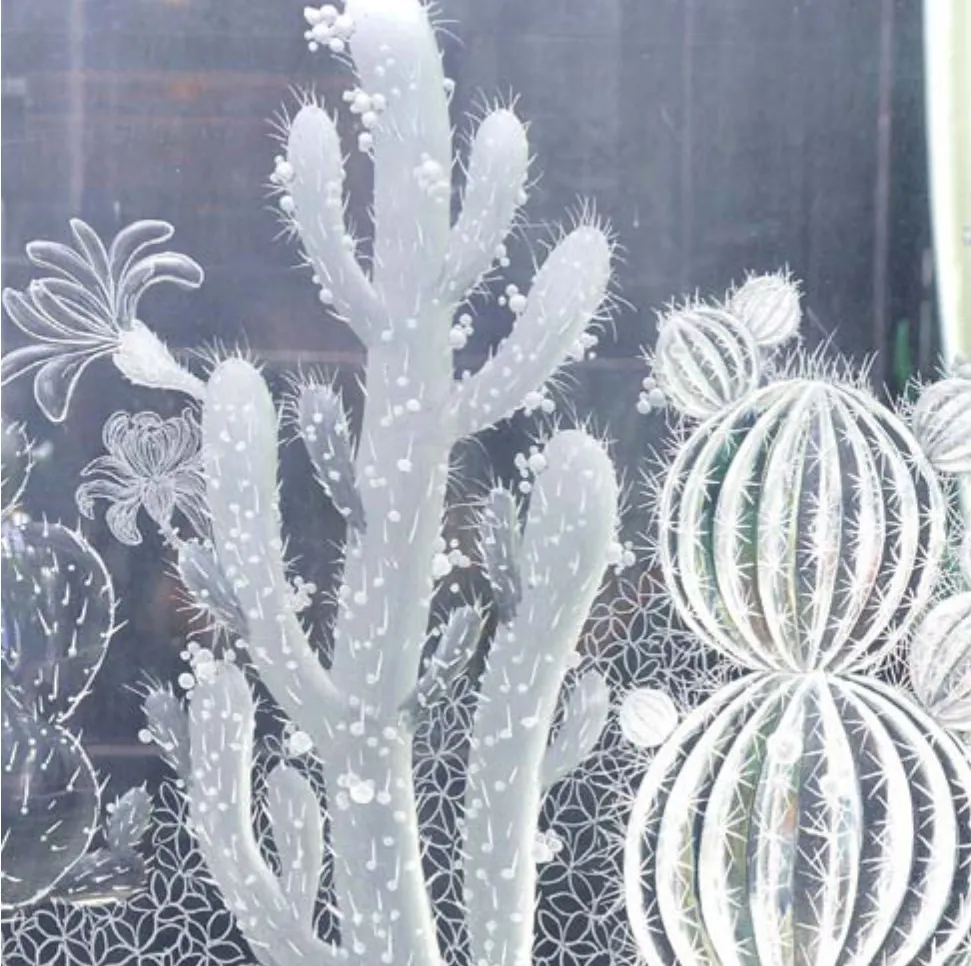
玻雕作品。A work of glass carving and sculpture.

吳子熊玻雕作品《九七龍慶回歸》。Dragons of 97 Celebrating Hong Kong’s Return, a work of glass carving and sculpture by Wu Zixiong.
However, good times did not last, as Wu’s father later died of illness. To survive, Wu’s stepmother had no choice but to remarry. After graduating from primary school, Wu knew that his stepmother lived a hard life as well. Over the years, he sold flatbread and steamed bread, worked as a beggar, and was beaten.Cold and hunger were the norm.
As he grew up, one summer evening, he was walking along the main street in Haimen with nothing to do and feeling restless.Unknowingly, Wu walked to the gate of Haimen Glass Factory,where a middle-aged man wearing shorts was standing in the shade to enjoy the cool.
“Comrade, do you need any apprentices here?” Wu ventured up to ask.
“How old are you, kid?” The man replied in an accent that was not local.
“16.”
“Alright. Please come here tomorrow,” the middle-aged man ruffled Wu’s hair. “We had a vacancy.”
It seemed like the process was so easy.
Thus, Wu’s life trajectory had been inadvertently and forever changed.
He became a worker at the state-owned Haimen Glass Factory. His job was to insert a bamboo rod into the fracture of a variety of glassware still evolving in solution on the hearth and send it to the mouth of an annealing kiln 15 meters away at the fastest speed. Annealing workers holding a long iron fork would take over the ware into the burning annealing kiln.
On average, Wu delivered more than 500 pieces of glassware every day. Within a distance of 15 meters, it was equivalent to a brisk walk of at least 15 kilometers in a high-temperature workshop.
He cherished his job, clocking in early and clocking out late at work, and he worked hard without any complaint. In 1960, Wu was selected by the factory to study for three months at the Lyuda Glass Factory, the biggest in China at the time, together with dozens more from other factories across the country.
In the showroom, vases, flower baskets and overhead lamps of various colors and shapes dazzled. The beautiful goldfish, the peacock and the swimming shrimp were as if they were alive on the crystal jade.
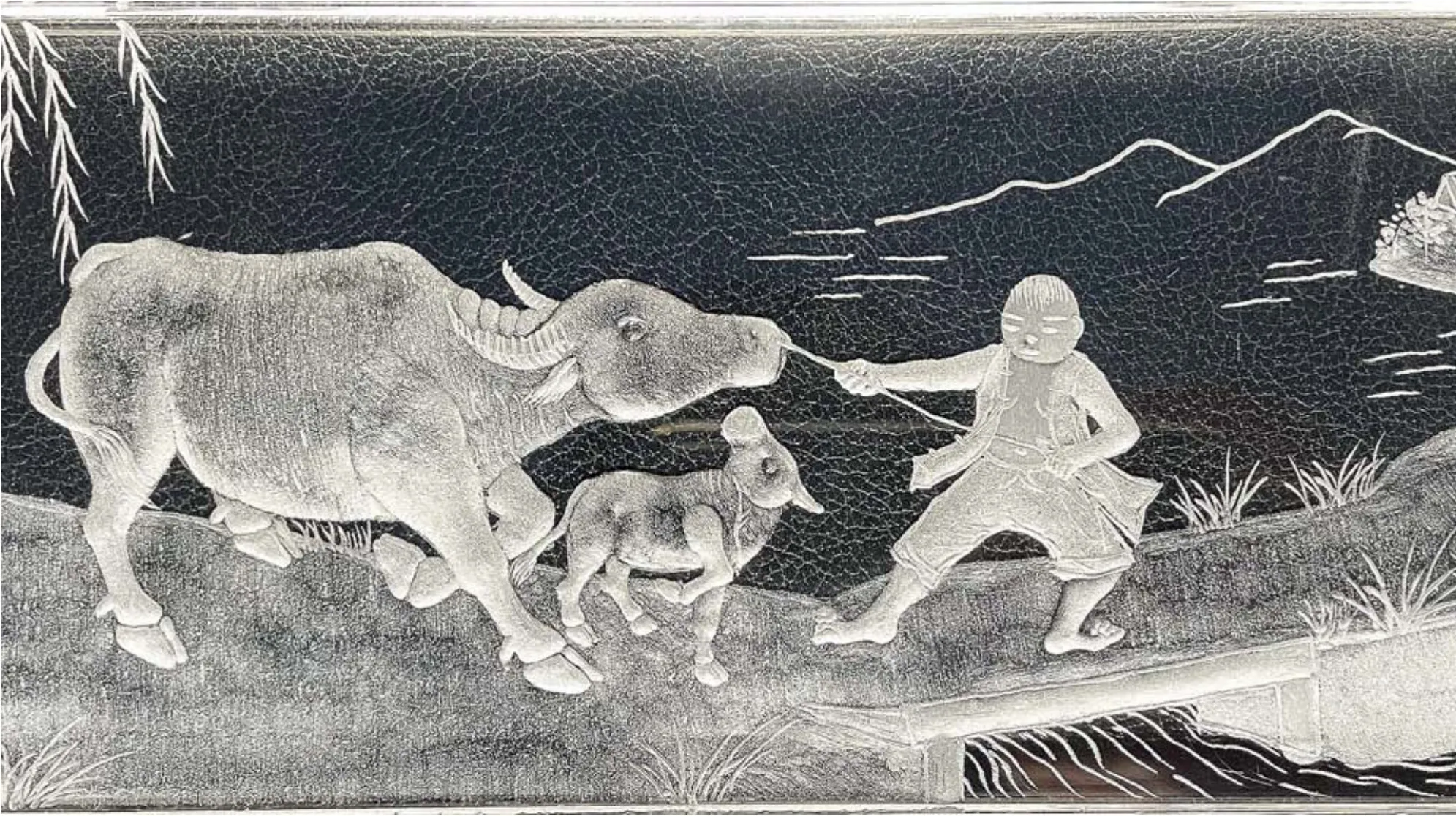
玻雕作品。A work of glass carving and sculpture.
Wu Zixiong was stunned. His peers who came to study with him all wanted to learn the craft. However, the factory guarded its techniques closely, and even taking photos was forbidden. But it was such a rare opportunity for Wu, and he was determined to learn something.
At Wu’s request, he was assigned to visit the engraving and carving workshop. He memorized the exquisite carving skills of the master craftsmen. Every petal, every branch, every connecting pattern, he drew on his palm. When his hand was painted full, he would draw on the cigarette boxes. Back to the dormitory in the evening, Wu would then copy the drawings on the paper.
While the master craftsmen were initially reluctant to teach Wu the craft, he simply worked hard. Every morning, he was the first to the workshop to help them fill the water in the barrel and wipe the machines clean. After work, he helped clean the whole workshop with the on-duty master craftsmen. Learning that the families of three master craftswomen were living a frugal life, he saved his food rations for them.
Eventually, these master craftsmen were moved and taught Wu their unique carving and engraving techniques and skills.During his stay in Lyuda, he also participated in the ceiling lamp carving project of the Great Hall of the People in Beijing.On weekends, he would visit department stores, museums and exhibition halls to look for glass sculptures and engraving patterns,before copying them down. In less than three months, Wu would collect almost 1,000 pieces of designs.
“Glass art is so fascinating that I decided to devote my life to it,” declared Wu.
After his return from the Lyuda Glass Factory, Wu was entrusted with the task of building their own glass sculpture workshop and cultivating more talents. But compared to Lyuda,Haimen’s technologies, mainly relying on sandblasting, were way more backward. The glassware, after sandblasting, could not retain any patterns or designs except for sand marks.
The priority, therefore, was for Wu to manufacture a grinding wheel carving machine. Despite his multiple attempts, they all failed.
He then traveled around and found an old worker named Qiu Zhaofa. Qiu used to work in a glass factory in Shanghai and saw the operation process of Japanese grinding glass technicians.When he returned to Haimen, he bought a pile of discarded small grinding wheels from the factor.
“Can you sell us your grinding wheels?”
“No need to buy, I’d also like to contribute to the development of Haimen Glass Factory.”
Under the guidance of Qiu, a simple grinding wheel carving machine was quickly made. The whole factory was looking forward to the success of the test.
Wu Zixiong was both excited and nervous. He sat down and started the motor, the grinding wheel whirring. He grasped the glass tightly and touched it lightly on the tip of the grinding wheel to create a white arc. Just as he was about to carve a petal, the glass cracked with a snap. He picked up the second glass and there was another crack ... Five times in a row. Five cracks.
The onlooking workers walked away silently one by one,anticipation turning into disappointment. No one is more annoyed than Wu, but no one is more persistent than him.
Undaunted, he went to consult the lathe operator. He was told the speed of the grinding wheels determined their impact and power, which suddenly made him realize the “mistake” he had committed: 1000 revolutions per minute would surely break the glass!
Later, when the speed was adjusted to 400 to 600 revolutions per minute,the first engraved glass product of the factory was soon born. Soon business boomed and the carving machine increased from a single one to 80, even more than Lyuda.
Wu also started to sharpen his skills. He found that those craftsmen at Lyuda were only able to carve but couldn’t draw, and those who could draw didn’t know how to carve. On the contrary,Wu could do both.
Moreover, he integrated the traditional Chinese ink painting art — the lines and compositions of paintings, the strokes of calligraphy and the rhythm of music — into his glass sculptures.
"A flower,a bird,an accidental change,a subtle symbol,all evoke beauty in my heart. I want to carve this beautiful experience into glass works and share it with more people,” Wu said.
In 1978, when the Zhejiang pavilion of the Great Hall of the People was renovated, he was assigned to carve the horseshoe flower patterns on the two glass-engraved wall lamps on the west wing. Later, he wowed his audiences in Beijing, Hong Kong,Shanghai and other places with his exquisite skills.
The name "Wu Zixiong" soon became known internationally.He was invited to Germany, the Netherlands, Britain, Australia,the US,Japan,Singapore,Italy,among other countries.The more he traveled, the more he felt attached to his home country, the more he realized there was still a lack of understanding about China in many parts of the world.
February 6, 1989 was the lunar New Year. Wu was invited to perform at Myer, Australia’s largest chain store, in downtown Brisbane. But when he walked into the luxury mall, he was shocked. In front of him, four bamboo poles supported a thatched hut, with a bamboo ladder, a bonsai and four baskets— a primitive “Chinese household”, quite incongruous with the surroundings.
“It’s not like this in China; I can’t work in a thatched hut,”Wu protested. At his request, the organizer set up another working station and rearranged the site.
Seeing how well-received his performances and his sculptures were in foreign lands, Wu wrote in his diary that “a sense of national pride filled my heart".
Indeed, each piece of glass sculpture has become a bond of friendship between him and thousands of strangers. So far, he has received more than 30,000 inscriptions and signatures from foreign friends, including luminaries and cultural celebrities.
In May 2004, the Wu Zixiong Glass Art Gallery, located on the east side of Taizhou Central Avenue, was completed. A national 3A tourist attraction, the gallery is open to the public free of charge. With the gallery serving as a base spreading spread art and culture in Taizhou, Wu Zixiong’s life has turned a new page.
Just as he showed in the glass sculpture The Power of Lite , life is tenacious.He experienced all kinds of suffering and failure,and in the end these experiences have become the most valuable wealth of his pishing for his continuous efforts towards more successes.
“A horse’s life is a life full of gallops and even its death a horse would maintain a standing position. I want to be like a horse, in this gorgeous world, in this transparent world of glass, constantly tested and always running.”
Because Wu’s Chinese zodiac animal is the horse.
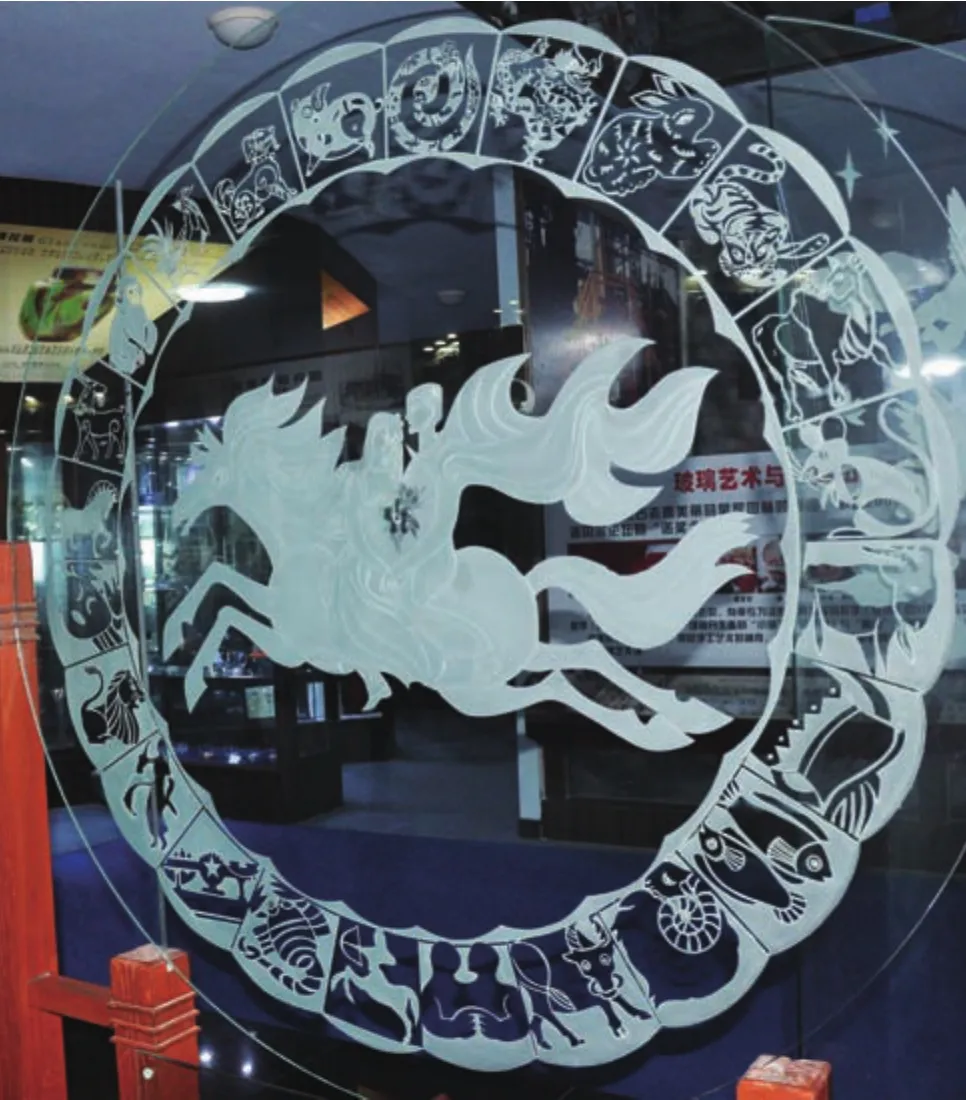
玻雕作品。A work of glass carving and sculpture.