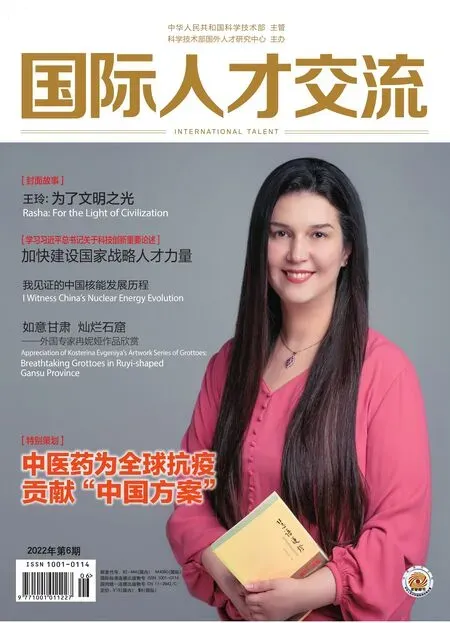
如意甘肅燦爛石窟
——外國(guó)專家冉妮婭作品欣賞
2022-07-19 15:20:06冉妮婭
國(guó)際人才交流 2022年6期
關(guān)鍵詞:藝術(shù)

炳靈寺石窟Bingling Temple Grottoes
甘肅位于中國(guó)的西北部。全長(zhǎng)6000多公里的中國(guó)古絲綢之路,在甘肅境內(nèi)就有1600公里。這片狀如如意的熱土,相對(duì)完整地保存了古絲綢之路的重要史料和文化記憶,石窟便是其中之一。河西走廊缺少建筑材料的不利因素,成就了石窟這一獨(dú)特的佛教建筑形式和藝術(shù)景觀。這里保存了豐富的石窟藝術(shù)群:馬蹄寺石窟群、炳靈寺石窟、麥積山石窟、慶陽(yáng)北石窟寺和名揚(yáng)中外的莫高窟、榆林窟及西千佛洞等。石窟是建筑、雕塑和繪畫三種藝術(shù)的綜合體,是認(rèn)識(shí)和研究世界美術(shù)史不可多得的資料。“莫高千窟列鳴沙,崖壁紛披五色霞。胡楊翠蔭閣道外,九層樓接日光華。”冉妮婭的甘肅石窟系列作品,以其獨(dú)特的中西結(jié)合的技法,充分展現(xiàn)了甘肅石窟氣勢(shì)磅礴、蔚為大觀、千姿百態(tài)之美。
Gansu is located in northwest China. Of the 6,000 kilometers of China's ancient Silk Road, 1,600 kilometres are within Gansu's borders. In this Ruyi-shaped province,rare historical materials and cultural memories of the ancient Silk Road have been preserved relatively intact, and the grottoes are one of them. The lack of building materials in the Hexi Corridor has contributed to the grottoe's unique Buddhist architectural form and artistic landscape.There are many artistically rich grottoes in Gansu, such as the Mati Temple Grottoes, Bingling Temple Grottoes, Maiji Mountain Grottoes, North Grottoes in Qingyang, Mogao Caves which is well-known both at home and abroad,Yulin Grottoes, and the Thousand Buddhas Caves. The grottoes are a synthesis of the three arts of architecture,sculpture and painting, and are an invaluable source for understanding and studying global art history. “Thousands of grottoes in Mogao Caves stand in the gravel. The cliffs are covered with a colorful glow. Outside the pavillion road in the green shade of the poplars, the nine floors of the buildings are bathed in the sunshine. ” Kosterina Evgeniya’s artwork series of grottoes in Gansu, with its unique combination of Chinese and Western techniques,fully embodies the majestic, spectacular and diverse beauty of the grottoes in Gansu.
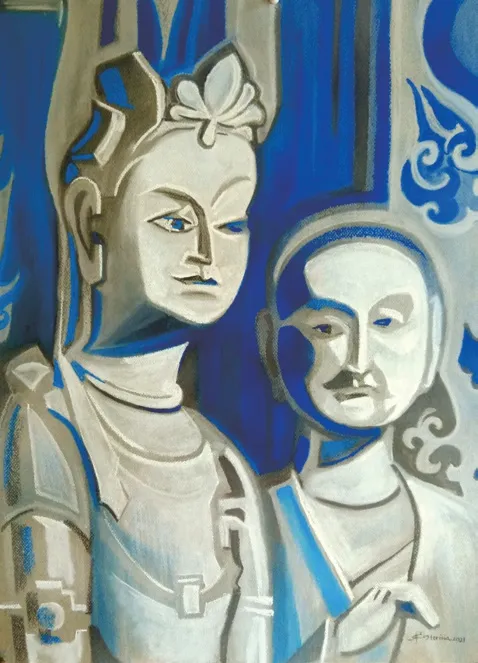
忍耐 Endurance

關(guān)系 Relationship

冥想 Meditation

謙卑 Humbleness

天水麥積山Maiji Mountain Grottoes in Tianshui
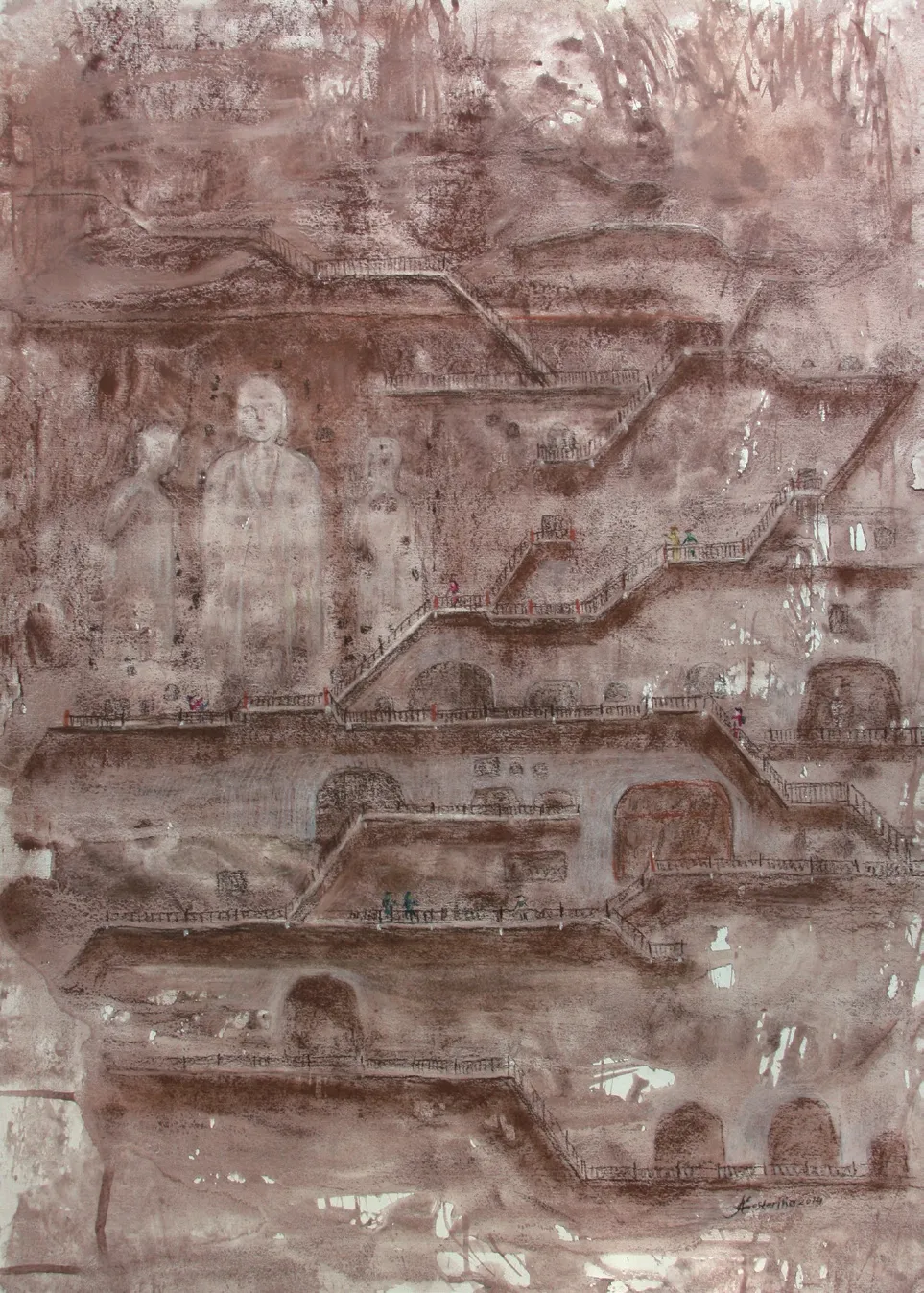
麥積山第一部Maiji Mountain-Part I

穿越時(shí)空 (三聯(lián)幅 左)Through Time and Space (triptych-left panel)
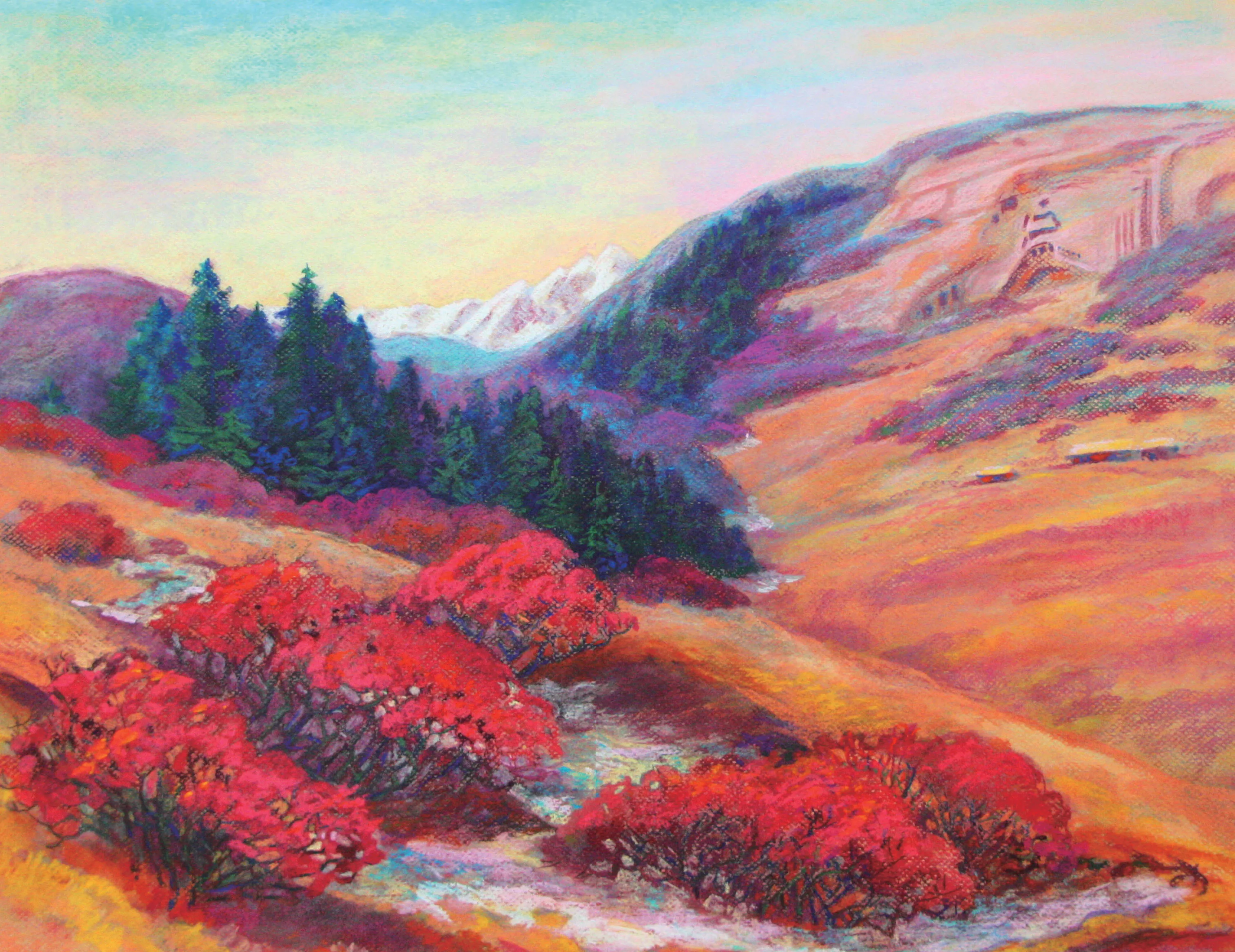
春天的馬蹄寺Mati Temple in Spring

穿越時(shí)空 (三聯(lián)幅 中)Through Time and Space (triptych-middle panel)

穿越時(shí)空 (三聯(lián)幅 右)Through Time and Space (triptych-right panel)
冉妮婭,俄羅斯畫家,又名冉梅,本名葉夫根尼婭·考斯特琳娜( )。2004 年畢業(yè)于莫斯科國(guó)立師范大學(xué)美術(shù)系,曾師從俄羅斯功勛藝術(shù)家阿列克謝·季莫申科(A.N.Timoshenko)。2010 年前往西北師范大學(xué)美術(shù)學(xué)院攻讀碩士學(xué)位,開(kāi)始學(xué)習(xí)中國(guó)畫,師從美術(shù)教育家、國(guó)畫家吳懷信教授。2013年研究生畢業(yè)并取得碩士學(xué)位,同年開(kāi)始舉辦個(gè)人美術(shù)作品展,作品包括油畫、中國(guó)畫、水彩畫、素描及中國(guó)書法,其獨(dú)特的中西結(jié)合的技法得到了書法美術(shù)界的好評(píng)。冉妮婭擅長(zhǎng)研究?jī)和佬g(shù)教育,現(xiàn)為甘肅省聯(lián)合國(guó)教科文組織協(xié)會(huì)藝術(shù)教育專家,中俄文化交流策展人,華僑大學(xué)客座教授。
Profile of Kosterina Evgeniya:Kosterina Evgeniya, of which the Chinese transliteration is Ran Niya or Ran Mei, is a contemporary Russian painter whose Russian name is Евгения Костерина. Kosterina Evgeniya graduated from the Institute of Fine Arts of Moscow State Pedagogical University in 2004, where she studied under the decorated Russian artist A.N. Timoshenko. In 2010, she went to Northwest Normal University to study for a master's degree in the Academy of Fine Art & Design. There she began studying Chinese painting under Professor Wu Huaixin,an art educator and Chinese painter. In 2013, Kosterina Evgeniya graduated with a master's degree and began holding solo exhibitions of her artworks, including oil paintings,Chinese paintings, watercolors, drawings, and calligraphy.The calligraphy and art community's unique combination of Chinese and Western techniques has been well-received.Specializing in the study of children's art education, Kosterina Evgeniya is now an art education expert for the Gansu UNESCO Association, a curator of cultural exchanges between China and Russia, and a visiting professor at Huaqiao University.
猜你喜歡
家教世界(2022年13期)2022-06-03 09:07:18
家教世界(2022年7期)2022-04-12 02:49:34
中外文摘(2021年23期)2021-12-29 03:54:02
兒童繪本(2018年22期)2018-12-13 23:14:52
藝術(shù)啟蒙(2018年7期)2018-08-23 09:14:06
讀者·校園版(2018年13期)2018-06-19 06:20:12
英語(yǔ)學(xué)習(xí)(2016年2期)2016-09-10 07:22:44
Coco薇(2016年2期)2016-03-22 16:58:59
讀者(2016年7期)2016-03-11 12:14:36
爆笑show(2014年10期)2014-12-18 22:27:48