
Male metaplastic breast cancer with poor prognosis: A case report
2022-06-22 08:49:20HyunYulKimSeungjuLeeDongilKimChangShinJungJeeYeonKimKyungJinNamKiSeokChooYounJooJung
World Journal of Clinical Cases 2022年15期
INTRODUCTION
Metaplastic breast cancer (MBC) is a special subtype of breast cancer. MBC represents less than 1% of breast cancer cases, and male MBC is extremely rare. MBC shows aggressive clinical features. It often presents with a larger mass and rarely with axillary nodal metastasis, and it tends to recur locoregionally and distantly. MBC is not sensitive to common therapies for breast cancer, and there are limited options for the treatment of MBC, especially due to its triple-negative status. There are only a few reports of male MBC. We report a case of MBC in a male patient with pulmonary metastasis at the time of diagnosis.
Peggy? she asked, kneeling beside me. I m Lisa. I m a social worker here at the hospital, and I also go to your church. I got a call from the pastor10 that you were here, so I ducked over to see if you were okay.
CASE PRESENTATION
Chief complaints
A 78-year-old man presented to our breast center with a palpable mass on his left breast diagnosed as malignant by core needle biopsy.
No, indeed; the most singular flowers and plants grow there; the leaves and stems of which are so pliant4, that the slightest agitation5 of the water causes them to stir as if they had life
History of present illness
This patient recognized a palpable mass on his left breast 10 d earlier when he visited the local clinic. He had no complaints other than the lump.
When King Quimus heard of the approach of such a great company, he sent out his wazir to give the prince honourable177 meeting, and to ask what had procured178 him the favour of the visit
History of past illness
He previously had a robot-assisted laparoscopic radical prostatectomy for prostate cancer in May 2016.He received routine follow-up in the urology department. He had also been followed-up for coronary artery obstructive disease in the cardiology department. He was taking dual antiplatelet therapy.
Personal and family history
The patient did not abuse alcohol and was a non-smoker. There was no specific family history of malignancy.
Physical examination
There was a fixed mass on his left breast, with no visible signs like redness, skin ulcer, or edema. There were no palpable masses in the axillary areas.
Laboratory examinations
Carcinoembryonic antigen, cancer antigen 15-3, and prostate-specific antigen were checked according to his history and were within the normal range (3.9 ng/mL, 7.73 U/mL, and 0.01 ng/mL, respectively).Except for mild anemia, his blood test results were normal. Genetic testing for BRCAness or next generation sequencing was not performed.
Imaging examinations
Radiologic findings of MBCs are similar to other types of breast cancers. They are also similar to benign lesions, as is common for triple-negative breast cancers. Therefore, careful examination and active histologic confirmation must be performed. On MRI, MBC presents as isointense or hypointense,similar to other histologic types of invasive breast carcinoma. High signal intensity on T2-weighted images is a frequent finding. The commonly reported kinetic pattern is an early enhancement and a delayed washout corresponding to the enhancing peripheral portion and non-enhancing internal components[10].
Recently, some studies have attempted to find new therapeutic approaches. Basho
[14] reported a high frequency of alterations in the PI3K/AKT/mTOR pathway in MBC. According to this report, MBC treated with an mTOR-based systemic therapy regimen showed a better outcome than non-metaplastic triple-negative breast cancer treated with the same regimen. Adams[15] reported remarkable responses to immune checkpoint inhibitors, like pembrolizumab and durvalumab, in advanced MBC with PD-L1 expression.


Diagnostic procedure and histologic examination
We reviewed the breast biopsy specimen. A percutaneous needle biopsy was also performed on the lung mass to differentiate between metastasis and primary lung cancer. The percutaneous needle biopsy revealed poorly differentiated carcinoma with spindle cell differentiation, suggesting metastatic metaplastic carcinoma. GATA3, pancytokeratin, and p53 were positive. Alpha-Methylacyl-CoA Racemase (AMACR) and TTF-1 were negative. These findings helped us rule out primary lung cancer.
FINAL DIAGNOSIS
The final diagnosis of the presented case was metaplastic carcinoma of the breast with metastatic carcinoma of the lung.
TREATMENT
The patient did not wish to undergo chemotherapy. Subsequently, a multidisciplinary discussion was conducted, following which the surgical treatment option was chosen.
In 1961, when I was quarterback and captain of the San Diego Chargers, we were scheduled to play the Oilers in Houston for the AFL Championship. Traditionally, the night before the game, Coach Sid Gilman took the entire team to a movie. Shortly after we sat down in our seats, I noticed that Paul Lowe, Ernie Wright, Ernie Ladd and Charlie McNeil were missing. I asked around and discovered they had been sent to the blacks-only balcony. When I told Coach Gilman, he stood immediately and said, Gather the team. Get all the guys. We re out of here. In a silent, powerful demonstration11 of our belief in equality, living and working as a team, we walked out as a team. I was very proud of Coach Gilman, but so much more needed to be done.
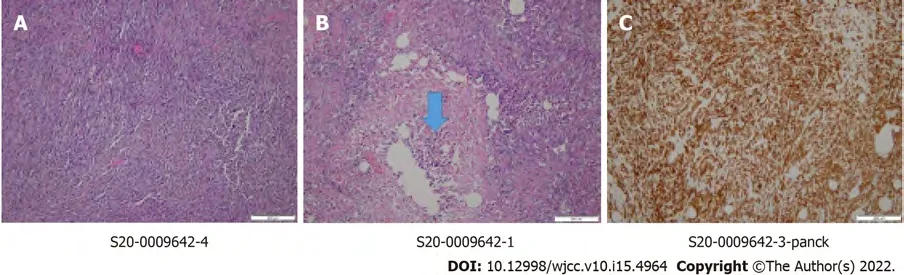
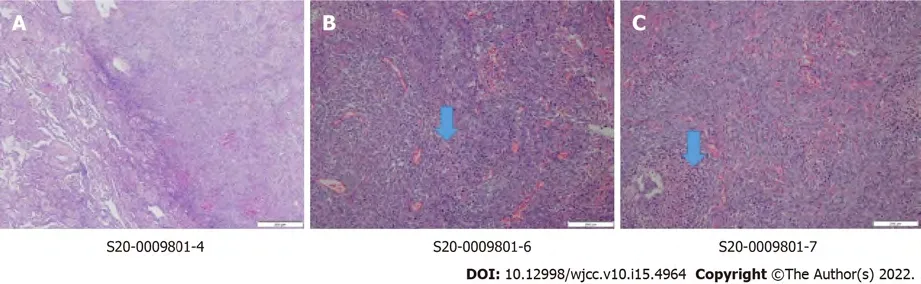
Total mastectomy, sentinel lymph node biopsy, and video-assisted segmentectomy of the right lung were performed. There were no tumor cells in the sentinel lymph nodes. The final pathologic report of the breast confirmed poorly differentiated metaplastic carcinoma (Figure 3). It revealed triple-negative breast cancer with a Ki67 index of up to 90%. p53 and pancytokeratin were positive. Pathology of the lung also revealed metastatic carcinoma from the metaplastic carcinoma of the breast (Figure 4). Finally,the patient was staged as stage IV, pT2pN0pM1. Adjuvant chemotherapy was also omitted considering his age and medical condition.
OUTCOME AND FOLLOW-UP
Although breast cancer is one of the most frequently diagnosed cancers, MBC is a rare clinical entity among breast cancer cases. MBC accounts for less than 1% of breast cancer diagnoses and is extremely rare in males. We found only 5 cases of male MBC reported in the literature[1-5].
Follow-up CT of the chest and abdomen revealed multiple metastatic findings, including an enlarged left supradiaphragmatic lymph node and multiple metastases of the liver, adrenal gland, omentum,muscles of the thigh, and the subcutaneous fat layer of the abdominal wall and buttock. The patient died 5 mo after the initial diagnosis.
DISCUSSION
After 3 mo, the patient visited the emergency department due to headache, degradation of cognitive function, and general weakness. CT of the brain revealed multiple isodense masses with peritumoral edema at the bilateral cerebral hemisphere, which were suspicious of metastasis. Further MRI evaluation showed multiple rim-enhancing masses or enhancing foci at both cerebral hemispheres. The largest mass of 1.5 cm in the right temporal lobe was reported as a metastasis. The patient was administered palliative radiotherapy to the whole brain (30 Gy in 10 fractions) to relieve the severe headache.
MBC was first described by Huvos
[6] in 1973. MBC is a heterogeneous group of neoplasms.Wargotz
[7] classified MBC into 5 types: matrix-producing carcinoma, squamous cell carcinoma,spindle cell carcinoma, carcinosarcoma, and metaplastic carcinoma with osteoclastic giant cells.However, in 2012, the World Health Organization[8] suggested 7 types of metaplastic carcinomas,including low-grade adenosquamous carcinoma, fibromatosis-like metaplastic carcinoma, squamous cell carcinoma, spindle cell carcinoma, metaplastic carcinoma with mesenchymal differentiation, mixed metaplastic carcinoma, and myoepithelial carcinoma. These types are also subdivided into low- or highgrade tumors according to their cellular features.
MBCs are usually seen in women in their 5
and 6
decades of life. The clinical presentation of MBC is similar to common breast cancers; however, MBCs often manifest as a rapidly growing mass;therefore, they tend to be larger at the time of diagnosis. According to the previously reported cases,most male patients presented with palpable masses accompanied by common signs of cancer, such as edema, erythema, and nipple retraction, but those signs were absent in our case. MBC shows lower rates of axillary nodal involvement but higher rates of both local recurrence and metastasis. Luini
[9]reported high rates of pulmonary metastasis, suggesting that MBCs were more associated with hematogenous spread than with lymphatic spread. Compared to invasive ductal carcinoma (IDC), more MBCs present with stage IV disease at diagnosis, and more than 50% of MBCs develop local or distant metastases within 5 years. MBC is associated with a poor prognosis.
Ultrasonography showed an ill-defined, lobulated, heterogeneous hypoechoic mass 2 cm in size on the left breast (Figure 1). Mammography identified a 3.2-cm sized oval, indistinct, hyperdense mass on his left mid inner breast (Figure 2A). On magnetic resonance imaging (MRI), there was a 2.9 cm × 2.9 cm × 3 cm sized irregular, rim-enhancing mass with an adjacent satellite-enhancing focus on the left breast. The mass showed diffusion restriction. There were two round enhancing lymph nodes on level I, which were suspicious for metastasis. For the metastasis workup, a bone scan and Computed tomography(CT) of the chest, abdomen, and pelvis were performed. There were no metastatic findings in the bones or abdomen. Examination of chest CT revealed a 5.1 cm × 3.0 cm sized lobulated lung mass in the posterior basal segment of the right lower lobe with multiple enlarged sub-centimeter-sized lymph nodes in the subaortic area (Figure 2B).
Chen
[13] reported on systemic chemotherapy for MBC. They insisted that MBC behaves more like a low-grade sarcoma rather than IDC. Although the data is limited, it is reported that taxane-based regimens show better results than other regimens. Hormone therapy is usually unnecessary because of the high prevalence of triple-negative status. The role of radiotherapy is also uncertain; however, it can be performed as part of palliative care. The lack of data makes it difficult for physicians to manage patients with MBC. In our case, chemotherapy was not administered considering the patient’s the advanced age and comorbidities.
Pathologic confirmation is the gold standard for diagnosis. The most common type of MBC is squamous cell carcinoma, followed by spindle cell carcinoma. MBC must be differentiated from phyllodes tumors, primary sarcomas, and fibromatoses. Although male breast cancers are usually hormone-receptor positive, most MBCs are negative for estrogen receptor, progesterone receptor, and human epidermal growth factor receptor 2. However, MBC shows even more aggressive behavior than the more common type of triple-negative invasive ductal carcinoma[11]. Lien
[12] recently proved that the epithelial-mesenchymal transition (EMT) related genes were notably upregulated in MBC. EMT is known to be related to cancer invasion, progression, and resistance to chemotherapy. These findings validate the poor prognosis of MBC.
Surgery is the treatment of choice for MBCs. Due to their larger sizes and high propensity for local recurrence than IDCs, mastectomy is preferred as the surgical treatment. Axillary lymph node dissection is not recommended initially because nodal involvement is not common. Sentinel lymph node biopsy is preferable. It is known that MBCs are more resistant to chemotherapy.
There is no optimal chemotherapeutic regimen for MBC. Katz
[2] reported on the youngest man to be treated with surgery and chemotherapy for MBC. The patient received adjuvant chemotherapy with four cycles of dose-dense adriamycin and cyclophosphamide followed by 12 wk of paclitaxel, one of the standard regimens.
Then I had an unexpected visit from the person I dreaded, most to see -- the mother of the college classmate who died. Years ago , she said, I found it in my heart, through prayer, to forgive you. Betty forgave you. So did your friends and employers. She paused, and then said sternly,, You are the one person who hasn t forgiven Tom Anderson. Who do you think you are to stand out against, the people of this town and the Lord Almighty5? I looked into her eyes and found there a kind of permission to be the person I might have been if her boy had lived. For the first time in my adult life I felt worthy to love and be loved.
Tina shook her head. The other gargoyles are much crankier than us. The reason I m nicer to you is I like it here. I never want to leave. I like you too.
When at last the right fish came swimming along she gave him a nudge, and he seized it at once, drove his knife into it, and split it up, took the heart out of it, and cut it through the middle
CONCLUSION
MBC is a distinct disease entity that shows a dismal prognosis compared to other types of breast cancer.There is no standard mode of treatment, but surgery is the treatment of choice. Conventional therapeutic modalities like chemotherapy, radiotherapy, hormone therapy, and molecular-targeted therapy can be applied, but their effects are not certain. Future studies of effective treatments and agents, like immunotherapy and molecular-targeted treatment, are needed to improve the course of the disease.
He was the only animal that was left in the wood now, for the troll had tied up all the others, and every hunter in the whole country was eager to knock him over
FOOTNOTES
Kim HY and Jung YJ performed the surgery, reviewed the literature, and contributed to manuscript drafting; Lee SJ, Kim DI, Jung CS reviewed the literature and contributed to manuscript drafting; Kim JY analyzed and interpreted the pathologic specimen; Nam KJ and Choo KS analyzed and interpreted the imaging findings; all authors issued final approval for the version to be submitted.
The requirement for informed consent was exempted by the Institutional Review Board of the Pusan National University Yangsan Hospital (No. 05-2021-092).
the 2020 research grant from Pusan National University Yangsan Hospital, No. 2020-193.
The authors declare that they have no conflict of interest.
The authors have read the CARE Checklist (2016), and the manuscript was prepared and revised according to the CARE Checklist (2016).
This article is an open-access article that was selected by an in-house editor and fully peer-reviewed by external reviewers. It is distributed in accordance with the Creative Commons Attribution NonCommercial (CC BYNC 4.0) license, which permits others to distribute, remix, adapt, build upon this work non-commercially, and license their derivative works on different terms, provided the original work is properly cited and the use is noncommercial. See: https://creativecommons.org/Licenses/by-nc/4.0/
South Korea
Hyun Yul Kim 0000-0001-7717-7734; Seungju Lee 0000-0001-5100-0017; Dong-il Kim 0000-0001-9874-1322; Chang Shin Jung 0000-0002-2945-4191; Jee Yeon Kim 0000-0002-0503-984X; Kyung Jin Nam 0000-0001-5118-1903;Ki Seok Choo 0000-0001-5072-4259; Youn Joo Jung 0000-0002-9647-8556.
There was no conversation. Their soggy sandals left marks upon the hearthstone. I served them cocoa and toast with jam to fortify7 against the chill outside. Then I went back to the kitchen and started again on my household budget.
Xing YX
A
Xing YX
1 Barr JG, Jane Clayton ES, Sotheran W. A case of metaplastic breast cancer in a man.
2013; 2013 [PMID:24964410 DOI: 10.1093/jscr/rjs047]
2 Katz H, Jafri H, Dougherty T, Lebowicz Y. Rare case of metaplastic breast cancer in a man.
2018; 2018[PMID: 29514832 DOI: 10.1136/bcr-2017-222033]
3 Kuo SH, Chen CL, Huang CS, Cheng AL. Metaplastic carcinoma of the breast: analysis of eight Asian patients with special emphasis on two unusual cases presenting with inflammatory-type breast cancer.
2000; 20: 2219-2222 [PMID: 10928181]
4 Rehman A. Triple-negative phenotype of poorly-differentiated metaplastic breast carcinoma in a male: an oncological rarity.
2013; 23: 370-372 [PMID: 23673183]
5 Tampakis A, Tampaki EC, Trafalis D, Nonni A, Kontzoglou K, Patsouris E, Kontos M, Kouraklis G. Nestin and CD146 expression in metaplastic breast cancer: stem-cell therapy in need?
2017; 21: 4137-4140[PMID: 29028085]
6 Huvos AG, Lucas JC Jr, Foote FW Jr. Metaplastic breast carcinoma. Rare form of mammary cancer.
1973;73: 1078-1082 [PMID: 4348806]
7 Wargotz ES, Deos PH, Norris HJ. Metaplastic carcinomas of the breast. II. Spindle cell carcinoma.
1989; 20:732-740 [PMID: 2473024 DOI: 10.1016/0046-8177(89)90065-8]
8 Sinn HP, Kreipe H. A Brief Overview of the WHO Classification of Breast Tumors, 4th Edition, Focusing on Issues and Updates from the 3rd Edition.
2013; 8: 149-154 [PMID: 24415964 DOI: 10.1159/000350774]
9 Luini A, Aguilar M, Gatti G, Fasani R, Botteri E, Brito JA, Maisonneuve P, Vento AR, Viale G. Metaplastic carcinoma of the breast, an unusual disease with worse prognosis: the experience of the European Institute of Oncology and review of the literature.
2007; 101: 349-353 [PMID: 17009109 DOI: 10.1007/s10549-006-9301-1]
10 Kim HJ, Kim SY, Huh S. Multimodality Imaging Findings of Metaplastic Breast Carcinomas: A Report of Five Cases.
2018; 34: 88-93 [PMID: 29394219 DOI: 10.1097/RUQ.0000000000000340]
11 Jung SY, Kim HY, Nam BH, Min SY, Lee SJ, Park C, Kwon Y, Kim EA, Ko KL, Shin KH, Lee KS, Park IH, Lee S, Kim SW, Kang HS, Ro J. Worse prognosis of metaplastic breast cancer patients than other patients with triple-negative breast cancer.
2010; 120: 627-637 [PMID: 20143153 DOI: 10.1007/s10549-010-0780-8]
12 Lien HC, Hsiao YH, Lin YS, Yao YT, Juan HF, Kuo WH, Hung MC, Chang KJ, Hsieh FJ. Molecular signatures of metaplastic carcinoma of the breast by large-scale transcriptional profiling: identification of genes potentially related to epithelial-mesenchymal transition.
2007; 26: 7859-7871 [PMID: 17603561 DOI: 10.1038/sj.onc.1210593]
13 Chen IC, Lin CH, Huang CS, Lien HC, Hsu C, Kuo WH, Lu YS, Cheng AL. Lack of efficacy to systemic chemotherapy for treatment of metaplastic carcinoma of the breast in the modern era.
2011; 130: 345-351[PMID: 21792625 DOI: 10.1007/s10549-011-1686-9]
14 Basho RK, Yam C, Gilcrease M, Murthy RK, Helgason T, Karp DD, Meric-Bernstam F, Hess KR, Valero V, Albarracin C,Litton JK, Chavez-MacGregor M, Hong D, Kurzrock R, Hortobagyi GN, Janku F, Moulder SL. Comparative Effectiveness of an mTOR-Based Systemic Therapy Regimen in Advanced, Metaplastic and Nonmetaplastic Triple-Negative Breast Cancer.
2018; 23: 1300-1309 [PMID: 30139837 DOI: 10.1634/theoncologist.2017-0498]
15 Adams S. Dramatic response of metaplastic breast cancer to chemo-immunotherapy.
2017; 3: 8 [PMID:28649648 DOI: 10.1038/s41523-017-0011-0]
 World Journal of Clinical Cases2022年15期
- World Journal of Clinical Cases的其它文章
- Diet and intestinal bacterial overgrowth: Is there evidence?
- Spontaneous liver rupture following SARS-CoV-2 infection in late pregnancy: A case report
- Metastasis of liver cancer to the thyroid after surgery: A case report
- Solitary primary pulmonary synovial sarcoma: A case report
- Knot impingement after arthroscopic rotator cuff repair mimicking infection: A case report
- Clear aligner treatment for a four-year-old patient with anterior crossbite and facial asymmetry: A case report