ON THE CHARACTER
2022-06-19 05:49:32HUANGWEIJIA黃偉嘉ANDANITAHE賀文文ILLUSTRATIONBYWANGSIQI
漢語世界 2022年3期
–HUANG WEIJIA (黃偉嘉) AND ANITA HE (賀文文), ILLUSTRATION BY WANG SIQI
A character that can move heaven and earth
感:匯聚身心萬千體驗


BRONZE SCRIPT
SEAL SCRIPT
CLERICAL SCRIPT
When facing unfair treatment or false accusations, Chinese speakers often use a common proverb, “我比竇娥還冤 (Wǒ bǐ Dòu E hái yuān, I am more wronged than Dou E)”—comparing themselves to the tragic heroine from the playThe Injustice to Dou E that Moved Heaven and Earth(《感天動地竇娥冤》) by Yuan dynasty (1206 –1368) playwright Guan Hanqing (關(guān)漢卿).
Losing her mother at a young age and sold by her father to a woman called Granny Cai at age 7, Dou E was later framed by a local thug for poisoning his father, and was tortured and sentenced to death by the corrupt magistrate. Before she was beheaded, Dou E prophesied three supernatural signs that would prove her innocence: that her blood would stain a white cloth above the executioner’s block, without a drop spilling on the ground; that snow would fall in midsummer; and that her city would suffer from drought for three years. Heaven was apparently moved by Dou E’s plight, as all three events came to pass after her death.
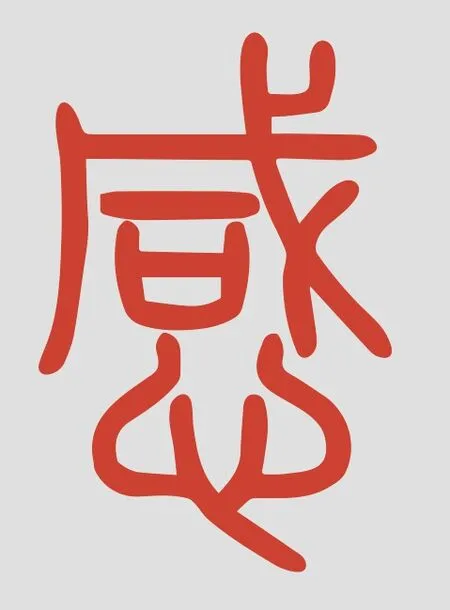
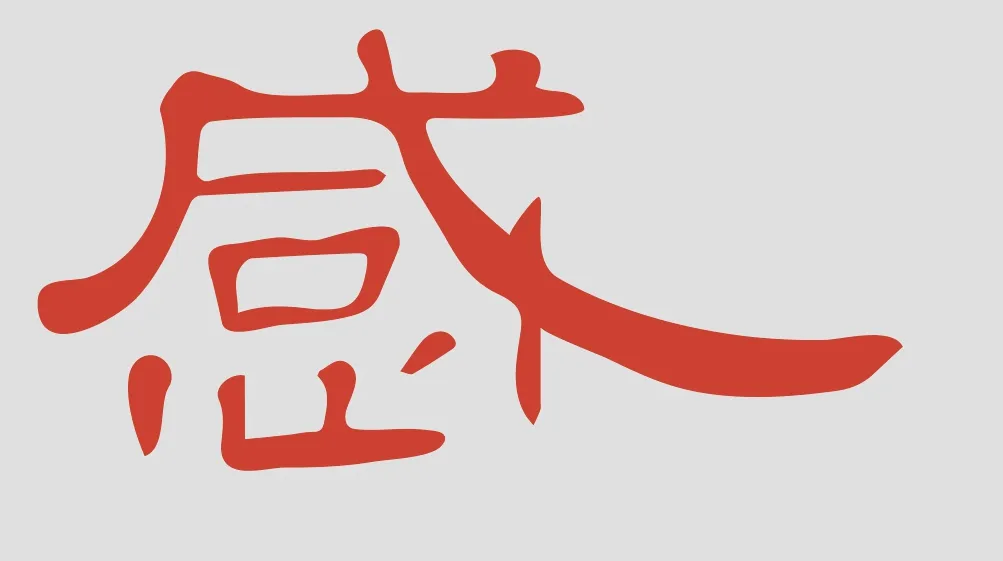
In modern Chinese, the character 感 (gǎn) means “to feel,” though the play’s title uses its other, more ancient meaning, “to move emotionally.” TheAnalytical Dictionary of Chinese Characters(《說文解字》), one of the earliest Chinese dictionaries, defines 感 as “to touch one’s heart,” noting the radical 心 (xīn) marks the meaning. The upper part of the character, 咸 (xián), approximated the pronunciation, which has changed since that time. But 感’s earliest appearance, which is similar to its modern form, only with a more complex 心 radical, can be traced back to bronze inscriptions in the Warring States period (475 –221 BCE).
The original meaning of 感 is still in use now. Dou E’s tragic life and unjust death have 感動 (gǎndòng, moved) viewers throughout the centuries since the play came out. Those who felt 感傷 (gǎnshāng, sentimental) about Dou E’s sufferings might 感慨 (gǎnkǎi, lament) and 感嘆 (gǎntàn, sigh) over her dreadful fate, while others who were enraged by the patriarchy or incompetent justice system in the story might describe their feeling as 感憤 (gǎnfèn, indignation). If all of these sentiments well up in your heart and intertwine, you can express them with the idiom 百感交集 (bǎigǎn jiāojí); while any takeaways gained from the story can be called 感悟 (gǎnwù, realization).
感情 (gǎnqíng, emotions) is another common word that uses 感 to refer to feelings, especially in interpersonal relationships. 動感情 (dòng gǎnqíng), literally “to move one’s emotions,” means one is developing feelings for another person, and to bond with someone is called 聯(lián)絡(luò)感情 (liánluò gǎnqíng), which literally translates to “putting emotions in contact.”
The character can also refers to the senses, or 感覺 (gǎnjué). 感 can be paired with many adjectives to refer to different senses, from pleasant ones such as 美感 (měigǎn, sense of beauty) and 快感 (kuàigǎn, sense of pleasure) to the more complicated feelings such as 優(yōu)越感 (yōuyuègǎn, sense of superiority), 正義感 (zhèngyìgǎn, sense of justice), and 負罪感 (fùzuìgǎn, guilt).
Turning from the heart to the body, to be infected with disease is called 感染 (gǎnrǎn), and if one is unfortunate enough to catch Covid-19, the phrase is 感染新冠肺炎 (gǎnrǎn xīnguān fèiyán). To 感染風寒 (gǎnrǎn fēnghán) means to catch a cold, which is caused by frigid wind according to traditional Chinese medicine. In modern Chinese, the common cold is called 感冒 (gǎnmào).
Colloquially, one can also use 感冒 to express 感興趣 (gǎn xìngqù), which means being interested in something or someone. Both “我感冒了 (Wǒgǎnmào le, I have a cold)” and “我不感冒 (Wǒ bù gǎnmào, I’m not interested)” can be used as an excuse to turn down an invitation. When the lack of interest worsens into dislike, the word is 反感 (fǎngǎn).

To beginners in Mandarin, an important phrase is “非常感謝你 (fēicháng gǎnxiè nǐ, thank you very much)!” 感 is fittingly found in several words that mean “to express gratitude,” such as 感激 (gǎnjī), 感恩 (gǎn’ēn), 感謝 (gǎnxiè), and 感念 (gǎnniàn)—all of which should come from the heart.