Quanzhou Papercut: ADDING BY CUTTING
2022-06-15 01:44:37ChenZhiying
中國-東盟博覽(政經(jīng)版) 2022年6期
Chen Zhiying
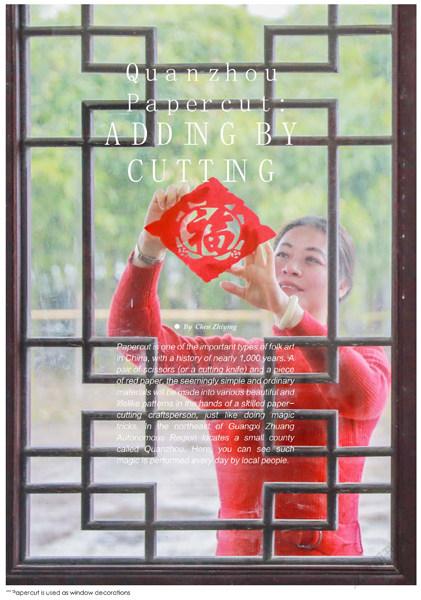

Papercut is one of the important types of folk art in China, with a history of nearly 1,000 years. A pair of scissors (or a cutting knife) and a piece of red paper, the seemingly simple and ordinary materials will be made into various beautiful and lifelike patterns in the hands of a skilled paper-cutting craftsperson, just like doing magic tricks. In the northeast of Guangxi Zhuang Autonomous Region locates a small county called Quanzhou. Here, you can see such magic is performed every day by local people.
Papercut in the long history
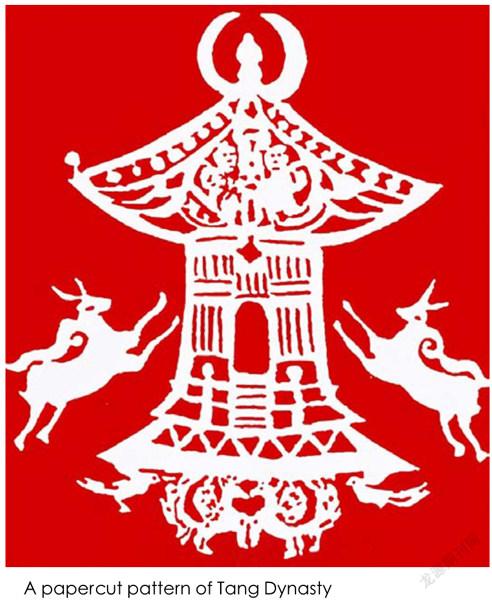
Paper was invented in the Western Han Dynasty (202 BC-8 AD). However, a similar technique of carving was popular then even before paper was invented. In Historical Records by Sima Qian, the Western Han Dynasty historian, the King Cheng of Zhou gave his younger brother a “Yu Gui” (a jade ritual vessel) carved from Chinese parasol tree leaves in the early Western Zhou Dynasty (1046-771 BC) and thus conferred titles of nobility on him. Not only leaves, people also used thin materials such as silk, gold foil, and leather to carve hollowed-out patterns for various uses. During the Tang Dynasty (618-907 AD), papercut was further developed. In a poem written by Du Fu, there was a line that depicts people using papercut to offer sacrifices to the dead. The emergence of Quanzhou papercut is also related to such customs.
The papermaking technology in the Song Dynasty (960-1279 AD) was mature and various kinds of paper sprang up, providing fertile land for the popularization of the papercut. In the Jizhou kilns of Jiangxi Province, craftsmen started using the patterns of the papercut while making ceramics to create vivid designs on the surface. According to the Annals of Quanzhou County, local people enjoyed the tradition of making and hanging lanterns during the Spring Festival and the Lantern Festival. Instead of drawing pictures, they more often would prefer to paste papercuts on the lanterns as decorations, which, under the light inside, became even more attractive and interesting. We can also find the use of papercuts in the running-horse lanterns. The lanterns with a revolving pinwheel featuring papercuts of horses will move around the central axle driven by the hot air once the candle is lit. The shadows of the horse papercut were cast onto the surface of the lanterns, giving the illusion of galloping horses chasing one after another.
During the Ming (1368-1644 AD) and Qing dynasties (1644-1912 AD), the papercut reached its peak. It was used to decorate doors, windows, and walls, which not only added liveliness to ordinary things but also expressed the meaning of happiness. Quanzhou papercut originated in the Qin Dynasty (221-207 BC) and spread from north China. At present, the papercut popular in Quanzhou is characterized by many kinds of patterns from flowers, birds, and characters, to scenery like mountains and rivers. It also features wide uses and various themes. Thats why it is favored by the local people in Quanzhou.4830AF89-B3DA-4FB8-A166-65CE6FEDE5F8
Fold, cut, and unfold into a picture
Quanzhou papercut is a living cultural technique taught by verbal instructions and practical demonstrations. Although the tools used for Quanzhou papercut are simple, the technique involved in creating an artistic work is complex and difficult to master, and its more of an improvised art: a piece of red paper is folded and cut several times, and then being unfold into a beautiful picture, which means it needs more practice and imagination than other forms of traditional art. Flexibility is also an important factor in making papercuts since any hesitation will lead to the imprecision and imperfection of the whole image. Artists can produce papercuts in complex patterns quickly and perfectly, while learners can only tackle some simple decorative motifs.
Quanzhou papercut boasts a wide range of patterns, mainly including characters, animals, drama scenes, plants, celebrations, totems, farming pictures, etc. All these elements are mostly based on the daily life of the local people, demonstrating the rural flavor of the counties in northern Guangxi. Its said that back in the 1950s there was no gift box in the countryside. When visiting relatives and friends, people would cut a red paper flower and paste it on the basket before putting foods inside and sending it out. The flower papercut symbolizes the senders good wishes to the receiver. Today, these traditional customs still exist and are well-preserved in Quanzhou County.
In 2011, Quanzhou papercut was listed in the third batch of the intangible cultural heritage of Guangxi Zhuang Autonomous Region. How to activate the traditional form of art? Experts gave their answers in the 17th China-ASEAN Cultural Forum held in Beihai, Guangxi. By intergrating with digital technology, it is believed that the handicraft will be favored by more people.4830AF89-B3DA-4FB8-A166-65CE6FEDE5F8