Talking About Covid
2022-06-15 21:56:19楊婷婷
漢語世界(The World of Chinese) 2022年3期
關(guān)鍵詞:疫情
楊婷婷
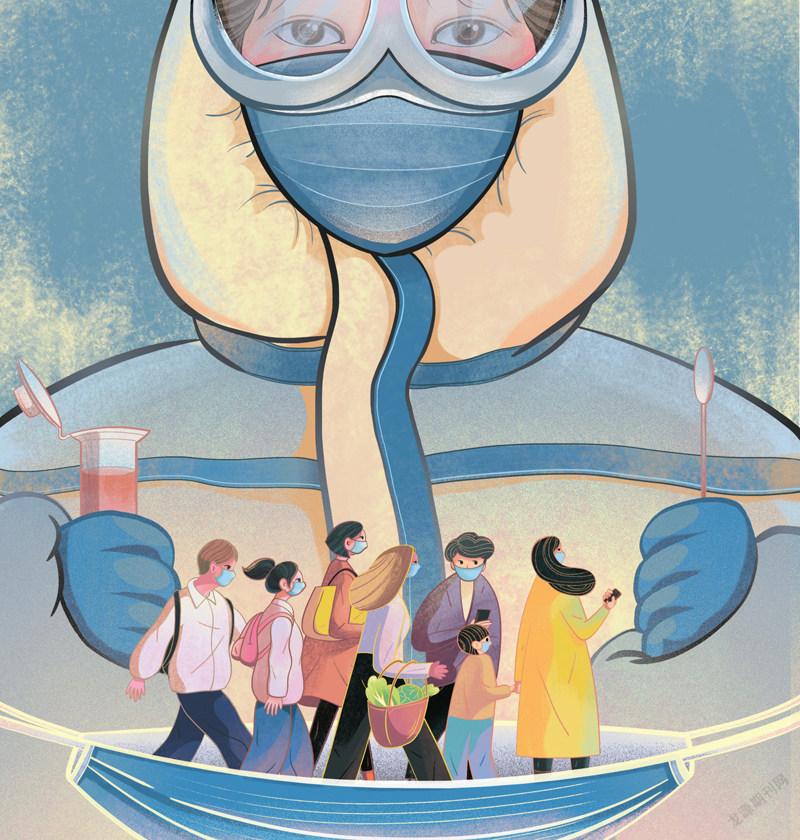
How the epidemic has reshaped life in the last two years
疫情必備用語指南
Nearly two-and-a-half years since Covid-19 was detected at a seafood market in Wuhan, the pandemic has touched nearly every aspect of life worldwide—changing people’s attitudes toward food safety, public health, travel, and socializing, as well as popularizing phrases like “social distancing” and “flattening the curve.”
In China, which has maintained a “zero-Covid” policy since 2020, stringent?lockdown measures and widespread testing of affected neighborhoods have also made people utterly at home with previously obscure terms like 清零?(qīnglíng, zero-Covid), 消殺?(xiāoshā, disinfection), and 核酸?(hésuān), short for 核酸檢測(cè)?(hésuān jiǎncè, nucleic acid test). When Beijing saw a cluster outbreak in the summer of 2020, it was joked that “您核酸了嗎?(Nín hésuān?le ma, Have you taken a nucleic acid test)?” had replaced?“吃了嗎?(Chī le ma, Have you eaten)?” as a standard greeting among elderly residents of the capital.
At the time of publication, Shanghai is coming out of over two months of a battle against an outbreak of the highly contagious omicron variant, which has led to China’s strictest lockdown measures to date. With an estimated 400 million people experiencing restrictions due to pandemic control in Shanghai and other parts of China, the pandemic has reshaped how they speak, act, and even eat.
Stockpiling supplies
In the early days of Shanghai’s city-wide lockdown, the shutdown of businesses and delivery channels inside and outside the city made food and other basic necessities into scarce commodities for those who did not stock up beforehand. Across the city, tech-savvy residents got used to setting their alarm at odd hours—say, 5:45 a.m.—to get ready to “snatch” fresh produce from online delivery platforms before they run out.
It is a test of both swiftness and perseverance. Cycling through up to 12 apps on their phone, the Shanghai resident might repeatedly smash the “checkout” button, only to have supplies run out or the app crash due to too many people attempting order simultaneously. Those who missed out might exclaim:
Vegetables are even harder to buy than a ticket to a Jay Chou concert.
Qiǎngcài bǐ qiǎng Zhōu Jiélún yǎnchànghuì ménpiào hái xūyào yònglì.
搶菜比搶周杰倫演唱會(huì)門票還需要用力。
As supply struggles to meet demand, vegetables have become the new luxuries in China’s biggest city, previously known for being the hub of the country’s finance and high-end consumption. With a single cabbage setting them back by 80 yuan in the panicked early days of the lockdown, Shanghai residents developed their own spin on the ol’, asking one another:
Have you snatched up your green luxuries?
Nǐ?de lǜsè shēchǐpǐn qiǎngdào?le ma?
你的綠色奢侈品搶到了嗎?
Lockdown living
Life in isolation and social distancing can take a toll on one’s mental health. In Shanghai, as in Wuhan in early 2020, locked-down residents turned to activities like building an obstacle course in the living room, watching viral workout videos, or singing with their neighbors on the balcony to pass the time.
But there is only so much exercise one can do. The rest of the time, there might be nothing to stave off boredom except gaze out the window and record one’s observations:
The leaves outside my window trembled 1,682 times. Birds chirped 168 times. A package of sunflower seeds contains 1,846 pieces.
Chuāngwài shùyè huàngdòngle yìqiān liùbǎi bāshí’èr cì, xiǎoniǎo jiàole yìbǎi liùshíbā shēng, yí dài guāzǐ?yīgòng yìqiān bābǎi sìshíliù lì.
窗外樹葉晃動(dòng)了1682次,小鳥叫了168聲,一袋瓜子一共1846粒。
Other locked-down netizens have turned their ponderings to a more intellectual direction: by producing “pandemic literature (疫情文學(xué)?yìqíng wénxué),” a meme involving making parodies of famous lines from literature in the context of Covid-19, such as Albert Camus’s ?or Lu Xun’s “Autumn Night”:
My green health code turned red today. Or maybe it was yesterday, I don’t know.
Jīntiān, lǜmǎ?hóng?le, yòu huòzhě shì zuótiān, wǒ?yě bù qīngchu.
今天,綠碼紅了,又或者是昨天,我也不清楚。
There are two buildings in my community. One is locked down. The other is also locked down.
Xiǎoqū li yǒu liǎng dòng lóu, yí dòng fēng le, lìng yí dòng yě fēng le.
小區(qū)里有兩棟樓,一棟封了,另一棟也封了。
For those stranded at home, perhaps the color of the 健康碼?(jiànkāngmǎ, health code), a QR code that changes color and restricts a person’s movements if they’ve been in close contact with Covid cases or traveled to an affected area, does not matter that much after all, as they can’t go out anyway. Those getting itchy feet to tour exhibitions, art museums, and famous sights can take the virtual tours many museums and tourist sites in China have offered since the pandemic began:
Calling for online travel buddies to join me for a virtual tour of the Yellow Crane Tower in Wuhan!
Zàixiàn chéngzhāo xiǎohuǒbàn yìqǐ yúnyóu Wǔhàn Huánghè Lóu!
在線誠招小伙伴一起云游武漢黃鶴樓!
Learning under lockdown
Some of the people most affected by the pandemic are students of all ages, who have had to stay either at home or on their campuses for most of the last two years. For college students especially, the bustle of campus life might seem like a distant memory—if they got to experience it at all, unlike students who entered after 2020:
Due to the pandemic, I’ve been at home for over a hundred days in total. My college education has become a distance learning course.
Yīnwèi yìqíng, zàijiā yǐjīng dāile yìbǎi duō tiān, huóshēngshēng bǎ quánrìzhì dàxué dúchéngle hánshòu.
因?yàn)橐咔椋诩乙呀?jīng)待了100多天,活生生把全日制大學(xué)讀成了函授。
They’ve gotten used to dealing with technical glitches during online lessons and seeing their teachers’ heads talking on a screen:
Can everyone hear me? Am I frozen? Did you all take out the green book? Write in the comment section if you did.
Néng tīng qīngchu wǒ shēngyīn ma? Kǎ ma? Lǜshū ná chūlái méiyǒu? Ná chūlái zài pínglùnqū jiǎng yíxià.
能聽清楚我聲音嗎?卡嗎?綠書拿出來沒有? 拿出來在評(píng)論區(qū)講一下。
Office workers, too, have had to periodically work from home when their cities see a surge in infection. They’ve become familiar with children and pets interrupting online meetings, as well as the embarrassment of having made an excellent point…only to hear their colleagues frantically shouting:
Mr. Zhang, your microphone is muted!
Xiǎo Zhāng, nǐ de màikèfēng méi dǎkāi!
小張,你的麥克風(fēng)沒打開!
D-Day
The most highly anticipated event for any locked-down community is, of course, 解封?(jiěfēng, the lifting of the lockdown). When it happens, it’s time to celebrate the exciting news on social media:
My travel code finally lost its asterisk.
Xíngchéngmǎ xǐtí zhāixīng.
行程碼喜提摘星。
An asterisk-free travel code, meaning that one has not been to a medium or high-risk area in the past fourteen days, is uplifting, but it is not immune to change. Community officials will keep up with the strict contact-tracing protocols, checking in with every household by phone or WeChat:
Please check whether you crossed paths with these confirmed cases. If so, please report to the community.
Qǐng dàjiā zìchá yǔ bìnglì yǒu méiyǒu shíkōng jiāojí, rú yǒu qǐng shàngbào shèqū.
請(qǐng)大家自查與病例有沒有時(shí)空交集,如有請(qǐng)上報(bào)社區(qū)。
To keep up with contact tracing requirements, public buildings and businesses in most cities require all visitors to scan a QR code so the system can keep track of who has been where:
Please wear your mask and scan the health code. Thank you for your cooperation.
Qǐng nín pèidài hǎo kǒuzhào, sǎo jiànkāngmǎ, xièxie?pèihé.
請(qǐng)您佩戴好口罩,掃健康碼,謝謝配合。
Nucleic acid tests have become routine especially for those who travel, as trains and flights require passengers to present a recent negative test result before boarding, and communities may require it for those who come back:
Which type of swab will we have tomorrow? Nasal or throat?
Míngtiān zuò shénme hésuān a? Shì bíshìzǐ háishi?yānshìzǐ a?
明天做什么核酸啊?是鼻拭子還是咽拭子啊?
Before taking off, travelers need to check carefully that they wouldn’t end up in mandatory quarantine, as policies could vary city to city.
If we travel from a low-risk area of Shanghai to Shenzhen for two days by high-speed train, do we need to quarantine upon return? Do we need to do nucleic acid tests?
Xiǎng wèn cóng Shànghǎi dīfēngxiǎn dìqū zuò gāotiě qù Shēnzhèn liǎng tiān, huílái xūyào gélí ma? Xūyào zuò hésuān ma?
想問從上海低風(fēng)險(xiǎn)地區(qū)坐高鐵去深圳兩天,回來需要隔離嗎?需要做核酸嗎?
Will we be taken to centralized quarantine or allowed to quarantine at home?
Zài chēzhàn zhíjiē lāzǒu jízhōng gélí háishi zìjǐ huíjiā gélí a?
在車站直接拉走集中隔離還是自己回家隔離啊?
But those currently stuck in a strict lockdown might feel they won’t even have to travel far to enjoy their newfound freedom:
The first thing I will do after the lockdown is to eat all the delicious food in Shanghai!
Jiěfēng zhīhòu dì yī jiàn shì jiùshì chībiàn Shànghǎi suǒyǒu měishí!
解封之后第一件事就是吃遍上海所有美食!
猜你喜歡
北京測(cè)繪(2022年5期)2022-11-22 06:57:43
音樂天地(音樂創(chuàng)作版)(2022年1期)2022-04-26 13:51:10
今日農(nóng)業(yè)(2021年3期)2021-03-19 08:38:00
今日農(nóng)業(yè)(2021年1期)2021-03-19 08:35:42
小學(xué)生學(xué)習(xí)指導(dǎo)(中年級(jí))(2020年12期)2021-01-08 02:50:02
人大建設(shè)(2020年5期)2020-09-25 08:56:22
快樂作文(1.2年級(jí))(2020年8期)2020-09-10 07:22:44
北極光(2020年1期)2020-07-24 09:04:04
安徽醫(yī)學(xué)(2020年6期)2020-07-17 12:18:48
文苑(2020年4期)2020-05-30 12:35:48