
Two Sides of Thailand’s Legalization of Cannabis
2022-05-30 09:25:52HuYukun
中國東盟報道 2022年8期
Hu Yukun
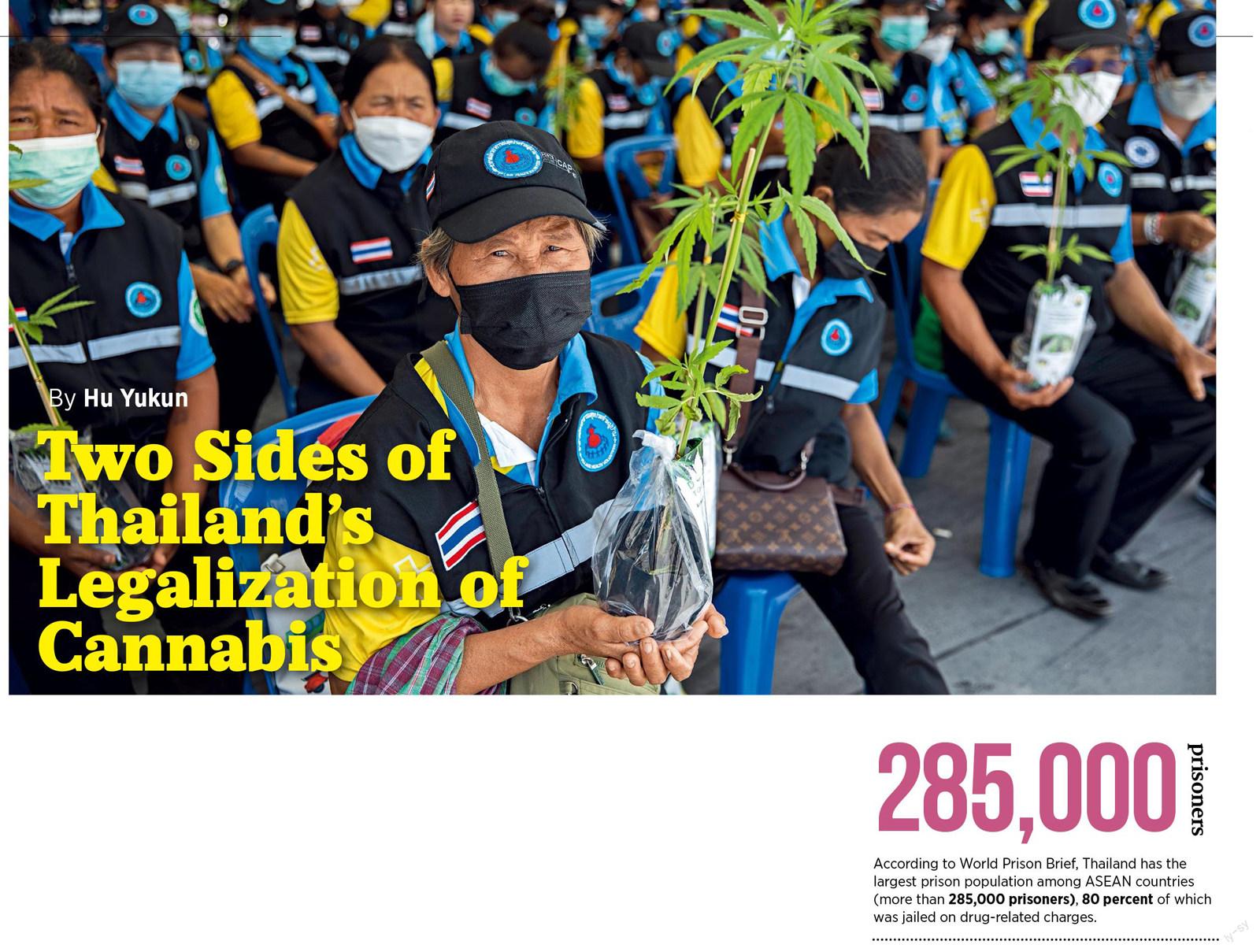
In early June, Thailand officially decriminalized the growing of marijuana and its consumption for medical and legal purposes, a first for Asia which has been known for the strictest anti-drug laws in the world. The government hopes the move will help boost the economy, but health and social concerns have already emerged in the region.
Behind Thailands Historic Move
Southeast Asia, a region of 11 countries and around 680 million people, has long been widely recognized for some of the strictest laws against drug use and production. Historically, they not only enforced criminalization of illicit drug usage widely, but also imposed harsh punishments on offenders. Countries including Thailand and the Philippines have even launched draconian and violent crackdown on those who use or sell drugs, which raised international concern of human rights violations, especially the drug war launched in 2016 by the Philippine government under then-President Rodrigo Duterte.
But recent signs indicate that leaders in the region may have grown more amenable to changing course. On June 9, the government of Thailand removed cannabis and hemp from its Category 5 narcotics list, a historic move towards its legalization. Although recreational use of the drug remains illegal and regulations still prohibit “consumption, smoking, or use of cannabis products in non-productive ways,” as Thai Deputy Prime Minister and Public Health Minister AnutinCharnvirakul explained to CNN, a lawful basis has been created for its import, export, production, distribution, consumption, and possession.
The same day, more than 3,000 inmates serving prison terms for cannabis or hemp-related drug offenses were released following the announcement from the Public Health Ministry. According to World Prison Brief, Thailand has the largest prison population among ASEAN countries (more than 285,000 prisoners), 80 percent of which was jailed on drugrelated charges. With one of the worlds highest incarceration rates, Thailand has been grappling with overcrowded prisons, especially in the COVID-19 era.
But the primary concerns for the Thai government transcend reducing the burden on prisons, and the government had previously taken substantial steps to loosen the draconian laws. In 2018, Thailand became the first country in the region to legalize marijuana for medical purposes. In December 2021, the country announced a new Narcotics Code resulting from collaboration with the United Nations Office on Drugs and Crime (UNODC). The new code emphasizes the health and wellbeing of those who use drugs and allows for amendment to threshold quantities regarding sentencing. More importantly, the updated legal framework includes proportionate sentencing for drug crimes and provides alternatives to imprisonment for drug offenders.
Obviously the latest reform was not a quick decision and emerged only after considerable prudential consideration. Economic benefits are the driving force propelling greater tolerance for cannabis. As Time explained, Thailand has a climate conducive to growing cannabis and an established medical tourism industry. Its medical cannabis market reached a value of US$79 million last year and is projected by IMARC Group to reach around US$12 billion by 2027 with a compound annual growth rate (CAGR) of 55.6 percent.
Thailand recently opened its borders hoping to recover its tourist economy from the long COVID slumber, and relaxing cannabis control could help. Once legalized, the need for illegal trafficking of cannabis into Thailand is likely to be reduced, especially from Laos, if Thai people are permitted to grow cannabis and sell it at home. The move also brought good news for the local catering industry: Now restaurants and street food vendors can sell marijuana-infused dishes and drinks to local and international diners if products contain less than 0.2 percent tetrahydrocannabinol (THC).
“The hope is that Thai farmers andlocal companies will be able to benefit from the rapidly booming international medical cannabis market,” said Martin Jelsma, director of the Drugs &Democracy project at the Transnational Institute (TNI) in Amsterdam. Today, households are allowed to cultivate up to six cannabis pot plants at home, while farmers and companies can also grow the plant if they register with authorities and receive permits.
Compared to the heavy cost and controversy accompanying harsh crackdowns on drugs, this new reform seems a feasible alternative with a winwin outcome.
Complications
The Thai governments bold move has drawn international attention. Beyond the United Nations operational recommendations and international guidelines on policy issues, the new law appears to be the most liberal approachto cannabis anywhere in the world, according to analysis in The Guardian. The reaction in Thailand to such an unprecedented reform has been mixed, and the possible emerging scenarios might be more complicated than authorities ever imagined.
Many residents now feel free to grow and consume as much of the plant as they like. “One thing is clear: You cannot go to jail in Thailand just for using cannabis anymore,” said Tom Kruesopon, a pioneering entrepreneur who helped persuade the government to change its drug policy. Now, cafés and stalls are openly selling all kinds of cannabis products or showing off jars filled with potent marijuana flowers. Even Mr. Anutin was seen sampling cannabis-laced curries, applauded by farmers seeking new sources of income.
But behind the liberal environment, many in the Thai government, including some in the Ministry of Public Health, fear that such a dramatic turnaround might be too much too fast. Their major concern is possible abuse of cannabis products. For the moment, no law substantially restricts cannabis to medical use only, which has paved the way for widespread recreational use.
Abuse of cannabis among young people, especially children and adolescents, seems to be a major concern. According to RasmonKalayasiri, director of the Center for Addiction Studies at Thailands Chulalongkorn University, recreational cannabis use among 18- to 19-yearolds has doubled to around 2 percent of the age group since 2019. After the government so dramatically changed its regulations, she worries the figure will rise even more among minors and adults alike. In fact, one in 10 habitual cannabis users suffer from health problems in Thailand including psychosis and addiction.
The economic prospects are also uncertain. In the 2019 general election, Mr. Anutin adopted legalization of cannabis as his Bhumjaithai Partys signature policy because the partys stronghold is in Thailands poor, rural north-east. Farmers in the region could hardly make a living by growing rice and sugar and were in desperate need of a new cash crop, so they found this policy appealing.
However, after decades of draconian drug control, Thailand is likely a latecomer to the rapidly booming international medical cannabis market. Established companies from Canada, the United States, and European countries have long been key players in the global market and occupied a large share of it, which will make it difficult for Thai companies and farmers to immediately benefit from the medical cannabis market.
Furthermore, intensified debate is expected on Southeast Asias broader drug policy, and Thailand might face resistance from narcotics hardliners in other ASEAN countries. Although the voices in support of decriminalizing cannabis and other narcotics have emerged in recent years in Myanmar and Malaysia, their governments have still remained cautious in making changes. Singapore has long championed the “drug-free ASEAN” dream, a drive it launched in 1998 with the goal to be reached by 2015, and has actively lobbied the UN against legalization of cannabis in various parts of the world.
Currently a draft law on cannabis control is being discussed in the Thai parliament, and some advocates are optimistic about further gradual relaxing of rules on usage. For now, to minimize uncertainty and possible negative effects, clear regulations on practices for legal production and consumption are acutely needed.
