WHEN CHINA GOES ON THE ROAD
2022-03-01 05:55:16TEXTBYJEREMIAHJENNE
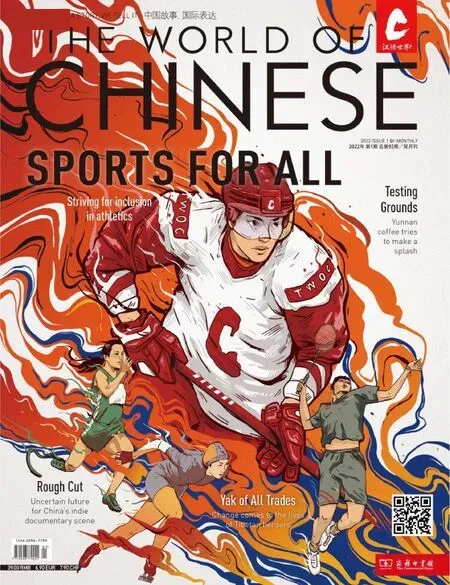
漢語世界 2022年1期
TEXT BY JEREMIAH JENNE
ILLUSTRATION BY CAI TAO

A new book by historian Yajun Mo reveals the through-lines linking Chinese travelers,past and present
在一本民國歷史書中,發現旅行文化的前世今生
Mass tourism in China is not a new phenomenon.InTouring China:A History of Travel Culture,1912-1949,historian Yajun Mo explores the development of the travel industry in China in the Republican era,a time when urbanites took to the rails,roads,rivers,and even skies to see the sights of their nation—and eerily prefigures some of the challenges facing China’s tourism industry a century later.
Mo,an associate professor of history at Boston College,describes how tourist activities in the years before 1949 “allowed Chinese citizens to redefine postimperial China in a period of dramatic political change.”Modern transportation allowed tourists to explore once difficult-toaccess regions.New business models,including the first major domestic travel agency,the China Travel Service,offered ticket services and tour packages to cater to demand.
The expansion of print media in early 20th-century Chinese cities led to popular specialty magazines like China Travel,whose travel articles and photographs inspired readers to plan their voyages.Mo argues participating in travel and tourism was a novel form of leisure for a burgeoning Chinese urban elite.Travel as recreation was seen as vogue and Western,a way to display wealth and allow travelers to present an image of sophistication and modernity.
According to Mo,Chinese travelers were also part of a zeitgeist,to build a coherent and unified nation from the ruins of the Qing Empire.Scholars and researchers—as well as more adventurous tourists—traveled into the frontiers of the new nation.
Tourism in China’s southwestern regions after the Republic of China moved its capital to Chongqing in 1937,and to Taiwan after the war against Japan ended in 1945,allowed patriotic tourists to symbolically claim sovereignty over contested areas.As Mo argues,“These diverse forms of modern travel contributed to the imagination of China as a congruent national space.”
Tourism was not only a way for Chinese to define the boundaries of their own nation,but to reclaim their country after nearly a century of foreign imperialism.Early 20thcentury Chinese travelers described by Mo shared their transportation and destinations with foreign tourists and expatriate residents,the latter seeking to re-create Western-style tourism spaces inside China.
Particularly galling for Chinese travelers,writes Mo,were policies of racial segregation for accommodation and transport,creating “racial boundaries that differentiated Western-style tourism spaces from the rest of China.”
Colonialism and colonialist attitudes have long played a part in the evolution of the travel industry.As early as the 18th century,Thomas Cook promised his clients the means to see the magical sights of the British Empire while assuring they would be protected from being ripped offor robbed by ungrateful locals.Even today,colonial nostalgia continues to play a role in attracting visitors to Asia—the official website of the Astor in Tianjin lauds how the historic hotel “evokes the romance of a bygone era.”
Chinese travelers were not immune to some of these same colonialist attitudes.Mo describes how the Chinese academic Liu Bannong,who journeyed to northwestern China with the Swedish geographer Sven Hedin in the 1920s,complained about Hedin’s use of the term“expedition” (translated as 遠征) to refer to their mission.Expeditions,as Liu Bannong and his Chinese colleagues understood them,“were carried out among the ‘blacks and savages,’ and it would be insulting to use the term in China,a country with an ancient culture,” Mo writes.
Yet Hedin and Liu shared an attitude toward the regions through which they were traveling.The European explorer and the Chinese scholar considered the frontiers of the old Qing Empire as places to be explored.Liu and the other Chinese scholars on the trip “had no qualm about considering the non-Han peoples in the Northwest as less civilized,” writes Mo.
While the book does not cover the post-1949 period,Mo’s research suggests some interesting continuities between tourism in China in the early 20th century and today.There were over 3.43 billion domestic trips in China last year,a 19 percent increase over 2020.The China Tourism Academy expects that trend to continue in 2022,estimating domestic tourism will be at about 70 percent of pre-pandemic totals this year.
Many of the trends that drove the rise of tourism in an earlier era are part of the 21st-century expansion,including greater disposable wealth,increasingly sophisticated media,and significant infrastructure improvements that make travel easier and destinations more accessible.While overt racial segregation is no longer an issue between foreign and Chinese tourists traveling in China,similar conflicts over issues of sovereignty,representation,and travel culture persist into the 21st century.
On modern international travel websites like Trip Advisor,non-Chinese travelers to popular destinations like Lijiang Old Town in Yunnan province,and the karst mountains surrounding Yangshuo in Guangxi,lament “hordes”of Chinese tourists or offer wistful reminisces of these places before they were “discovered” by domestic travelers.International travel guides to China warn about the creeping influence of commercialization and a lack of“authenticity.”
At the same time,portrayals of western China and non-Han nationalities in contemporary Chinese travel literature reveal a similar fixation on the sensual and the exotic.Domestic travel agencies advertise excursions to ethnic minority regions in Yunnan and other parts of China using colorful photos of women in traditional clothing,emphasizing the people’s singing,dancing,and handicrafts.
This is also not a new phenomenon.Mo’s book examines how representation of non-Han people in Republicanera print culture often emphasized frontier regions’ unusual,colorful,and sensual attractions.This production of knowledge about frontier regions helped bind those areas to the center while also implicitly reinforcing the idea that the nation would come to be defined by Han sensibilities.
Traveling to new places is a magical experience,but it is not a politically inert act.Whether it’s Anthony Bourdain eating pig anus in Africa,or ordinary travelers looking for that perfect selfie to put on Instagram or WeChat,how people travel,where they go,and how they interact,interpret,and represent what they have seen shape and reinforce perceptions of those places.Mo’s book carries a reminder of the powerful influence travel has on our world,and the people we leave behind when we pack our suitcases and head back home.
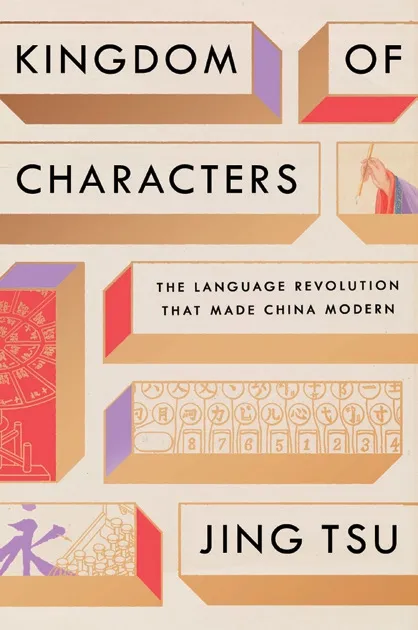
KINGDOM OF CHARACTERS
The making of modern Chinese was far from smooth.In this highly readable account,Jing Tsu,professor of East Asian languages at Yale University,outlines the reform and standardization of the language during the 20th century,in tandem with China’s wider attempts at modernization.Jing also discusses the difficulty of adapting tens of thousands of Chinese characters to Western communication systems,from Morse code to typewriters to iPhones.

THE ARTISANS:A VANISHING CHINESE VILLAGE
Now living in Paris,writer Shen Fuyu has a complicated relationship with his home village in Jiangsu province,which he left aged 18.It was for him both a place of backwardness and nostalgia.He has witnessed its decay over the years with every return visit on the Lunar New Year—the advancing urban sprawl,the families moving away,the homes being demolished.Now considering himself“rootless,” Shen digs through the memories of his father and grandfather to record the history of a village that once held tens of thousands of people,but now nearly ceases to exist.

FLOWERS OF LHASA
A long-term Lhasa resident,Tsering Yangkyi paints a vivid portrait of her city,both ancient and highly modern.This novel follows the story of three Tibetan and one Han Chinese women,migrant workers who’ve traveled to Lhasa in search of a better life.Their tales intertwine when they meet in a nightclub,working as prostitutes.Their struggles to survive lead the reader through the cruel underbelly of modern Tibetan city life.The book was originally published in Tibetan in 2016,and the translation by Christopher Peacock has won an English PEN award.–ALEX COLVILLE
猜你喜歡
中國德育(2022年12期)2022-08-22 06:16:18
湖北教育·綜合資訊(2022年4期)2022-05-06 22:54:06
金橋(2022年2期)2022-03-02 05:42:50
金橋(2022年1期)2022-02-12 01:37:04
小天使·一年級語數英綜合(2018年9期)2018-10-16 06:30:16
全體育(2016年4期)2016-11-02 18:57:28
科普童話·百科探秘(2015年6期)2015-10-13 07:21:18
科普童話·百科探秘(2015年9期)2015-09-22 07:36:52
科普童話·百科探秘(2015年8期)2015-08-14 07:13:06
科普童話·百科探秘(2015年5期)2015-05-26 07:28:14