
Observation on the clinical effect of abdominal massage combined with fomentation in the treatment of constipation-predominant irritable bowel syndrome
2021-12-31 07:29:50YingCui
Nursing Communications 2021年6期
Ying Cui
1Department of Spinal and Soft Tissue Injury, First Teaching Hospital of Tianjin University of Traditional Chinese Medicine, Tianjin, 300193, China.
Abstract:Objective: To investigate the clinical effect of abdominal massage combined with fomentation of traditional Chinese medicine in the treatment of constipation-predominant irritable bowel syndrome. Methods: A total of 90 patients with irritable bowel syndrome were selected and randomly divided into a control group and an observation group, with 45 cases in each group. The control group received abdominal massage therapy, and the observation group received abdominal massage combined with traditional Chinese medicine fomentation. The clinical efficacy of the two groups of patients on constipation-predominant irritable bowel syndrome was compared. Results: The total effective rate of the observation group in the treatment of constipation-predominant irritable bowel syndrome was 95.6% (43/45), which was higher than the control group by 80% (36/45), and the difference was statistically significant (P < 0.05). Conclusion: Abdominal massage combined with fomentation of traditional Chinese medicine is effective in treating constipation-predominant irritable bowel syndrome. Its environmental protection, green, non-invasive treatment advantages are convenient for clinical promotion and application.
Keywords: Abdominal massage, Fomentation, Irritable bowel syndrome, Clinical observation?
Introduction
In recent years, due to changes in people's life, eating habits, mentality, infection, etc., the incidence of irritable bowel syndrome (IBS) has shown a significant upward trend, and it has become a common and frequently-occurring disease [1]. Especially the middle-aged and young people are the high-risk groups of irritable bowel syndrome. Irritable bowel syndrome, as one of the common digestive system diseases, belongs to the category of functional gastrointestinal diseases. IBS refers to the symptoms of abnormal stool morphology such as continuous or intermittent episodes of abdominal distension, abdominal pain, diarrhea, and constipation. Because the disease not only brings a greater economic burden to patients and affects the quality of life, but it is also one of the factors that induce and aggravate heart and cerebrovascular diseases. At present, the external treatment of traditional Chinese medicine is a therapy that combines abdominal massage with traditional Chinese medicine fomentation [2]. The purpose of treatment is to achieve the effects of dredging the meridians, clearing away heat and detoxification, and dispelling swelling, thereby reducing symptoms such as tissue swelling and pain.
Data Collection
Diagnostic criteria
Refer to Rome III: The Functional Gastrointestinal Disorders and diagnostic criteria of constipation-predominant irritable bowel syndrome. In the past 3 months, recurring abdominal pain or discomfort occurred at least 3 days a month, combined with the following 2 or more symptoms: symptoms relieved after defecation; accompanied by changes in frequency of bowel movements during attacks, and changes in stool shape and appearance during attacks (Figure 1).
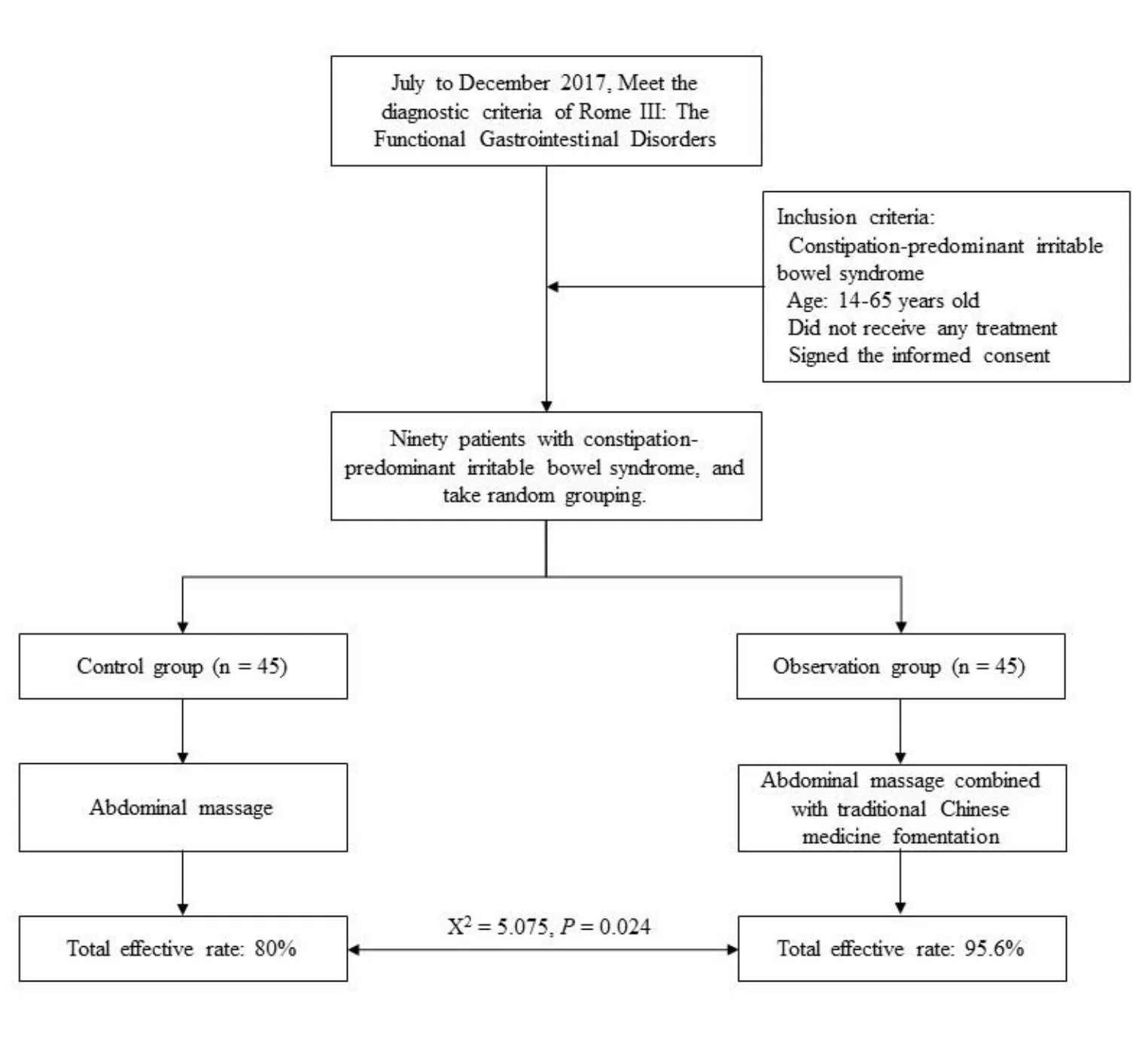
Figure 1 Processing flow of 90 cases of constipation-predominant irritable bowel syndrome
Inclusion criteria
Constipation-predominant irritable bowel syndrome patients who meet Rome III: The Functional Gastrointestinal Disorders. Patients aged 14-65 years old. Did not receive any Chinese or Western medical treatment in the past one month, and signed the patient's informed consent.
Clinical data
From July 2017 to December 2017, 90 patients with irritable bowel syndrome were selected and randomly divided into abdominal massage control group and abdominal massage combined with traditional Chinese medicine fomentation treatment observation group, with 45 cases in each group.
Method
The patient lies on the treatment bed, fully exposing the upper abdomen. The nurse stood on the right side of the patient and first rubbed the Zhongwan (RN12), Shenque (RN8), Qihai (RN6), Guanyuan (RN4) and other acupoints with her fingers until the feeling of swelling and numbness appeared [3]. Then use the palm of your hand to rub the middle and lower abdomen counterclockwise with the Zhongwan (RN12) acupoint as the center. The action should be slow, gentle and strong, and the treatment should be 5 minutes. Finally rub the abdomen for 5 minutes. During treatment, pay attention that the temperature of the nurse's hands should not be too low, so as not to cause discomfort to the patient. In addition, during the treatment process, pay attention to keeping the patient's abdomen warm and protect the patient's privacy. This treatment should not be used within 30 minutes before and after meals.
Control group
After the treatment is completed according to the abdominal massage operation, pay attention to the warmth of the abdomen, and the patient should rest for 30 minutes. Instruct patients to eat more crude fiber foods, fruits, vegetables, and light and easy-to-digest foods [5]. Should develop regular bowel habits. Encourage patients to drink more water [4], and appropriate daily activities to promote bowel movements.
Observation group
After the massage is over, pay attention to keeping the abdomen warm. After the patient rests for 10 minutes, apply fomentation with traditional Chinese medicine.
Traditional Chinese medicine fomentation should use Chinese medicine such asRadix Aconiti Lateralis Preparata,Rhizoma Zingiberis,Flos Caryophylli,Cortex Cinnamomi,Herba Asari,Fructus Schisandrae,Semen Cassiae,Radix et Rhizoma Rhei,Herba Cistanches, to achieve the effects of nourishing Yin, clearing heat and detoxification, and moisturizing the intestines.
Put the Chinese medicine in a gauze bag of 30×30 cm size, and soak it in water for 30 minutes. Put the soaked traditional Chinese medicine bag in the medicine pot and cook at a temperature of 90°C. Use it when the temperature of the medicine bag drops to 50 °C ± 2 °C.
Take out the traditional Chinese medicine fomentation and apply it to Shenque (RN8), Qihai (RN6), Guanyuan (RN4) and other acupoints. During the fomentation treatment, the nurse pressed the traditional Chinese medicine pack several times to ensure that the hot pack adhered to the acupuncture points.
Treatment is performed once a day, the treatment time of fomentation is 15 minutes, and a course of treatment is 15 times.
The temperature must be mastered during fomentation treatment with traditional Chinese medicine. Pay attention to the patient's tolerance to heat to avoid burns. Especially the elderly and those with slow feelings of cold and heat should make frequent patrols and strengthen care to avoid aggravation of the condition.
Before treatment, pay attention to assess the patient's skin for ulceration, skin disease, etc., and keep the treatment points clean and dry. After treatment, instruct patients to drink more water to stimulate bowel movements.
Result
Criteria for treatment outcome
Cure: The defecation is regular and unobstructed, 1-2 times a day or once every 2 days, the stool volume is normal, and there is no recurrence in the short term.
Effective: The bowel movement is smoother than before, the number of bowel movements is increased but less than normal, and the amount of bowel movement is basically normal.

Table 1 Comparison example of two groups of curative effect
Invalid: Irregular bowel movements and no change in stool volume.
Clinical effect
The average age of the control group was 44 ± 15.22 years, including 20 males and 25 females. The course of the disease was 2.14 years. The average age of the observation group was 41 ± 11.5 years, including 21 males and 24 females. The course of disease was 1.8 years. Comparing the age, gender, course of disease and other data of the two groups of patients, they are all comparableP> 0.05.
The total effective rate of the control was 80%, of which 11 cases were cured and 25 cases were effective. The total effective rate of the observation group was 95.6%, of which 20 were cured and 23 were effective. After statistical analysis of the two groups, it was found that X2= 5.075,P= 0.024, indicating that abdominal massage combined with fomentation has a better therapeutic effect than abdominal massage alone.
Discussion
Abdominal massage is one of the external treatments of traditional Chinese medicine. It is guided by the basic theories of traditional Chinese medicine and combines traditional medicine with modern science and technology to act on the meridians and acupoints. Through the function of meridian and Qi, it can invigorate the deficiency and relieve the solid, and reconcile the Yin and Yang. The out-of-balance viscera, yin and yang can be improved and adjusted again, so as to promote the recovery of functions and achieve the purpose of treatment and health care.
Traditional Chinese medicine fomentation therapy is a traditional external treatment method. This operation method is simple, easy to learn and use, and does not require special medical equipment. It can make the patient painless and easy to accept without destroying the integrity of the skin. The traditional Chinese medicine used has the effects of nourishing yin and clearing away heat, moisturizing the intestines and purging the intestines. Moreover, the irritation of the gastrointestinal tract during oral administration is avoided, and the toxic and side effects of the drug are small. In addition, traditional Chinese medicine fomentation therapy does not have strict requirements for the treatment environment, avoiding the complexity of the treatment method.
Abdominal massage is the use of abdominal massage on the projection of the abdominal area of the gastrointestinal body surface, through the direct action of massage, to promote gastrointestinal peristalsis [3]. The traditional Chinese medicine fomentation is to use gauze to soak the medicinal solution and apply it to the affected area. Through the penetration of the medicinal solution and the principle of heat effect, the medicinal properties are expressed. The combination of abdominal massage and traditional Chinese medicine fomentation in the treatment of IBS has a significant clinical effect.
In short, abdominal massage [5] therapy is one of the precious heritages of Chinese medicine and an important part of the external treatment of Chinese medicine. This method combined with traditional Chinese medicine fomentation therapy embodies the environmental protection and non-invasive advantages of traditional Chinese medicine treatment, and is convenient for clinical popularization and application. With the application of external treatment of Chinese medicine, it will play a more important role in disease prevention and treatment, and protection of people's physical and mental health.
- Nursing Communications的其它文章
- The effect of Bach flower remedies on quality of life and sleep in hospital professionals during the Covid-19 pandemic
- The effects of the application of WeChat as a platform combined with problem-based learning in nursing teaching in China: a systematic review and meta-analysis
- Practice of the construction and management of TCM nursing outpatient service — takes a breast specialty in a third-grade hospital in Beijing as an example
- Analysis of ideological education status of male undergraduate nursing students