
思維導圖在英語讀后續寫中的應用
——以2021 年新高考Ⅰ卷讀后續寫為例
2021-12-20 03:36:04周小娜張明良
福建基礎教育研究 2021年11期
周小娜 張明良
(1.泉港區第二中學,福建 泉州 362801;2.泉港區第一中學,福建 泉州 362801)
一、引言
“思維導圖”又稱心智導圖,是表達發散性思維的有效圖形思維工具,它由英國人類大腦潛能與學習法研究專家東尼·博贊(Tony Buzan)創建,是一種簡單、有效且實用的思維工具。它通過層級結構圖培養學生發散思維、構建網絡知識從而提高學習能力的一種系統化工具,是幫助我們學習語言的工具。《普通高中英語課程標準(2017 年版)》明確提出,英語教學應以主題意義為引領,以語篇為依托,整合語言知識、文化知識、語言技能等學習內容,創設具有綜合性、關聯性和實踐性的英語學習活動,引導學生采用自主、合作的學習方式,參與主題意義的探究活動,并從中學習語言知識,汲取文化營養,塑造良好品格,提高學習效率。[1]
王初明提出:讀后續寫是一種將語言輸出與輸入緊密結合、旨在加速提高學生語言運用能力的方法。[2]思維導圖在讀后續寫中的運用,能夠幫助學生形成系統的學習和思維習慣,能夠激發學生將研究對象進行聯想和創造,從而將各種表面上看起來是零散的知識點、語言項目等關聯起來,使之成為結構嚴謹、邏輯貫通的一個層級圖形。也有研究者提出,教師可以把思維導圖應用到高中英語讀后續寫教學中,幫助學生梳理文本信息,把握文本的結構脈絡,領悟作者的寫作意圖,體驗作者的情感表達等,從而引導他們在自主探究和構建思維導圖的過程中鍛煉思維能力和語言表達能力。[3]
讀后續寫最大的優勢在于將語言的模仿與內容的創新相結合,在釋放讀者想象力的同時提高其準確使用外語的能力。讀后續寫除了要求學生必須掌握豐富的詞匯和句式外,還要求學生有銜接內容構思與情節相符合的能力。思維導圖有助于提高學生的語言表達能力,發展學生的高階思維。所以說,思維導圖是一種能很好為學生創設具有綜合性、關聯性和實踐性的英語學習工具。
二、思維導圖在讀后續寫中的實踐
本文闡述了如何運用思維導圖進行讀后續寫創作,幫助學生理解文章宏觀結構和內部邏輯關系,梳理與整合關鍵信息,探究語篇主題,從而幫助學生提高寫作能力,提升思維品質。記敘文六要素:時間、地點、人物、起因、經過和結果,利用Story Mountain 模型的background(時間、地點、人物)、rising action(起因)、climax(高潮)、falling action(經過)、resolution(結果),其示意圖如圖1:
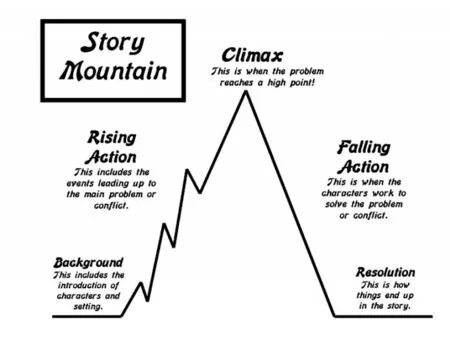
圖1
本文以2021 年新高考I 卷讀后續寫為例,談談思維導圖在讀后續寫中的實踐應用。2021 年新高考I 卷讀后續寫真題原文如下:
A MOTHER’S DAY SURPRISE
The twins were filled with excitement as they thought of the surprise they were planning for Mother’s Day.How pleased and proud Mother would be when they brought her breakfast in bed.They planned to make French toast and chicken porridge.They had watched their mother in the kitchen.There was nothing to it.Jenna and Jeff knew exactly what to do.(其余略)
該題要求如下:
1.續寫詞數應為150 左右。
2.請按如下格式在答題卡的相應位置作答。
As the twins looked around them in disappointment,their father appeared.
__________________________________________
The twins carried the breakfast upstairs and woke their mother up.
__________________________________________
以下是本節課的教學流程:
Step 1:畫出Bubble Map 模型,分析文本,把握故事梗概
讓學生通過對照記敘文的六要素(who,what,when,where,how,why),利用思維導圖,進行文本解讀,讓學生了解文章的主旨大意、把握故事梗概(如圖2)。
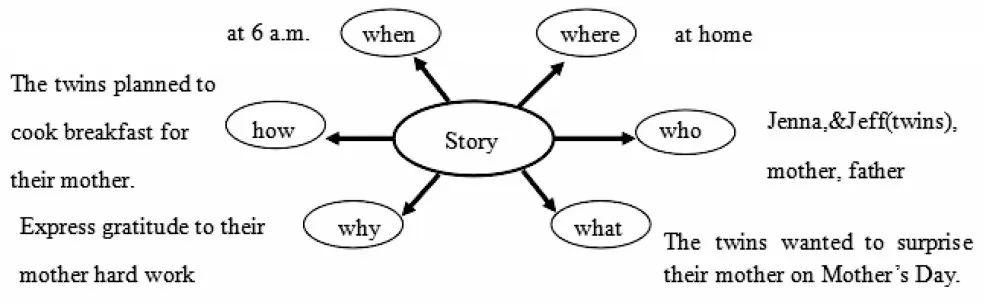
圖2
[設計意圖]培養學生的分析能力,落實語言能力。
Step 2:畫出Story mountain 模型,梳理情節線
解讀文本后,應用Story mountain 模型,讓學生把握故事的發展,beginning→rising action→climax→falling action→resolution,從而合理推測續寫情節,明確寫作方向(如圖3)。
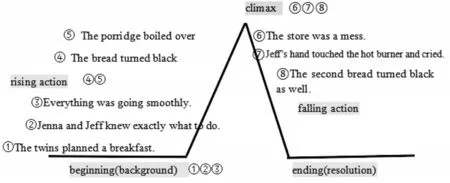
圖3
[設計意圖]培養學生的歸納總結、推理判斷等能力。
Step 3:用Story mountain 模型,梳理情感線
在故事發展的同時,發生的心理活動,進行情感態度判斷,為后文續寫人物的心理和動作做好鋪墊(如圖4)。
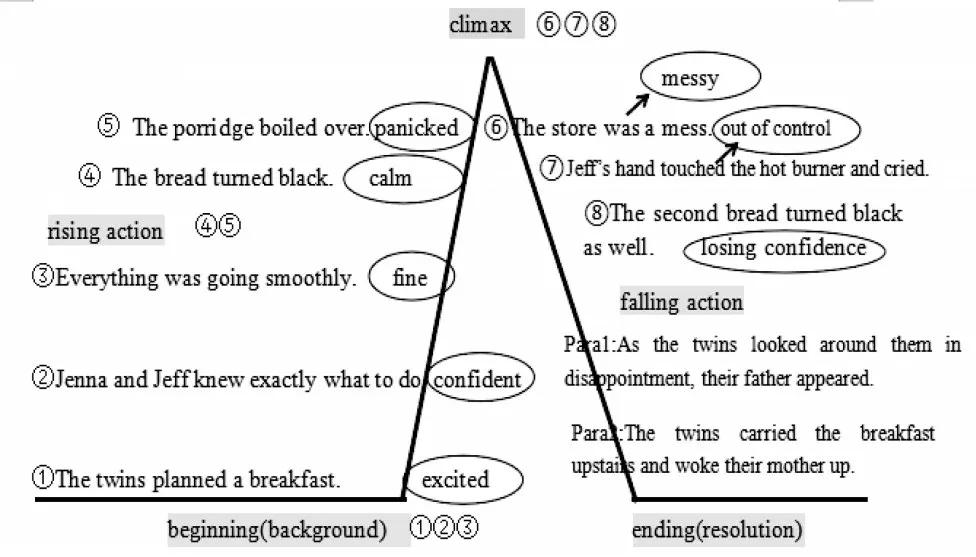
圖4
[設計意圖]培養學生的情感態度,樹立正確的價值觀。
Step 4:預測續寫部分的情節
剖析兩個段首句,通過讓學生回答一些問題,引導學生合理推測續寫部分的情節和情感走向,培養學生的推理能力(如圖5)。
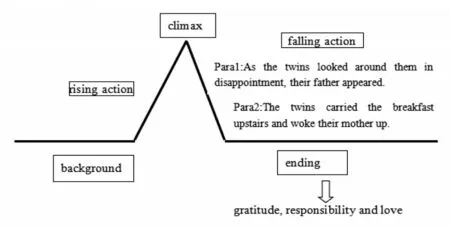
圖5
Para1:As the twins looked around them in disappointment,their father appeared.Q1:Would the father help them out?
Q2:How did the father help them?
Q3:How did they feel?
Para 2:The twins carried the breakfast upstairs and woke their mother up.
Q1:What would the twins say to their mother?
Q2:How did their mother react to the surprise?
Q3:What does the story intend to tell readers?
[設計意圖]分析故事的情節發展、情感態度以及主題后,引導學生進行讀后續寫創作。教師在讀后續寫的教學中,利用思維導圖,能夠激發學生的靈感,發展創造性思維。在有內容可寫的情況下,充分調動了學生寫作的積極性。
Step 5:完成續寫
學生根據以上的文本解讀,根據情節發展,續寫故事。
Possible version:
As the twins looked around them with disappointment,their father appeared.Quite confused,their father wondered what they were doing.Looking at their father,the twins dropped their heads in embarrassment and said,“We just wanted to give Mother a surprise.”Looking at the mess,their father patted them on the shoulders,encouraged them to go on and put on an apron to help them.With the help of their father,the twins managed to finish French toast and chicken porridge.The clock was ticking.It was time to wake up their mother up.
The twins took their breakfast upstairs and woke their mother.On seeing what they were holding,Mother immediately knew everything.A smile lit up her face and her eyes glittered with happiness.Though it was still chilly,mother was bathed in the sunshine of love.She hugged the pairs affectionately and said,“I am proud of what you did.You are the real surprise that God sent to me!”Mother took the breakfast,which was the most delicious breakfast she had ever tasted.At that moment,Father opened his eyes wide,pretending to be surprised.The twins smiled.It was gratitude,responsibility and love that make their home the harbor of heart and the paradise of love.
[設計意圖]培養學生語言能力、思維品質以及學習能力,并基于文本對情感進行升華,讓學生學會感恩、包容、愛和責任。
三、結語
運用思維導圖進行讀后續寫創作,有助于激發學生寫作的積極性,發展學生的創造性思維,而創造性思維是一種應用獨特、新穎的方式解決問題的思維過程,是人類思維的高級表現形式。它幫助學生利用圖形構建寫作的方向,把握文章深層立意,能夠讓故事情節更加清晰,內容更加豐富,語言更加多樣。在新課程標準的教學前提下,通過運用思維導圖可以促進“語言能力、文化意識、思維品質、學習能力”四大核心素養的落地生根,進一步培養具有中國情懷、國際視野和跨文化溝通能力的社會主義建設者和接班人。
總之,思維導圖運用于讀后續寫,可以為學生學習英語創造條件,可以培養學生學習的主動性、積極性,培養學生能發現問題、會分析問題、會解決問題的能力,能讓學生體驗學習英語的樂趣,可以讓學生在學習過程中不斷超越自我,讓學生愛學習、能學習、會學習,并在實踐中反思,在體驗中成長,為進一步學習打下堅實的基礎。
猜你喜歡
中國生殖健康(2020年5期)2021-01-18 02:59:48
文苑(2020年4期)2020-05-30 12:35:30
北極光(2019年12期)2020-01-18 06:22:10
小太陽畫報(2019年10期)2019-11-04 02:57:59
制造技術與機床(2019年10期)2019-10-26 02:48:08
電子制作(2018年18期)2018-11-14 01:48:06
中國生殖健康(2018年5期)2018-11-06 07:15:40
小學生作文(中高年級適用)(2018年3期)2018-04-18 01:24:47
華北電力大學學報(社會科學版)(2016年4期)2016-12-01 03:59:30
小學教學參考(2015年20期)2016-01-15 08:44:38
