《教育中的人工智能:學習速度的變化》(五)
2021-12-08 13:12:26
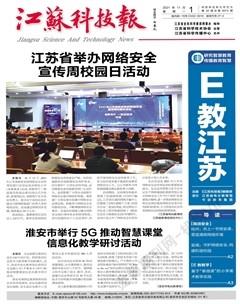
江蘇科技報·E教中國 2021年19期
Product by UNESCO IITE (The UNESCO Institute for Information Technologies in Education)聯合國教科文組織教育信息技術研究所
該報告為UNESCO IITE新推出的“教育的數字化轉型”(Digital Transformation of Education)系列出版物的第一期。據悉,“教育的數字化轉型”系列將包括政策簡報、分析報告和反思論文,以探討由于技術的使用及其對教育和人類生活其他領域的影響,教育領域正在發生和正在出現的根本性變化。
4. Challenges
4.1 Equity, Equality and Access
The term ‘digital divide has been in use since the late 1990s. Although the manual recording of data by educators and institutions can help to address this divide, as electronic data capture becomes the norm, learners who have limited access to the information required to assist them in their studies, and the ability to generate and share electronic data, may be disadvantaged when it comes to the building of personalized learning pathways which adequately identify and address their needs.
4.2 The Ethical Dimension
At present it is private companies who are leading the way in bringing the power of AI to education, giving rise to concerns about the privacy, protection and use of student data. An ethical foundation for AI is required during the development of AI-enabled services and solutions: not just at the deployment stage. How can we ensure that gender, racial, socio-economic and ability biases are not introduced at the programming level? How can we ensure that social and cultural stereotypes are not promulgated? How can we ensure that all learners, regardless of where they live, have the same access to the benefits which will accrue?
4.3 Technology Dependence
An increased reliance upon AI will not be entirely to our benefit. We can expect to see an increased number of jobs replaced by automation, in both the developed and developing world. There is also a danger that our ability to delegate tasks and cognitive functions to machines can increase our dependence upon technology whilst eroding our own ability to perform these, in what might be termed a ‘use it or lose it scenario. Do students who rely on a computer keyboard lose the ability to write legibly? Do those who perform calculations using a spreadsheet or calculator become less skilled at mental arithmetic? Has a reliance upon GPS affected our ability to navigate? As these technologies become smarter and more capable, it will also become more important than ever to know where it is we want to go.
4.4 Continuous Professional Development
To derive the benefits of AI in education, it will be necessary to equip educators and administrators with the skills to assess and interpret the results. Effective AI solutions generate easy-to-interpret visualizations and dashboards which allow users to interrogate the data and absorb insights in real time. Custom views and reports, tailored for different roles and functions, can easily be produced. The core focus of CPD in this context involves training educators to leverage the insights generated so as to incorporate them into their teaching practice, and to assist them in creating personalised learning pathways for their students.
5. Whats Next?
5.1 New Ways of Doing
5.1.1 Metacognitive Scaffolding
AI can play a role in metacognitive scaffolding by allowing the students themselves to benefit from the insights generated during the course of their learning pathways. Increasingly, students will become the primary users of AI solutions and services, rather than simply the subjects of the data analyzed by educators, administrators and system owners. A learner who is provided with greater insight into how they learn, and how they think, has greater agency and control over their education, and is equipped with vital knowledge of self to act as a bedrock for lifelong learning.
5.1.2 Personalized Assessment and Credentialing
AI will also play an important part in addressing the next great challenge being offered to education technologists: how to support personalized assessment. We know that current forms of assessment in our schools and colleges are seldom aligned to the skills that will be demanded of students when they enter the world of work. Some of the higher-order thinking skills that will be required in a 21st century environment — recall, comparison, analysis and inference — but soft skills, ‘people skills, moral character, teamwork, collaboration and the ability to work effectively as part of a team are difficult to evaluate using these traditional forms.
Many institutions and an increasing number of school systems are investigating the use of micro-credentials that measure complex and general learning capabilities, including such 21st century skills as critical thinking, creativity, communication skills and entrepreneurship. If these new credentials are to remain relevant after their introduction it will also be essential to conduct a continuous analysis of their efficacy and effectiveness, and to present these findings and insights using real-time dashboards tailored to each stakeholders area of interest or expertise.
譯文
4. 挑戰
4.1 平等、公平與機會
“數字鴻溝”一詞自20世紀90年代末開始使用。盡管教育工作者和機構手工記錄數據有助于彌補信息富有者與信息貧困者之間的差距,但隨著電子數據采集成為常態,部分學習者獲得幫助其學習所需信息的機會有限,并且無法生成和共享電子數據,在建立個性化學習途徑以確定和滿足個人的需求時,可能處于不利地位。
4.2 倫理方面
目前,私營公司在將人工智能的力量引入教育領域方面起著帶頭作用,這引起了人們對學生數據的隱私、保護和使用的擔憂。對人工智能的倫理基礎的考慮不僅僅是在人工智能服務和解決方案的部署階段,而是應該貫穿在整個開發過程中。我們如何確保在編制方案時不引入性別、種族、社會經濟和能力偏見?我們如何確保社會和文化的陳詞濫調不被傳播?我們如何確保所有學習者無論身處何處,都能同樣享受到人工智能帶來的好處?
4.3 技術依賴
增加對人工智能的依賴并不完全有利于我們。我們可以預期,在發達國家和發展中國家,自動化將取代越來越多的工作崗位。還有一種危險,即將某些任務和認知功能委托給機器可能會增加我們對技術的依賴,同時削弱人類執行這些任務的能力,也許這就是“要么使用,要么失去”。依賴電腦鍵盤的學生會失去清晰書寫的能力嗎?那些使用電子表格或計算器進行計算的人在心算方面是否變得不那么熟練?對GPS的依賴是否影響了我們的導航能力?隨著這些技術變得越來越智能、越來越成熟,了解我們想要去哪里也將變得比以往任何時候都重要。
4.4 持續的專業發展
為了使人工智能有益于教育的發展,有必要讓教育者和管理者掌握評估和解釋數據結果的技能。
有效的人工智能解決方案產生易于理解的可視化表和儀表盤,讓用戶可以實時查詢數據并吸收見解,可以很容易地生成針對不同角色和功能定制自定義視圖和報表。在此背景下,持續的專業發展的核心重點是培訓教育者學會將人工智能所產生的見解融入教學實踐,并幫助他們為學生創建個性化的學習途徑。
5. 未來展望
5.1 做事方式變革
5.1.1 元認知障礙
人工智能可以在元認知“腳手架”中發揮作用,讓學生自己從學習過程產生的洞察力中獲益。學生將越來越成為人工智能解決方案和服務的主要用戶,而不僅僅是教育者、管理員和系統所有者分析數據的對象。學習者對自己的學習方式和思維方式有更深入的了解,就會對自己的教育有更大的能動性和控制力,并且具備重要的自我知識也是終身學習的基石。
5.1.2 個性化評估和認證
人工智能還將在應對教育技術專家面臨的下一個重大挑戰上發揮重要作用,即如何支持個性化評估和認證。我們知道,目前高校的評估形式很少與學生進入職場時所需的技能相一致。21世紀環境中所需的一些高階思維技能,如記憶、比較、分析和推理,可以用傳統的標準化考試來評估,但軟技能、人際交往技能、道德品質、團隊合作、協作等很難用這種形式來評估。
越來越多的機構和學校正在研究使用微型證書來衡量復雜和一般的學習能力,包括21世紀技能中的批判性思維、創造力、溝通技能和創業精神等技能。如果這些新證書在引入后仍具有相關性,人工智能可以對其效力和有效性進行持續分析,并針對利益相關者的興趣或專業領域定制實時儀表盤展示這些發現和見解。
猜你喜歡
故事作文·高年級(2023年10期)2023-10-23 11:21:18
華人時刊(2022年13期)2022-10-27 08:55:52
當代陜西(2022年4期)2022-04-19 12:08:52
福建基礎教育研究(2019年9期)2019-05-28 01:34:27
商界(2019年12期)2019-01-03 06:59:05
IT經理世界(2018年20期)2018-10-24 02:38:24
北京教育·普教版(2018年1期)2018-01-29 20:45:18
中國公路(2017年19期)2018-01-23 03:06:33
學苑創造·A版(2017年6期)2017-06-23 14:10:46
小康(2017年16期)2017-06-07 09:00:59