
China’s Consumption Market on the Road to Recovery
2021-11-26 08:58:30ByLynnYu
China’s foreign Trade 2021年1期
By Lynn Yu
The Party leaderships pro- posals for formulating the 14th Five-Year Plan (2021-2025) for National Economic and Social Development and the Long-Range Objectives Through the Year 2035 were adopted by the fifth plenary session of the 19th CPC Central Committee in October of 2020. The proposals clearly stated the need for “comprehensively promoting consumption” and made concrete arrangements for how to achieve this target. It is estimated that during the 14th Five-Year Plan period, the consumption and retail market will undergo rapid growth to become the backbone of Chinas economic development.
Recently, KPMG released a report entitled “Industry Outlook for the 14th Five-Year Plan Period”, in which it is stated that during the post-pandemic era, Chinas consumption market has shown a strong momentum of recovery. The recovery is mainly being propelled by production, investment and exports in the manufacturing industry. As the Chinese economy further recovers, the consumption and service sectors will also play a more important role.
Chinas brand upgrading comes at the right time
The “dual circulation” new development pattern has been written into the 14th Five-Year Plan, and will become the core guideline for Chinas high-quality economic development. The internal economic circulation and the building of a strong domestic market will become the key priorities of the “dual circulation” strategy. On the one hand, it is important to optimize the supply-side structure through the market-based reform of factors and upgrade the supply side through innovation; on the other hand, it is important to develop new scenes and channels for consumption, stimulate the domestic market and achieve consumption upgrading.
The report said that the upgrading of both supply and demand will enable the Chinese economy to act as the dual centers of both “supply and demand” in the global value chain. China will be able to shift from the lower and middle range to the upper and middle range of the global value chain. Against this backdrop, foreign brands will not have a clear advantage in the domestic consumption market. All brands should follow the channel of internal circulation and achieve new development through localization. China brands have distinct competitive edges in terms of both supply and demand, and will thus achieve raid growth.
From the perspective of the demand side, people born in the 1990s and 2000s will become the main force driving consumption during the 14th Five-Year Plan period. Born in the era of Chinas economic rise and the high-speed development of information technology, this group of consumers have strong confidence, high recognition of and pride in national culture, and a more inclusive concept of consumption; also in addition, they are highly receptive to electronics and online products and services, and have a more adventurous and personalized consumption concept. These new features of Chinese consumers will create a huge space for Chinas brand development.
On the supply side, some of the industry and supply chain of foreign trade have shifted their focus onto providing services for national brands against the backdrop of the pandemic. These moves will help national brands increase their efficiency and shift their business models from “Made in China” to “Made for China”.
Chinas digital economic boom has also enabled many national brand operators to capture consumers demands and seize new consumption opportunities in a more efficient way. These brand operators use livestreaming, short videos, content marketing and many other platforms to reach specific groups of consumers, build their brand images and improve their brand value. The report shows that in the future, the product brand value will surpass the channel brand value. Correspondingly, the rise of Chinas brand will also be expected.
Livestreaming e-commerce, private traffic and duty-free economy are booming
The pandemic-induced stay-athome economy and non-contact economy has caused a boom in new consumption models such as livestreaming and private traffic channels represented by services such as WeChat.
The proposals also clearly stated need for the “encouragement of new consumption model development”. As more and more stimulus measures are released, and the new infrastructure and digital economy continue to empower the retail industry, there will be more and more online consumption scenarios. The most prominent of these will be livestreaming e-commerce.
The COVID-19 pandemic in 2020 placed livestreaming e-commerce under the spotlight. More than 10 million livestreaming activities took place during the first half of this year. The strong market effect has led all industries to use livestreaming platforms to sell products. Taking livestreaming anchors as an example, during the ear- ly phases, professional livestreamers, celebrities and renowned entrepreneurs were the major anchors, while later almost all businesses, both large and small, have their own livestreaming anchors. Livestreaming is developing towards being more inclusive and beneficial for all. Meanwhile, the varieties of products covered by livestreaming have become more and more diversified. Besides traditional products such as fast-retail products, cosmetics and agricultural produce, service products including tourism and financial products are also reaching consumers through livestreaming.
Livestreaming e-commerce is reshaping the retail industry in three distinct aspects: people, product and scenarios. It has become the new business focus for everyone from all social walks of life. It is estimated that the overall scale of livestreaming will surpass the RMB 1 trillion achieved in 2020 to reach RMB 1.05 trillion. Moreover, the penetration rate of the e-commerce industry will reach 8.6%. It is also estimated that in the year 2021, livestreaming e-commerce will continue to undergo rapid growth, with the scale approaching RMB 2 trillion and the penetration rate reaching 14.3%.
In terms of private traffic, private traffic channels mainly include online shopping applications based on WeChat, Alipay and Baidu Intelligence. In contrast to traditional e-commerce platforms, businesses can directly contact customers without needing to go through the platforms. The essence of this is the transformation from platform digitization to business digitization.
For traditional e-commerce platforms, the cost for access to customers is too high to bear for small and medium-sized businesses. Comparatively, the cost for access to customers is relatively low through private traffic. Businesses do not need to purchase traffic at a high price, but instead need to operate their private traffic and raise the number of customers. The cost for developing customers will be low and profits will be much higher. According to the half year report on WeChat released by QuestMobile 2020, life services and mobile shopping have become the key focal points of these platforms, but Baidu, Alibaba and Tencent have adopted different approaches for marketing. The WeChat app has wide coverage; the Alipay app has a strong performance in terms of financing and offline services; and the Baidu Smart app has the competitive edge in mobile videos.
In terms of the duty-free economy, duty-free commodities have price competitiveness as they are free from tariffs, value-added tax and consumption tax. As such, duty-free has become an important policy tool for all countries to stimulate consumption and promote the development of the tourism industry. In March 2020, the Implementation Opinion of Promoting Consumption Scale and Quality and Forming a Strong Domestic Market was released, in which the improvement of policies regarding duty-free shop in cities, the establishment of a batch of city duty-free shops with Chinese characteristics, the expansion of duty-free business at ports and the opening of more duty-free shops at the port are emphasized.
The Overall Plan for the Construction of Hainan Free Trade Port released in June 2020 mentions that the duty-free shopping quota for each person has been raised to RMB 100,000, and the number of com-modity varieties has been increased to 12. From July 1 to October 30, the duty-free shopping volume in Hainan rose by 58.8%. After that, the Wangfujing Group obtained a duty-free retail license. Besides in-store shopping, the online duty-free shopping business has also grown quickly due to online shopping technology. Recently, the China Duty Free Group launched an app on WeChat. LVMH Groups subsidiary DFS Group also purchased 22% of shares in Guomian Yigou, an e-commerce brand of the Shenzhen Duty-Free Group, in order to enter the online duty-free shopping business.
Sinking market channels create large space for business
Sinking market channels mainly targets the markets in tier-three cities, towns and rural regions. This includes approximately 200 prefecture-level cities, 3,000 towns and 40,000 villages, covering 70% of Chinas population. In recent years, as the network and logistics infrastructure continue to improve, young consumers in small towns and villages have become an important force for consumption. They have strong purchasing power, and the scale of consumption has risen quickly.
Data from 2017-2019 shows that the average growth rate of online sales in rural regions is 5 percentage points higher than the national average. During Q2 of 2020, approximately 86.6% of new mobile internet users come from sinking markets. The proposals also state that it is important to develop non-contact transaction and services, promote the integration between online and offline consumption, and expand the consumption markets in rural and urban areas.
The long-tail effect of sinking market channels would be impossible without supportive policies issued by the national government. Thanks to the rapid growth of e-commerce, the national government has designed a policy framework from three aspects, including targeted poverty alleviation, expansion of domestic demand, and rural rejuvenation.
Local life services witness more development opportunities
as calculated by the standards of the World Bank, in 2016, Chinas middle-income population had surpassed 400 million, accounting for more than 30% of the total population. The State Council Development Research Center estimates that by 2025, Chinas middle-income population will surpass 560 million, accounting for more than half of Chinas urban population.
The report points out that the“new city middle class” will lead the change in Chinas consumption concept from quantity to quality. On the one hand, the proportion of consumption of necessities will further drop, while the consumption of food and clothes will focus more on health and brands; on the other hand, the demands for service consumption will further expand and shift towards quality and the high-end area. For example, tourism, sports, exercise, nursing care and housekeeping will all have big development potential. The integration of local life service platforms is recommended to seize these opportunities.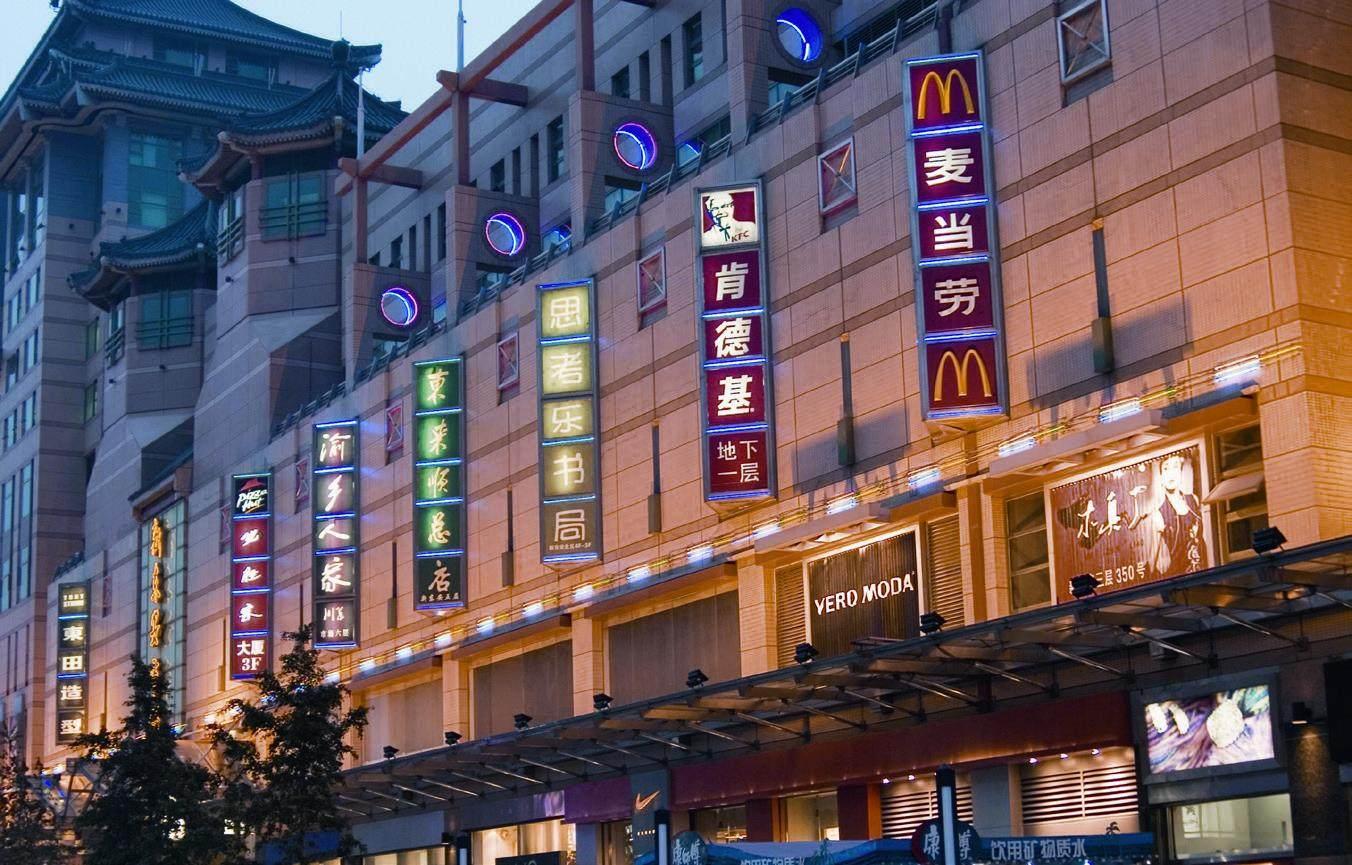
Community group buying is a new retail model based on communities and social relationships. As an important channel for local life service markets, community group buying has become quite popular. During the pandemic, people were forced to stay at home and offline purchasing channels accordingly encountered big difficulties. Meanwhile, as the flow and management of information is normally based on community, community group buying has become more and more prevalent. Community group buying has recently mainly included the purchasing of fresh products, in order to help solve the daily demands of consumers. Community group buying has been growing rapidly during the pandemic.
According to data from the Ministry of Commerce, the proportion of users purchasing fresh products through community group buying has risen by approximately 10 percentage points during the pandemic, accounting for 12% of the total amount of fresh products purchased. The large market opportunities presented by this have attracted internet giants, who are now engaging in the community group buying business. The government has also enhanced supervision of the industry from various perspectives and has provided guidance for the development of the industry. The report says that, in the future, community group buying will achieve more balanced development that features the promotion of internal demands, and will improve peoples lives, stabilize employment and boost the system, all of which will be thanks to the joint efforts of all members of society.
- China’s foreign Trade的其它文章
- The Ongoing Year Will Be Much Better than 2020 in All Senses
- Making Digital Platforms Work for Asia and the Pacific
- Chinese High-Net-worth Individuals Have the Highest Confidence in the Future Economy of China
- Modern Tea Becomes Popular in the Capital Market
- China Enhances Financial Support for Major Foreign-Funded Enterprises
- RCEP to Deepen Economic Cooperation