
Healthy tourism initiative in the age of COVID-19 in Indonesia
2021-10-23 02:53:40MdAdyWirawanNyomanSutarsaPutuAyuSwandewiAstuti
I Md Ady Wirawan ,I Nyoman Sutarsa ,Putu Ayu Swandewi Astuti
1Department of Public Health and Preventive Medicine,Faculty of Medicine,Udayana University,Bali,Indonesia
2Travel Medicine Research Group,Health Research Centre,Udayana University,Bali,Indonesia
3Rural Clinical School,ANU Medical School,Australian National University,Canberra,Australia
The severity of COVID-19 epidemic is more salient for regions that are heavily reliant on tourism industry.The pandemic along with travel restrictions,border closures and social distancing requirements pose serious threats for the sustainability of tourism sectors in many regions of Indonesia,putting livelihoods for the whole societies at risk.
In May 2020,the Ministry of Tourism and Creative Economy of Indonesia proposed a Cleanliness,Health,Safety,and Environmental Sustainability Program[1] to accelerate the recovery of the ‘dying’tourism sector amid COVID-19 epidemic.This program sets out practical solutions to balance economic and public health risks through certification of hotels,restaurants and tourist attractions.Key elements of the certification process include:provision of hand washing facilities,temperature screening,adjustment of layout to allow physical distancing,regular disinfection,and mandatory use of masks at tourist attractions.While these COVID-19 safe measures are essential,they are insufficient when the national and local responses to control the pandemic remain fragmented.New COVID-19 cases increased by 58%-118% following each of four long holidays throughout 2020[2] as local and domestic tourism remains open.
Tourism industry intersects intricately with air travel policies.During the early phase of the pandemic,the Bali Government implemented repatriation flights for approximately 22 000 Balinese migrant workers,mainly those working for cruise ships[3].They were required to undertake COVID-19 screening test at the international gate and followed by mandatory isolation at government facilities.This strategy,however,was hampered by incomplete migrant worker database,leading to difficulties in predicting the actual number of workers and in obtaining information about the departing country and the arrival airport in Indonesia.Many of these workers had gone through without the screening test or mandatory isolation,contributing to an increase of locally transmitted cases in the villages where the migrant workers reside.Additionally,conflicting policies regarding international travel exemptions or testing requirements for domestic air travel mandated by the national and local governments have led to confusion and inconsistencies during the implementation.
These data signify the challenges of balancing economic benefits and public health risks from tourism industry including air travel.Systemic risks posed by the pandemic require systemic responses from all sectors and societies.Organising public health measures at tourist destinations necessitate concerted actions of broader policy communities and implementers beyond the health and tourism sectors.The pandemic invites an integrated policy framework to promote safe,resilient and sustainable tourism industry.This policy framework must include regulations on border control,infrastructure policies such as the provisions of clean water and sanitation,health facilities and safety in tourist destination (i.e.
the Cleanliness,Health,Safety,and Environmental Sustainability Program),outreach and enforcement programs to engage tourism industry in implementing healthy tourism initiatives,and community system strengthening activities at tourist destinations to improve participation of local communities.Regulations on border control,for instance,must incorporate a decision support mechanism of exit and entry screening for airline travellers during a pandemic by employing algorithm and framework of infectious disease control measures in air travel[4].Engaging tourism industry and local communities to support the realisation of healthy tourism initiatives is crucial considering the benefits offered by sustainable tourism for local economies and livelihoods.Indeed,tourism actors have always wanted to be involved in travel health promotion[5].The COVID-19 pandemic offers a new political responsibility where tourism,health,local community and other stakeholders may come together to create integrated institutions or mechanisms to promote a healthy,sustainable and resilient tourism industry in Indonesia (Figure 1).The provision of travel health services at tourist destinations must be coherently implemented with relevant public health initiatives (e.g
.,diseases surveillance,health promotion,environmental health and safety) to protect the wellbeing of travellers and local communities.In the past year,decisions on closing and re-opening tourist attractions or destinations were sporadic and multiple guidelines for different types of tourism industry have been introduced.While these guidelines provide temporary solution for the recovery of tourism industry,the implementation strategies must be designed based on site-specific health,social and safety assessment for each tourist attractions or destinations[6].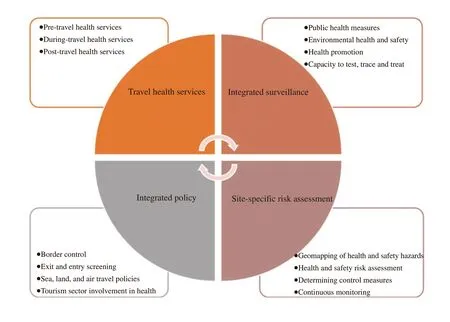
Figure 1.Conceptual framework for healthy and sustainable tourism in Indonesia during and after COVID-19 pandemic.
Systemic risks need comprehensive responses.Tourism sector needs a paradigmatic shift,moving away from a siloed model to an integrated approach to promote healthy,safe,sustainable and resilient tourism.This shift should facilitate inclusive economy and non-exploitative tourism industry.Such actions may enable a more optimistic and sustainable future for tourism industry and local economies in Indonesia.
Conflict of interest statement
The authors declare that there is no conflict of interest.
Authors' contributions
I.M.A.W.conceptualized the study,developed the conceptual framework,and prepared the original draft of the manuscript.I.N.S.and P.A.S.A.performed literature review,reviewed and edited the manuscript.All authors contributed to the final version of the manuscript.
登錄APP查看全文
 Asian Pacific Journal of Tropical Medicine
2021年9期
Asian Pacific Journal of Tropical Medicine
2021年9期
- Asian Pacific Journal of Tropical Medicine的其它文章
- COVID-19-associated mucormycosis and treatments
- Predictive modeling of 30-day readmission risk of diabetes patients by logistic regression,artificial neural network,and EasyEnsemble
- Seroprevalence of anti-HBs antibodies and the need for booster vaccination in children under 5 years of age born to HBsAg-negative mothers
- Foodborne parasitic diseases in China:A scoping review on current situation,epidemiological trends,prevention and control
- Wolbachia-infected mosquitoes:The answer to the dengue endemic in Pakistan?