非沉浸式虛擬現實平臺下正常視力人群和屈光參差患者的雙眼不平衡狀態分析
2021-10-14 03:31:37羅匯慧姜志東林青梅徐莉
新醫學 2021年7期
羅匯慧?姜志東?林青梅?徐莉
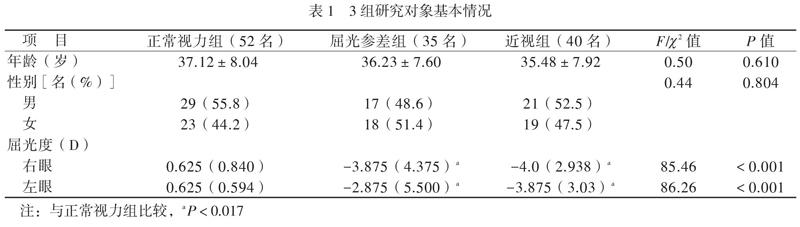
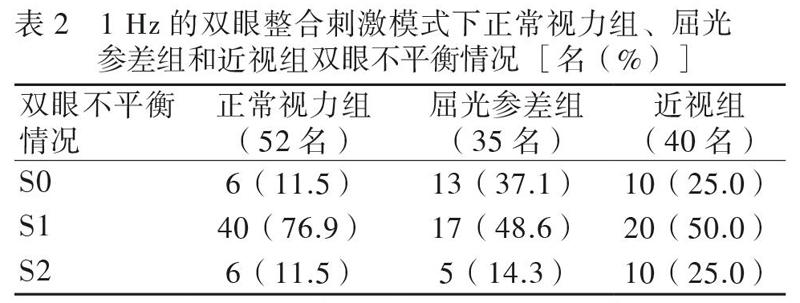
【摘要】目的 應用非沉浸式虛擬現實平臺,探尋屈光參差和雙眼不平衡情況的關系。方法? 對體檢人群中不同屈光狀態的127名志愿者進行研究,檢查其屈光狀態和視功能(非沉浸式虛擬現實平臺),記錄和統計分析結果。結果 1 Hz頻率的雙眼整合刺激模式下,正常視力組與屈光參差組的雙眼不平衡情況的差異均有統計學意義(P < 0.017),正常視力組中雙眼不平衡(S1)的比例高于屈光參差組,單眼抑制(S2)的比例低于屈光參差組;而正常視力組和近視組、屈光參差組和近視組雙眼不平衡情況差異均無統計學意義(P均> 0.017)。輕度屈光參差組和重度屈光參差組的雙眼不平衡情況差異無統計學意義(P = 0.159)。結論 在非沉浸式虛擬現實平臺的檢查模式下發現屈光參差組和正常視力組雙眼不平衡情況的構成有差異,屈光參差者中雙眼嚴重不平衡的情況更多。
【關鍵詞】雙眼不平衡;屈光參差;雙眼整合刺激模式
Assessment of binocular imbalance with a non-immersive virtual reality platform between emmetropes and anisometropes Luo Huihui, Jiang Zhidong, Lin Qingmei, Xu Li. Department of Cornea Ophthalmo-logy, Foshan Aier Eye Hospital, Foshan 528000, China Corresponding author, Xu Li, E-mail: xuli21315@ 163. com
【Abstract】Objective To explore the relationship between anisometropia and binocular imbalance by using a non-immersive virtual reality platform. Methods A total of 127 volunteers with different refractive status were recruited during physical examination. The refractive status and visual function (non-immersive virtual reality platform) were examined, and the results were recorded and statistically analyzed. Results Under the frequency of 1 Hz integrated binocular stimulation mode, the composition of binocular imbalance significantly differed among the normal vision and anisometropia groups (P < 0.017). The ratio of binocular imbalance in the normal vision group (S1) was higher, and the ratio of monocular suppression (S2) was lower than that of anisometropia group. The composition of binocular imbalance did not significantly differ between the normal vision, anisometropia and myopia groups (both P > 0.017). The composition of binocular imbalance did not significantly differ between the mild and severe anisometropia groups (P = 0.159). Conclusions Using the non-immersive virtual reality platform, the composition of binocular imbalance significantly differs between the anisometropia and normal vision counterparts. The incidence of binocular imbalance is higher in anisometropia patients.
【Key words】Binocular imbalance;Anisometropia;Integrated binocular stimulation mode
屈光參差被認為是在等效球鏡(Se)≥1.00 D的雙眼屈光差。屈光參差引起的雙眼視功能異常會對患者的生活和工作產生極大的影響[1-2]。雙眼視知覺中的雙眼不平衡狀態為知覺在雙眼呈現的不同刺激圖像間競爭,表現為觀察者看到2個圖像交替出現[3]。本課題組前期通過回顧性調查發現不同程度的雙眼不平衡在正常視力者(雙眼裸眼視力≥0.8且無眼疾)中占有很大比例,且可能會讓雙眼交替間歇使用[4]。但雙眼不平衡情況與屈光參差的關系有待進一步探索。本研究收集體檢人群中不同屈光狀態的志愿者,使用頻率為
1 Hz的雙眼整合刺激模式對其雙眼不平衡的情況進行測量,探尋屈光參差和雙眼不平衡情況的關系,為臨床探尋屈光參差的發生和進展機制提供新的思路。
對象與方法
一、研究對象
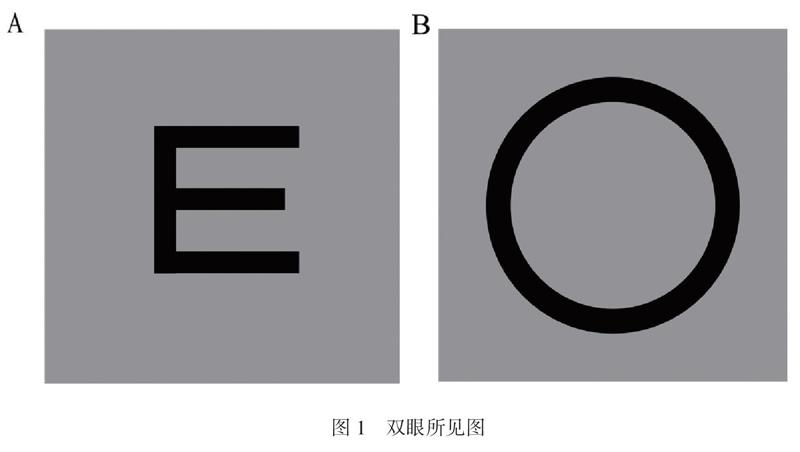
視覺系統的物理成份和神經成份協同工作來形成我們“感知”的圖像,物理成份可捕獲物像的某些細節,但人們“感知”的圖像可能不完全是眼睛捕獲的東西,神經成份的有效表現能增強圖像,但神經成份的缺陷會扭曲或摧毀這些細節。視覺傳導系統中的大細胞系統主要傳導運動信息和低對比度黑白信息(小細胞系統傳導顏色和高對比度黑白細節的信息)[15]。課題組采用1 Hz頻率抖動的檢查標圖像(E視標和圓圈)來檢測雙眼對運動信息的處理情況后發現,雖然正常視力組、屈光參差組與近視組雙眼不平衡情況的平均分布位置差異無統計學意義,但屈光參差組中S2的構成高于正常視力組,由此推測屈光參差可能與大細胞通路(負責運動信息傳遞)功能缺陷相關。正常視力組中絕大部分的志愿者表現為雙眼不平衡,從雙眼不平衡的表現過程和其在正常視力人群中普遍存在的這個現象中推測,雙眼視知覺中的雙眼不平衡可能會讓雙眼間歇、交替使用,能更好的表現出雙眼間使用的協調性,有助于減輕視疲勞[4, 16]。屈光參差組中,輕度屈光參差組和重度屈光參差組的雙眼不平衡情況的構成情況差異無統計學意義,可推測大細胞通路的缺陷可能和屈光參差的進展關系不大。但因屈光參差組的樣本量尤其是重度屈光參差的樣本量偏小,這個結論有待以后擴大樣本量作進一步的驗證。
綜上所述,雙眼視知覺中的雙眼不平衡情況在人群中普遍存在且可能會讓雙眼交替間歇使用。屈光參差組中的雙眼嚴重不平衡更多,由此可以推測大細胞通路(傳輸運動信息)的缺陷與屈光參差發生有關,與其進展關系可能不大,但其中的具體關聯性還需要更進一步擴大樣本量的臨床實驗證實。
參考文獻
[1] Smith EL 3rd, Hung LF, Arumugam B, Wensveen JM, Chino YM, Harwerth RS. Observations on the relationship between anisometropia, amblyopia and strabismus. Vision Res,2017,134:26-42.
[2] Deng L, Gwiazda JE. Anisometropia in children from infancy to 15 years. Invest Ophthalmol Vis Sci,2012,53(7):3782-3787.
[3] 王育良, 張傳偉, 閆麗.腦視覺.北京:人民軍醫出版社,2013:204-205.
[4] 徐莉, 藍劍青, 潘羽蔚, 羅琨, 褚航, 閻麗, 曾錦.正常視力人群在不同時空頻率的雙眼整合刺激模式下的雙眼視功能.中國斜視與小兒眼科雜志,2019,27(3):8-11.
[5] 趙堪興, 楊培增.眼科學.8版.北京:人民衛生出版社,2013:246-249.
[6] 李娟, 郭海科, 曾錦, 謝文娟, 李仲明, 歐碧群, 廖偉雄.雙眼屈光參差中眼軸、角膜屈光力與屈光度差值的相關性研究.新醫學,2013,44(3):202-205.
[7] 付晶, 盧煒, 吳殿鵬, 褚航, 閻麗.斜視與弱視患者精細與粗糙立體視的研究.中國斜視與小兒眼科雜志,2015,23(1):1-5.
[8] 徐莉, 龐莎莎, 褚航, 閻麗, 曾錦.近視者雙眼不平衡的臨床觀察.臨床醫學工程,2020,27(9):1157-1158.
[9] 馮成志, 賈鳳芹.雙眼競爭研究現狀與展望.心理科學進展,2008,16(2):213-221.
[10] Wang J, Feng L, Wang Y, Zhou J, Hess RF. Binocular benefits of optical treatment in anisometropic amblyopia. J Vis,2018,18(4):6.
[11] Hess RF, Thompson B. Amblyopia and the binocular approach to its therapy. Vision Res,2015,114:4-16.
[12] Vera-Diaz FA, Bex PJ, Ferreira A, Kosovicheva A. Binocular temporal visual processing in myopia. J Vis,2018,18(11):17.
[13] Nabie R, Andalib D, Khojasteh H, Aslanzadeh SA. Comparison of the effect of different types of experimental anisometropia on stereopsis measured with Titmus, Randot and TNO stereotests. J Ophthalmic Vis Res,2019,14(1):48-51.
[14] Nabie R, Andalib D, Amir-Aslanzadeh S, Khojasteh H. Effect of artificial anisometropia in dominant and nondominant eyes on stereoacuity. Can J Ophthalmol,2017,52(3):240-242.
[15] Cadet N, Huang PC, Superstein R, Koenekoop R, Hess RF. The effects of the age of onset of strabismus on monocular and binocular visual function in genetically identical twins. Can J Ophthalmol,2018,53(6):609-613.
[16] Xu L, Huang M, Lan J, Huang W, Wang X, Zhang G, Li X, Shasha P, Chu H, Wiederhold BK, Wiederhold M, Yan L, Yang X, Zeng J. Assessment of binocular imbalance with an augmented virtual reality platform in a normal population. Cyberpsychol Behav Soc Netw,2019,22(2):127-131.
(收稿日期:2020-11-20)
(本文編輯:鄭巧蘭)